
Complexity
Complexity science and the rules behind order in cells, brains and markets.
Summary
The reference has not verified this book in detail; the summary states only what the title, author and subject establish.
Lewin, a science writer, reports on complexity science: the search for the rules that produce order in complex systems such as cells, brains, ecosystems, stock markets and political power. The chapter titles trace the route. He opens at Chaco Canyon, the abandoned Anasazi settlement in New Mexico, then moves to the idea of the edge of chaos, mass extinctions, artificial life in computers, the Gaia hypothesis of a self-stabilising Earth, whether evolution shows progress, and consciousness.
The first edition came out from Macmillan in 1992 in 208 pages, when the Santa Fe Institute was building the field; reviewers note that the book follows how that institute's researchers worked. The University of Chicago Press second edition of 2000 adds an essay, "On the Edge in the Business World", and an interview with John Holland, author of Emergence. Ian Stewart reviewed it in Nature and Stephen Jay Gould praised it; the publisher's page carries both. The available sources give the subjects and order of the chapters but not their arguments in detail.
Key takeaways 4
- Complexity science looks for shared rules behind cells, brains, ecosystems, markets and political systems.
- The edge of chaos, the zone between rigid order and randomness, is the book's central idea.
- Computer models of artificial life serve as experiments on how complex order arises.
- The second edition extends the ideas to business in an added essay and an interview with John Holland.
Who should read it
Readers who want a reporter's account of the early Santa Fe Institute ideas on complexity before reading the technical literature.
Who recommended it 1
Similar books 6
Chosen by shared topics, the entries that hold them, and the people who recommended both.
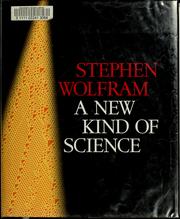
How very simple programs produce complexity, and what that explains in nature.
Recommended by: Mohnish Pabrai, Steve Jurvetson
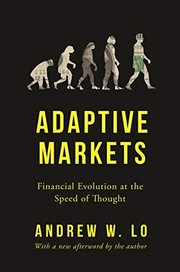
The adaptive markets hypothesis, joining efficient markets and behavioural finance.
“Lo, Andrew W., Adaptive Markets: Financial Evolution at the Speed of Thought (Princeton, NJ: Princeton University Press, 2017)” — Michael Mauboussin
Source: Who Is On the Other Side? You Need Good BAIT to Land a Winner, page 40
Recommended by: Michael Mauboussin
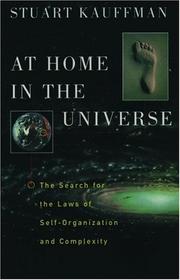
The laws of self-organization and complexity, from the origin of life to firms.
“Kauffman, S. At Home in the Universe: The Search for Laws of SelfOrganization and Complexity, Oxford: Oxford University Press, 1995” — Michael Mauboussin
Source: Shift Happens: On a New Paradigm of the Markets as a Complex Adaptive System, page 15
Recommended by: Michael Mauboussin, Naval Ravikant

The pattern behind catastrophes from blackouts to oil spills, and how to plan.
Recommended by: Mohnish Pabrai
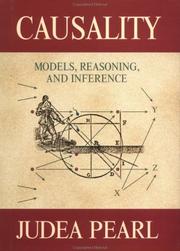
A mathematical theory of causation for statistics, AI, economics and science.
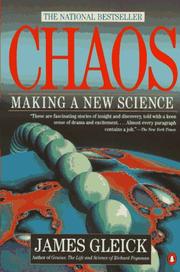
How scientists found order in chaos, from nonlinearity to the butterfly effect.
Recommended by: Jim Collins, Naval Ravikant, Stewart Brand