
Why Information Grows
Why some nations prosper, explained by how information and knowledge grow.
Who recommended it 1
Similar books 6
Chosen by shared topics, the entries that hold them, and the people who recommended both.
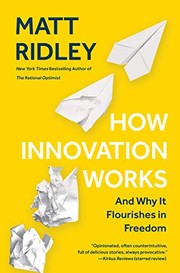
Innovation is gradual, collective and bottom-up, not the work of lone inventors.
“Matt Ridley, How Innovation Works: And Why It Flourishes in Freedom (New York: Harper, 2020)” — Michael Mauboussin
Source: Increasing Returns: Identifying Forms of Increasing Returns and What Drives Them, page 17
Recommended by: Balaji S. Srinivasan, Michael Mauboussin and 1 other
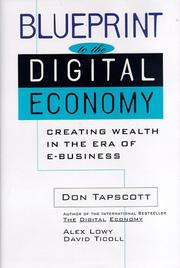
Essays by consultants and executives on restructuring businesses for the internet.
Recommended by: Mohnish Pabrai

Why most government efforts to build venture capital sectors fail.
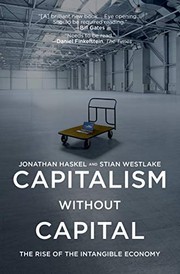
How the economy changes when intangible assets replace physical capital.
“For a more thorough review of the characteristics of intangible assets, see Jonathan Haskel and Stian Westlake, Capitalism Without Capital: The Rise of the Intangible Economy (Princeton, NJ: Princeton University Press, 2017), 56-88” — Michael Mauboussin
Source: The Impact of Intangibles on Base Rates, page 10
Recommended by: Bill Gates, Michael Mauboussin
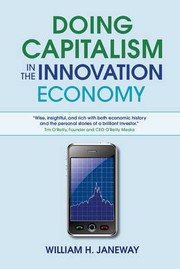
Innovation as a game played by the state, capital markets and competition.
“He wrote this book, which I really recommend, it's called Doing Capitalism” — Marc Andreessen
Source: Dwarkesh Podcast — Marc Andreessen (transcript)
Recommended by: Marc Andreessen

Digital costs near zero mean goods can be given away, which changes whole industries.
“During the month I read Chris Anderson’s excellent 2009 book “Free” and found in it a lot of sense about the way the business world is today and where it’s going – certainly more sense than I get from watching a Bloomberg scr” — Nick Train
Source: April 2016 Monthly Manager Report, page 2
Recommended by: Nick Train