Creation: Life and How to Make It
How a game designer built artificial life from simple rules of biology.
Artificial life and emergence; complexity built from very simple rules
Summary
Grand designed Creatures, a 1996 computer game in which the creatures had simulated neural networks, biochemistry and genetics rather than scripted behaviour. This book sets out the ideas behind that work and makes a general argument about what life and mind are.
His central claim is that what matters is not the material but the persistent pattern. Grand argues that a thing is defined by the stable process that maintains it rather than by the matter it is made of, and that living things and minds are patterns of this kind operating at several levels at once. From that he argues that artificial life is possible in principle because the substrate does not matter, that it must be built from the bottom up rather than programmed top down, and that emergence across levels is the mechanism to be engineered rather than a mystery to be admired.
The book explains how he built the Creatures biochemistry and neural systems concretely, which is unusual: most artificial life writing is either philosophical or technical, and Grand does both at an accessible level. It is worth reading for people thinking about emergence, agent design and what building a mind actually requires in practice. It is from 2000 and predates deep learning entirely, so its treatment of how learning systems would be built is historical. Grand's philosophical arguments about consciousness and persistent patterns are stated with confidence and are not defended against the standard objections in philosophy of mind.
Key takeaways 7
- A living thing is a persistent pattern of process rather than a particular collection of matter, which means the substrate a system runs on is irrelevant to whether it is alive.
- Artificial life must be built from the bottom up by specifying local rules, because the interesting behaviour is what emerges rather than what is programmed.
- Emergence operates across multiple levels simultaneously, and a designer's job is to build the level below the one they want to appear.
- Simulating biochemistry and neural systems separately and letting them interact produces behaviour that neither system alone would generate.
- Intelligence is a property of the interaction between an agent and its environment rather than something contained in the agent.
- Top-down symbolic approaches to artificial intelligence fail because they specify the outcome rather than the process that generates it.
- Building a working artificial creature teaches more about what life requires than analysing existing organisms does.
Who should read it
Readers interested in emergence, bottom-up system design and artificial life, particularly as a pre-deep-learning statement of the constructive approach.
Who recommended it 2 · 1 direct
Similar books 6
Chosen by shared topics, the entries that hold them, and the people who recommended both.
The theory that the neocortex works through thousands of models of the world.
Recommended by: Bill Gates
The adaptive markets hypothesis, joining efficient markets and behavioural finance.
“Lo, Andrew W., Adaptive Markets: Financial Evolution at the Speed of Thought (Princeton, NJ: Princeton University Press, 2017)” — Michael Mauboussin
Source: Who Is On the Other Side? You Need Good BAIT to Land a Winner, page 40
Recommended by: Michael Mauboussin

Computer models of how minds make analogies and create.
Recommended by: Patrick Collison
How Hinton, LeCun and Bengio kept neural networks alive until deep learning took off.
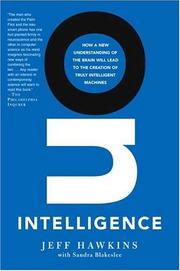
How the brain produces intelligence, and what that means for intelligent machines.
Recommended by: Keith Rabois, Patrick Collison, Ev Williams
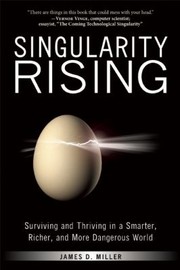
How a future of abundant human and machine intelligence may change the world.
Recommended by: Patrick Collison