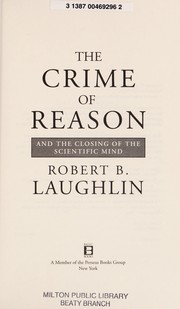
The Crime of Reason
How valuable information is becoming private property and dangerous to acquire.
Summary
Robert B. Laughlin, a Nobel laureate in physics, challenges the belief that information flows more freely than ever. He argues that acquiring information is becoming a danger or even a crime: the most valuable information is increasingly private property or a state secret, so that a flash of insight, arrived at innocently, can infringe a patent or threaten national security.
The public pays little attention because the information is technical, but Laughlin argues that information is often labelled technical precisely so that it can be locked away. Growing restrictions in fields such as cryptography, biotechnology and software design, he writes, are creating a new Dark Age, marked by disinformation and ignorance rather than light and truth. He calls this the crime of reason: the antisocial and sometimes illegal status of certain intellectual activities. The publisher describes the book as a short, fiercely argued essay for people working at the frontiers of new ideas.
Key takeaways 4
- Valuable knowledge is increasingly owned or classified.
- Independent discovery can now break patent or security law.
- Labelling knowledge technical keeps it out of public debate.
- Restrictions in cryptography, biotechnology and software threaten open inquiry.
Who should read it
Scientists, engineers and readers concerned with intellectual property and secrecy.
Who recommended it 1
Similar books 6
Chosen by shared topics, the entries that hold them, and the people who recommended both.
How a few scientists with ties to industry ran campaigns to deny settled science.
Recommended by: Nat Eliason, Elon Musk
Knowledge can grow without limit through good explanations that are hard to vary.
“Favorites, I would say David Deutsch, "The Beginning of Infinity" is definitely one of my favorites.” — Albert Wenger
Source: Transcript: Albert Wenger
Recommended by: Albert Wenger, Derek Sivers and 9 others
Thirteen scientific anomalies, from the missing universe to the placebo effect.
Recommended by: Mohnish Pabrai, Bill Gates
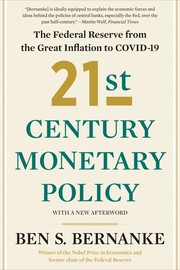
How American monetary policy changed from the 1950s through quantitative easing.

Why well-designed cities are the key to America's national challenges.
Recommended by: Patrick Collison
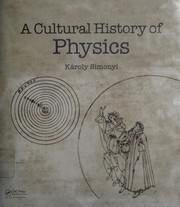
A history of physics set in its cultural context.
Recommended by: Naval Ravikant