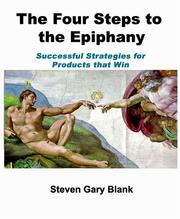
The Four Steps to the Epiphany
Customer development: how startups find customers before building the full product.
Summary
Blank argues that startups fail because they execute a product development process designed for companies with known customers and known markets, and he proposes a parallel process he calls customer development. The book precedes and is the direct source for The Lean Startup.
The four steps are customer discovery, in which the founders test whether the problem and the proposed solution match what customers actually experience; customer validation, in which they establish a repeatable and scalable sales process; customer creation, in which they build demand, with different approaches depending on whether they are entering an existing market, a new market or resegmenting one; and company building, in which the organisation transitions from a search organisation to an execution organisation.
Blank's central assertion is that a startup is a temporary organisation searching for a repeatable business model, not a small version of a large company, and that applying large company functions and metrics before the model is found causes the failure. He insists that founders must do the customer discovery themselves rather than delegate it, that the facts exist outside the building, and that the correct response to invalidated hypotheses is iteration rather than escalation of spending.
His market type framework is the most underused part. He argues that the go-to-market approach, the spending profile and the time to revenue differ fundamentally between existing markets, new markets and resegmented markets, and that most failures come from applying the wrong one. The book is poorly organised and badly edited, which Blank has acknowledged, and it reads as a manual rather than a narrative. It is written for enterprise technology and hardware companies of its period. The market type framework and the insistence on founder-led discovery are its lasting contributions.
Key takeaways 8
- A startup is a temporary organisation searching for a repeatable and scalable business model, not a smaller version of an established company.
- Product development processes designed for known markets cause failure when applied to startups, because they assume the customer and the problem are already established.
- Founders must conduct customer discovery personally, because the information required cannot survive being relayed through others.
- Customer discovery tests whether the hypothesised problem exists and whether the proposed solution addresses it, before any product is built at scale.
- Customer validation requires demonstrating a repeatable sales process, and scaling before that exists converts a small problem into an expensive one.
- Market type determines the entire go-to-market approach, and entering an existing market, creating a new one and resegmenting one require different spending, timelines and metrics.
- New markets take years to develop and companies that fund them on existing-market assumptions run out of money before demand appears.
- Hiring sales and marketing organisations before the business model is validated is the most common and most expensive startup error.
Who should read it
Founders in enterprise or technical markets who want the original customer development process and the market type framework that later books omitted.
Who recommended it 5 · 2 direct
“Buy it, read it, keep it under your pillow and absorb it via osmosis.”
Similar books 6
Chosen by shared topics, the entries that hold them, and the people who recommended both.
Why startups should build something new and own a small market before growing.
“Inspired by modern tech classics like Zero to One and The Hard Thing About Hard Things, I wrote the book to be succinct, thorough, and accessible.” — Chris Dixon
Source: I wrote a book: Read Write Own — cdixon
Recommended by: Balaji S. Srinivasan, Chris Dixon and 38 others
Build, measure, learn: test what customers want with small experiments.
“There's a bunch of - I think if it's a little company, Eric Ries's book is great, The Lean Startup.” — Ben Horowitz
Recommended by: Ben Horowitz, Derek Sivers, Kathryn Minshew and 19 others
How to lead a company through layoffs, near-death crises and the decision to sell.
“…books I've recommended, highlighted to death, or forced on friends.” — Andrew Wilkinson
Source: Andrew Wilkinson's Bookshelf, neverenough.com
Recommended by: Andrew Wilkinson, Balaji S. Srinivasan and 34 others
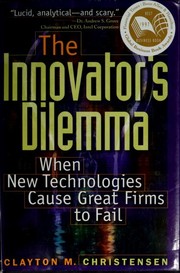
Why well-run firms lose to cheaper, worse products that enter at the market's bottom.
“Clayton Christensen's big "aha" in Innovator's Dilemma is that eventually a product will become over-featured and as a result feature growth will slow, and along with it innovation.” — Bill Gurley
Source: Picture Proof of the Innovator’s Dilemma: SlideRocket
Recommended by: Bill Gurley, Drew Houston, Jim Collins and 29 others
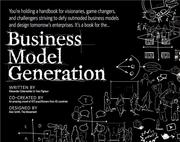
The Business Model Canvas: nine blocks for how a firm creates and captures value.
Recommended by: Nir Eyal
A step-by-step guide to finding customers, a market and product-market fit.
Recommended by: Patrick Collison, Matej Latin and 1 other
Where it sits in the reference 3
Topics 3
As an Amazon Associate I earn from qualifying purchases.