
The Long Tail
Without shelf limits, sales of many niche products add up to rival the hits.
Why unlimited shelf space moves demand into the tail
Summary
Anderson, then editor of Wired, argues that removing the physical constraints of shelf space and distribution changes the shape of demand. A physical retailer stocks only items that sell well enough to justify their space, which truncates the demand curve. An online retailer with warehouse or digital distribution can carry unlimited inventory, and the aggregate sales of many low-volume items can equal or exceed the sales of the hits.
His evidence comes from Amazon, Netflix in its DVD period, Rhapsody, iTunes and eBay, with data showing that a substantial share of sales came from titles unavailable in physical stores. He identifies three forces that produce the effect: democratised production, which lets more people create; democratised distribution, which lets them reach buyers; and connected supply and demand through search, recommendations and reviews, which he argues is the decisive one because unlimited inventory is worthless without filters that let people find what they want.
The strategic implications he draws include pricing lower where marginal cost is near zero, offering everything rather than curating, and letting the market do the filtering rather than predicting demand in advance.
The empirical claims have been substantially challenged. Anita Elberse's research found that demand has concentrated further rather than dispersing, that the tail has lengthened but become flatter, and that hits have become more dominant in music and video. Streaming economics since publication have concentrated attention on a small number of titles more than physical retail did. The observation about unlimited inventory and search-driven discovery is correct. The prediction that this would shift the balance of revenue away from hits has not held.
Key takeaways 8
- Physical shelf space truncates demand by excluding items that do not sell enough to justify their space, which distorts what appears to be consumer preference.
- Unlimited inventory plus effective search allows aggregate sales from many low-volume items to become commercially significant.
- Filters including search, recommendations and reviews are the decisive component, since unlimited inventory without them produces nothing.
- Production and distribution have both been democratised, which increases the number of available items faster than demand for any of them.
- Where marginal cost approaches zero, offering everything beats curating, because the cost of carrying an item that never sells is negligible.
- Predicting which items will sell becomes unnecessary when everything can be carried and the market can do the filtering.
- Subsequent research found that demand has concentrated further on hits rather than dispersing, which contradicts the book's central prediction.
- The tail has become longer and flatter, meaning more items sell almost nothing rather than the tail capturing more revenue.
Who should read it
Founders and investors in marketplaces and content businesses who want the original argument alongside the evidence that has since contradicted its main prediction.
About Chris Anderson
Head of TED, the nonprofit that publishes TED talks; founded Future Publishing and the games site IGN.
TED Talks: The Official TED Guide to Public Speaking sets out how the talks TED publishes are built.
Who recommended it 5 · 2 direct
“also Chris Anderson, The Long Tail: Why the Future of Business Is Selling Less of More (New York: Hyperion, 2006), 121”
Similar books 6
Chosen by shared topics, the entries that hold them, and the people who recommended both.
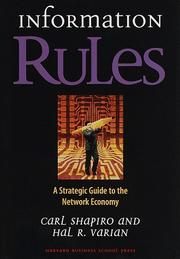
Economics for information goods: pricing, versioning, lock-in and network effects.
“Carl Shapiro and Hal R. Varian, Information Rules (Boston, MA: Harvard Business School Press, 1999), 174” — Michael Mauboussin
Source: The Ecosystem Edge, page 10
Recommended by: Michael Mauboussin, Mohnish Pabrai and 1 other
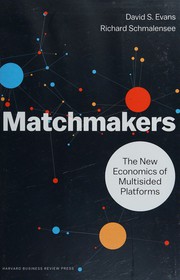
How multi-sided platforms such as card networks get both sides on board at once.
“David S. Evans and Richard Schmalensee, Matchmakers: The New Economics of Multisided Platforms (Boston, MA: Harvard Business Review Press, 2016)” — Michael Mauboussin
Source: Measuring the Moat: Assessing the Magnitude and Sustainability of Value Creation
Recommended by: Michael Mauboussin
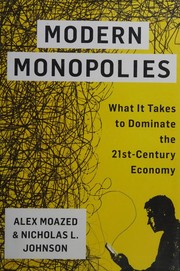
How platform businesses connecting users differ from firms that make products.
“Alex Moazed and Nicholas L. Johnson, Modern Monopolies: What It Takes to Dominate in the 21st Century (New York: St. Martin’s Press, 2016)” — Michael Mauboussin
Source: Measuring the Moat: Assessing the Magnitude and Sustainability of Value Creation
Recommended by: Michael Mauboussin
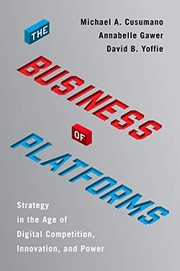
Innovation platforms and transaction platforms, and what each needs to succeed.
“See Michael A. Cusumano, Annabelle Gawer, and David B. Yoffie, The Business of Platforms: Strategy in the Age of Digital Competition, Innovation, and Power (New York: Harper Business, 2019), 107-138” — Michael Mauboussin
Source: Market Share: Understanding Competitive Advantage Through Market Power, page 42
Recommended by: Michael Mauboussin
How platforms create value by matching groups, unlike linear pipeline businesses.
Recommended by: Reid Hoffman

A design guide for founders building marketplaces and networks.