The Innovator's Prescription
Disruptive innovation applied to health care.
Summary
Clayton Christensen, with physician Jerome Grossman and Jason Hwang, applies disruptive innovation theory to health care. The book is the most systematic attempt to explain why medical costs rise and what would change that.
The analytical core is a distinction between three business models that health care institutions mix and should not. Solution shops diagnose problems whose causes are unknown, are paid on a fee-for-service basis, and cannot be measured on outcomes because the work is unstructured. Value-adding process businesses perform defined procedures where the diagnosis is known, can be measured on outcomes, and should be paid a fixed price per case. Facilitated networks connect participants who help each other, which suits chronic disease management. General hospitals combine all three under one roof and one overhead structure, which the authors argue makes every activity expensive.
The disruption argument holds that medical care becomes cheaper when a condition moves from intuitive medicine, requiring expert judgement, to precision medicine, where the diagnosis is definitive and the treatment rule-based, and that when this happens the care can move to a lower-cost provider and setting: from specialist to general physician, from physician to nurse, from hospital to clinic to home. They argue that regulation, professional licensing and reimbursement structures block this movement. The framework is powerful and the specific predictions about retail clinics and about disruptive business models have been partly realised. Critics argue that the authors understate the complexity of comorbid patients and that disruption theory transfers imperfectly to a market where the customer does not pay.
Key takeaways 7
- Health care institutions mix three incompatible business models, and general hospitals combine all of them under one overhead structure.
- Solution shops diagnose unknown problems and must be paid for effort, while value-adding process businesses should be paid a fixed price per case.
- Care becomes cheaper when a condition moves from requiring expert judgement to being definitively diagnosable and rule-based.
- When diagnosis becomes precise, care can move to a lower-cost provider and setting, and regulation is what usually prevents it.
- Professional licensing and reimbursement rules block the movement of care down the cost curve.
- Chronic disease management suits a facilitated network model in which patients contribute to each other's care.
- Employers rather than providers or insurers have the strongest incentive to disrupt health care, since they bear the cost.
Who should read it
Health care executives and investors who want a business model framework explaining why costs rise and what structural changes would reduce them.
About Clayton Christensen
Kim B. Clark Professor of Business Administration, Harvard Business School 1992-2020; co-founder of Innosight, Rose Park Advisors and the Clayton Christensen Institute; died 23 January 2020
The Innovator's Dilemma turned disruption into a primary framework that the rest of the strategy and innovation literature argues with rather than around.
Similar books 6
Chosen by shared topics, the entries that hold them, and the people who recommended both.
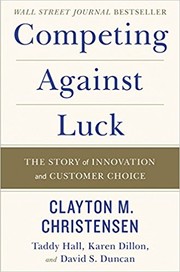
Customers hire products to do a job; innovate by finding the job, not the buyer type.
“Clayton M. Christensen, Taddy Hall, Karen Dillon, and David S. Duncan, Competing Against Luck: The Story of Innovation and Customer Choice (New York: HarperBusiness, 2016)” — Michael Mauboussin
Source: Measuring the Moat: Assessing the Magnitude and Sustainability of Value Creation, page 64
Recommended by: Michael Mauboussin
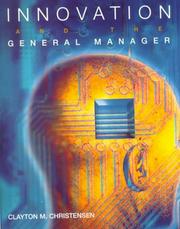
Harvard teaching cases on managing innovation and new products.
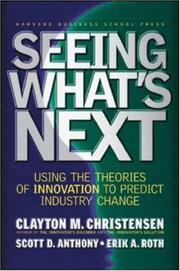
Disruption theory used to forecast how industries will change.
“also Clayton M. Christensen, Scott D. Anthony, and Erik A. Roth, Seeing What’s Next: Using the Theories of Innovation to Predict Industry Change (Boston, MA: Harvard Business School Press, 2004)” — Michael Mauboussin
Source: Untangling Skill and Luck: How to Think About Outcomes - Past, Present, and Future, page 31
Recommended by: Michael Mauboussin, Ev Williams
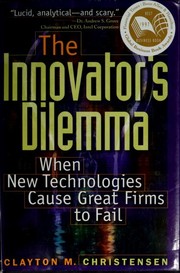
Why well-run firms lose to cheaper, worse products that enter at the market's bottom.
“Clayton Christensen's big "aha" in Innovator's Dilemma is that eventually a product will become over-featured and as a result feature growth will slow, and along with it innovation.” — Bill Gurley
Source: Picture Proof of the Innovator’s Dilemma: SlideRocket
Recommended by: Bill Gurley, Drew Houston, Jim Collins and 29 others
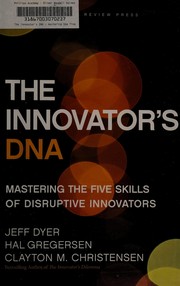
What innovative entrepreneurs and executives do differently from other managers.
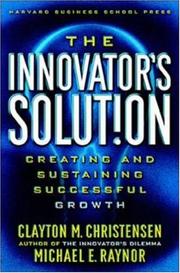
How a company can build new businesses through low-end and new-market disruption.
“Required reading for business-owners and investors. Shows how technology improves faster than people's ability to use it, so when someone says a technology is “not good enough”, add “yet” and prepare for disruption.” — Derek Sivers
Source: Derek Sivers book notes (primary, rated list) · Rating: 8/10
Recommended by: Derek Sivers, Keith Rabois and 3 others
Where it sits in the reference 3
Topics 3
As an Amazon Associate I earn from qualifying purchases.