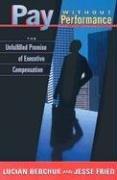
Pay Without Performance
Why American executive pay is not set by arm's-length bargaining for shareholders.
Summary
Lucian Bebchuk and Jesse Fried argue that American executive compensation is not the result of arm's-length bargaining between a board acting for shareholders and a chief executive, and that the standard optimal contracting account cannot explain the observed arrangements. Their alternative is the managerial power thesis: executives influence their own pay, and the constraint on how much they extract is outrage rather than negotiation.
The evidence is the design features that optimal contracting cannot explain. Options granted at the money with no performance conditions reward executives for general market movements they did not cause. Option repricing after share price declines removes the downside the instrument was supposed to create. Executives are permitted to hedge and to unwind their equity positions, which severs the link the grants were meant to establish. Severance payments exceed contractual entitlements. Retirement benefits, deferred compensation and perquisites are structured to be less visible in disclosure. Boards are populated by directors nominated by the chief executive and advised by consultants the company retains.
The authors call the constraint on extraction outrage costs, meaning that pay arrangements are limited by what can be defended publicly, which explains why compensation is camouflaged rather than minimised. Their proposals concern board independence, shareholder power to nominate directors, and disclosure of the full value of arrangements. The book influenced say-on-pay legislation and the subsequent shift toward performance-conditioned equity. Critics, particularly from the optimal contracting side, argue that the authors underweight the market for executive talent and that observed pay levels reflect firm scale. The design critiques have largely been accepted and many of the specific practices have changed.
Key takeaways 7
- Executive compensation is set through a process the executive substantially influences rather than through arm's-length bargaining.
- Options granted at the money without performance conditions pay executives for market movements they did not produce.
- Repricing options after a share price fall removes the downside exposure the grant was meant to create.
- Permitting executives to hedge or unwind equity positions severs the alignment those positions were supposed to establish.
- Pay arrangements are camouflaged in retirement benefits and deferred compensation because visibility, not cost, is the binding constraint.
- Boards nominated by the chief executive and advised by company-retained consultants cannot bargain independently.
- Bebchuk and Fried argue that the amount extracted is limited by what can be publicly defended rather than by what shareholders would agree to.
Who should read it
Investors and directors evaluating compensation arrangements who want the systematic critique that reshaped pay practice and governance regulation.
Who recommended it 1 · 1 direct
“For the negative case see Lucian A. Bebchuk and Jesse M. Fried, Pay Without Performance: The Unfulfilled Promise of Executive Compensation (Cambridge, MA: Harvard University Press, 2004) and Lucian A”
Similar books 6
Chosen by shared topics, the entries that hold them, and the people who recommended both.
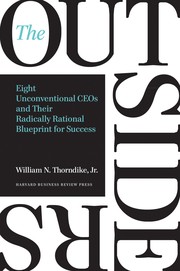
Eight CEOs who beat the market by allocating capital, not by running operations.
“…books I've recommended, highlighted to death, or forced on friends.” — Andrew Wilkinson
Source: Andrew Wilkinson's Bookshelf, neverenough.com
Recommended by: Andrew Wilkinson, Dan Loeb, Francois Rochon and 12 others
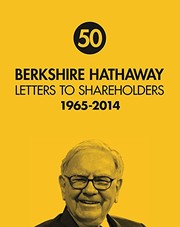
Every Berkshire annual letter since 1965, in order, as the company grew.
“…books I've recommended, highlighted to death, or forced on friends.” — Andrew Wilkinson
Source: Andrew Wilkinson's Bookshelf, neverenough.com
Recommended by: Andrew Wilkinson, Arnold Van Den Berg and 5 others
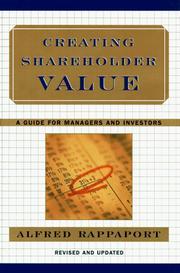
Value is discounted future cash flow, not earnings per share or return on equity.
“Alfred Rappaport, a professor emeritus at the Kellogg School of Management at Northwestern University, made this point clearly in his seminal book, Creating Shareholder Value.” — Michael Mauboussin
Source: Market Share: Understanding Competitive Advantage Through Market Power, page 1
Recommended by: Michael Mauboussin, Mohnish Pabrai
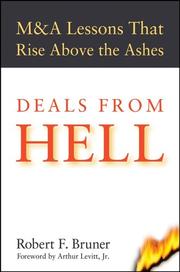
Post-mortems on value-destroying mergers, from AOL Time Warner to Quaker and Snapple.
“Robert F. Bruner, Deals from Hell: M&A Lessons That Rise Above the Ashes (Hoboken, N.J.: John Wiley & Sons, 2005)” — Michael Mauboussin
Source: Share Repurchase from All Angles: Assessing Buybacks, No Matter Where You Sit, page 14
Recommended by: Michael Mauboussin
How the chase for short-term share prices corrupted shareholder value, and fixes.
“Alfred Rappaport, Saving Capitalism from Short-Termism: How to Build Long-Term Value and Take Back Our Financial Future (New York: McGraw Hill, 2011), 69-88” — Michael Mauboussin
Source: The Importance of Expectations: The Question that Bears Repeating: What’s Priced in?, page 14
Recommended by: Michael Mauboussin, Patrick O'Shaughnessy
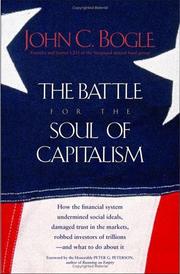
How managers and middlemen took value from the owners of American companies.
“Bogle, John C., The Battle for the Soul of Capitalism (New Haven: Yale University Press, 2005)” — Michael Mauboussin
Recommended by: Michael Mauboussin, Mohnish Pabrai and 1 other
Where it sits in the reference 3
Topics 2
As an Amazon Associate I earn from qualifying purchases.