Subscribed
Why firms are moving from selling units to selling ongoing subscriptions, and how.
Zuora's founder on the shift from unit sales to subscriber accounting.
Summary
Tzuo was an early Salesforce executive and founded Zuora, which sells subscription billing software. The book argues that businesses across sectors are shifting from selling units to selling ongoing access, and sets out what that requires operationally.
The strategic claim is that the relationship rather than the transaction becomes the asset. A subscription business knows who its customers are, what they use and when they stop, which permits product development based on behaviour rather than on surveys. Tzuo argues that this changes the organisation: product teams work on continuous improvement rather than on release cycles, sales compensation must reward retention rather than only acquisition, finance must track recurring revenue and churn rather than bookings, and the whole company must organise around the customer lifecycle from acquisition through onboarding, expansion and renewal.
The financial content is the most concrete. Tzuo proposes an alternative income statement for subscription businesses: start with recurring revenue at the beginning of the period, subtract churn, add new recurring revenue, subtract the cost of servicing existing subscribers and the cost of acquiring new ones, and the resulting figure shows whether the business is growing profitably. He argues that conventional accounting makes a healthy subscription business look unprofitable because acquisition costs are expensed immediately while the revenue arrives over years.
He covers sector examples including media, software, manufacturing shifting to service contracts, transport and retail.
The book is written by a vendor of subscription infrastructure and reads as advocacy for the model. It gives little attention to where subscriptions fail, to subscription fatigue among consumers, to the businesses that converted and then reversed, or to the fact that recurring revenue quality varies enormously depending on switching costs. The metrics framework is the durable part.
Key takeaways 7
- In a subscription business the ongoing customer relationship rather than the transaction is the asset being built.
- Conventional accounting makes healthy subscription businesses look unprofitable because acquisition cost is expensed before the revenue arrives.
- A subscription income statement should start with recurring revenue, subtract churn, add new recurring revenue, then subtract servicing and acquisition costs.
- Sales compensation that rewards only new acquisition works against the retention that determines subscription value.
- Continuous product improvement replaces release cycles because the customer can leave at any renewal point.
- Usage data from subscribers replaces market research as the input to product decisions.
- Recurring revenue quality depends on switching costs, so equal revenue figures can represent very different businesses.
Who should read it
Operators converting a business to recurring revenue who need the metrics and organisational changes required, discounting the vendor's enthusiasm.
Who recommended it 1 · 1 direct
“See www.zuora.com/resource/ subscription-economy-index/ and Tien Tzuo and Gabe Weisert, Subscribed: Why the Subscription Model Will Be Your Company's Future–and What to Do About It (New York: Portfolio/Penguin, 2018)”
Similar books 6
Chosen by shared topics, the entries that hold them, and the people who recommended both.
Set prices from the value customers get, not from cost or rivals' prices.
“For more on pricing strategy, see Thomas T. Nagle and Georg Müller, The Strategy and Tactics of Pricing: A Guide to Growing More Profitably, Sixth Edition (New York: Routledge, 2018) and Alan S” — Michael Mauboussin
Source: The Economics of Customer Businesses: Calculating Customer-Based Corporate Valuation, page 35
Recommended by: Michael Mauboussin
Set the price before you design the product, since most failures are pricing ones.
Recommended by: Alfred Lin, Bill Gurley, Leo Polovets
How to build subscription businesses: retention, pricing tiers and renewal.
Why firms should treat customers as members in an ongoing relationship.
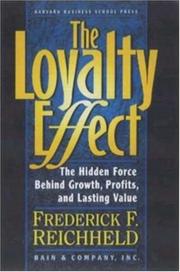
Keeping customers, employees and investors is what drives profit and growth.
“In his seminal book, The Loyalty Effect, Fred Reichheld shows that a 5 percentage point improvement in retention rate (a reduction in churn) increases customer NPVs more than 75 percent for a host of industries including advertising agencies, auto insurance, credit cards, life 12 insurance, and publishing.” — Michael Mauboussin
Source: The Economics of Customer Businesses, page 6
Recommended by: Michael Mauboussin
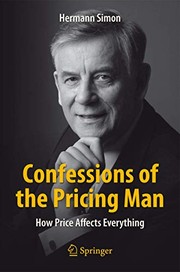
Price is the strongest profit lever and the least managed; how to set it well.
Recommended by: Michael Mauboussin