Managerial Excellence: McKinsey Award Winners from the Harvard Business Review
Harvard Business Review articles that won the journal's annual McKinsey Award.
Summary
The reference has not verified this book in detail; the summary states only what the title, author and subject establish.
This is a collection of Harvard Business Review articles that won the McKinsey Award, which the journal gives annually to its best articles as judged by an independent panel. The volume was published by the Harvard Business Review to collect winners from the award's first decades.
The reference has not verified this particular volume's specific contents or the years it covers. What the format establishes is that it collects articles the journal itself judged its most significant, which over the award's history has included work by Peter Drucker, Theodore Levitt, Michael Porter, Robert Hayes and William Abernathy, Chris Argyris, Frederick Herzberg, Henry Mintzberg and others whose articles became foundational.
Articles frequently included in such collections cover marketing myopia, in which Levitt argued that industries decline because they define themselves by their product rather than by the customer need; the managing oneself and effective executive material from Drucker; Porter's articles on competitive forces and on strategy; Hayes and Abernathy on how American management practice caused industrial decline; Argyris on defensive reasoning and on teaching smart people to learn; and Herzberg on motivation.
Collections of this kind are useful because the individual articles are frequently better than the books that later expanded them, being shorter and argued more tightly. Readers should identify which articles a given edition contains before acquiring it, since the specific selection determines the value and the reference cannot confirm it here.
Key takeaways 7
- The McKinsey Award is given annually to the best Harvard Business Review articles as judged by an independent panel.
- Award winners over the journal's history include foundational articles by Drucker, Levitt, Porter, Argyris, Mintzberg and Herzberg.
- Individual articles are frequently tighter and better argued than the books that later expanded them.
- Levitt's marketing myopia argument, that industries decline by defining themselves by product rather than by customer need, is among the most cited.
- Argyris's work on defensive reasoning explains why capable people are the hardest to teach, since they have least experience of failing.
- Readers should identify which articles a specific edition contains, since the selection determines the volume's value.
- The reference has not verified this volume's specific contents or the years it covers.
Who should read it
Readers wanting foundational management articles in their original tighter form, after checking which pieces the specific edition contains.
Who recommended it 1 · 1 direct
Similar books 6
Chosen by shared topics, the entries that hold them, and the people who recommended both.
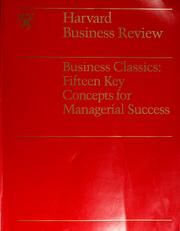
Fifteen classic Harvard Business Review essays on management.
Recommended by: Mohnish Pabrai
Why managers are rethinking the principles that have run their institutions.
Recommended by: Mohnish Pabrai
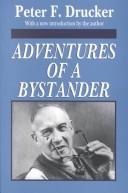
A memoir told through portraits of the people the author knew, from Vienna on.
Recommended by: Mohnish Pabrai, Stewart Brand
What eighteen long-lived companies did differently from close rivals in their fields.
“Drucker), Commander Watson noted that “people are driven by an intrinsic need to connect with a purpose larger than themselves,” and even quotes the authors of two best-selling business books: First hear Jim Collins, author of Built To Last: “The best executives aspire to create something bigger and more lasting than themselves—an on-going institution rooted in a set of timeless core values that exists for a purpose beyond …” — John C. Bogle
Source: Helping Others, page 4
Recommended by: John C. Bogle, Mohnish Pabrai, Drew Houston and 4 others
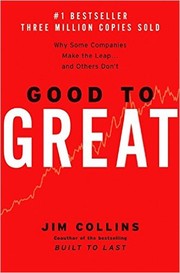
What eleven companies did to turn fifteen ordinary years into fifteen great ones.
“(We invite you to read the chapter devoted to the company in the book “Good to Great”).” — Francois Rochon
Source: Giverny Capital Annual Letter to Partners 2006, page 7
Recommended by: Brian Armstrong, Francois Rochon and 20 others
Good to Great's principles applied to non-profits and the public sector.
Recommended by: Mohnish Pabrai
Where it sits in the reference 3
Topics 3
As an Amazon Associate I earn from qualifying purchases.