Updates

  1. Fund letters lists 118 more letters, each with its own page: 44 weekly commentaries by Jeremy Siegel from 2026, 31 issues of Van Tharp's newsletter from 2018, 23 Pabrai Investment Funds letters from 2021 to Q3 2026, 13 Efficient Frontier essays by William Bernstein, Oakmark's three 3Q 2026 commentaries, two Lindsell Train reports, a John Hussman comment and Third Point's Q3 2026 letter.
  2. 2,027 more books carry a one-line description in the Books table and on their pages; 7,067 of 7,715 have one, every tier 1, 2 and 3 book among them.
  3. Fund letters lists 187 more letters from 19 firms, among them Permanent Equity, Social Capital, Lux Capital, Square Peg, Bestinver, Cobas, Sequoia Fund, Marketfield and EquityCompass; each shows on its investor's page and has a page of its own.
  4. 2,928 more books carry a one-line description in the Books table and on their pages, so every tier 1, 2 and 3 book has one; 5,040 in all.
  5. Every publication on Newsletters has its own page: its writing, its writers, its staff and who recommends it. Investor pages have a Management tab; a company's Experts tab now leaves out its own people, who list under Management. Tabs on a phone move sideways only.
  6. Every fund letter and research paper has its own page: the thesis, the PDF, the companies and books it names, and for 176 letters and 24 papers so far a summary, key insights and quotes with their page.
  7. 99 books that no page listed now sit under their topics in Books, among them Caste, American Prometheus and Pale Blue Dot.
  8. Newsletters lists every newspaper, magazine, investment newsletter, journal and blog the reference holds, 442 in all, with the people who write there. The search box keeps your last 20 searches. You can create an account.
  9. 283 books that fund managers recommend in their letters are on the shelf, each with the letter's own words and page; investor pages have a Recommends tab.
  10. Person, company, investor and show pages link their own accounts on X, Threads, Instagram, LinkedIn, YouTube and Substack: 275 people, 552 companies and organisations, 88 investors and 478 shows.
  11. 716 more book recommendations name their source: the person's own reading list, letter, blog post, speech or interview, or an article that reports it. 232 of them quote the person's own words about the book, on the book card and on the book's page.
  12. Every US-listed company has a page with its SEC filings. Company pages list their experts and their management, past and present. Fund managers sit under Investors. Each show has a page of its episodes, and an episode page names its guests and hosts. Biographies lists groups, then people. Breadcrumbs show where a page sits.
  13. Media lists every podcast episode, video, interview and talk, over 10,000, by person, company, publisher and event; each filter searches its own choices. Books opens on its table, then Browse, then Authors and Recommenders. A filter's count no longer covers its arrow.
  14. A book that no company, country or subject page lists shows its topics under Where it sits in the reference. On a phone, a page's tabs scroll sideways only. Descriptions read the same on every page. See them in the Experts tab lists every expert the page names.
  15. Every podcast episode, video and interview has its own page with a video or audio player and a link to the source. Investor pages show each company's sector and market cap; firms such as Berkshire Hathaway have one page that holds their letters and their company tabs. Letters tabs filter by company and search the theses. Companies filter by Public, Private and Defunct and link each company's website.
  16. Every tab, view and search has its own address, such as /books/table/asset or /letters/companies, so Back works and a link opens the same place. Page addresses no longer end in .html. Fund letters, Investors, Companies and Papers load about a fifth of the data they did.
  17. Fund letters has a Companies tab: every company the letters name, with its market cap, sector, country, and how many letters and investors name it. Investor pages link each investor's website. Lists in table cells end with “… and N more” at every width.
  18. 1,120 more book summaries; descriptions for 373 papers; pages for 137 more companies, each with the fund letters that discuss it; 215 official photographs; search has its own page.
  19. 411 more books have a summary; person pages list 930 more of the books they wrote; 147 people show their official photograph.
  20. Every investor has a page with its letters and the companies they discuss; company pages list the investors whose letters name them.
  21. A Companies section at the top of the rail lists every company the books, experts and fund letters name.
  22. Person pages list letters, writing, profiles and links as sortable tables with filters, and show each person's companies as links; Fund letters show each letter's description in its own column.
  23. Experts show a checked job title and a short description of each person; 30 more people have photographs.
  24. Every company, fund, university and publication the experts work for has a page listing the people there.
  25. Fund letters show each letter's thesis and filter by it; 225 person pages list the essays, columns and newsletter issues the person wrote.
  26. Person pages list every essay and newsletter issue a person wrote, and their own books as a table in List view.
  27. Recommends shows the five largest kinds of book and the rest under More; browse pictures load sooner.
  28. Podcasts and talks link the original episode, filter by Audio and video or Press, and list each publisher once.
  29. Pages are wider, Recommends has List and Grid, and a filter clicked again turns off.
  30. Book cards sit in a ruled grid with Open Library and Goodreads links and each book's one-line note.
  31. Funds is now Investors; each investor's styles are buttons that filter the table.
  32. Podcasts and talks on a person's page filter by year and publisher and show as a list or a grid of pictures.
  33. Quotes show only people's own words: 472 summaries written by list sites are gone.
  34. Country pages open from Browse again, and every link on the shelf lands on a page.
  35. Subject and person pages show their sections as tabs, and each book appears once on a person's page.
  36. Book cards show the quote, who said it and the source; grids show five cards to a row.
  37. On a phone, a menu holds the sections, search, Updates, Feedback and dark mode.
  38. Feedback takes a screenshot of the page with no browser prompt, opens a screenshot full size when you click it, and clears itself once sent.
  39. Book cards are centred, search names the topic each book sits in, and any text cut short shows whole on hover.
  40. Search groups its results by kind: people, companies, geographies, subjects, topics, books, funds, fund letters and papers.
  41. The Books table lists who recommended each book by name, and the browser tab names the section you are in.
  42. Feedback can take a screenshot of the page, or one you paste or choose, and opens in the corner beside Updates.
  43. Each rail button reopens its section where you left it, and Browse, Table and People show on every book and subject page.
  44. Filters grey out choices that hold nothing instead of hiding them, and Books › People filters by authors or recommenders.
  45. Feedback takes a subject line and up to three screenshots.
  46. Biographies are grouped by the person they are about: 41 new pages, from Abraham Lincoln to Lee Kuan Yew.
  47. Sport splits into 23 sports, and Religion into one topic per faith.
  48. Book lists show as cards: the cover, one recommendation quote and every recommender by name.
  49. Seventeen subjects that had two or three pages under different names now have one page each.
  50. Every page lists its Experts as authors and recommenders, with a link to them on the Experts tab.
  51. Economics, Financial history, Financial panics and Accounting are subjects of their own, with one page per financial crisis.
  52. Book, person and subject pages open inside the app, so the tabs stay in view.
  53. 996 more book covers, and photographs or logos for 227 more people and companies.
  54. Books › Browse shows every subject as cards, and the rail holds Fund letters, Papers, Experts, Books and Funds.
  55. Every topic over 150 books splits into narrower topics, each with a page of its own.

Send feedback

What is it?
Screenshots, up to 3 (optional)
or paste one with Ctrl+V

We use your email only to reply to you.

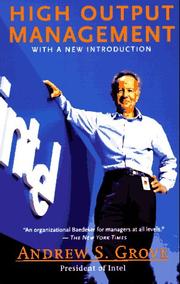
High Output Management

High Output Management

Management as production: a manager's output is the output of the team they lead.

Andrew S. Grove
1983
T1 235 pages · about 3h 55m to read Open LibrarygoodreadsAmazon

Insider: Grove's management system built at Intel; source of OKRs.

Summary

Grove defines a manager's output as the output of the organisation under their supervision plus the output of neighbouring organisations under their influence. Everything in the book follows from that definition. He treats management as a production process, opening with a breakfast factory to establish concepts of limiting step, batch size, work in progress and process, assembly and test operations.

The managerial leverage chapters give the highest-value material. Grove argues that a manager should spend time on activities that affect many people or affect them for a long time, and he ranks activities by that measure. He treats one-on-ones as a high-return activity, recommending that the subordinate sets the agenda and that the meeting lasts at least an hour. He analyses meetings as either process-oriented or mission-oriented and gives rules for both. He argues for dual reporting and hybrid organisations, which he says are unavoidable in any company that needs both functional depth and business focus.

The performance sections cover task-relevant maturity, which determines whether a manager should be structured or delegative with a given person on a given task, and they cover performance review as the single most important form of task-relevant feedback. Grove also describes objectives and key results, which Intel used and which John Doerr later carried to Google.

The book comes from Intel in the 1970s and early 1980s, and some of the examples show it. Manufacturing metaphors run throughout, and the treatment of knowledge work assumes more measurable output than many teams have. Grove's approach to performance ranking has aged less well than his approach to meetings and one-on-ones. The core definitions still hold, and the book remains the most concrete management manual written by a practising CEO.

Key takeaways 8

  1. A manager's output equals the output of their organisation plus the output of neighbouring organisations they influence.
  2. Managerial leverage is the measure that should govern how a manager allocates time, calculated as output produced per hour of managerial activity.
  3. Training your subordinates is among the highest-leverage activities available, and the manager must do it personally rather than delegate it.
  4. One-on-ones should be scheduled regularly, run for at least an hour and have their agenda set by the subordinate rather than the manager.
  5. Meetings are the medium of managerial work and should not be treated as an obstacle to it.
  6. The right management style depends on the subordinate's task-relevant maturity for that particular task, not on their seniority or the manager's preference.
  7. Indicators should come in pairs, because measuring only quantity or only speed will degrade the other dimension.
  8. Dual reporting and hybrid organisations are necessary in any company that needs both functional expertise and business-unit accountability.

Who should read it

Managers at any level who want a concrete operating manual rather than leadership philosophy, particularly those setting up meeting and review structures for the first time.

About Andrew S. Grove

Intel's third employee, later its chief executive and chairman, who ran the company through the shift from memory to microprocessors.

High Output Management defines a manager's output as the output of the organisation beneath and beside them, then supplies the mechanics for raising it: meetings, one-on-ones, indicators, task-relevant maturity, training. Only the Paranoid Survive names the strategic inflection point and shows, through Intel's exit from memory, how a company recognises one and moves.

Who recommended it 27 · 7 direct

“Also read and re-read High Output Management by Andy Grove.”

“And in the talk I was talking about my book, my first book The Hard Thing About Hard Things, and somebody asked me why I wrote it, and I said, "Well, when I was a kid, I read this book High Output Management.”

“Andy Grove has an excellent explanation of this in his classic book High Output Management, where he describes a concept called "Task Relevant Maturity".”

Brad Feldreported
Brian Cheskyreported

“I really admire everything that he did”

Ev Williamsreported
Jensen Huangreported
John Doerrreported
Julie Zhuoreported
Paul Grahamreported
Reid Hoffmanreported
Ron Conwayreported
Ryan Hooverreported
Sam Altmanreported
Tobi Lütkereported

Similar books 6

Chosen by shared topics, the entries that hold them, and the people who recommended both.
Andrew S. Grove · 1996

How to spot a strategic inflection point, when a tenfold force changes a business.

“There's also a number of great books that just tell the narrative of one company, such as The New New Thing, Startup, eBoys, Only the Paranoid Survive, Breaking Windows, but I've left those off the list even though they are very fun to read.” — Andrew Chen

Source: Ten classic books that define tech

Recommended by: Andrew Chen, Charlie Munger and 12 others
Jim Collins · 2001

What eleven companies did to turn fifteen ordinary years into fifteen great ones.

“(We invite you to read the chapter devoted to the company in the book “Good to Great”).” — Francois Rochon

Source: Giverny Capital Annual Letter to Partners 2006, page 7

Recommended by: Brian Armstrong, Francois Rochon and 19 others
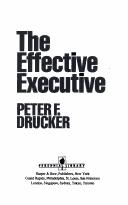
Peter F. Drucker · 1967

Effectiveness is learned practice: manage time, pick priorities, decide well.

“The second is The Effective Executive by Peter Drucker, and the central core of that book is really about it's very easy to mistake effort for effectiveness.” — Drew Houston

Source: The Tim Ferriss Show Transcripts: Drew Houston (#334)

Recommended by: Drew Houston, Ev Williams, Nat Eliason and 5 others
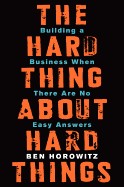
Ben Horowitz · 2014

How to lead a company through layoffs, near-death crises and the decision to sell.

“…books I've recommended, highlighted to death, or forced on friends.” — Andrew Wilkinson

Source: Andrew Wilkinson's Bookshelf, neverenough.com

Recommended by: Andrew Wilkinson, Balaji S. Srinivasan and 34 others
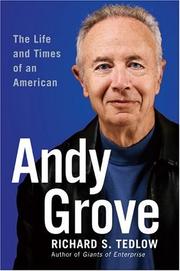
Richard S. Tedlow · 2006

The life of Andy Grove, from Nazi-occupied Hungary to running Intel.

Jocko Willink, Leif Babin · 2015

Combat leadership lessons from the battle of Ramadi, applied to running teams.

Where it sits in the reference 5

Executives
Companies
Business themes
Business themes
Business themes

Topics 2

Business and ManagementLeadership

As an Amazon Associate I earn from qualifying purchases.