
Intel
Microprocessor company whose founders wrote some of the most durable management books in business, alongside a strong outside literature.
SEC CIK 0000050863 · Semiconductors & Related Devices · Incorporated in Delaware
Market cap $273B on 21 Nov 2026
| Daily Journal Annual Meeting 2023 Transcript | At the 2023 Daily Journal meeting Charlie Munger calls Alibaba one of his worst mistakes, says BYD made over $2 billion in cars and is far ahead of Tesla in China, and calls for a crypto ban. | Charlie Munger | Q1 2023 | |
| 1995 Q2 Market Commentary | Bill Miller reports Value Trust rose 14.47% in Q2 1995 and 21.51% for the year to date. | Legg Mason Value Trust | Bill Miller | Q2 1995 |
| Third Point Q3 2024 Investor Letter | Third Point returned 3.9% in Q3 2024, led by private R2 Semiconductor, PG&E and Vistra. | Third Point | Daniel Loeb | Q3 2024 |
| Third Point Q1 2024 Investor Letter | Third Point returned 7.8% in Q1 2024, led by Meta, Vistra, Amazon, Bath & Body Works and Microsoft, while PG&E and DuPont lost money. | Third Point | Daniel Loeb | Q1 2024 |
| Third Point Q4 2021 Investor Letter | Third Point returned -5.3% in Q4 2021 and +22.7% for the year, led by Rivian among the quarter's winners. | Third Point | Daniel Loeb | Q4 2021 |
| Third Point Q2 2021 Investor Letter | Third Point returned +3.7% in Q2 2021 and +15.2% for the first half, with SentinelOne among the top winners. | Third Point | Daniel Loeb | Q2 2021 |
| Third Point Q1 2021 Investor Letter | Third Point returned +11.0% in Q1 2021, led by Upstart Holdings. | Third Point | Daniel Loeb | Q1 2021 |
| Third Point Q4 2020 Investor Letter | Third Point returned +16.1% in Q4 2020 and +20.5% for the year. | Third Point | Daniel Loeb | Q4 2020 |
| Third Point letter to Intel chairman Omar Ishrak | Dan Loeb tells Intel's chairman that Third Point has taken a significant stake and urges the board to fix Intel's lost manufacturing lead, including exploring options for its chip-making. | Third Point | Daniel Loeb | 2020 |
| Bill Nygren Market Commentary | 4Q18 | Bill Nygren notes the gap between Oakmark's businesses, which performed as expected, and their stock prices, which fell in late 2018. | Oakmark Funds | Bill Nygren | Q4 2018 |
| Giverny Capital Annual Letter to Partners 2002 | Giverny's portfolio lost money in 2002 but beat its benchmark by 15%. | Giverny Capital | Francois Rochon | 2002 |
| Giverny Capital Annual Letter to Partners 2001 | François Rochon's 2001 annual report to Giverny's clients, translated from French. | Giverny Capital | Francois Rochon | 2001 |
| Understanding Blockchain Technology: Consensus Protocols, Part 1 and 2 | Van Tharp describes the consensus protocols beyond proof of work (proof of stake, delegated stake, activity, authority, burn, capacity, elapsed time and importance) and the weakness of each. | Van Tharp Institute | Van K. Tharp | Q2 2018 |
| Magnificent 7 Fatigue? Investing in 'the Best of the Rest' | Ibrahim Kanan argues that the earnings gap between the Magnificent 7 and the other 493 S&P 500 stocks is narrowing in 2026, so active investors should pick overlooked large companies such as Intel and industrials serving AI data centres. | BlackRock | BlackRock | Q1 2026 |
| STF Tactical Growth ETF Annual TSR 2026 | Shelton reports that the STF Tactical Growth ETF (TUG) returned 22.24% at NAV in the year to 31 March 2026 against 12.35% for its 60% S&P 500 / 40% Bloomberg US Aggregate blend, fully invested in growth stocks led by Western Digital, Seagate, Micron, Intel and AMD. | Shelton Capital Management | Shelton Capital Management | 2026 |
| STF Tactical Growth & Income ETF Annual TSR 2026 | Shelton reports that the STF Tactical Growth & Income ETF (TUGN) returned 19.80% at NAV in the year to 31 March 2026 against 12.35% for its 60% S&P 500 / 40% Bloomberg US Aggregate blend, fully invested in growth stocks led by Western Digital, Seagate, Micron, Intel and AMD. | Shelton Capital Management | Shelton Capital Management | 2026 |
| The discipline to stay boring | U.S. equity market commentary 2Q 2026 | Bill Nygren explains why the Oakmark Fund was flat in the first half of 2026 while index gains came from high-P/E, AI-driven technology stocks it did not own. | Oakmark Funds | Bill Nygren | Q2 2026 |
| Strong Earnings with AI Boom Offset Oil Fears | Jeremy Siegel argues that a 75% earnings beat rate and AI-driven chip demand let U.S. stocks absorb oil at $90 to $100, as long as oil stays within $5 to $8 of current levels. | Jeremy Siegel | Q2 2026 | |
| Value, not momentum: extracts of 1Q99 report for the Apollo 001 Fund | Claire Barnes reports that the Apollo 001 Fund lost 7% in the first quarter of 1999 while the MSCI Far East ex Japan index rose 10%, and argues that its ordinary shares, on 6.0 times current-year earnings with a 7.0% after-tax yield and 78% of book, offer better long-term value than the market leaders. | Apollo Asia Fund | Apollo Asia Fund | Q1 1999 |
| Lux Q3 2026 Report | Josh Wolfe argues that new instruments expose the anomalies that break paradigms, reports that 24 of the roughly 25 Lux companies that raised in Q3 did so at a median 1.7x step-up, and names six market anomalies, from a 5.36% 10-year yield to debt-funded hyperscaler capex. | Lux Capital | Josh Wolfe | Q3 2026 |
| Vanguard Windsor Fund Annual Report, fiscal year ended October 31, 1995 - Report from the Adviser, signed John B. Neff | John Bogle reports Windsor Fund returned 17.8% in fiscal 1995, a year for blue-chip growth rather than value stocks, and announces Jack Brennan as his successor as CEO. | Vanguard Windsor Fund | John Neff | Q4 1995 |
| Monthly Market Pulse – October 2025 | Christopher Shipley, Daniel Carter and Blake Stanislaw argue that the Fed's September cut was a risk-management move driven by weak hiring, and expect slow cuts toward a neutral rate near 3% that help floating-rate borrowers but do little for housing while the 30-year mortgage rate stays near 6.2%. | Fort Washington Investment Advisors | Fort Washington Investment Advisors | Q4 2025 |
The Nasdaq 100 fell 3.7% in a day, and Intel—a tenth of which is owned by the U.S. government—fell 30%, its worst day since 1974.Show in the letter ›
Lux Q3 2026 Report · Lux Capital · Q3 2026
Intel’s blowout results were especially important because they reinforced the extraordinary demand for chips and showed that the AI trade is broadening beyond the most obvious winners.Show in the letter ›
Strong Earnings with AI Boom Offset Oil Fears · Jeremy Siegel · Q2 2026
He cites Intel as an example.Show at the source ↗
Magnificent 7 Fatigue? Investing in 'the Best of the Rest' · BlackRock · Q1 2026
These equities were: Western Digital Corp., Seagate Technology, Micron Technology, Intel Corp, Advanced Micro Devices which all outpaced NVIDIA Corp.Show at the source ↗
STF Tactical Growth & Income ETF Annual TSR 2026 · Shelton Capital Management · page 1 · 2026
These equities were: Western Digital Corp., Seagate Technology, Micron Technology, Intel Corp, and Advanced Micro Devices which all outpaced NVIDIA Corp.Show at the source ↗
STF Tactical Growth ETF Annual TSR 2026 · Shelton Capital Management · page 1 · 2026
Instead, most conversations quickly turn to why we didn’t buy companies such as Dell, Micron or Intel that are now widely viewed as the obvious beneficiaries of AI.Show in the letter ›
The discipline to stay boring | U.S. equity market commentary 2Q 2026 · Oakmark Funds · Q2 2026
Nvidia’s investments in Intel and OpenAI, along with Oracle’s 25% monthly gain on the back of a strong cloud pipeline, added confidence in the durability of AI infrastructure spending.Show in the letter ›
Monthly Market Pulse – October 2025 · Fort Washington Investment Advisors · Q4 2025
Intel, which developed PoET, says that this algorithm scales to thousands of nodes and will run efficiently on any Intel processor that supports SGX.Show in the letter ›
Understanding Blockchain Technology: Consensus Protocols, Part 1 and 2 · Van Tharp Institute · Q2 2018
The primary problem with this protocol is it requires you to put your trust in Intel.Show in the letter ›
Understanding Blockchain Technology: Consensus Protocols, Part 1 and 2 · Van Tharp Institute · Q2 2018
Such old-fashioned management integrity and shareholder rewards are of course deeply unfashionable, and contrast starkly with the US technology companies which make most of their profits from financial engineering (eg writing put options to gamble on the non-decline of their own inflated share prices - Intel), have never paid a dividend (Microsoft), and buy back their own stocks at extraordinary multiples of book value, inflated "earnings", and sales - but somehow the share capital never shrinks very much, because of all the employee options (Dell).Show at the source ↗
Value, not momentum: extracts of 1Q99 report for the Apollo 001 Fund · Apollo Asia Fund · Q1 1999
Interestingly, while hardly market-weighted, we did have a 5.0% representation in technology starting out the fiscal year and benefited accordingly with particularly participative results in Seagate Technology and Intel.Show in the letter ›
Vanguard Windsor Fund Annual Report, fiscal year ended October 31, 1995 - Report from the Adviser, signed John B. Neff · Vanguard Windsor Fund · Q4 1995
 Daniel Loebdiscussed it in 7 letters; named it in 1 interview“Desde Yahoo y Sony hasta Intel, Daniel Loeb se convirtió en uno de los inversionistas activistas más influyentes de su generación.” — 58. Daniel Loeb: el inversionista más temido de Wall Street. (El Arte de Invertir, 2026)
 Guido Appenzellernamed it in 6 interviews“a16z's Raghu Raghuram and Guido Appenzeller sit down with Playground Global General Partner and former Intel CEO Pat Gelsinger to discuss the next wave of semiconductor innovation and the physical constraints shaping the AI buildout.” — Chips, Memory, and Power | Pat Gelsinger (The a16z Show, 2026)
 Bill Nygrendiscussed it in 2 letters
 Francois Rochondiscussed it in 2 letters
 Charlie Mungerdiscussed it in 1 letter
 Bill Millerdiscussed it in 1 letter
 Geoffrey A. Moorenamed it in 2 interviews“These Fools welcome guest Geoffrey Moore, world-renowned business strategist famous for books such as “Crossing the Chasm” and consultant with leading enterprises such as Salesforce, Intel, and Microsoft.” — #49: Geoffrey Moore: Pattern Recognition (Fools and Sages, 2025)
 Jeremy Siegeldiscussed it in 1 letter
 John Doerrnamed it in 2 interviews“Heilemann and Doerr discuss the sweeping agenda laid out in Doerr's new book Speed & Scale: An Action Plan for Solving Our Climate Crisis Now and his takeaways from the UN climate summit COP26 taking place in Glasgow, Scotland; the evolution of Doerr’s career from engineer at Intel to one of prime movers behind the PC boom of the 1980s and the Internet explosion in the Valley from the mid-1990s through today; his relationships with high-tech titans such as Bill Gates, Andy Grove, and Steve Jobs; how Al Gore's An Inconvenient Truth sent his career in a new direction; the critical role that the private sector can and must play in tackling climate change; and why Doerr believes it’s far cheaper to save the planet than to destroy it.” — John Doerr (Impolitic with John Heilemann, 2021)
 John Neffdiscussed it in 1 letter
 Van K. Tharpdiscussed it in 1 letter
 Josh Wolfediscussed it in 1 letter
Show all 35
 Kanu Gulatinamed it in 2 interviews“An NVIDIA graduate fellow during her PhD, she went from Intel's research labs to Harvard Business School, a cold email to Vinod Khosla and an early role at the GPU database startup now called Heavy.ai , before joining Khosla Ventures in 2017.” — Fault Lines #23 - Kanu Gulati - Can AI prove it's right? Inside Khosla Ventures' bets beyond LLMs (Fault Lines, 2026)
 Noah Kagannamed it in 2 interviews“His journey in the tech industry began with roles at Intel, Facebook (where he was the 30th employee), and Mint.com, but it was his entrepreneurial ventures that truly defined his career.” — 174: Million Dollar Weekend with Noah Kagan (The Lifestyle Investor - Investing, Passive Income, Wealth, 2024)
 Sarah Wangnamed it in 2 interviews“Dylan Patel on the AI Chip Race - NVIDIA, Intel & the US Government” (AI + a16z, 2026)
 Shahin Farshchinamed it in 2 interviews“He’s the guru everyone reads (and listens to), covering the intricacies of chips and compute for a readership of hundreds of thousands of subscribers.Joining host Danny Crichton as well as Lux’s Shahin Farshchi and Michelle Fang , the quartet discuss the questions above plus how Mark Zuckerberg is transitioning Meta Reality Labs, the hopes and dreams of new chip startups, the future of AI workloads, and finally, Intel after the U.S.” — How compute and AI will create next-gen superapps (Riskgaming, 2025)
 Sebastian Mallabynamed it in 1 interview“Andy Grove, Intel: John [Doerr], venture capital, that’s not a real job.” — EUVC #48 Sebastian Mallaby, The Power Law (EUVC, 2022)
 Mohnish Pabrainamed it in 1 article
 David Heinemeier Hanssonnamed it in 1 article
 Bob Swannamed it in 1 interview“In this episode of the AI Revolution (AIR) series , Bob Swan, a16z Operating Partner and former CEO of Intel, sits down with Lisa Su, CEO of AMD, to discuss how her leadership has propelled AMD’s growth and positioned the company at the forefront of AI innovation.” — Building a Thriving AI Ecosystem with Lisa Su (The a16z Show, 2024)
 Chelsea Krostnamed it in 1 interview“Chelsea sat on the board of Cosmopolitan Magazine as a Millennial Board Member and has been a brand ambassador for many notable and diverse brands such as Intel, MasterCard, IBM, Suave, and Skype to name a few.” — Episode 8: Chelsea Krost Chelsea Krost on importance of personal branding, professional growth and creating your brand story (Methods to Greatness, 2022)
 David Weidennamed it in 1 interview“Ben Horowitz discusses the leadership styles of Intel’s Andy Grove and Apple’s Bill Campbell, how Okta won its market with culture, and how to look for and hire the talent you don’t have in an interview with David Weiden, founding partner at Khosla Ventures, at the Khosla Ventures CEO Summit.” — Ben Horowitz on How the Best Leaders Build Culture (a16z Live, 2022)
 Erik Torenbergnamed it in 1 interview“Dylan Patel: GPT-5, NVIDIA, Intel, Meta, Apple” (The a16z Show, 2025)
 Erin Price-Wrightnamed it in 1 interview“Dylan Patel: GPT-5, NVIDIA, Intel, Meta, Apple” (The a16z Show, 2025)
 Hadley Peer Marshallnamed it in 1 interview“Given Brookfield manages some of the asset class’s biggest strategies across core equity, pure-play infrastructure debt and energy transition, scale is a big part of the discussion, which also covers Brookfield’s corporate tie-ups with the likes of Microsoft and Intel, its preconditions for launching new strategies, as well as the opportunity in the ever-expanding infrastructure debt market.” — Brookfield: ‘We can play in scale, even on day one’ (The Infrastructure Investor Podcast, 2025)
 James Joaquinnamed it in 1 interview“Highlights include: Master of the Senate by Robert Caro, recommended by Casber Wang of Sapphire Ventures for its deep exploration of power and politics Traffic by Ben Smith, cited by Joe Alalou of Daring Ventures as essential reading on how the social web shaped our modern world The Sentence by Louise Erdrich, praised by Initiate Ventures’ Jessica Owens for its emotional depth and powerful storytelling Read Write Own by Chris Dixon, a pick from Bobby Franklin of the NVCA to better understand the potential of blockchain beyond crypto Even Cowgirls Get the Blues by Tom Robbins, a personal favorite of Wharton’s Lori Rosenkopf for its message on turning perceived flaws into strengths Mindset by Carol Dweck, currently on Larry Gadea’s reading list The Foundation Series by Isaac Asimov, a longtime source of inspiration for Imvaria's Joshua Reicher High Output Management by Intel legend Andy Grove, recommended by Avery Pennarun of Tailscale Tomorrow, and Tomorrow, and Tomorrow by Gabrielle Zevin, the book Amit Kumar of Accel is gifting to friends Prediction Machines by Ajay Agrawal, a favorite of Terry Doyle from TELUS Ventures for making AI approachable—even for his 89-year-old mother And anything by Isaac Asimov…” — 2025 Summer VC Reading List (Sand Hill Road, 2025)
 Jeff Atwoodnamed it in 1 article
 John Maedanamed it in 1 article
 Konstantine Buhlernamed it in 1 interview“Recorded at Playground Global in Palo Alto and hosted by Peter Barrett, General Partner, this Sourcery conversation features: - Naveen Rao — CEO & Co-Founder, Unconventional AI (founder of Nervana, acquired by Intel for $400M+, and MosaicML, acquired by Databricks for $1.3B; former Chief AI Officer at Databricks) - Konstantine Buhler — Partner at Sequoia Capital - Molly O’Shea — Founder of Sourcery (Moderator) Unconventional AI is building a new computational substrate designed for biology-scale efficiency — running neural networks directly on the nonlinear physics of silicon instead of simulating them through traditional digital abstractions.As AI demand accelerates, computation is approaching a collision with global energy supply.” — $4.5B Brain-Inspired AI Chip Company (Sourcery, 2026)
 Martin Casadonamed it in 1 interview“How does/ doesn’t it fit into other patterns of tech succession -- like recent moves at Netflix (where Chief Content Officer Ted Sarandos was named co-CEO alongside Reed Hastings ); Microsoft (Satya Nadella); Intel (Pat Geisinger); Cisco and more?” — Beyond Bezos: Amazon, Cloud, and CEO Transitions (16 Minutes News by a16z, 2021)
 Matt Bornsteinnamed it in 1 interview“Previously, Naveen led AI at Databricks and founded two successful companies: Mosaic (cloud computing) and Nervana (AI accelerators, acquired by Intel).” — The 80-Year Bet: Why Naveen Rao Is Rebuilding the Computer from Scratch (The a16z Show, 2025)
 Raghu Raghuramnamed it in 1 interview“a16z's Raghu Raghuram and Guido Appenzeller sit down with Playground Global General Partner and former Intel CEO Pat Gelsinger to discuss the next wave of semiconductor innovation and the physical constraints shaping the AI buildout.” — Chips, Memory, and Power | Pat Gelsinger (The a16z Show, 2026)
 Sam Altmannamed it in 1 interview“Plus, Intel is still in focus on Capitol Hill and Wall Street .” — The Sam Altman Interview 8/8/25 (Squawk Pod, 2025)
| Fault Lines #23 - Kanu Gulati - Can AI prove it's right? Inside Khosla Ventures' bets beyond LLMs | Kanu Gulati | Fault Lines | 2026-11-12 | In this episode of Fault Lines, Augustin Sayer sits down with Kanu Gulati, partner at Khosla Ventures, who was speeding up chip design software on NVIDIA GPUs years before the AI wave. An NVIDIA graduate fellow during her PhD, she went from Intel's research labs to Harvard Business School, a cold email to Vinod Khosla and an early role at the GPU database startup now called Heavy.ai , before joining Khosla Ventures in 2017. They talk about how Khosla invests by theme and treats every startup as a sequence of risks to retire, and why Kanu believes in large language models but backs the companies fixing their limits: formal methods that make AI provably correct, and the data recipes behind robotics foundation models. She also shares how she judges deep tech founders, what she sees in European and Indian startups, from Nomagic's warehouse robots in Warsaw to Sarvam's sovereign AI and ten-minute grocery deliveries, why cold emails still work, and why robots will go where human labor can't. | |
| Chips, Memory, and Power | Pat Gelsinger | Guido Appenzeller, Raghu Raghuram | The a16z Show | 2026-10-09 | a16z's Raghu Raghuram and Guido Appenzeller sit down with Playground Global General Partner and former Intel CEO Pat Gelsinger to discuss the next wave of semiconductor innovation and the physical constraints shaping the AI buildout. Drawing on his experience designing Intel's 386 and 486 processors, Pat explains how AI could transform chip design, but also why faster design alone won't solve the industry's biggest problems. They examine the bottlenecks in manufacturing, memory bandwidth, advanced packaging, and power, and why today's explosion of specialized AI chips may eventually consolidate around a smaller number of architectures. They also discuss the potential for new memory technologies, the shift from copper to optical networking, and why energy capacity could become a major constraint on AI growth. Finally, they revisit Pat's VMware years to ask what virtualization might look like when infrastructure is built for agents rather than humans. | |
| 58. Daniel Loeb: el inversionista más temido de Wall Street. | Daniel Loeb | El Arte de Invertir | 2026-07-15 | 44 min | Durante más de dos décadas, Daniel Loeb construyó una reputación única en Wall Street. No solo por sus rendimientos, sino por su capacidad para influir en empresas, reemplazar directivos y presionar cambios que podían transformar por completo el rumbo de una compañía. Desde Yahoo y Sony hasta Intel, Daniel Loeb se convirtió en uno de los inversionistas activistas más influyentes de su generación. 👉 Si quieres invertir con una estrategia bien construida, conoce GBM Advisory haciendo clic aquí. En este episodio de El Arte de Invertir analizamos la historia de Daniel Loeb, fundador de Third Point, y uno de los inversionistas activistas más exitosos de Wall Street. En este episodio analizamos: • Cómo fundó Third Point con 3.3 millones de dólares. • La historia detrás de Mr. Pink. • Las famosas cartas que hicieron temblar a Wall Street. • El activismo financiero como estrategia de inversión. • Los casos de Yahoo, Sony, Sotheby's e Intel. • La evolución de Loeb desde deuda hasta tecnología. • Las lecciones que dejó FTX. • Su visión sobre inteligencia artificial y el inversionista moderno. También hablamos de hedge funds, activismo financiero, gobierno corporativo, inteligencia artificial, venture capital, tecnología, Yahoo, Sony, Intel y las mejores ideas de inversión de Daniel Loeb. 📅 Episodio grabado en 2026. 💬 Las opiniones expresadas en este podcast son exclusivamente a título personal y no representan la posición de ninguna empresa o institución relacionada. |
| $4.5B Brain-Inspired AI Chip Company | Konstantine Buhler | Sourcery | 2026-02-07 | Unconventional AI recently emerged from stealth with $475M in seed funding at a $4.5B valuation, led by Andreessen Horowitz and Lightspeed, with participation from Sequoia, Lux Capital, DCVC, Future Ventures, Jeff Bezos, Playground Global, and others. Naveen is also personally investing $10M into the company. Recorded at Playground Global in Palo Alto and hosted by Peter Barrett, General Partner, this Sourcery conversation features: - Naveen Rao — CEO & Co-Founder, Unconventional AI (founder of Nervana, acquired by Intel for $400M+, and MosaicML, acquired by Databricks for $1.3B; former Chief AI Officer at Databricks) - Konstantine Buhler — Partner at Sequoia Capital - Molly O’Shea — Founder of Sourcery (Moderator) Unconventional AI is building a new computational substrate designed for biology-scale efficiency — running neural networks directly on the nonlinear physics of silicon instead of simulating them through traditional digital abstractions.As AI demand accelerates, computation is approaching a collision with global energy supply. Unconventional’s thesis: achieving step-function efficiency gains requires rethinking compute itself. | |
| Dylan Patel on the AI Chip Race - NVIDIA, Intel & the US Government | Guido Appenzeller, Sarah Wang | AI + a16z | 2026-01-06 | Nvidia’s $5 billion investment in Intel is one of the biggest surprises in semiconductors in years. Two longtime rivals are now teaming up, and the ripple effects could reshape AI, cloud, and the global chip race. To make sense of it all, Erik Torenberg is joined by Dylan Patel, chief analyst at SemiAnalysis, joins Sarah Wang, general partner at a16z, and Guido Appenzeller, a16z partner and former CTO of Intel’s Data Center and AI business unit. Together, they dig into what the deal means for Nvidia, Intel, AMD, ARM, and Huawei; the state of US-China tech bans; Nvidia’s moat and Jensen Huang’s leadership; and the future of GPUs, mega data centers, and AI infrastructure. Resources: Find Dylan on X: https://x.com/dylan522p Find Sarah on X: https://x.com/sarahdingwang Find Guido on X: https://x.com/appenz Learn more about SemiAnalysis: https://semianalysis.com/dylan-patel/ Check out everything a16z is doing with artificial intelligence here , including articles, projects, and more podcasts. Hosted by Simplecast, an AdsWizz company. See pcm.adswizz.com for information about our collection and use of personal data for advertising. | |
| The 80-Year Bet: Why Naveen Rao Is Rebuilding the Computer from Scratch | Matt Bornstein | The a16z Show | 2025-12-08 | Naveen Rao is cofounder and CEO of Unconventional AI, an AI chip startup building analog computing systems designed specifically for intelligence. Previously, Naveen led AI at Databricks and founded two successful companies: Mosaic (cloud computing) and Nervana (AI accelerators, acquired by Intel). In this episode, a16z’s Matt Bornstein sits down with Naveen at NeurIPS to discuss why 80 years of digital computing may be the wrong substrate for AI, how the brain runs on 20 watts while data centers consume 4% of the US energy grid, the physics of causality and what it might mean for AGI, and why now is the moment to take this unconventional bet. Stay Updated: If you enjoyed this episode, please be sure to like, subscribe, and share with your friends. Follow Naveen on X: https://x.com/NaveenGRao Follow Matt on X: https://x.com/BornsteinMatt Follow a16z on X: https://twitter.com/a16z Follow a16z on LinkedIn:https://www.linkedin.com/company/a16z Follow the a16z Podcast on Spotify: https://open.spotify.com/show/5bC65RDvs3oxnLyqqvkUYX Follow the a16z Podcast on Apple Podcasts: https://podcasts.apple.com/us/podcast/a16z-podcast/id842818711 Please note that the content here is for informational purposes only; should NOT be taken as legal, business, tax, or investment advice or be used to evaluate any investment or security; and is not directed at any investors or potential investors in any a16z fund. a16z and its affiliates may maintain investments in the companies discussed. | |
| Dylan Patel on the AI Chip Race - NVIDIA, Intel & the US Government vs. China | Guido Appenzeller, Sarah Wang | The a16z Show | 2025-09-22 | Nvidia’s $5 billion investment in Intel is one of the biggest surprises in semiconductors in years. Two longtime rivals are now teaming up, and the ripple effects could reshape AI, cloud, and the global chip race. To make sense of it all, Erik Torenberg is joined by Dylan Patel, chief analyst at SemiAnalysis, joins Sarah Wang, general partner at a16z, and Guido Appenzeller, a16z partner and former CTO of Intel’s Data Center and AI business unit. Together, they dig into what the deal means for Nvidia, Intel, AMD, ARM, and Huawei; the state of US-China tech bans; Nvidia’s moat and Jensen Huang’s leadership; and the future of GPUs, mega data centers, and AI infrastructure. Resources: Find Dylan on X: https://x.com/dylan522p Find Sarah on X: https://x.com/sarahdingwang Find Guido on X: https://x.com/appenz Learn more about SemiAnalysis: https://semianalysis.com/dylan-patel/ Stay Updated: If you enjoyed this episode, be sure to like, subscribe, and share with your friends! | |
| How compute and AI will create next-gen superapps | Shahin Farshchi | Riskgaming | 2025-09-10 | The launch of OpenAI’s GPT-5 has ushered in a panoply of views on the future of AGI and end-user applications. Does the platform’s aggressive router presage a future of lobotomized AI responses driven more by compute efficiency than quality? Will new chip models be able to make up the difference? And how will OpenAI, which recently hired Fidji Simo from Instacart to become CEO of Applications, expand its revenue beyond API calls and consumer subscriptions?These are huge questions which will ricochet throughout the tech economy. Thankfully, we have a veteran hand this week to go over it with us in the form of Dylan Patel , founder, CEO, and chief analyst of Semianalysis . He’s the guru everyone reads (and listens to), covering the intricacies of chips and compute for a readership of hundreds of thousands of subscribers.Joining host Danny Crichton as well as Lux’s Shahin Farshchi and Michelle Fang , the quartet discuss the questions above plus how Mark Zuckerberg is transitioning Meta Reality Labs, the hopes and dreams of new chip startups, the future of AI workloads, and finally, Intel after the U.S. government’s purchase of 10% of its shares. | |
| Dylan Patel: GPT-5, NVIDIA, Intel, Meta, Apple | Erik Torenberg, Erin Price-Wright, Guido Appenzeller | The a16z Show | 2025-08-18 | The AI hardware race is heating up, and NVIDIA is still far ahead. What will it take to close the gap? In this episode, Dylan Patel (Founder & CEO, SemiAnalysis) joins Erin Price-Wright (General Partner, a16z), Guido Appenzeller (Partner, a16z), and host Erik Torenberg to break down the state of AI chips, data centers, and infrastructure strategy. We discuss: Why simply copying NVIDIA won’t work, and what it takes to beat them How custom silicon from Google, Amazon, and Meta could reshape the market The economics of AI model launches and the shift toward cost efficiency Infrastructure bottlenecks: power, cooling, and the global supply chain The rise of AI silicon startups and the challenges they face Export controls, China’s AI ambitions, and geopolitics in the chip race Big tech’s next moves: advice for leaders like Jensen Huang, Sundar Pichai, Mark Zuckerberg, and Elon Musk Resources: Find Dylan on X: https://x.com/dylan522p Find Erin on X: https://x.com/espricewright Find Guido on X: https://x.com/appenz Learn more about SemiAnalysis: https://semianalysis.com/dylan-patel/ Stay Updated: Let us know what you think: https://ratethispodcast.com/a16z Find a16z on Twitter: https://twitter.com/a16z Find a16z on LinkedIn: https://www.linkedin.com/company/a16z Subscribe on your favorite podcast app: https://a16z.simplecast.com/ Follow our host: https://x.com/eriktorenberg Please note that the content here is for informational purposes only; should NOT be taken as legal, business… | |
| The Sam Altman Interview 8/8/25 | Sam Altman | Squawk Pod | 2025-08-08 | 39 min | OpenAI CEO Sam Altman sits down for an extended interview after the ChatGPT-5 launch this week. In a wide-ranging conversation, Altman discusses the impact his AI is having on human agency and hints at the world he envisions, as AI becomes more integrated into every aspect of society. He explains the expensive bet he’s making on Silicon Valley’s top AI talent, as well as his decision to keep pushing innovation–before focusing on his OpenAI’s profitability. Plus, Intel is still in focus on Capitol Hill and Wall Street . Sam Altman - 19:23 In this episode: Sam Altman, @sama Joe Kernen, @JoeSquawk Andrew Ross Sorkin, @andrewrsorkin Katie Kramer, @Kramer_Katie |
| 2025 Summer VC Reading List | James Joaquin | Sand Hill Road | 2025-06-26 | It's our annual tradition—venture capitalists and startup founders share the books that shaped them. From sci-fi and civil rights to artificial intelligence and management, this year's reading list offers insight into the minds of Silicon Valley’s most thoughtful leaders. Highlights include: Master of the Senate by Robert Caro, recommended by Casber Wang of Sapphire Ventures for its deep exploration of power and politics Traffic by Ben Smith, cited by Joe Alalou of Daring Ventures as essential reading on how the social web shaped our modern world The Sentence by Louise Erdrich, praised by Initiate Ventures’ Jessica Owens for its emotional depth and powerful storytelling Read Write Own by Chris Dixon, a pick from Bobby Franklin of the NVCA to better understand the potential of blockchain beyond crypto Even Cowgirls Get the Blues by Tom Robbins, a personal favorite of Wharton’s Lori Rosenkopf for its message on turning perceived flaws into strengths Mindset by Carol Dweck, currently on Larry Gadea’s reading list The Foundation Series by Isaac Asimov, a longtime source of inspiration for Imvaria's Joshua Reicher High Output Management by Intel legend Andy Grove, recommended by Avery Pennarun of Tailscale Tomorrow, and Tomorrow, and Tomorrow by Gabrielle Zevin, the book Amit Kumar of Accel is gifting to friends Prediction Machines by Ajay Agrawal, a favorite of Terry Doyle from TELUS Ventures for making AI approachable—even for his 89-year-old mother And anything by Isaac Asimov… | |
| #49: Geoffrey Moore: Pattern Recognition | Geoffrey A. Moore | Fools and Sages | 2025-05-13 | 1:43 | These Fools welcome guest Geoffrey Moore, world-renowned business strategist famous for books such as “Crossing the Chasm” and consultant with leading enterprises such as Salesforce, Intel, and Microsoft. Geoff introduces “The Infinite Staircase,” his proposal for a metaphysics that provides a secular framework for ethics. He and these Fools explore the human experience and how we develop in our search for meaning. Geoff is a treasure, as is his life’s work, and it was an honor to host him. Enjoy! |
| Brookfield: ‘We can play in scale, even on day one’ | Hadley Peer Marshall | The Infrastructure Investor Podcast | 2025-01-06 | In this episode, Infrastructure Investor senior editor Bruno Alves sits down with Hadley Peer Marshall, Brookfield Asset Management ’s chief financial officer and co-head of infrastructure debt and structured solutions. Given Brookfield manages some of the asset class’s biggest strategies across core equity, pure-play infrastructure debt and energy transition, scale is a big part of the discussion, which also covers Brookfield’s corporate tie-ups with the likes of Microsoft and Intel, its preconditions for launching new strategies, as well as the opportunity in the ever-expanding infrastructure debt market. | |
| Building a Thriving AI Ecosystem with Lisa Su | Bob Swan | The a16z Show | 2024-10-17 | Lisa Su has transformed AMD into a global leader in AI and high-performance computing. In this episode of the AI Revolution (AIR) series , Bob Swan, a16z Operating Partner and former CEO of Intel, sits down with Lisa Su, CEO of AMD, to discuss how her leadership has propelled AMD’s growth and positioned the company at the forefront of AI innovation. They explore AMD’s pivotal role in democratizing the benefits of gen AI, the evolution of AI computing, and the importance of open ecosystems and partnerships in driving technological breakthroughs. Resources: Find Lisa on X: https://x.com/lisasu Find Bob on X: https://x.com/bobswan Stay Updated: Let us know what you think: https://ratethispodcast.com/a16z Find a16z on Twitter: https://twitter.com/a16z Find a16z on LinkedIn: https://www.linkedin.com/company/a16z Subscribe on your favorite podcast app: https://a16z.simplecast.com/ Follow our host: https://twitter.com/stephsmithio Please note that the content here is for informational purposes only; should NOT be taken as legal, business, tax, or investment advice or be used to evaluate any investment or security; and is not directed at any investors or potential investors in any a16z fund. a16z and its affiliates may maintain investments in the companies discussed. For more details please see a16z.com/disclosures. | |
| Scoping the Enterprise LLM Market | Matt Bornstein | AI + a16z | 2024-04-12 | Naveen Rao, vice president of generative AI at Databricks, joins a16z's Matt Bornstein and Derrick Harris to discuss enterprise usage of LLMs and generative AI. Naveen is particularly knowledgeable about the space, having spent years building AI chips first at Qualcomm and then as the founder of AI chip startup Nervana Systems back in 2014. Intel acquired Nervana in 2016. After a stint at Intel, Rao re-emerged with MosaicML in 2021. This time, he focused on the software side of things, helping customers train their own LLMs, and also fine-tune foundation models, on top of an optimized tech stack. Databricks acquired Mosaic in July of 2023. This discussion covers the gamut of generative AI topics — from basic theory to specialized chips — to although we focus on how the enterprise LLM market is shaping up. Naveen also shares his thoughts on why he prefers finally being part of the technology in-crowd, even if it means he can’t escape talking about AI outside of work. More information: LLMs at Databricks Mosaic Research More AI content from a16z Follow everyone on X: Naveen Rao Matt Bornstein Derrick Harris Check out everything a16z is doing with artificial intelligence here , including articles, projects, and more podcasts. Hosted by Simplecast, an AdsWizz company. See pcm.adswizz.com for information about our collection and use of personal data for advertising. | |
| Future Building: Investment Insights with Lux Capital's Shahin Farshchi | Shahin Farshchi | Venture with Grace | 2024-03-20 | Inspired by Knight Rider and Star Trek, Shahin grew up with a passion to endow superpowers to humanity through feats of engineering. He learned BASIC on an IBM PC XT clone he built at his aunt’s computer store and used to dial into Bulletin Board Systems when he was in the 4th grade. He learned about engines by taking apart an Alfa Romeo at his Uncle’s repair shop a few years later. He aspired to design microchips, software, and systems that could someday amount to the fictional K.I.T.T., and build warp drives that could propel humanity to far corners of the galaxy. Shahin has had the privilege of partnering with amazing founding teams for over two decades. After working for several software startups, he built his first startup in 2004 building upon his PhD research designing chips, systems, and software to capture and interpret brain signals. He later had the pleasure of meeting Lux’s founding team, who invited him to partner with them in 2006, where he has cofounded and led Lux’s investments into companies that have gone on to become publicly traded (e.g., NYSE:AEVA and NYSE:PL), and acquired by the likes of Intel (Nervana), Amazon (Zoox), Silicon Laboratories (Silicon Clocks), and Lattice Semiconductor (SiBeam). Topics: - Building and Scaling Deep Tech Startups: Challenges and Opportunities - Collaborating with Founders to Drive Innovation in Complex Technologies - Exploring the Influence of AI and Robotics #VentureCapital #AI #Robotics #DeepTech #Innovation | |
| 174: Million Dollar Weekend with Noah Kagan | Noah Kagan | The Lifestyle Investor - Investing, Passive Income, Wealth | 2024-02-22 | 41 min | Today, I’m talking with Noah Kagan. Noah’s an entrepreneur, author, and the founder and CEO of AppSumo. His journey in the tech industry began with roles at Intel, Facebook (where he was the 30th employee), and Mint.com, but it was his entrepreneurial ventures that truly defined his career. Despite some initial setbacks and ventures that didn't pan out, Noah's persistence led to the creation of AppSumo in 2010, aiming to democratize access to software for entrepreneurs. Today, he's not just the guy behind AppSumo, but also an influential figure in the startup community, sharing his knowledge through his podcast, YouTube channel, and the OKdork blog. In this episode, Noah shares insights from his new book, Million Dollar Weekend: The Surprisingly Simple Way to Launch a 7-Figure Business in 48 Hours – and provides a step-by-step guide for anyone looking to test the waters with their idea. Noah’s big on that first step - which is almost always the most difficult one, yet the most rewarding. He dives into practical tips on how to find your first customer and why talent is not required to be a successful entrepreneur. Instead, it’s about rolling up your sleeves, learning from bumps along the way, and getting better as you go. In this episode, you’ll learn: ✅ Why playing it safe and is riskier than you think. ✅ Noah’s inspiring journey from being fired from Facebook and Mint.com to building one of the top software marketplaces in the world. |
| Khosla Ventures: AI, Robotics, Deep-Tech Investing | Kanu Gulati | Wharton Tech Toks | 2024-01-26 | "We don't always need an AI person [to] come up with a new transformer-like model, but we do need people who have a good intuition on understanding where these models do well and where these models can fail." In this episode, Cynthia and Leon interviewed Dr. Kanu Gulati, partner at Khosla Ventures. Kanu started her career as a research scientist at Intel, was a founding engineer at a number of early start-ups, and has since been investing at the forefront of AI/ML applications, robotics and hardware acceleration. In this episode, we talked about how Khosla Ventures became one of the earliest backers of OpenAI, Kanu's investment thesis in AI and Robotics, and what traits she looks for in founders. Whether you're an aspiring entrepreneur, an investor, or just intrigued by the rapid advancements in AI, tune into this episode to learn more! | |
| Harnessing a new superpower: Chris Kindt speaks to Guido Appenzeller Part 2 | Guido Appenzeller | Orbit - An Hg software leadership podcast | 2023-10-02 | After a year when the sudden leap forward of Gen AI and LLMs took almost everyone by surprise, it’s a good time to ignore the hype, take a step back and look at what we have. Guido Appenzeller is a special advisor to a16z, a former CTO at Intel and VM Ware and a leading voice in the current wave of software and technology. In part two of our conversation with Guido, we look at the ways the new generation of AI applications will effect the business world. How do you best capture the value of this wave, how to prepare for it and how to enable your teams to experiment from the bottom up. | |
| LLM AI, the fourth pillar of software: Chris Kindt speaks to Guido Appenzeller Part 1 | Guido Appenzeller | Orbit - An Hg software leadership podcast | 2023-10-02 | After a year when the sudden leap forward of Gen AI and LLMs took almost everyone by surprise, it’s a good time to ignore the hype, take a step back and look at what we have. Guido Appenzeller is a special advisor to a16z, a former CTO at Intel and VM Ware and a leading voice in the current wave of software and technology. In part one of our conversation with Guido, we discuss where AI fits into the existing software universe, what phase 2 might look like, the potential limitations – regulatory and infrastructural - and what it means for developers when you have an additional fundamental system building block with which to work. | |
| Ben Horowitz on How the Best Leaders Build Culture | David Weiden | a16z Live | 2022-08-19 | Ben Horowitz discusses the leadership styles of Intel’s Andy Grove and Apple’s Bill Campbell, how Okta won its market with culture, and how to look for and hire the talent you don’t have in an interview with David Weiden, founding partner at Khosla Ventures, at the Khosla Ventures CEO Summit. Read a transcript of the conversation here. 0:40: The management legacy of Intel’s Andy Grove 4:26: Why everyone remembers Bill Campbell 7:35: How culture gave Okta the competitive edge 12:15: Finding the talent you don’t have 16:07: Building a resilient company culture Read a transcript of this conversation here . | |
| Writing Tips for The Age of Internet (w/ David Perell) | David Perell | Noah Kagan Presents | 2022-02-25 | 40 min | David is a writer and educator, and he likes playing golf. His online course, Write of Passage, has been taken by more than 500 students from companies like Intel, Google, and Twitter. He also hosts the North Start podcast where he interviews high-achievers such as Seth Godin, Ryan Holiday, and Tyler Cowen. Full show notes at: https://okdork.com/podcast/237 Use this link to get 10% off at checkout on AppSumo: https://appsumo.com/?coupon=noah10&code=noah10 |
| EUVC #48 Sebastian Mallaby, The Power Law | Sebastian Mallaby | EUVC | 2022-02-08 | 44 min | The Power Law by Sebastian Mallaby has been capturing headlines in the VC community lately. We sat down with him at The European VC to dive into his book and shed light on some of the stand-out quotes and stories from the book. If you love VC, you’ll love this book (and hopefully also our interview with Sebastian 🤣) **Join us to learn the story behind the quotes:** Vinod Khosla: Most people think improbable ideas are unimportant. The only thing that’s important is something that’s improbable. Matt Clifford: Silicon Valley is gripped by the cult of the individual. But those individuals represent the triumph of the network. Michael Moritz, Sequoia: The great challenge at venture partnerships is that the principals must refrain from killing each other. Paul Graham, Y Combinator: Spend as little as you can, because every dollar of the investor’s money you get will be taken out of your ass. Andy Grove, Intel: John [Doerr], venture capital, that’s not a real job. It’s like being a real estate agent. |
| Episode 8: Chelsea Krost Chelsea Krost on importance of personal branding, professional growth and creating your brand story | Chelsea Krost | Methods to Greatness | 2022-01-25 | 1:04 | Chelsea Krost (IG:@chelseakrost) is one of America’s leading Millennial influencers, a LinkedIn Rated Top 20 Millennial marketing and brand strategist, a sought-after keynote speaker, Forbes Contributor, and the #MillennialTalk chat host whose influence shapes marketing strategies of not only small businesses but Fortune 500 corporations. Chelsea's LinkedIn Learning course, "Learning Personal Branding" ranked #12 Globally on the Top Performing Course List 2020. She offers Live 1-on-1 Coaching and DIY programs to Entrepreneurs and Businesses of all sizes. Chelsea specializes in those who are looking to gain a deeper understanding of Millennial and Gen Z mindset, zero in on what to do on social media, explain how to use influencer marketing, streamline digital marketing strategies, and reveal how to build a loyal and engaged online community. Chelsea sat on the board of Cosmopolitan Magazine as a Millennial Board Member and has been a brand ambassador for many notable and diverse brands such as Intel, MasterCard, IBM, Suave, and Skype to name a few. |
| John Doerr | John Doerr | Impolitic with John Heilemann | 2021-11-09 | 1:13 | In which John Heilemann talks with John Doerr, the billionaire Silicon Valley venture capitalist who financed Google, Amazon, and other household names of the digital age, about his transformation into a greentech pioneer and environmental policy advocate. Heilemann and Doerr discuss the sweeping agenda laid out in Doerr's new book Speed & Scale: An Action Plan for Solving Our Climate Crisis Now and his takeaways from the UN climate summit COP26 taking place in Glasgow, Scotland; the evolution of Doerr’s career from engineer at Intel to one of prime movers behind the PC boom of the 1980s and the Internet explosion in the Valley from the mid-1990s through today; his relationships with high-tech titans such as Bill Gates, Andy Grove, and Steve Jobs; how Al Gore's An Inconvenient Truth sent his career in a new direction; the critical role that the private sector can and must play in tackling climate change; and why Doerr believes it’s far cheaper to save the planet than to destroy it. Doerr also explains why he finds himself agreeing with Greta Thunberg more often than you might imagine of one of the world's richest men. For more details on Doerr's ambitious plan for solving the climate crisis, click here . Hosted on Acast. See acast.com/privacy for more information. |
| Beyond Bezos: Amazon, Cloud, and CEO Transitions | Martin Casado | 16 Minutes News by a16z | 2021-02-06 | Amazon just announced this week that its founder and CEO Jeff Bezos "will transition to the role of Executive Chair in the third quarter of 2021 and [CEO of Amazon Web Services] Andy Jassy will become Chief Executive Officer at that time". So in this episode of 16 Minutes -- our show where we talk about tech trends in the headlines, what's hype/ what's real, and where we are on the long arc of innovation -- we talk not just about this news, but what it signals regarding cloud computing as well as CEO transitions in general. How does/ doesn’t it fit into other patterns of tech succession -- like recent moves at Netflix (where Chief Content Officer Ted Sarandos was named co-CEO alongside Reed Hastings ); Microsoft (Satya Nadella); Intel (Pat Geisinger); Cisco and more? Is Amazon -- with its ability to straddle both enterprise and consumer so strongly -- an outlier, and perhaps more of a conglomerate? And are there certain inflection points or phases for when companies of all sizes should think about succession planning/ such leadership transitions? Sonal Chokshi and Zoran Basich chat with a16z general partner Martin Casado -- who was previously cofounder and CTO at Nicira (which was acquired by VMware, where he became GM of the Networking and Security Business Unit) -- so Casado knows a thing or two about such transitions... not to mention his own past debates and discussions of whether or not to bring on an external CEO. | |
| Why the secret to success is setting the right goals | John Doerr | John Doerr | TED Business | 2020-10-26 | 18 min | When promising projects crash and burn, it's not always because of glaring mistakes. Venture capitalist John Doerr reveals it's often because those projects were linked to the wrong objectives. Get Doerr's practical guidance on how to set and execute on audacious goals with "Objectives and Key Results," or OKRs — a goal-setting system that's been employed by the likes of Google, Intel and Bono — plus host Modupe Akinola's twist on the importance of timing. Hosted on Acast. See acast.com/privacy for more information. |
| #84 with Noah Kagan - How the Founder of AppSumo Walked Away From $100m | Noah Kagan | My First Million | 2020-06-19 | 1:00 | Joined our private FB group yet? It's a page where people share each others million dollar ideas or what they're already working on: https://www.facebook.com/groups/ourfirstmillion. Sam Parr (@theSamParr) and Shaan Puri (@ShaanVP) catch up with Noah Kagan (@noahkagan), founder of AppSumo and OkDork.com. Before that, he was employee #30 at Facebook, #4 at Mint, and worked at Intel. In today’s episode we hear about Noah’s background (1:05), Noah talks about the different between needing to do things and choosing to do things (5:58), how Noah thinks about finding customers (12:30), Sam asks for Noah’s framework for knowing how and when to build a new product (16:10, Noah talks about how our greatest strengths are also our greatest weaknesses (18:12), Shaan joins the podcast (27:00), Shaan asks Noah how he would build a company now if he was 21 with no name recognition (33:50), Noah leaves the podcast and Sam and Shaan talk through Sam’s upcoming road trip and future ideas (50:30). See acast.com/privacy for privacy and opt-out information. |
| 011 - "AI is not the only answer" ft. Andy Budd | Andy Budd | Alexa Stop Podcast | 2018-01-29 | 58 min | Back for 2018 with a blast, this episode features ballistic missile shenanigans, Intel's security faux pas and a robot bear. We're joined in the studio by the amazing Andy Budd, CEO of Clearleft, to talk through his pioneering work on the Juvet Agenda and his thoughts on the future of work, AI and humanity. -- Alexa Stop is supported by Manifesto and Wirehive, recorded live in London, UK. manifesto.co.uk wirehive.com |
| Geoffrey Moore - High Tech Marketing | Geoffrey A. Moore | Industry Angel Business Podcast | 2016-08-24 | 30 min | Geoffrey Moore is an author, speaker, and advisor who splits his consulting time between start-up companies in the Mohr Davidow portfolio and established high-tech enterprises, most recently including Salesforce, Microsoft, Intel, Box, Aruba, Cognizant, and Rackspace. Moore's life's work has focused on the market dynamics surrounding disruptive innovations. His first book, Crossing the Chasm, focuses on the challenges start-up companies face transitioning from early adopting to mainstream customers. It has sold more than a million copies, and its third edition has been revised such that the majority of its examples and case studies reference companies come to prominence from the past decade. Moore's most recent work, Escape Velocity, addresses the challenge large enterprises face when they seek to add a new line of business to their established portfolio. It has been the basis of much of his recent consulting. Irish by heritage, Moore has yet to meet a microphone he didn't like and gives between 50 and 80 speeches a year. One theme that has received a lot of attention recently is the transition in enterprise IT investment focus from Systems of Record to Systems of Engagement. This is driving the deployment of a new cloud infrastructure to complement the legacy client-server stack, creating massive markets for a next generation of tech industry leaders. |
| Andy Grove Co-founder of Intel 1999 Interview | Andrew S. Grove | Silicon Valley Historical Association |
 FFault Lines #23 - Kanu Gulati - Can AI prove it's right? Inside Khosla Ventures' bets beyond LLMsFault Lines · 2026-11-12
 TChips, Memory, and Power | Pat GelsingerThe a16z Show · 2026-10-09
 E58. Daniel Loeb: el inversionista más temido de Wall Street.El Arte de Invertir · 2026-07-15
 S$4.5B Brain-Inspired AI Chip CompanySourcery · 2026-02-07
 ADylan Patel on the AI Chip Race - NVIDIA, Intel & the US GovernmentAI + a16z · 2026-01-06TThe 80-Year Bet: Why Naveen Rao Is Rebuilding the Computer from ScratchThe a16z Show · 2025-12-08
 TDylan Patel on the AI Chip Race - NVIDIA, Intel & the US Government vs. ChinaThe a16z Show · 2025-09-22
 RHow compute and AI will create next-gen superappsRiskgaming · 2025-09-10
 TDylan Patel: GPT-5, NVIDIA, Intel, Meta, AppleThe a16z Show · 2025-08-18
 SThe Sam Altman Interview 8/8/25Squawk Pod · 2025-08-08
 S2025 Summer VC Reading ListSand Hill Road · 2025-06-26
 F#49: Geoffrey Moore: Pattern RecognitionFools and Sages · 2025-05-13
 TBrookfield: ‘We can play in scale, even on day one’The Infrastructure Investor Podcast · 2025-01-06
 TBuilding a Thriving AI Ecosystem with Lisa SuThe a16z Show · 2024-10-17
 AScoping the Enterprise LLM MarketAI + a16z · 2024-04-12
 VFuture Building: Investment Insights with Lux Capital's Shahin FarshchiVenture with Grace · 2024-03-20
 T174: Million Dollar Weekend with Noah KaganThe Lifestyle Investor - Investing, Passive Income, Wealth · 2024-02-22
 WKhosla Ventures: AI, Robotics, Deep-Tech InvestingWharton Tech Toks · 2024-01-26
 OHarnessing a new superpower: Chris Kindt speaks to Guido Appenzeller Part 2Orbit - An Hg software leadership podcast · 2023-10-02
 OLLM AI, the fourth pillar of software: Chris Kindt speaks to Guido Appenzeller Part 1Orbit - An Hg software leadership podcast · 2023-10-02
 aBen Horowitz on How the Best Leaders Build Culturea16z Live · 2022-08-19
 NWriting Tips for The Age of Internet (w/ David Perell)Noah Kagan Presents · 2022-02-25
 EEUVC #48 Sebastian Mallaby, The Power LawEUVC · 2022-02-08
 MEpisode 8: Chelsea Krost Chelsea Krost on importance of personal branding, professional growth and creating your brand storyMethods to Greatness · 2022-01-25
 IJohn DoerrImpolitic with John Heilemann · 2021-11-09
 1Beyond Bezos: Amazon, Cloud, and CEO Transitions16 Minutes News by a16z · 2021-02-06
 TWhy the secret to success is setting the right goals | John DoerrTED Business · 2020-10-26
 M#84 with Noah Kagan - How the Founder of AppSumo Walked Away From $100mMy First Million · 2020-06-19
 A011 - "AI is not the only answer" ft. Andy BuddAlexa Stop Podcast · 2018-01-29
 IGeoffrey Moore - High Tech MarketingIndustry Angel Business Podcast · 2016-08-24
 SAndy Grove Co-founder of Intel 1999 InterviewSilicon Valley Historical Association
| Intel on AI | Podcast | Intel on AI, podcast from Intel, hosted by Intel Corporation; 1 episode in the reference. | 1 | 9 Dec 2020 |
Start here
- Only the Paranoid SurviveAndrew S. Grove, 1996
- The Intel TrinityMichael S. Malone, 2014
- Chip WarChris Miller, 2022
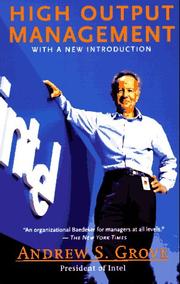
Management as production: a manager's output is the output of the team they lead.
“Also read and re-read High Output Management by Andy Grove.” — Andrew Chen
Source: What do you look for an investment? How long should a founder be without salary? And other Q&A
Recommended by: Andrew Chen, Ben Horowitz, David Cancel and 24 others
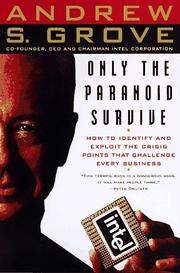
How to spot a strategic inflection point, when a tenfold force changes a business.
“There's also a number of great books that just tell the narrative of one company, such as The New New Thing, Startup, eBoys, Only the Paranoid Survive, Breaking Windows, but I've left those off the list even though they are very fun to read.” — Andrew Chen
Source: Ten classic books that define tech
Recommended by: Andrew Chen, Charlie Munger, Jim Collins and 12 others
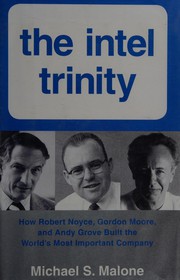
Intel's history through Robert Noyce, Gordon Moore and Andy Grove.
“As of today The Intel Trinity,The: How Robert Noyce, Gordon Moore, and Andy Grove Built the World’s Most Important Company wins my award for best business book of 2015.” — Brad Feld
Source: Book: The Intel Trinity — Feld Thoughts
Recommended by: Brad Feld, Keith Rabois, Mohnish Pabrai
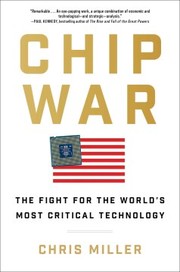
How chips became the key to economic and military power, made in a few chokepoints.
Recommended by: Andrew Wilkinson
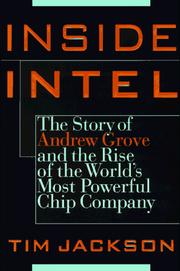
How Intel rose through innovation and held its lead with hard tactics and lawsuits.

A Jewish boy survives the war and Soviet rule in Hungary and escapes to America.
Recommended by: Keith Rabois, Patrick Collison, Ben Horowitz
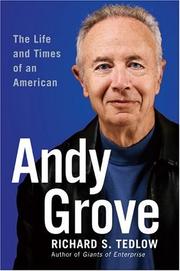
The life of Andy Grove, from Nazi-occupied Hungary to running Intel.
Recommended by: Keith Rabois, Patrick Collison
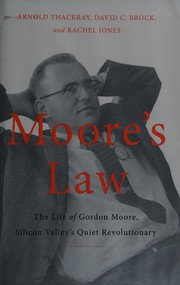
The life of Intel founder Gordon Moore and the forecast named after him.