Updates

  1. Every US-listed company has a page with its SEC filings. Company pages list their experts and their management, past and present. Fund managers sit under Investors. Each show has a page of its episodes, and an episode page names its guests and hosts. Biographies lists groups, then people. Breadcrumbs show where a page sits.
  2. Media lists every podcast episode, video, interview and talk, over 10,000, by person, company, publisher and event; each filter searches its own choices. Books opens on its table, then Browse, then Authors and Recommenders. A filter's count no longer covers its arrow.
  3. A book that no company, country or subject page lists shows its topics under Where it sits in the reference. On a phone, a page's tabs scroll sideways only. Descriptions read the same on every page. See them in the Experts tab lists every expert the page names.
  4. Every podcast episode, video and interview has its own page with a video or audio player and a link to the source. Investor pages show each company's sector and market cap; firms such as Berkshire Hathaway have one page that holds their letters and their company tabs. Letters tabs filter by company and search the theses. Companies filter by Public, Private and Defunct and link each company's website.
  5. Every tab, view and search has its own address, such as /books/table/asset or /letters/companies, so Back works and a link opens the same place. Page addresses no longer end in .html. Fund letters, Investors, Companies and Papers load about a fifth of the data they did.
  6. Fund letters has a Companies tab: every company the letters name, with its market cap, sector, country, and how many letters and investors name it. Investor pages link each investor's website. Lists in table cells end with “… and N more” at every width.
  7. 1,120 more book summaries; descriptions for 373 papers; pages for 137 more companies, each with the fund letters that discuss it; 215 official photographs; search has its own page.
  8. 411 more books have a summary; person pages list 930 more of the books they wrote; 147 people show their official photograph.
  9. Every investor has a page with its letters and the companies they discuss; company pages list the investors whose letters name them.
  10. A Companies section at the top of the rail lists every company the books, experts and fund letters name.
  11. Person pages list letters, writing, profiles and links as sortable tables with filters, and show each person's companies as links; Fund letters show each letter's description in its own column.
  12. Experts show a checked job title and a short description of each person; 30 more people have photographs.
  13. Every company, fund, university and publication the experts work for has a page listing the people there.
  14. Fund letters show each letter's thesis and filter by it; 225 person pages list the essays, columns and newsletter issues the person wrote.
  15. Person pages list every essay and newsletter issue a person wrote, and their own books as a table in List view.
  16. Recommends shows the five largest kinds of book and the rest under More; browse pictures load sooner.
  17. Podcasts and talks link the original episode, filter by Audio and video or Press, and list each publisher once.
  18. Pages are wider, Recommends has List and Grid, and a filter clicked again turns off.
  19. Book cards sit in a ruled grid with Open Library and Goodreads links and each book's one-line note.
  20. Funds is now Investors; each investor's styles are buttons that filter the table.
  21. Podcasts and talks on a person's page filter by year and publisher and show as a list or a grid of pictures.
  22. Quotes show only people's own words: 472 summaries written by list sites are gone.
  23. Country pages open from Browse again, and every link on the shelf lands on a page.
  24. Subject and person pages show their sections as tabs, and each book appears once on a person's page.
  25. Book cards show the quote, who said it and the source; grids show five cards to a row.
  26. On a phone, a menu holds the sections, search, Updates, Feedback and dark mode.
  27. Feedback takes a screenshot of the page with no browser prompt, opens a screenshot full size when you click it, and clears itself once sent.
  28. Book cards are centred, search names the topic each book sits in, and any text cut short shows whole on hover.
  29. Search groups its results by kind: people, companies, geographies, subjects, topics, books, funds, fund letters and papers.
  30. The Books table lists who recommended each book by name, and the browser tab names the section you are in.
  31. Feedback can take a screenshot of the page, or one you paste or choose, and opens in the corner beside Updates.
  32. Each rail button reopens its section where you left it, and Browse, Table and People show on every book and subject page.
  33. Filters grey out choices that hold nothing instead of hiding them, and Books › People filters by authors or recommenders.
  34. Feedback takes a subject line and up to three screenshots.
  35. Biographies are grouped by the person they are about: 41 new pages, from Abraham Lincoln to Lee Kuan Yew.
  36. Sport splits into 23 sports, and Religion into one topic per faith.
  37. Book lists show as cards: the cover, one recommendation quote and every recommender by name.
  38. Seventeen subjects that had two or three pages under different names now have one page each.
  39. Every page lists its Experts as authors and recommenders, with a link to them on the Experts tab.
  40. Economics, Financial history, Financial panics and Accounting are subjects of their own, with one page per financial crisis.
  41. Book, person and subject pages open inside the app, so the tabs stay in view.
  42. 996 more book covers, and photographs or logos for 227 more people and companies.
  43. Books › Browse shows every subject as cards, and the rail holds Fund letters, Papers, Experts, Books and Funds.
  44. Every topic over 150 books splits into narrower topics, each with a page of its own.

Send feedback

What is it?
Screenshots, up to 3 (optional)
or paste one with Ctrl+V

We use your email only to reply to you.

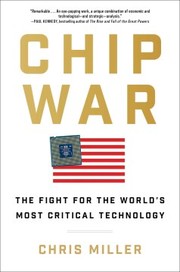
Chip War

Chip War

How chips became the key to economic and military power, made in a few chokepoints.

Chris Miller
2022
T2 464 pages · about 7h 44m to read Open Librarygoodreads

Intel's rise and manufacturing decline inside the global chip contest.

Summary

Miller, an economic historian, writes the history of the semiconductor industry and argues that computing power has become the decisive determinant of economic and military strength, and that its production is concentrated in a small number of chokepoints.

The history covers the invention of the transistor and the integrated circuit, the founding of Fairchild and Intel, the role of American military demand in funding early production, the Japanese memory challenge of the 1980s and the American response, the emergence of the fabless model with design separated from manufacturing, the rise of TSMC in Taiwan under Morris Chang, and the concentration of lithography in ASML in the Netherlands.

The strategic argument concerns the chokepoints. Advanced logic manufacturing is concentrated in Taiwan and South Korea, extreme ultraviolet lithography exists only at ASML, and design tools are dominated by three American companies. Miller shows that this concentration was produced by the economics of the industry, since each generation of capability requires larger capital expenditure and the number of firms that can fund it has fallen with every node.

He covers Chinese efforts to build domestic capability, the export controls imposed by the United States, and the military significance including precision weapons and signal processing. The book was published in 2022 and the export control regime has changed substantially since. Miller writes as a historian and the technical explanation is at a general level. His framing of semiconductors as the central strategic resource is convincing for the specific chokepoints and less so as a general theory of national power.

Key takeaways 8

  1. Computing capability has become a determinant of military and economic power comparable to energy resources in the twentieth century.
  2. Advanced chip manufacturing is concentrated in Taiwan and South Korea, which makes a small geographic area a chokepoint for the entire global economy.
  3. Extreme ultraviolet lithography exists at a single company in the Netherlands, and no alternative source exists at any price.
  4. Each generation of manufacturing capability requires larger capital expenditure, which has reduced the number of firms able to compete to a handful.
  5. The separation of chip design from manufacturing created the fabless model and made TSMC's position possible.
  6. American military demand funded the early industry, and the relationship between defence procurement and commercial semiconductors has been continuous.
  7. Japan's memory challenge in the 1980s was met through a combination of trade policy, industry consortia and a shift by American firms into different products.
  8. Chinese efforts to build domestic capability face the constraint that the equipment and design tools required are controlled by other countries.

Who should read it

Investors and operators in technology and hardware who need the industry structure and the specific chokepoints that determine supply.

Who recommended it 1 · 1 direct

Similar books 6

Chosen by shared topics, the entries that hold them, and the people who recommended both.
T. R. Reid · 1984

How Kilby and Noyce each invented the integrated circuit in 1958 and 1959.

Recommended by: Patrick Collison
Joe Studwell · 2013

Why some Asian nations grew rich: land reform, export-led industry, directed credit.

“it's a good read for anyone who wants to understand what actually determines whether a developing economy will succeed.” — Bill Gates

Source: Gates Notes review of How Asia Works

Recommended by: Bill Gates, Mohnish Pabrai, Patrick Collison

Tae Kim · 2024

Nvidia from its 1993 founding to the AI boom, from interviews with Jensen Huang.
Michael Riordan, Lillian Hoddeson · 1997

How the Bell Labs team of Shockley, Bardeen and Brattain invented the transistor.

Recommended by: Patrick Collison
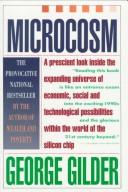
George Gilder · 1989

Portraits of the scientists, engineers and founders behind new technology.
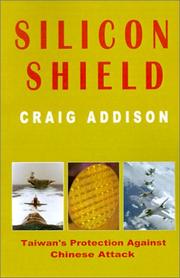
Craig Addison · 2001

The argument that Taiwan's chip industry protects it from Chinese attack.

Where it sits in the reference 8

Companies
Companies
Companies
Geographies
Business models
Industries
Secular themes
Business themes

Topics 6

Technology and ComputingGeneral HistoryPolitics and GovernmentScience, Technology and MedicineGeopolitics and international relationsHistory of computing and semiconductors