
Matt Bornstein
Invests in AI and data systems at Andreessen Horowitz, among them Cursor and Hex; earlier at the seed firm Blumberg Capital and on LinkedIn's business operations team.
 Andreessen Horowitz
| The Engine Powering Open-Source AI | The a16z Show | 2026-08-06 | Elena Burger and Matt Bornstein are joined by Simon Mo, co-founder and CEO of Inferact, the open-source inference engine powering many of today's most advanced AI applications. Together, they explore how open-source AI evolved from a research project into critical infrastructure, why inference has become one of the most important layers of the AI stack, and what it takes to bring frontier intelligence to developers around the world. The conversation covers vLLM's origins, the rise of open-weight models, why companies increasingly want control over their AI infrastructure, and how open-source inference enables the next generation of AI applications. They also discuss model licensing, the economics of open-weight AI, Kimi K3, distillation, AI infrastructure, and why Simon believes the gap between open and closed models is rapidly disappearing. | |
| Inside vLLM: The Engine Powering Open-Source AI | AI + a16z | 2026-08-06 | Elena Burger and Matt Bornstein are joined by Simon Mo, co-founder and CEO of Inferact, the open-source inference engine powering many of today's most advanced AI applications. Together, they explore how open-source AI evolved from a research project into critical infrastructure, why inference has become one of the most important layers of the AI stack, and what it takes to bring frontier intelligence to developers around the world. The conversation covers vLLM's origins, the rise of open-weight models, why companies increasingly want control over their AI infrastructure, and how open-source inference enables the next generation of AI applications. They also discuss model licensing, the economics of open-weight AI, Kimi K3, distillation, AI infrastructure, and why Simon believes the gap between open and closed models is rapidly disappearing. Resources: Follow Simon Mo on X: https://x.com/simon_mo_ Follow Matt Bornstein on X: https://x.com/BornsteinMatt Follow Elena Burger on X: https://x.com/VirtualElena Follow Inferact: https://x.com/inferact Check out everything a16z is doing with artificial intelligence here , including articles, projects, and more podcasts. Hosted by Simplecast, an AdsWizz company. See pcm.adswizz.com for information about our collection and use of personal data for advertising. | |
| Building Self-Accelerating AI with Mirendil | AI + a16z | 2026-06-24 | Matt Bornstein speaks with Mirendil cofounders Behnam Neyshabur and Harsh Mehta about their vision for building self-accelerating AI. After leading research efforts at Google and Anthropic, the founders started Mirendil around a simple question: what happens when AI systems can meaningfully contribute to their own development? Rather than focusing solely on AI as a tool for productivity, they argue that the most important application may be accelerating scientific and technological progress itself. The conversation explores AI research, scaling laws, automated engineering, scientific discovery, and the challenges of building systems that can improve over time. They discuss the future of AI-assisted research, why they believe scientific progress remains bottlenecked by intelligence, and how more capable AI systems could help unlock advances across medicine, engineering, and the natural sciences. Resources: Follow Behnam Neyshabur on X: https://x.com/bneyshabur?lang=en Follow Harsh Mehta on X: https://x.com/HarshMeh1a Follow Matt Bornstein on X: https://x.com/BornsteinMatt Check out everything a16z is doing with artificial intelligence here , including articles, projects, and more podcasts. Hosted by Simplecast, an AdsWizz company. See pcm.adswizz.com for information about our collection and use of personal data for advertising. | |
| Rethinking Git for the Age of Coding Agents with GitHub Cofounder Scott Chacon | The a16z Show | 2026-04-20 | Matt Bornstein speaks with Scott Chacon, cofounder of GitHub and CEO of GitButler, about why Git's user interface has barely changed since 2005, how GitButler is rethinking version control for both humans and AI agents, and what the "next GitHub" might actually look like. They cover parallel branches, agent-optimized CLI design, the future of code review, and why the best engineers of the future will be the best writers. Resources: Follow Scott Chacon on X: https://twitter.com/chacon Follow Matt Bornstein on X: https://twitter.com/BornsteinMatt Stay Updated: Find a16z on YouTube: YouTube Find a16z on X Find a16z on LinkedIn Listen to the a16z Show on Spotify Listen to the a16z Show on Apple Podcasts Follow our host: https://twitter.com/eriktorenberg Please note that the content here is for informational purposes only; should NOT be taken as legal, business, tax, or investment advice or be used to evaluate any investment or security; and is not directed at any investors or potential investors in any a16z fund. a16z and its affiliates may maintain investments in the companies discussed. For more details please see a16z.com/disclosures. Hosted by Simplecast, an AdsWizz company. See pcm.adswizz.com for information about our collection and use of personal data for advertising. | |
| Rethinking Git for the Age of Coding Agents with GitHub Cofounder Scott Chacon | AI + a16z | 2026-04-08 | Matt Bornstein speaks with Scott Chacon, cofounder of GitHub and CEO of GitButler, about why Git's user interface has barely changed since 2005, how GitButler is rethinking version control for both humans and AI agents, and what the "next GitHub" might actually look like. They cover parallel branches, agent-optimized CLI design, the future of code review, and why the best engineers of the future will be the best writers. Resources: Follow Scott Chacon on X: https://twitter.com/chacon Follow Matt Bornstein on X: https://twitter.com/BornsteinMatt Check out everything a16z is doing with artificial intelligence here , including articles, projects, and more podcasts. Hosted by Simplecast, an AdsWizz company. See pcm.adswizz.com for information about our collection and use of personal data for advertising. | |
| The 80-Year Bet: Why Naveen Rao Is Rebuilding the Computer from Scratch | The a16z Show | 2025-12-08 | Naveen Rao is cofounder and CEO of Unconventional AI, an AI chip startup building analog computing systems designed specifically for intelligence. Previously, Naveen led AI at Databricks and founded two successful companies: Mosaic (cloud computing) and Nervana (AI accelerators, acquired by Intel). In this episode, a16z’s Matt Bornstein sits down with Naveen at NeurIPS to discuss why 80 years of digital computing may be the wrong substrate for AI, how the brain runs on 20 watts while data centers consume 4% of the US energy grid, the physics of causality and what it might mean for AGI, and why now is the moment to take this unconventional bet. Stay Updated: If you enjoyed this episode, please be sure to like, subscribe, and share with your friends. Follow Naveen on X: https://x.com/NaveenGRao Follow Matt on X: https://x.com/BornsteinMatt Follow a16z on X: https://twitter.com/a16z Follow a16z on LinkedIn:https://www.linkedin.com/company/a16z Follow the a16z Podcast on Spotify: https://open.spotify.com/show/5bC65RDvs3oxnLyqqvkUYX Follow the a16z Podcast on Apple Podcasts: https://podcasts.apple.com/us/podcast/a16z-podcast/id842818711 Please note that the content here is for informational purposes only; should NOT be taken as legal, business, tax, or investment advice or be used to evaluate any investment or security; and is not directed at any investors or potential investors in any a16z fund. a16z and its affiliates may maintain investments in the companies discussed. | |
| Models, Modalities, and Memes: Creating Compelling AI Characters | AI + a16z | 2025-08-14 | Models, Modalities, and Memes: Creating Compelling AI Characters In this episode of AI + a16z , Hedra founder and CEO Michael Lingelbach joins a16z partners Justine Moore and Matt Bornstein to talk about building AI-native video — and why the next wave of generative content is all about characters, not just clips. They discuss how Hedra’s expressive, full-body, dialogue-centric video models are powering everything from viral meme content to enterprise training tools. Michael explains why “character” is the core design primitive in Hedra’s architecture, how consumers are leading the charge in discovering new use cases, and what it takes to productionize those behaviors for real-world applications. Along the way, they explore what makes multi-modal generation uniquely hard, the role of user control in shaping believable AI performances, and why being a founder sometimes means responding to thousands of support emails — at 6 a.m. Key takeaways: How Hedra’s real-time video model blends audio, image, and character control Why generative content is shifting from static avatars to programmable personas The surprising crossover between consumer creativity and enterprise adoption Where existing LLMs fall short in generating emotionally authentic characters What vibe coding, hands-on design, and founder obsession look like in practice For anyone curious about building AI characters, scaling creative workflows, or the future of human-computer interaction — this one’s not to be missed. | |
| The Future of Software Development - Vibe Coding, Prompt Engineering & AI Assistants | The a16z Show | 2025-07-21 | Is AI the Fourth Pillar of Infrastructure? Infrastructure doesn’t go away — it layers. And today, AI is emerging as a new foundational layer alongside compute, storage, and networking. Erik Torenberg interviews a16z’s Martin Casado, Jennifer Li, and Matt Bornstein breaking down how infrastructure is evolving in the age of AI — from models and agents to developer tools and shifting user behavior. We dive into what infra actually means today, how it differs from enterprise, and why software itself is being disrupted. Plus, we explore the rise of technical users as buyers, what makes infra companies defensible, and how past waves — from the cloud to COVID to AI — are reshaping how we build and invest. Timestamps: (00:00) Introduction (01:49) Defining Infrastructure in the AI Era (03:15) The Fourth Pillar: AI's Role in Infrastructure (06:01) Historical Context and Evolution of Infrastructure (08:20) The Impact of AI on Software Development (10:18) Investment Strategies and Market Dynamics (17:02) Developer Tools and AI Integration (20:57) Defensibility in the AI Landscape (22:16) Founders' Intuition and Industry Progress (22:26) Defensibility in AI Infrastructure (24:00) Expansion and Contraction Phases in the Industry (24:35) The Role of Layers in Market Consolidation (27:43) The Future of AI Models and Specialization (29:27) The Decade of AI Agents (29:54) Context Engineering and New Infrastructure (34:23) The Evolution of Software Development (42:13) Horizontal vs. | |
| AI's Unsung Hero: Data Labeling and Expert Evals | AI + a16z | 2025-06-27 | Labelbox CEO Manu Sharma joins a16z Infra partner Matt Bornstein to explore the evolution of data labeling and evaluation in AI — from early supervised learning to today’s sophisticated reinforcement learning loops. Manu recounts Labelbox’s origins in computer vision, and then how the shift to foundation models and generative AI changed the game. The value moved from pre-training to post-training and, today, models are trained not just to answer questions, but to assess the quality of their own responses. Labelbox has responded by building a global network of “aligners” — top professionals from fields like coding, healthcare, and customer service, who label and evaluate data used to fine-tune AI systems. The conversation also touches on Meta’s acquisition of Scale AI, underscoring how critical data and talent have become in the AGI race. Here's a sample of Manu explaining how Labelbox was able to transition from one era of AI to another: It took us some time to really understand like that the world is shifting from building AI models to renting AI intelligence. A vast number of enterprises around the world are no longer building their own models; they're actually renting base intelligence and adding on top of it to make that work for their company. And that was a very big shift. But then the even bigger opportunity was the hyperscalers and the AI labs that are spending billions of dollars of capital developing these models and data sets. | |
| AI, Data Engineering, and the Modern Data Stack | AI + a16z | 2025-06-20 | In this episode of AI + a16z, dbt Labs founder and CEO Tristan Handy sits down with a16z's Jennifer Li and Matt Bornstein to explore the next chapter of data engineering — from the rise (and plateau) of the modern data stack to the growing role of AI in analytics and data engineering. As they sum up the impact of AI on data workflows: The interesting question here is human-in-the-loop versus human-not-in-the-loop. AI isn’t about replacing analysts — it’s about enabling self-service across the company. But without a human to verify the result, that’s a very scary thing. Among other specific topics, they also discuss how automation and tooling like SQL compilers are reshaping how engineers work with data; dbt's new Fusion Engine and what it means for developer workflows; and what to make of the spate of recent data-industry acquisitions and ambitious product launches. Follow everyone on X: Tristan Handy Jennifer Li Matt Bornstein Check out everything a16z is doing with artificial intelligence here , including articles, projects, and more podcasts. Hosted by Simplecast, an AdsWizz company. See pcm.adswizz.com for information about our collection and use of personal data for advertising. | |
| Building AI Systems You Can Trust | AI + a16z | 2025-05-23 | In this episode of AI + a16z, Distributional cofounder and CEO Scott Clark, and a16z partner Matt Bornstein, explore why building trust in AI systems matters more than just optimizing performance metrics. From understanding the hidden complexities of generative AI behavior to addressing the challenges of reliability and consistency, they discuss how to confidently deploy AI in production. Why is trust becoming a critical factor in enterprise AI adoption? How do traditional performance metrics fail to capture crucial behavioral nuances in generative AI systems? Scott and Matt dive into these questions, examining non-deterministic outcomes, shifting model behaviors, and the growing importance of robust testing frameworks. Among other topics, they cover: The limitations of conventional AI evaluation methods and the need for behavioral testing. How centralized AI platforms help enterprises manage complexity and ensure responsible AI use. The rise of "shadow AI" and its implications for security and compliance. Practical strategies for scaling AI confidently from prototypes to real-world applications. Follow everyone: Scott Clark Distributional Matt Bornstein Derrick Harris Check out everything a16z is doing with artificial intelligence here , including articles, projects, and more podcasts. Hosted by Simplecast, an AdsWizz company. See pcm.adswizz.com for information about our collection and use of personal data for advertising. | |
| What Is an AI Agent? | AI + a16z | 2025-04-28 | In this episode of AI + a16z, a16z Infra partners Guido Appenzeller, Matt Bornstein, and Yoko Li discuss and debate one of the tech industry's buzziest words right now: AI agents. The trio digs into the topic from a number of angles, including: Whether a uniform definition of agent actually exists How to distinguish between agents, LLMs, and functions How to think about pricing agents Whether agents can actually replace humans, and The effects of data siloes on agents that can access the web. They don't claim to have all the answers, but they raise many questions and insights that should interest anybody building, buying, and even marketing AI agents. Learn more: Benchmarking AI Agents on Full-Stack Coding Automating Developer Email with MCP and Al Agents A Deep Dive Into MCP and the Future of AI Tooling Agent Experience: Building an Open Web for the AI Era DeepSeek, Reasoning Models, and the Future of LLMs Agents, Lawyers, and LLMs Reasoning Models Are Remaking Professional Services From NLP to LLMs: The Quest for a Reliable Chatbot Can AI Agents Finally Fix Customer Support? Follow everybody on X: Guido Appenzeller Matt Bornstein Yoko Li Check out everything a16z is doing with artificial intelligence here , including articles, projects, and more podcasts. Hosted by Simplecast, an AdsWizz company. See pcm.adswizz.com for information about our collection and use of personal data for advertising. | |
| REPLAY: Scoping the Enterprise LLM Market | AI + a16z | 2024-11-30 | This is a replay of our first episode from April 12, featuring Databricks VP of AI Naveen Rao and a16z partner Matt Bornstein discussing enterprise LLM adoption, hardware platforms, and what it means for AI to be mainstream. If you're unfamiliar with Naveen, he has been in the AI space for more than decade working on everything from custom hardware to LLMs, and has founded two successful startups — Nervana Systems and MosaicML. Check out everything a16z is doing with artificial intelligence here , including articles, projects, and more podcasts. Hosted by Simplecast, an AdsWizz company. See pcm.adswizz.com for information about our collection and use of personal data for advertising. | |
| Building Developers Tools, From Docker to Diffusion Models | AI + a16z | 2024-11-15 | In this episode of AI + a16z, Replicate cofounder and CEO Ben Firshman, and a16z partner Matt Bornstein, discuss the art of building products and companies that appeal to software developers. Ben was the creator of Docker Compose, and Replicate has a thriving community of developers hosting and fine-tuning their own models to power AI-based applications. Here's an excerpt of Ben and Matt discussing the difference in the variety of applications built using multimedia models compared with language models: Matt: "I've noticed there's a lot of really diverse multimedia AI apps out there. Meaning that when you give someone an amazing primitive, like a FLUX API call or a Stable Diffusion API call, and Replicate, there's so many things they can do with it. And we actually see that happening — versus with language, where all LLM apps look kind of the same if you squint a little bit. "It's like you chat with something — there's obviously code, there's language, there's a few different things — but I've been surprised that even today we don't see as many apps built on language models as we do based on, say, image models." Ben: "It certainly maps with what we're seeing, as well. I think these language models, beyond just chat apps, are particularly good at turning unstructured information into structured information. Which is actually kind of magical. And computers haven't been very good at that before. That is really a kind of cool use case for it. | |
| Open Models and Maturation: Assessing the Generative AI Market | AI + a16z | 2024-05-17 | a16z partners Guido Appenzeller and Matt Bornstein join Derrick Harris to discuss the state of the generative AI market, about 18 months after it really kicked into high gear with the release of ChatGPT — everything from the emergence of powerful open source LLMs to the excitement around AI-generated music. If there's one major lesson to learn, it's that although we've made some very impressive technological strides and companies are generating meaningful revenue, this is still a a very fluid space. As Matt puts it during the discussion: "For nearly all AI applications and most model providers, growth is kind of a sawtooth pattern, meaning when there's a big new amazing thing announced, you see very fast growth. And when it's been a while since the last release, growth kind of can flatten off. And you can imagine retention can be all over the place, too . . . "I think every time we're in a flat period, people start to think, 'Oh, it's mature now, the, the gold rush is over. What happens next?' But then a new spike almost always comes, or at least has over the last 18 months or so. So a lot of this depends on your time horizon, and I think we're still in this period of, like, if you think growth has slowed, wait a month and see it change." Follow everyone on X: Guido Appenzeller Matt Bornstein Derrick Harris Check out everything a16z is doing with artificial intelligence here , including articles, projects, and more podcasts. Hosted by Simplecast, an AdsWizz company. | |
| Scoping the Enterprise LLM Market | AI + a16z | 2024-04-12 | Naveen Rao, vice president of generative AI at Databricks, joins a16z's Matt Bornstein and Derrick Harris to discuss enterprise usage of LLMs and generative AI. Naveen is particularly knowledgeable about the space, having spent years building AI chips first at Qualcomm and then as the founder of AI chip startup Nervana Systems back in 2014. Intel acquired Nervana in 2016. After a stint at Intel, Rao re-emerged with MosaicML in 2021. This time, he focused on the software side of things, helping customers train their own LLMs, and also fine-tune foundation models, on top of an optimized tech stack. Databricks acquired Mosaic in July of 2023. This discussion covers the gamut of generative AI topics — from basic theory to specialized chips — to although we focus on how the enterprise LLM market is shaping up. Naveen also shares his thoughts on why he prefers finally being part of the technology in-crowd, even if it means he can’t escape talking about AI outside of work. More information: LLMs at Databricks Mosaic Research More AI content from a16z Follow everyone on X: Naveen Rao Matt Bornstein Derrick Harris Check out everything a16z is doing with artificial intelligence here , including articles, projects, and more podcasts. Hosted by Simplecast, an AdsWizz company. See pcm.adswizz.com for information about our collection and use of personal data for advertising. | |
| a16z’s Matt Bornstein on How to Build an AI Science Startup | SAIR |
 TThe Engine Powering Open-Source AIThe a16z Show · 2026-08-06
 AInside vLLM: The Engine Powering Open-Source AIAI + a16z · 2026-08-06ABuilding Self-Accelerating AI with MirendilAI + a16z · 2026-06-24TRethinking Git for the Age of Coding Agents with GitHub Cofounder Scott ChaconThe a16z Show · 2026-04-20ARethinking Git for the Age of Coding Agents with GitHub Cofounder Scott ChaconAI + a16z · 2026-04-08TThe 80-Year Bet: Why Naveen Rao Is Rebuilding the Computer from ScratchThe a16z Show · 2025-12-08
 AModels, Modalities, and Memes: Creating Compelling AI CharactersAI + a16z · 2025-08-14
 TThe Future of Software Development - Vibe Coding, Prompt Engineering & AI AssistantsThe a16z Show · 2025-07-21
 AAI's Unsung Hero: Data Labeling and Expert EvalsAI + a16z · 2025-06-27
 AAI, Data Engineering, and the Modern Data StackAI + a16z · 2025-06-20
 ABuilding AI Systems You Can TrustAI + a16z · 2025-05-23
 AWhat Is an AI Agent?AI + a16z · 2025-04-28
 AREPLAY: Scoping the Enterprise LLM MarketAI + a16z · 2024-11-30
 ABuilding Developers Tools, From Docker to Diffusion ModelsAI + a16z · 2024-11-15
 AOpen Models and Maturation: Assessing the Generative AI MarketAI + a16z · 2024-05-17
 AScoping the Enterprise LLM MarketAI + a16z · 2024-04-12
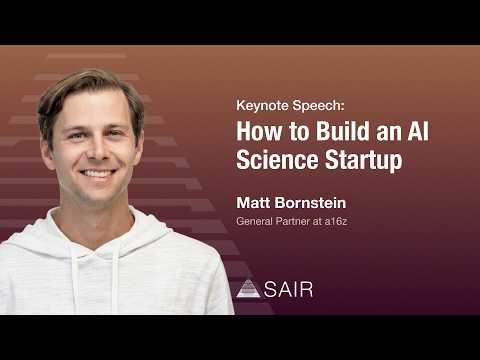 Sa16z’s Matt Bornstein on How to Build an AI Science StartupSAIR