 T
Episodes
| The Missing Layer for Personal AI | First Person Labs’ Ken Liu | Joel de la Garza, Martin Casado | 18 November 2026 | AI agents are getting smarter, but every new agent still has to learn who you are. What if your preferences, priorities, relationships, and digital context could move with you instead? First Person Labs co-founder Ken Liu joins a16z’s Martin Casado and Joel de la Garza to introduce Second, a personal context layer designed to understand what you’re doing across your digital life and make that context available to the agents you choose. They discuss how Second can proactively connect information across conversations and applications, why protecting such personal data requires a different security architecture, and the longer-term vision of AI that doesn’t just respond to prompts, but understands enough context to know when and how to help. | |
| Can AI Learn to Improve Itself? | Recursive Self-Improvement | Sarah Wang | 17 November 2026 | For decades, the idea of AI improving itself was just a thought experiment. Today, AI is already helping researchers at frontier labs run experiments, write code and test ideas faster. Mark Chen says OpenAI has built “AI research interns.” So how far are we from AI that can do the research on its own? In our first episode of Working Theory, a16z general partner Sarah Wang explores recursive self-improvement with two leading AI researchers: Mark Chen, Chief Research Officer at OpenAI, and John Schulman, co-founder and Chief Scientist of Thinking Machines Lab, and co-founder of OpenAI. They cover what RSI actually means, why research taste is so hard to teach, and why AI may be one of our best tools for solving alignment. | |
| Every Day Is Zero Day | Wiz CTO Ami Luttwak | Sarah Wang, Zane Lackey | 13 November 2026 | AI isn’t just helping defenders find vulnerabilities. It’s giving attackers the speed and expertise to exploit them faster than many companies can respond. Wiz co-founder and CTO Ami Luttwak joins a16z General Partners Zane Lackey and Sarah Wang to unpack what he calls “Black October,” a wave of vulnerabilities and agentic attacks that he believes marks a turning point for cybersecurity. They break down PHP2Shell, why AI is collapsing the time between vulnerability discovery and exploitation, and what happens when open-source models put increasingly sophisticated offensive capabilities in more hands. Ami explains why startups are becoming attractive targets, particularly when they hold valuable AI credentials, and why yesterday’s secure architecture may no longer be secure as models improve. The conversation then turns to defense. Ami argues that companies need to continuously attack their own systems, automate investigation and patching wherever possible, design infrastructure assuming sophisticated attackers will get in, and rethink security stacks built for a slower era. His warning is simple: if attackers can move in minutes, defenders can no longer operate on human timelines. | |
| The Next Era of Games: Mods, Agents, and Infinite Worlds | Anish Acharya, Jonathan Lai | 12 November 2026 | AI is collapsing the distance between an idea and a playable game. What happens when almost anyone can build one? In this episode, a16z General Partners Anish Acharya and Jonathan Lai discuss how AI is changing game development, from generating art and code to operating tools like Blender and game engines directly. They explain why cheaper development could let studios take more creative risks while opening game creation to people without traditional coding or design skills. They also explore modding, remixing existing games, and the emergence of AI-native experiences that generate characters, abilities, and storylines on the fly, potentially creating games that never really end. Resources: Follow Anish Acharya on X: https://x.com/illscience Follow Jonathan Lai on X: https://x.com/Tocelot Stay Updated: Find a16z on YouTube: YouTube Find a16z on X Find a16z on LinkedIn Listen to the a16z Show on Spotify Listen to the a16z Show on Apple Podcasts Follow our host: https://twitter.com/eriktorenberg Please note that the content here is for informational purposes only; should NOT be taken as legal, business, tax, or investment advice or be used to evaluate any investment or security; and is not directed at any investors or potential investors in any a16z fund. a16z and its affiliates may maintain investments in the companies discussed. For more details please see a16z.com/disclosures. Hosted by Simplecast, an AdsWizz company. | |
| What the Internet Boom Teaches Us About the AI Buildout | Mike Volpi | Guido Appenzeller, Raghu Raghuram | 11 November 2026 | The internet boom built bandwidth. The AI boom is building intelligence. Mike Volpi, who helped shape Cisco’s strategy during the internet buildout, asks what that era can teach us about this one. Mike joins a16z’s Raghu Raghuram and Guido Appenzeller to compare today’s investment in GPUs, data centers, and power with the fiber boom of the late 1990s, and explain why the infrastructure could prove valuable even if the market corrects. They also discuss NVIDIA, custom silicon, networking, and the changing economics of GPUs, plus lessons from Cisco’s acquisition machine. And Mike explains why he thinks this technology cycle could be even more consequential than the last. Resources: Follow Mike Volpi on X: https://x.com/mavolpi Follow Raghu Raghuram on X: https://x.com/RaghuRaghuram Follow Guido Appenzeller on X: https://x.com/appenz Stay Updated: Find a16z on YouTube: YouTube Find a16z on X Find a16z on LinkedIn Listen to the a16z Show on Spotify Listen to the a16z Show on Apple Podcasts Follow our host: https://twitter.com/eriktorenberg Please note that the content here is for informational purposes only; should NOT be taken as legal, business, tax, or investment advice or be used to evaluate any investment or security; and is not directed at any investors or potential investors in any a16z fund. a16z and its affiliates may maintain investments in the companies discussed. For more details please see a16z.com/disclosures. Hosted by Simplecast, an AdsWizz company. | |
| The Health Interventions Actually Worth Your Time | Justin Mares | Daisy Wolf | 8 November 2026 | Health advice has become an endless stream of supplements, diets, wearables, and biohacks. Which interventions are actually worth your time? Truemed CEO Justin Mares argues that most people should ignore the extremes and focus on a few fundamentals: better food, movement, sleep, and reducing harmful exposures. Justin joins a16z General Partner Daisy Wolf to walk through his own approach to health, from what he eats and how he exercises to supplements, blood tests, sauna, sleep, and the changes he’s made to his home. They also discuss the larger problem behind Truemed: while chronic disease drives the vast majority of U.S. healthcare spending, relatively little goes toward prevention. Justin explains how Truemed is trying to change that by making it easier for eligible consumers to use tax-free HSA and FSA dollars on qualified lifestyle interventions. Resources: Follow Justin Mares on X: https://x.com/jwmares Follow Daisy Wolf on X: https://x.com/daisydwolf Learn more about TrueMed: https://www.truemed.com/ Stay Updated: Find a16z on YouTube: YouTube Find a16z on X Find a16z on LinkedIn Listen to the a16z Show on Spotify Listen to the a16z Show on Apple Podcasts Follow our host: https://twitter.com/eriktorenberg Please note that the content here is for informational purposes only; should NOT be taken as legal, business, tax, or investment advice or be used to evaluate any investment or security; and is not directed at any investors or potential investors in any a16z fund. | |
| Mark Hyman’s Guide to Living Longer and Staying Strong | Daisy Wolf | 7 November 2026 | What actually matters if you want to stay healthy as you age? Dr. Mark Hyman argues it isn’t the most extreme longevity intervention. It’s the small investments you make every day in strength, nutrition, sleep, and stress. Mark joins a16z Partner Daisy Wolf to walk through what he actually does, from meditation and strength training to protein, supplements, sleep, sauna, cold plunges, and the occasional ice cream. He explains why preserving muscle becomes increasingly important with age and how he uses testing to understand what’s happening inside his body. They also discuss the idea behind Function Health: combining blood tests, imaging, wearables, medical records, and eventually AI to move healthcare from treating disease toward understanding and preventing it earlier. Resources: Follow Mark Hyman: https://x.com/drmarkhyman Learn more about Function Health: https://www.functionhealth.com Follow Daisy Wolf on X: https://x.com/daisydwolf Stay Updated: Find a16z on YouTube: YouTube Find a16z on X Find a16z on LinkedIn Listen to the a16z Show on Spotify Listen to the a16z Show on Apple Podcasts Follow our host: https://twitter.com/eriktorenberg Please note that the content here is for informational purposes only; should NOT be taken as legal, business, tax, or investment advice or be used to evaluate any investment or security; and is not directed at any investors or potential investors in any a16z fund. | |
| Inside Salesforce’s $100 Billion M&A Playbook | John Somorjai | Alex Immerman | 6 November 2026 | What makes a startup worth acquiring when software has never been easier to build? Salesforce’s John Somorjai says the answer goes well beyond technology: the best acquisitions can accelerate a product roadmap, bring in exceptional talent, and put a startup in front of 15,000 Salesforce sales reps almost overnight. John joins a16z General Partner Alex Immerman to unpack the thinking behind nearly $100 billion in acquisitions during his tenure, from Slack and MuleSoft to a new generation of AI-native companies. They discuss Salesforce’s build-versus-buy framework, why outcome-based pricing is replacing seats in parts of enterprise software, and what founders should consider when deciding whether to sell. John also shares what can kill a deal during diligence, why he thinks parts of today’s venture market are overvalued, and how Salesforce Ventures is expanding from enterprise software into frontier AI and robotics. | |
| The New CFO: How AI Is Rewriting the Finance Function | Figma CFO Praveer Melwani | Seema Amble | 5 November 2026 | AI is moving finance from reconciling what happened last month to helping decide what the business should do next. Figma CFO Praveer Melwani argues that the best finance teams are becoming builders themselves, automating repetitive work so they can spend more time understanding customers, running experiments, and shaping strategy. Praveer joins a16z’s Seema Amble and Ivan Makarov to share what that shift looks like inside Figma, from collections and expense analysis to M&A diligence, where the corp dev team now uses AI to prototype products and simulate how Figma leaders might challenge an investment memo. They discuss why AI “slop” is a real risk, how Figma decides what to build versus buy, and why successful internal experiments eventually need a centralized systems layer to turn one-off agents into reliable infrastructure. They also get into what this means for hiring the next generation of finance leaders. Praveer’s bar isn’t simply whether someone can use AI. It’s whether they can understand the business, interrogate the output, communicate clearly, and use automation without outsourcing their thinking. | |
| The New AI Agents That Shop, Plan, and Gossip | Anish Acharya, Josh Elman | 4 November 2026 | Will we have one AI assistant that does everything, or an entire network of agents that know different parts of our lives? David Pawlan, creator of Assistant Benchmark, returns with Anish Acharya and Josh Elman to take stock of how quickly the agent landscape has changed. David has now tested more than 140 AI assistants, and they unpack what separates them, from memory and judgment to trust, shopping, and social experiences. They also explore what happens when agents start talking to each other, how they could create new kinds of social networks and serendipity, and why the most compelling agents may ultimately do more than save time. They could become a kind of secret superpower. Resources: Follow David Pawlan: https://x.com/DavidPawlan Follow Josh Elman: https://x.com/joshelma Follow Anish Acharya on X: https://x.com/illscience Stay Updated: Find a16z on YouTube: YouTube Find a16z on X Find a16z on LinkedIn Listen to the a16z Show on Spotify Listen to the a16z Show on Apple Podcasts Follow our host: https://twitter.com/eriktorenberg Please note that the content here is for informational purposes only; should NOT be taken as legal, business, tax, or investment advice or be used to evaluate any investment or security; and is not directed at any investors or potential investors in any a16z fund. a16z and its affiliates may maintain investments in the companies discussed. For more details please see a16z.com/disclosures. Hosted by Simplecast, an AdsWizz company. | |
| Andrew Huberman’s Three Rules for Better Health and Focus | Daisy Wolf | 3 November 2026 | If you could do only three things for your health, what should they be? Andrew Huberman’s answer is surprisingly straightforward: get bright light shortly after waking, resistance train, and make the sleep you can get as high-quality as possible. Andrew joins a16z Partner Daisy Wolf to walk through the protocols he actually follows, from exercise and nutrition to meditation, supplements, and locking his social media phone in a box. He also explains why optimizing every health protocol can be counterproductive if it gets in the way of the rest of your life. And for founders, Andrew makes a different case: identify the hours when your brain does its best work and protect them. They discuss cognitive performance, meditation, sustainable workloads, and emerging neurotechnology that could help us control transitions between sleep, focus, and recovery. Resources: Huberman Lab : https://www.hubermanlab.com/ Follow Andrew Huberman: https://www.youtube.com/@hubermanlab Follow Daisy Wolf: https://x.com/daisydwolf Stay Updated: Find a16z on YouTube: YouTube Find a16z on X Find a16z on LinkedIn Listen to the a16z Show on Spotify Listen to the a16z Show on Apple Podcasts Follow our host: https://twitter.com/eriktorenberg Please note that the content here is for informational purposes only; should NOT be taken as legal, business, tax, or investment advice or be used to evaluate any investment or security; and is not directed at any investors or potential investors in any a16z fund. | |
| The Robots Already Working in American Factories | Tutor Intelligence | Raghu Raghuram | 2 November 2026 | What does it take to build robots that can actually work in factories and warehouses? Tutor Intelligence CEO Josh Gruenstein argues robotics is a systems problem spanning AI, hardware, manufacturing, and the work itself. Josh joins a16z General Partners Martin Casado and Raghu Raghuram to explain Tutor’s approach: deploy robots into real businesses, use human “tutors” when needed, and turn that work into training data that makes the robots more capable. They discuss Tutor’s 100-robot data factory, robots starting at roughly $16 an hour, advances in spatial reasoning, and what flexible robotic labor could mean for American manufacturing and the physical economy. Resources: Follow Josh Gruenstein on X: https://x.com/joshgruenstein Follow Martin Casado on X: https://x.com/martin_casado Follow Raghu Raghuram on X: https://x.com/RaghuRaghuram Learn more about Tutor Intelligence: https://tutorintelligence.com/ Stay Updated: Find a16z on YouTube: YouTube Find a16z on X Find a16z on LinkedIn Listen to the a16z Show on Spotify Listen to the a16z Show on Apple Podcasts Follow our host: https://twitter.com/eriktorenberg Please note that the content here is for informational purposes only; should NOT be taken as legal, business, tax, or investment advice or be used to evaluate any investment or security; and is not directed at any investors or potential investors in any a16z fund. a16z and its affiliates may maintain investments in the companies discussed. | |
| How Bending Spoons Built a $20 Billion Compounder | Luca Ferrari | Anish Acharya | 1 November 2026 | Can relentless optimization create as much value as breakthrough invention? Bending Spoons CEO Luca Ferrari argues that radical innovation can produce extraordinary outcomes, but systematic improvement can be more dependable, especially when paired with a model designed to compound over decades. Speaking with a16z General Partner Anish Acharya at Wave by Vento, Luca explains how Bending Spoons acquires technology companies, integrates them onto a shared platform, improves their economics, and reinvests the resulting cash into new acquisitions. They discuss the tradeoffs between growth and profitability, how to use debt without putting the company at risk, and why long-term thinking can create an advantage. They also debate whether AI really threatens SaaS, why moats like brand, proprietary data, network effects, and switching costs still matter, and how Bending Spoons is already using AI across coding, customer support, and data analysis. Resources: Recorded at Wave by Vento. | |
| Why AI Could Turn Small Law Firms Into Billion-Dollar Businesses | Alex Rampell | 30 October 2026 | What happens when AI makes legal work cheap enough to take cases lawyers couldn't afford to touch before? Eve CEO Jay Madheswaran argues that AI won't just cut costs for law firms. It could expand access to legal representation by making an entirely new class of cases economically viable. Jay joins a16z General Partner Alex Rampell to explain how Eve is automating plaintiff law from the first client call through settlement, and why some firms are already using it to increase the number of clients each attorney can manage from roughly 100 to 500. They also discuss how AI could shift lawyers toward higher-value advocacy, why agents may eventually negotiate with other agents, and what happens to the legal system when bringing a case becomes dramatically cheaper. Resources: Follow Jay Madheswaran on LinkedIn: https://www.linkedin.com/in/jayanth1/ Follow Alex Rampell on X: https://x.com/arampell Stay Updated: Find a16z on YouTube: YouTube Find a16z on X Find a16z on LinkedIn Listen to the a16z Show on Spotify Listen to the a16z Show on Apple Podcasts Follow our host: https://twitter.com/eriktorenberg Please note that the content here is for informational purposes only; should NOT be taken as legal, business, tax, or investment advice or be used to evaluate any investment or security; and is not directed at any investors or potential investors in any a16z fund. a16z and its affiliates may maintain investments in the companies discussed. | |
| The Startups Rebuilding American Industry | The AD50 | Connor Love | 29 October 2026 | America’s defense, energy, manufacturing, and robotics booms are increasingly becoming one story: the rebuilding of the country’s industrial base. This year’s AD50 highlights the companies building across that stack, from critical materials and factories to the systems they ultimately power. a16z’s Erin Price-Wright and Connor Love join Elena Burger to unpack what has changed. They discuss how defense demand can help finance manufacturing capacity that ultimately serves much larger commercial markets, why AI is changing the economics of American factories, and how a new generation of founders is applying lessons from SpaceX, Tesla, Anduril, and Palantir to mining, energy, manufacturing, and defense. They also make the case that these companies are no longer simply important to America. With private capital increasingly willing to fund physical infrastructure and production before government demand is guaranteed, they can become some of the most valuable companies in the world. | |
| Mark Cuban on Why AI Could Turn Solo Founders Into Trillionaires | Julie Yoo | 28 October 2026 | Mark Cuban thinks AI could transform healthcare, but it won’t fix opaque prices and broken incentives on its own. His starting point for employers: run every benefits contract through AI and ask where you’re getting ripped off. Mark joins a16z General Partner Julie Yoo and Erik Torenberg to discuss what he’s learned building Cost Plus Drugs, why trust is its core product, and how greater transparency could put pressure on healthcare costs. They also explore where AI can help, what personalized medicine could look like, how the role of doctors may change, and why Mark believes founders should use AI to learn, not as an excuse to stop thinking. Resources: Follow Mark Cuban on X: https://x.com/mcuban Follow Julie Yoo: https://x.com/julesyoo Mark Cuban Cost Plus Drug Company: https://costplusdrugs.com/ Cost Plus Wellness: https://costpluswellness.com/ Stay Updated: Find a16z on YouTube: YouTube Find a16z on X Find a16z on LinkedIn Listen to the a16z Show on Spotify Listen to the a16z Show on Apple Podcasts Follow our host: https://twitter.com/eriktorenberg Please note that the content here is for informational purposes only; should NOT be taken as legal, business, tax, or investment advice or be used to evaluate any investment or security; and is not directed at any investors or potential investors in any a16z fund. a16z and its affiliates may maintain investments in the companies discussed. For more details please see a16z.com/disclosures. | |
| OpenAI: When AI Agents Use Computers Faster Than You | Fabrizio Serafini, Seema Amble | 26 October 2026 | AI agents are approaching a point where they can use computers faster than expert humans, turning the user interface itself into a universal way for AI to interact with software. OpenAI’s Ari Weinstein and James Sun argue that computer use is now entering its scaling moment, as better models, faster execution, and stronger safety controls make agents practical for more consumer and enterprise work. Ari and James join a16z’s Seema Amble and Fabrizio Serafini to explain how computer-using agents are already navigating legacy ERPs, reconciling financial data, handling procurement, and operating software without APIs or custom integrations. They also discuss why the harness around the model can matter as much as model intelligence, how enterprises can set deterministic guardrails around agent behavior, and why computer use could simultaneously extend the life of legacy software and accelerate the arrival of new AI-native applications. Looking ahead, they make the case for a more proactive and fluid relationship with computers, where agents work in the background, collaborate with users in real time, and increasingly adapt to us rather than requiring us to learn how to use them. Resources: Follow Seema Amble on X: https://x.com/seema_amble Follow Fabrizio Serafini on X: https://x.com/fabserafini Follow Ari Weinstein on X: https://x.com/AriX Follow James Sun on X: https://x.com/JamesZmSun Related a16z research from Seema Amble and Fabrizio Serafini: Can Agents Use a Computer Yet? | |
| What It Takes to Win as a Founder | Ben Horowitz | Ben Horowitz | 24 October 2026 | 42 min | |
| What It Takes to Win as a Founder | Ben Horowitz | Andrew Chen, Ben Horowitz | 24 October 2026 | 42 min | What does it take to build a company when AI is changing the rules this quickly? Ben Horowitz argues that technology may make companies easier to start, but the hardest parts of entrepreneurship, making decisions under uncertainty, building momentum, and managing your own doubts, aren't going away. Speedrun's Andrew Chen sits down with Ben to discuss why AI feels different from previous technology shifts, whether billion-dollar companies can be built with tiny teams, and why Ben thinks the application itself may eventually become less important as agents work directly against data. They also get into defensibility in AI, what founders should look for in an investor, how venture capital is changing, and why the best entrepreneurs aren't defined by a lack of weaknesses, but by having a strength or insight that's genuinely exceptional. Resources: Follow Ben Horowitz on X: https://x.com/bhorowitz Follow Andrew Chen on X: https://x.com/andrewchen Learn more about Speedrun: https://speedrun.a16z.com/apply Stay Updated: Find a16z on YouTube: YouTube Find a16z on X Find a16z on LinkedIn Listen to the a16z Show on Spotify Listen to the a16z Show on Apple Podcasts Follow our host: https://twitter.com/eriktorenberg Please note that the content here is for informational purposes only; should NOT be taken as legal, business, tax, or investment advice or be used to evaluate any investment or security; and is not directed at any investors or potential investors in any a16z fund. |
 Marc Andreessen and Chris Dixon | Chris Dixon | 22 October 2026 | 1:01 | a16z is expanding a16z crypto into a16z Frontier, a broader mandate to back founders building at the edges of what's possible. Chris Dixon joins Marc Andreessen, Ben Horowitz, and Erik Torenberg to explain why founders should increasingly ask not “is this too ambitious?” but “is this ambitious enough?” — and how AI could pull decades of technological progress forward across hardware, robotics, entertainment, science, and entirely new forms of media. They also explore the coming internet of AI agents, why open source matters as AI becomes more powerful, and why some of the most important companies of the next decade may combine technologies and business models that previously belonged in separate categories. Resources: Follow Chris Dixon on X: https://x.com/cdixon Follow Marc Andreessen on X: https://x.com/pmarca Follow Ben Horowitz on X: https://x.com/bhorowitz Learn more about a16z Frontier: https://a16zfrontier.com https://a16zfrontier.substack.com https://x.com/a16zfrontier Stay Updated: If you enjoyed this episode, be sure to like, subscribe, and share with your friends! |
| Marc Andreessen: The Biggest Gap I’ve Seen in My Career | Marc Andreessen | 22 October 2026 | 1:01 | a16z is expanding a16z crypto into a16z Frontier, a broader mandate to back founders building at the edges of what's possible. Chris Dixon joins Marc Andreessen, Ben Horowitz, and Erik Torenberg to explain why founders should increasingly ask not “is this too ambitious?” but “is this ambitious enough?” — and how AI could pull decades of technological progress forward across hardware, robotics, entertainment, science, and entirely new forms of media. They also explore the coming internet of AI agents, why open source matters as AI becomes more powerful, and why some of the most important companies of the next decade may combine technologies and business models that previously belonged in separate categories. Resources: Follow Chris Dixon on X: https://x.com/cdixon Follow Marc Andreessen on X: https://x.com/pmarca Follow Ben Horowitz on X: https://x.com/bhorowitz Learn more about a16z Frontier: https://a16zfrontier.com https://a16zfrontier.substack.com https://x.com/a16zfrontier Stay Updated: If you enjoyed this episode, be sure to like, subscribe, and share with your friends! |
| The Missing Infrastructure for AI Agents: Documents | Reducto’s Adit Abraham | Jennifer Li | 21 October 2026 | AI agents can reason over enormous amounts of information, but much of the world’s actual work is still trapped in PDFs, spreadsheets, scans, and other formats that models struggle to reliably understand. Reducto co-founder and CEO Adit Abraham argues that solving this document layer is essential if agents are going to take on consequential work in healthcare, legal, finance, and insurance. Adit joins a16z General Partner Jennifer Li to explain why traditional OCR breaks down on messy real-world documents, how Reducto combines vision-language models with specialized infrastructure to reach high accuracy without sacrificing cost or latency, and why frontier models can silently drop information on long extraction tasks. Reducto now processes billions of pages each month, including its seven billionth page the morning of the recording. They also discuss Reducto’s R1 model, agents that can review and correct their own document extraction, and the company’s push beyond simply reading files toward letting agents reliably work with and edit them. Underneath it all is a higher-stakes problem: when a misread word can affect a healthcare claim or financial decision, getting the input right matters just as much as making the model smarter. | |
| What Happens When Everyone Has a Health Expert in Their Pocket? | OpenAI’s Karan Singhal | Jay Rughani | 20 October 2026 | More than 300 million people use ChatGPT for health and wellness questions each week. OpenAI’s Karan Singhal thinks that’s only the beginning: the longer-term goal is AI that can help people navigate their health proactively, while making trustworthy medical intelligence dramatically more accessible. Karan joins a16z Partner Jay Rughani to explain why OpenAI trains healthcare expertise directly into its general-purpose frontier models, how it works with hundreds of medical experts to evaluate safety and disagreement, and why the company sees AI as a complement to doctors rather than a replacement for medical care. They also discuss integrations with Epic, AI copilots for clinicians, and what happens as personal agents begin navigating appointments, health records, and other fragmented parts of the healthcare system. Looking further ahead, Karan makes the case that the cost of medical intelligence could continue to fall dramatically, allowing AI to act as a safety net for patients and clinicians, surface insights from years of health data, and potentially accelerate the discovery and validation of new treatments. | |
| What Happens When Al Agents Can Spend Your Money? | Alex Rampell | 19 October 2026 | Why hasn't AI transformed everyday work as quickly as coding? Town CEO Jean-Denis Greze argues the bottleneck isn't intelligence, but making AI useful to people who don't have the time or technical skills to build their own automations. Jean-Denis joins a16z General Partner Alex Rampell to share why he pivoted Town from tax software to a personal AI assistant built around email, calendars, and the workflows that run businesses. They discuss why consumer-grade experiences may win in enterprise AI, how Town discovers and automates tasks users wouldn't think to delegate, and why model neutrality and data ownership matter as AI labs increasingly compete with application companies. They also explore what happens when agents begin acting on our behalf, from managing everyday work to shopping and commerce, and why the next generation of software may need to adapt to each user rather than the other way around. | |
| Why AI Could Finally Fix Healthcare Access | Zocdoc CEO Oliver Kharraz | Julie Yoo | 17 October 2026 | Why is booking a doctor's appointment still so difficult, and can AI finally change that? Zocdoc CEO Oliver Kharraz argues that the real problem isn't finding doctors, but connecting patients to accurate availability and making appointments bookable wherever they start their search. Oliver joins a16z General Partner Julie Yoo to discuss how Zocdoc spent nearly 20 years building the infrastructure behind online scheduling, and why it's now opening that technology to AI agents, insurers, and other platforms. They explore Zocdoc's partnership with Gemini, why patients shouldn't be locked into a single healthcare platform, and how surfacing last-minute availability can reduce appointment wait times from weeks to days. They also discuss what happens when AI becomes a new front door to healthcare and why Oliver believes the future of Zocdoc extends far beyond its own app. Resources: Follow Oliver Kharraz on LinkedIn: https://www.linkedin.com/in/kharraz Follow Julie Yoo: https://x.com/julesyoo Stay Updated: Find a16z on YouTube: YouTube Find a16z on X Find a16z on LinkedIn Listen to the a16z Show on Spotify Listen to the a16z Show on Apple Podcasts Follow our host: https://twitter.com/eriktorenberg Please note that the content here is for informational purposes only; should NOT be taken as legal, business, tax, or investment advice or be used to evaluate any investment or security; and is not directed at any investors or potential investors in any a16z fund. | |
| AI Can Write the Code. Can It Run the System? | Grepr CEO Jad Naous | Martin Casado | 16 October 2026 | a16z General Partner Martin Casado sits down with Grepr CEO Jad Naous to ask what comes after AI learns to write code: can it also debug and operate the systems that code creates? Jad shares how AI has transformed engineering inside his 10-person team, cutting some projects from six months to just 10 days. But operating production systems is a harder challenge, with unpredictable workloads, failures, and countless possible states. They discuss whether AI can learn to diagnose problems, test hypotheses, and debug systems like a human engineer. They also explore AI SREs, security, query optimization, and why the best engineers may be gaining the most leverage from coding agents. Resources: Follow Jad Naous on X: https://x.com/jadtnaous Follow Martin Casado on X: https://x.com/martin_casado Learn more about Grepr: https://www.grepr.ai/ Stay Updated: Find a16z on YouTube: YouTube Find a16z on X Find a16z on LinkedIn Listen to the a16z Show on Spotify Listen to the a16z Show on Apple Podcasts Follow our host: https://twitter.com/eriktorenberg Please note that the content here is for informational purposes only; should NOT be taken as legal, business, tax, or investment advice or be used to evaluate any investment or security; and is not directed at any investors or potential investors in any a16z fund. a16z and its affiliates may maintain investments in the companies discussed. For more details please see a16z.com/disclosures. Hosted by Simplecast, an AdsWizz company. | |
| When AI Agents Start Spending Your Money | Alex Rampell & Terry Angelos | Alex Rampell | 15 October 2026 | a16z General Partner Alex Rampell sits down with VGS Executive Board Member, Terry Angelos, to unpack what happens to payments when AI agents go from recommending what to buy to actually making the purchase. Terry explains the infrastructure required to safely give agents access to payment credentials, why wallets like PayPal, Shop Pay, and Link are competing to become the default payment layer for agents, and how new agentic tokens could preserve the chargebacks, identity checks, and merchant relationships that make today's payment networks work. VGS, which already secures payment credentials across a significant share of e-commerce, is now provisioning millions of these agentic tokens each week. They also discuss what happens when merchants don't want to transact with agents, how delegated authority changes liability when an agent makes a mistake, and why AI could simultaneously increase consumer spending while eliminating the subscriptions, fees, and other forms of economic "breakage" that depend on people not paying attention. | |
| Can Open Models Keep Up With the AI Frontier? | Nathan Lambert | Lisha Li | 14 October 2026 | a16z Partner Lisha Li sits down with AI researcher and Trillium founder Nathan Lambert to ask how durable the gap really is between frontier AI labs and open models. Nathan argues that OpenAI and Anthropic have structural advantages in compute, capital, and the ability to pioneer new training paradigms, but open-model labs, particularly in China, have proven remarkably capable of following close behind. They unpack how much of that comes from distillation versus technical talent, why compute remains a major constraint, and how data, RL environments, and post-training are increasingly shaping model progress. They also discuss Nathan’s new nonprofit research lab, Trillium, and its plans to open up parts of AI research that are increasingly difficult to study from the outside. That includes releasing RL environments and documenting how AI is actually being used to automate AI research, with the goal of demystifying recursive self-improvement and giving researchers and policymakers a clearer picture of what frontier systems can and cannot do. | |
| What Makes a Great Entrepreneur? | Ben Horowitz on Vintage x Vintage | Ben Horowitz | 10 October 2026 | 52 min | a16z co-founder and General Partner Ben Horowitz joins James Norman on the inaugural episode of Vintage x Vintage for a conversation spanning entrepreneurship, investing, hip-hop, and what changes when AI makes building dramatically easier. Ben reflects on going from Netscape to becoming a first-time CEO, why every founder eventually hits a “we’re fucked, it’s over” moment, and what he learned from building a16z around the needs of entrepreneurs. He explains why great investors should look for world-class strengths rather than an absence of weaknesses, and why expanding the ways we recognize talent can raise the bar rather than lower it. They also look at the current AI cycle, why Ben believes it is bigger than the internet, how AI changes who can become a builder, and why the infrastructure beneath today’s models may need to be rebuilt from the ground up. |
| Chips, Memory, and Power | Pat Gelsinger | Guido Appenzeller, Raghu Raghuram | 9 October 2026 | a16z's Raghu Raghuram and Guido Appenzeller sit down with Playground Global General Partner and former Intel CEO Pat Gelsinger to discuss the next wave of semiconductor innovation and the physical constraints shaping the AI buildout. Drawing on his experience designing Intel's 386 and 486 processors, Pat explains how AI could transform chip design, but also why faster design alone won't solve the industry's biggest problems. They examine the bottlenecks in manufacturing, memory bandwidth, advanced packaging, and power, and why today's explosion of specialized AI chips may eventually consolidate around a smaller number of architectures. They also discuss the potential for new memory technologies, the shift from copper to optical networking, and why energy capacity could become a major constraint on AI growth. Finally, they revisit Pat's VMware years to ask what virtualization might look like when infrastructure is built for agents rather than humans. | |
| Building the Cloud for an Agentic World | AWS CEO Matt Garman | Raghu Raghuram | 8 October 2026 | a16z’s Raghu Raghuram sits down with AWS CEO Matt Garman to discuss how AI is reshaping the cloud, from the needs of AI-native startups to infrastructure increasingly designed for agents. Matt explains how AWS is adapting as agents write code and manage infrastructure, why it’s reserving scarce GPU capacity for startups, and where custom chips like Trainium and Graviton fit into the AI stack. They also discuss Amazon's $220 billion capital investment, the shifting bottlenecks in the infrastructure buildout, what enterprises need to trust autonomous agents, and how AWS's own teams are building with agents. Resources: Follow Matt Garman on X: https://x.com/mattsgarman Follow Matt Garman on LinkedIn: https://www.linkedin.com/in/mattgarman Follow Raghu Raghuram on X: https://x.com/RaghuRaghuram Learn more about AWS: https://aws.amazon.com/ Stay Updated: Find a16z on YouTube: YouTube Find a16z on X Find a16z on LinkedIn Listen to the a16z Show on Spotify Listen to the a16z Show on Apple Podcasts Follow our host: https://twitter.com/eriktorenberg Please note that the content here is for informational purposes only; should NOT be taken as legal, business, tax, or investment advice or be used to evaluate any investment or security; and is not directed at any investors or potential investors in any a16z fund. a16z and its affiliates may maintain investments in the companies discussed. For more details please see a16z.com/disclosures. Hosted by Simplecast, an AdsWizz company. | |
| How Valon Rebuilt a $13 Trillion Industry From Scratch | Angela Strange | 7 October 2026 | a16z General Partner Angela Strange sits down with Valon’s Andrew Wang and Linda Du to unpack what it takes to rebuild the infrastructure underneath a $13 trillion mortgage market that still relies heavily on systems designed before the internet. Linda and Andrew explain why Valon chose the hardest path: becoming a regulated mortgage servicer, translating decades of federal and state regulation into software, and proving the platform on its own loans before selling it to the industry. That foundation made Valon roughly three times as efficient as traditional servicing and created the system of record it is now using to bring AI into complex mortgage workflows. They also discuss what AI makes possible on top of that infrastructure, from agents handling long-tail servicing tasks to voice interfaces and more personalized customer experiences. And they explain why deploying the technology into large regulated enterprises is ultimately as much a change-management challenge as a technical one. | |
| The Top 100 Consumer AI Apps: Who’s Actually Paying? | Josh Elman, Olivia Moore | 5 October 2026 | a16z Editorial Partner Elena Burger sits down with investing partners Olivia Moore and Josh Elman to unpack the seventh edition of a16z’s Top 100 Consumer AI Apps, including a new dimension this time: what consumers are actually paying for. The data reveals a striking power-user economy. Only a small share of consumers currently pay for AI, but among those who do, spending is heavily concentrated at the top. Olivia and Josh discuss why developers, creators, and other power users dominate spending today, and why subscriptions may not be the business model that ultimately brings consumer AI to everyone. They also dig into the rise of personal agents, the different trajectories of ChatGPT, Claude, and Gemini, how ads could reshape AI economics, and the enormous amount of consumer white space still left to build, from shopping and entertainment to social, dating, and marketplaces. | |
| David George & Jack Altman on AI, Autonomy, and the Next $25 Trillion | David George | 4 October 2026 | a16z General Partner David George joins Jack Altman on Uncapped to make the case that many of the biggest debates in AI are framed the wrong way. Frontier models or open source? Labs or applications? David’s answer is often “and.” With AI adoption still concentrated among a relatively small group of heavy users, he argues there could be room for multiple layers of the stack to grow at once. David and Jack discuss why demand for compute continues to outstrip supply, why applications can thrive even as frontier labs expand into new products, and why consumer AI may still be at the beginning of its biggest shift, from reactive chatbots to proactive assistants that can act on our behalf. They also zoom out to autonomy, robotics, healthcare, and the next generation of technology companies, before turning to venture itself: why David believes today’s product cycle is unusually strong, how capital can accelerate AI companies in ways it couldn’t during the SaaS era, and why founders and narrative become increasingly important as companies scale. This conversation originally appeared on Jack Altman’s Uncapped. | |
| Why AI Agents Can Beat the Incumbents | Seema Amble | 2 October 2026 | a16z’s Seema Amble and Elena Burger sit down with Lio co-founder and CEO Vladimir Keil to ask where AI-native startups have an advantage when incumbent software companies already own the customer, the data, and the system of record. Their answer comes down to the work that happens outside those systems. In procurement, a final price in an ERP can hide hundreds of emails, spreadsheets, supplier conversations, engineering analyses, and decisions across legal, finance, and operations. Vlad explains how Lio uses multi-agent systems to take on more of that end-to-end work, from sourcing and RFQs to negotiation, shipment tracking, and invoices. They also discuss how enterprises learn to trust agents with increasingly consequential decisions, why the last 20% of an internal AI build can require most of the effort, and what happens when both buyers and suppliers have agents working on their behalf. | |
| Rebuilding the Internet for Privacy | Barrett Lyon on DoxxNet | Joel de la Garza | 1 October 2026 | a16z’s Joel de la Garza sits down with DoxxNet founder Barrett Lyon to discuss what it would take to rebuild the internet around privacy, direct communication, and less dependence on centralized intermediaries. Barrett explains why he thinks traditional VPNs only solve part of the problem and how DoxxNet is building a parallel mesh network where users can communicate peer-to-peer, transfer large files, make calls, and message without routing those interactions through a central application server. He also explains why the company owns its infrastructure and runs its AI systems locally rather than relying on third-party inference providers. doxxnet_assembly They also get into the growing amount of tracking embedded across the internet, what happens when that data can be analyzed by increasingly capable AI, and why Barrett believes the underlying protocols of the internet are due for another wave of experimentation. Along the way, he shares lessons from decades of building internet infrastructure, from fighting early DDoS attacks to mapping the internet and building global networks. | |
| The Personal Agent Race Is Here | Anish Acharya & David Pawlan | Anish Acharya | 29 September 2026 | a16z General Partner Anish Acharya sits down with Assistant Benchmark creator David Pawlan to unpack the sudden explosion of personal AI agents and what it will take for one to become part of everyday life. David has been testing dozens of assistants across real-world tasks, from managing email and booking travel to handling financial admin. They discuss why the most useful agents may become increasingly invisible, proactively checking you into flights, finding refunds, filing reimbursements, or simply handling the small tasks that pile up across everyday life. They also explore whether the winning interface is an app, text thread, voice, or wearable; how much autonomy consumers will actually give their agents; and what happens when agents start interacting with other agents. From commerce and restaurant reservations to entirely new agent-native services, Anish and David ask what the internet looks like when software starts acting on our behalf. This episode was recorded on September 24, 2026. | |
| Aaron Levie, Steven Sinofsky & Martin Casado: How Do You Secure a World of AI Agents? | Aaron Levie, Martin Casado | 26 September 2026 | 56 min | Erik Torenberg sits down with Box CEO Aaron Levie, and a16z’s Martin Casado, and Steven Sinofsky to debate how the AI industry should think about safety, security, and regulation as increasingly capable agents move into the real world. They argue that much of today’s conversation is happening before we have clearly defined the risks we’re trying to regulate. Drawing on earlier waves of computing, from computer viruses and the early internet to aviation and automobiles, they ask what AI can learn from industries that developed safety standards only after understanding how their technologies actually failed. The conversation then gets concrete: agents don’t get tired, can operate at enormous scale, and can probe systems in ways human employees never could. That could require rethinking permissions, authentication, operating systems, and the security stack itself. They also discuss why AI innovation may increasingly move beyond the frontier labs and into the software built around the models. |
| The Reputation Graph of Silicon Valley | Introducing Cosign | Josh Elman, Olivia Moore | 25 September 2026 | a16z’s Erik Torenberg sits down with Josh Elman, Olivia Moore, and David Booth to introduce Cosign, a new product built around professional reputation and the people, companies, and products you’re willing to put your name behind. They unpack a simple idea at the heart of Silicon Valley: some of the most valuable professional signals aren’t credentials, but who believes in you. From the mentor who shaped your career to the colleague you’d work with anywhere or the young builder you think everyone should be watching, Cosign is an attempt to make those signals more visible and durable. They also discuss why human endorsements may become more valuable as AI makes outreach and information abundant, what existing professional networks get right and miss, and how making reputation more legible could help talented people get discovered earlier, find collaborators, and carry the work they’ve done behind the scenes into whatever they do next. | |
| The Case Against an AI Pause | Eddy Lazzarin | Eddy Lazzarin | 24 September 2026 | a16z crypto General Partner Eddy Lazzarin joins Theo Jaffee on MTS to debate the increasingly prominent calls to slow AI development and whether the current safety conversation is conflating very different kinds of risk. Eddy argues that the debate puts too much emphasis on speculative superintelligence and not enough on the costs of delaying useful technology. Rather than treating every AI failure as evidence of an alignment problem, he makes the case for familiar tools like cybersecurity, accountability, liability, market incentives, and stronger technical controls. They also discuss whether AI models can develop reputations for trustworthiness, the risks of concentrating oversight among a small group of evaluators, and why Eddy thinks the collision between Silicon Valley’s AI debates and broader politics could fundamentally reshape the conversation over the next year. | |
| Why a16z is Building a New School for the AI Era | Ben Horowitz | Ben Horowitz | 22 September 2026 | 43 min | Ben Horowitz and Erik Torenberg sit down with Gagan Biyani to introduce the Horowitz and Andreessen Academy and discuss a bigger question: what should education look like when AI is rapidly changing the skills people need to build, work, and create? Ben and Gagan explain why they believe learning should be more focused on doing rather than studying about doing, with students building real projects, developing people skills, and working alongside companies and builders in San Francisco. The goal isn’t to replace college for everyone, but to create a different path for young people who already know they want to build. They also discuss why AI could make this an unusually powerful time to be young, how project-based learning changes when everyone has access to powerful tools, why failure can be valuable when it produces real learning, and what it takes to develop the judgment and people skills that can't simply be learned from a textbook. |
| What Makes a Consumer AI Product Stick? | Josh Elman | Josh Elman | 19 September 2026 | a16z Partner Josh Elman joins Ollie Forsyth on New Economies to discuss the next wave of consumer AI and what separates a product people try once from one that becomes part of their everyday lives. Josh argues that getting attention has actually become easier, but getting consumers to stick is harder than ever. He explains what he looks for in consumer products, why the best ones start with a narrow wedge and earn the right to do more, and why trust becomes increasingly important as AI agents gain access to more of our personal lives. They also explore personal AI agents, the future of shopping and entertainment, why we haven’t seen another major social network emerge, and how AI could make technology more social rather than less, including agents that help people spend more time together in the real world. This conversation originally appeared on the New Economies podcast. | |
| Databricks CEO on AI Pacing, Cyber Risk, and the Enterprise | Sarah Wang | 18 September 2026 | Databricks co-founder and CEO Ali Ghodsi joins a16z General Partners Martin Casado and Sarah Wang for a conversation about AI risk, recursive self-improvement, cybersecurity, and what’s actually holding back enterprise adoption. Ali argues that today’s models are already capable enough to automate far more work than most companies are using them for. The bigger problem is context: models haven’t been in every meeting, don’t understand how decisions actually get made, and lack the institutional knowledge that experienced employees accumulate over years. He explains why building an organizational “ontology” could help close that gap and what Databricks has learned from doing it internally. They also debate the current conversation around pacing frontier AI, what would constitute meaningful recursive self-improvement, and why Ali distinguishes speculative superintelligence risk from the much more immediate challenge of AI-powered cyberattacks. They close with how enterprises are managing exploding AI usage and costs, the shift toward multiple models and harnesses, and why agents are beginning to reshape infrastructure itself. | |
| The Next Frontier of AI Video Is Control | Jennifer Li | 17 September 2026 | a16z General Partner Jennifer Li sits down with fal co-founder Gorkem Yurtseven and Head of Engineering Batuhan Taskaya to discuss what changes when generative video becomes fast enough to run in real time. They unpack the technical work behind H3 Max, fal’s post-trained version of MiniMax’s open-weight video model, and how combining model post-training with systems and hardware optimization significantly reduced generation time while maintaining quality. That speed has enabled experiments with continuous video, including streams that can remember previous scenes and respond to new directions while they’re running. They also discuss why the next challenge may be less about speed and more about control, from camera movement and lighting to characters, motion, and lip sync. And they explore what those capabilities could mean for professional creative workflows, where artists and studios need predictable tools rather than simply generating a video from a prompt. | |
| The AI-Native CRM | Alex Rampell | 16 September 2026 | a16z’s Alex Rampell and Joe Schmidt sit down with Lightfield co-founder and CEO Keith Peiris to discuss what it takes to rethink the CRM for an AI-native world, and the unusual pivot that got him there. Keith previously built Tome to 25 million users, but eventually walked away from the product after concluding that the underlying technology couldn’t capture enough context about a presenter, their audience, and the relationship between them. Starting again, his team followed customers from AI presentations into sales workflows and eventually found a harder problem: making sense of the fragmented and often conflicting data spread across a company’s emails, calls, CRM, and other systems. They unpack Lightfield’s idea of a “business world model,” why Keith believes intelligence can replace much of the rigid schema behind traditional software, and what changes when AI has enough context to reason about a company and its customers. They also get into building for greenfield versus brownfield markets, AI-era pricing, running a company where everyone is a generalist, and Keith’s lessons from making a hard pivot. | |
| Greg Brockman on Why OpenAI Says We’re Entering the AGI Era | Erik Torenberg | 14 September 2026 | Ben Horowitz and Erik Torenberg sit down with OpenAI co-founder and President Greg Brockman to discuss why he believes AI has entered a new phase, what OpenAI’s latest models reveal about the path to AGI, and the safety and security challenges that come with increasingly capable systems. Greg explains why computer use represents such an important step for agents, including models that can work coherently for 24 hours and interact with software through the same interfaces humans use. He also shares how OpenAI deployed 10,000 agents to tackle the Navier-Stokes problem, and why advances in mathematical reasoning could translate into new approaches to science, software, and cybersecurity. Ben, Erik, and Greg also dig into the “defender’s window” for cybersecurity, how AI could reshape work and entrepreneurship, and what the AI assistant of the future might actually look like: persistent, proactive, personalized, and capable of doing work on your behalf rather than waiting for another prompt. | |
| Why Companies Are Becoming a Series of Loops | Anish Acharya on Lenny’s Podcast | Anish Acharya | 12 September 2026 | a16z General Partner Anish Acharya joins Lenny Rachitsky on Lenny’s Podcast to discuss why fears of an AI-driven “permanent underclass” may be misplaced, how AI is changing the way companies operate, and why the opportunity may be less about replacing people and more about dramatically expanding what they can build. Anish lays out his idea that companies are becoming a series of loops, with agents increasingly handling workflows across engineering, sales, marketing, support, and other functions while humans provide the judgment and new ideas needed to move beyond local maxima. They also explore why Anish thinks consumer AI should focus less on productivity and more on helping people live richer lives, why moats are often discovered rather than designed, how to develop intuition for different AI models, and why his biggest advice for anyone trying to keep up with AI is simple: make more things. | |
| What It Takes to Build a Startup | Andrew Chen & Matt Perault | Andrew Chen | 11 September 2026 | 38 min | a16z’s Matt Perault sits down with General Partner and Speedrun lead Andrew Chen on the a16z AI Policy Brief to explore what “Little Tech” actually looks like at the earliest stages, and why the realities of building a two- or three-person startup are often missing from policy debates. Andrew takes us inside Speedrun, where founders are often starting companies from kitchen tables, working with tiny teams, and trying to determine in a matter of months whether their idea can become a viable business. He explains why these founders rarely have the time or resources to engage with policymakers, even as regulation can have an outsized impact on whether and where they build. Matt and Andrew also discuss how regulatory burdens accumulate for young companies, why startups can choose where to put down roots, the role of ecosystems like Tech Week, and what policymakers can do to hear directly from the founders who may otherwise be absent from the conversation. This episode originally appeared on the a16z AI Policy Brief. |
| Who Grades the AI Models? | Ben Horowitz & Rayan Krishnan | Ben Horowitz, Jennifer Li | 9 September 2026 | 40 min | a16z’s Erik Torenberg, Ben Horowitz, and Jennifer Li sit down with Vals founder and CEO Rayan Krishnan to discuss one of AI’s increasingly difficult problems: how do you actually measure whether a model is getting better? As public benchmarks saturate and models get better at optimizing for the tests themselves, Rayan makes the case for independent, continuously evolving evaluations. They unpack why self-reported model scores can be misleading, how VALS evaluates models in the hours before a release, and why measuring increasingly agentic systems means testing work that can unfold over hours, days, or even weeks. They also explore why evals are becoming critical for enterprises trying to understand the ROI of AI, what happens if token spend begins to rival employee salaries, and how evaluations could eventually provide a shared language for everything from model routing and recursive self-improvement to AI policy and international coordination. |
| OpenAI Researchers on the Future of Mathematical Reasoning | Lisha Li | 8 September 2026 | a16z Infra Partner Lisha Li sits down with OpenAI mathematicians Mehtaab Sawhney and Mark Sellke to discuss how quickly AI’s mathematical capabilities are advancing, what recent results reveal about model reasoning, and what happens when AI begins making progress on problems mathematicians have struggled with for decades. Mehtaab and Mark unpack several recent results from OpenAI’s models, including advances in sphere packing and the construction of a non-sofic group. They explain why the surprising part isn’t simply that models can search more possibilities or work longer than humans: in many cases, the reasoning traces look remarkably similar to the work of an expert mathematician, including choosing promising approaches, backtracking when they fail, and combining ideas from across the literature. They also explore what this means for mathematics itself: how the role of human taste and judgment may change, whether AI could produce far more mathematics than humans can absorb, and why models that accelerate discovery may also make sophisticated results easier to understand. | |
| Your AI Doctor Is Coming | Julie Yoo | Julie Yoo | 6 September 2026 | a16z General Partner Julie Yoo joins MTS host Sophia Dew to explain why she believes healthcare could benefit more from AI than almost any other industry, and why decades of slow technology adoption may actually give healthcare an advantage in the AI era. Julie traces healthcare’s evolution from paper records and fax machines through electronic health records and telehealth, and explains why AI represents something different: an organic adoption wave driven by tools that doctors and patients actually want to use. Because healthcare never built the same layers of legacy software as other industries, it may now be able to leapfrog directly into agentic AI. They also explore how AI could dramatically lower the cost of care, why consumers are becoming a more important payer, where Julie sees the biggest opportunities for healthcare founders, and a future where everyone has a highly personalized AI doctor in their pocket for life. | |
| Aaron Levie on Why Open AI Wins | Aaron Levie | 5 September 2026 | 31 min | Box co-founder and CEO Aaron Levie joins MTS hosts Theo Jaffee and Sofia Puccini to make the case for open-weight AI, unpack the economics of open versus closed models, and explain why he believes more openness could strengthen rather than undermine the U.S. AI ecosystem. Aaron argues that open models create more use cases, push closed labs to innovate faster, and don't fundamentally change where the economics of AI ultimately accrue. They debate model distillation, America's competition with China, why restricting access may simply accelerate competing AI ecosystems, and whether U.S. labs should begin releasing open-weight versions of previous-generation models. They also get into what the latest frontier models mean for knowledge work, how AI has changed software engineering at Box, and why Aaron believes companies cutting engineers may simply not be ambitious enough. Finally, they discuss why enterprises are unlikely to bet on a single model and why the layer that routes between models, data, and workflows could become increasingly valuable. |
| The $100B Niches Hiding Inside Payments | Max Levchin, Alex Rampell | 3 September 2026 | 1:01 | Erik Torenberg is joined by a16z General Partner Alex Rampell and Affirm Co-Founder and CEO Max Levchin for a conversation on 25 years of fintech, from the early days of digital payments to the origins of Affirm and the next generation of agentic commerce. Max and Alex revisit what surprised them most about how payments evolved, why the card interface has been so difficult to displace, and why even the smallest corners of payments can become enormous markets. They also trace the early idea maze behind Affirm, from "pay with your identity" and the pajama problem to the realization that installment financing could dramatically increase merchant conversion. The conversation also gets into real versus "fake" 0% financing, what people misunderstand about Affirm today, why negative customer acquisition cost can be such a powerful business model advantage, and why Max is more bullish on agentic payments than on agents choosing what people buy. |
| Daniel Litt: The Mathematician's Guide to AI | Lisha Li | 1 September 2026 | a16z’s Lisha Li sits down with Daniel Litt, Assistant Professor of Mathematics at the University of Toronto, to unpack AI's rapid progress in mathematics, what today's frontier models can actually do, and what they're still missing about the way mathematicians think. Daniel explains why some recent AI-generated results are genuinely impressive, including an autonomous solution to the Erdős unit distance problem, but argues that solving problems is only one part of mathematics. Today's models can grind through calculations, combine known techniques, and search enormous spaces, but still struggle with intuition, theory building, identifying the right questions, and developing the kind of big-picture understanding that drives much of mathematical progress. Lisha and Daniel also explore how AI is already changing mathematical research, why an explosion of AI-generated papers could distort academic incentives, and what happens if researchers outsource the work of thinking rather than use AI to deepen it. Ultimately, they ask a question that extends far beyond mathematics: as AI gets better at intellectual work, how do we make sure humans keep getting better at thinking too? | |
| Gavin Baker: Why AI Demand Is Outrunning Compute Supply | David George | 31 August 2026 | a16z’s David George sits down with Gavin Baker to unpack the state of the AI boom, why demand for intelligence may still be dramatically underestimated, and why the outcome doesn't necessarily have to be winner-take-all. David and Gavin explore the possibility that frontier labs, open-source models, applications, clouds, and NVIDIA can all capture significant value as AI adoption expands. They dig into the economics of the infrastructure buildout, why compute investments can have unusually fast payback periods, and what happens when today's relatively small group of heavy AI users expands to hundreds of millions of people. They also debate the risk of an AI bubble versus an AI shortage, the backlash against data centers, orbital compute, the rise of multi-model architectures, and NVIDIA's position at the center of the AI supply chain. Gavin makes the case that the AI buildout could help reindustrialize America, while David explores whether the bigger near-term risk is not overbuilding, but failing to build enough. | |
| The Infrastructure Behind the Machine Age | Martin Casado, Raghu Raghuram | 28 August 2026 | Ben Horowitz, Martin Casado, Raghu Raghuram, and Erik Torenberg discuss the launch of a16z's new Machine Age Fund and the infrastructure buildout behind AI, from chips, memory, and networking to power, cooling, and data centers. Why a dedicated fund now? The group argues that the bottleneck in AI is increasingly shifting from the models themselves to everything beneath them. Hyperscaler CapEx is surging, critical components are booked years in advance, and each new generation of reasoning and agents requires dramatically more compute. They unpack why this cycle looks different from previous infrastructure booms and how AI is turning problems once constrained by engineering into problems that can increasingly be attacked with capital and compute. They also explore where the next generation of infrastructure companies could emerge, why founders are returning to hard technical problems across hardware and systems, and what it will take to rebuild the computing stack for the Machine Age. | |
| The State of AI: Macro, Apps, and Consumer | Anish Acharya | 26 August 2026 | Anish Acharya joins Jen Kha to break down the next frontier of AI, from the evolving model landscape and open-source AI to why the application layer, and consumer AI in particular, may be entering a new phase. Anish explains why he believes there will be multiple winners at the model layer, why traditional moats like network effects, scale, and brand still matter, and how companies can choose between frontier and open-weight models depending on the economics of the task. They also explore why models are increasingly specializing, and how applications can combine different types of intelligence to create products that are more valuable than any single model. The conversation then turns to consumer AI: personal agents that can shop and manage your inbox, coding tools enabling a new generation of small businesses, and why Anish thinks we're seeing a renaissance for consumer builders. They also discuss the changing economics of AI software, the rise of "luxury software," and why the biggest risk for today's founders may no longer be thinking too big, but thinking too small. | |
| The New Economics of AI | Martin Casado & Steven Sinofsky | Martin Casado | 25 August 2026 | a16z General Partners Martin Casado and Erik Torenberg are joined by Board Partner Steven Sinofsky to explore what recent breakthroughs in AI and mathematics tell us about where the technology is headed, and whether some of the basic assumptions that have governed computing for decades are starting to break. Martin and Steven debate whether AI's progress in mathematics represents a genuine leap in reasoning or simply a new tool for solving problems at a higher level of abstraction. From the four-color theorem and early computers to graphing calculators and today's models, they trace how new technologies have repeatedly changed which problems humans need to solve themselves, and ask what makes this moment different. The conversation then turns to one of the biggest shifts in AI: problems that were once constrained by engineering talent can increasingly be attacked with capital and compute. They discuss what that means for startups versus incumbents, venture capital, the coming wave of AI applications, and why pouring billions into increasingly capable models may force us to rethink what these systems can ultimately accomplish. | |
| Why Medical AI Needs a Referee | Protege's Engy Ziedan | Daisy Wolf, Eva Steinman | 24 August 2026 | Daisy Wolf and Eva Steinman are joined by Engy Ziedan, co-founder and Chief Scientific Officer of Protege, to discuss why medical AI has a measurement problem, and why scoring well on a benchmark doesn't necessarily mean a model is ready for the hospital. Engy explains why healthcare AI needs independent evaluations that go beyond static exams and measure how models actually perform in real-world clinical workflows. They explore the risks of subtle bias and misalignment, why the same model can rank differently depending on how it's prompted or tested, and what happens as AI becomes more personalized and changes faster than traditional healthcare quality systems can keep up. The conversation also gets into Protege's role as an independent evaluator, how contaminated training data can undermine benchmarks, and why the future of medical AI may require continuous monitoring rather than occasional testing. | |
| Martin Casado on Where the Value Is Going in AI | Martin Casado | 22 August 2026 | Martin Casado joins MTS hosts Theo Jaffee and Sophia Dew to unpack where value is actually accruing in AI, why this technology cycle looks fundamentally different from previous waves, and whether the frontier labs will ultimately capture most of the market. Martin explains why AI has turned venture into a scale-up capital game, where small teams can productively deploy extraordinary amounts of money, and why the relationship between capital, innovation, and growth has never been tighter. He lays out the case both for and against the frontier labs dominating AI, the role of open-source and specialist models, and why applications are increasingly capturing more value. The conversation also explores model routing, AI economics, founder-market fit, and why Martin believes this may be the biggest unlock of wealth he's seen since the 1990s. | |
| Microsoft's Deputy CISO on Securing AI Agents | Joel de la Garza | 21 August 2026 | a16z's Joel De La Garza is joined by Aaron Zollman, Deputy CISO at Microsoft Gaming, to discuss how security teams can embrace AI agents without losing control. Aaron shares Microsoft's experience with OpenClaw, from the initial instinct to ban it to figuring out how to make it safe to use. They unpack what agents mean for identity, permissions, containerization, and monitoring, as well as how AI is shifting the CISO's role from saying "no" to safely enabling new technology. They also explore whether AI could help defenders patch vulnerabilities as quickly as they're discovered, and why new AI threats don't make the old security problems go away. Stay Updated: Find a16z on YouTube: YouTube Find a16z on X Find a16z on LinkedIn Listen to the a16z Show on Spotify Listen to the a16z Show on Apple Podcasts Follow our host: https://twitter.com/eriktorenberg Please note that the content here is for informational purposes only; should NOT be taken as legal, business, tax, or investment advice or be used to evaluate any investment or security; and is not directed at any investors or potential investors in any a16z fund. a16z and its affiliates may maintain investments in the companies discussed. For more details please see a16z.com/disclosures. Hosted by Simplecast, an AdsWizz company. See pcm.adswizz.com for information about our collection and use of personal data for advertising. | |
| How Global Networks Are Reshaping Startup Success | Angela Strange, Gabriel Vasquez | 20 August 2026 | Elena Burger is joined by a16z’s Angela Strange and Gabriel Vasquez to discuss the rise of the "borderless founder": entrepreneurs who bring the networks and insights of their home markets together with the talent, capital, and speed of Silicon Valley to build global companies. Angela and Gabriel trace how a16z's international investing efforts grew from early work in Latin America into a broader global network, and why AI has accelerated the flow of founders and talent between Silicon Valley and startup ecosystems around the world. They explore the advantages borderless founders can bring, from differentiated talent networks and early customers to strong local brands and communities that help open doors across markets. They also discuss how founder diasporas can function like powerful alumni networks, why spending time in Silicon Valley can help founders recalibrate around speed and ambition, and how the next generation of global companies may increasingly be built across multiple countries from day one. | |
| How Do You Defend Against AI That Can Hack? | Joel de la Garza | 18 August 2026 | a16z's Joel De La Garza is joined by Nick Warner of Neo and Max Pollard of Cotool to discuss what happens when cybersecurity tools built to defend against humans and malware suddenly have to contend with AI agents. As frontier models become more capable of finding and exploiting vulnerabilities, many of the assumptions underlying traditional security are beginning to break. They explore why guardrails designed to stop AI-powered attackers can also prevent security teams from doing their jobs, why defenders increasingly need access to multiple models, and how agentic software creates an entirely new endpoint security problem. They also discuss why static signatures and even newer techniques like honeypots are struggling in a world where software can reason and act autonomously. Recorded around Black Hat, the conversation looks at how security teams are adapting in real time and why the same AI capabilities creating new attack surfaces could ultimately give defenders their biggest advantage yet. | |
| The Two Ways to Sell AI: Lighthouse or Landgrab? | Andy McCall, Joe Schmidt | 13 August 2026 | Elena Burger is joined by a16z's Andy McCall and Joe Schmidt to break down two very different ways AI startups can go to market: the lighthouse and the landgrab. Should founders win a handful of marquee customers whose credibility unlocks an entire industry, or move quickly across a broad market where the ROI already speaks for itself? Drawing on Joe's Lighthouse or Landgrab framework and Andy's experience building sales organizations at Samsara and Meraki, they explore how founders can determine which strategy fits their market, when social proof matters more than math, and why the current rush to adopt AI has created a rare window for startups to sell big software again. They also get tactical on POCs, pricing and ACV, hiring early sales teams, moving from mid-market to enterprise, and why founders shouldn't spend too much time perfecting their GTM strategy before talking to customers. As Andy puts it: spend 1% of your time on strategy and 99% executing. | |
| Garry Tan on Taste, Agents and Founder Ambition | Anish Acharya | 12 August 2026 | Anish Acharya is joined by Garry Tan, President and CEO of Y Combinator, for a conversation about how AI is rewriting the startup playbook, why founders should be more ambitious than ever, and what two decades of Silicon Valley booms, busts, and missed opportunities have taught Garry about building what's next. Garry reflects on turning down an early opportunity to join Palantir, why chasing what's "hot" is often the wrong strategy, and why the best ideas tend to begin with people pursuing strange, earnest obsessions outside the mainstream. They also explore how AI changes the economics of company building, why traditional SaaS may be losing its advantage, and how tiny teams equipped with hundreds of agents can build businesses at a scale that once required entire organizations. The conversation goes deeper into agentic companies, taste and agency, why "a markdown file is an employee," and how AI could remove layers of bureaucracy that have historically limited organizations. Garry and Anish also discuss the future of consumer AI, the coming "harness wars," why AI adoption may take longer than Silicon Valley expects, and what the next generation of founders can build with intelligence that was unimaginable just a few years ago. | |
 Garry Tan: New Rules for Founders | Garry Tan | 12 August 2026 | 52 min | Anish Acharya is joined by Garry Tan, President and CEO of Y Combinator, for a conversation about how AI is rewriting the startup playbook, why founders should be more ambitious than ever, and what two decades of Silicon Valley booms, busts, and missed opportunities have taught Garry about building what's next. Garry reflects on turning down an early opportunity to join Palantir, why chasing what's "hot" is often the wrong strategy, and why the best ideas tend to begin with people pursuing strange, earnest obsessions outside the mainstream. They also explore how AI changes the economics of company building, why traditional SaaS may be losing its advantage, and how tiny teams equipped with hundreds of agents can build businesses at a scale that once required entire organizations. The conversation goes deeper into agentic companies, taste and agency, why "a markdown file is an employee," and how AI could remove layers of bureaucracy that have historically limited organizations. Garry and Anish also discuss the future of consumer AI, the coming "harness wars," why AI adoption may take longer than Silicon Valley expects, and what the next generation of founders can build with intelligence that was unimaginable just a few years ago. |
| The CISO Playbook for AI Agents | Datadog | Joel de la Garza | 11 August 2026 | a16z's Joel De La Garza is joined by Emilio Escobar, Chief Information Security Officer at Datadog, to discuss what it takes to secure a company where nearly every employee is using AI and more than 4,000 engineers are working with coding agents. Rather than trying to block new tools, Emilio explains why Datadog chose to embrace AI early and build the security infrastructure needed to use it safely. They unpack how AI changes traditional assumptions around data permissions, credentials, developer access, and software supply chains. Emilio shares how Datadog uses role-based MCP servers and ephemeral credentials, as well as an AI "judge" built by his security team to evaluate the intent behind code and agent skills before they enter the environment. They also discuss why security teams can't afford to wait for commercial solutions to every new AI threat, how the relationship between developers and security teams needs to change, and why Emilio is less concerned about an AI "escaping" than he is about the sheer volume of vulnerabilities AI could uncover. | |
| The Self-Improving Company | Kavak's AI Playbook | Angela Strange | 10 August 2026 | Angela Strange and Gabriel Vasquez are joined by Alejandro Maza Ayala, Chief Product & AI Officer at Kavak, to unpack how the Latin American used-car marketplace rebuilt itself around AI agents, with 96% of customer interactions and 95% of transactions now handled by agents. Alejandro explains why Kavak decided that simply giving employees AI tools wasn't enough, and instead redesigned the company's systems, teams, and customer experience around agents. They discuss why Kavak spends as much engineering effort on evals as it does building agents, how its AI sellers outperform its human teams, and an experiment where an AI "CEO" increased profits in one city by 50% in its first month. The conversation also explores what happens to organizational structure when agents do most of the work, why Kavak trains everyone from executives to mechanics to build with AI, and Alejandro's argument that companies looking for incremental AI adoption may be missing the larger opportunity: redesigning the organization itself. | |
| The Reality of AI-Powered Cyberattacks | Truffle Security & Socket | Joel de la Garza | 7 August 2026 | Joel De La Garza is joined by Dylan Ayrey, co-founder and CEO of Truffle Security, and Feross Aboukhadijeh, founder and CEO of Socket, to discuss one of the biggest shifts happening in cybersecurity: AI models are no longer just finding vulnerabilities—they're exploiting them. As frontier models become increasingly capable of hacking, software security, supply chain attacks, and cyber defense are entering a fundamentally new era. The conversation explores AI-powered hacking, software supply chain attacks, leaked credentials, zero-day vulnerabilities, package manager security, and why the path of least resistance for increasingly autonomous AI systems may also be the most dangerous. They also discuss what enterprises, developers, and the open-source ecosystem need to do to adapt as the gap between vulnerability discovery and exploitation continues to shrink. | |
| The Engine Powering Open-Source AI | Matt Bornstein | 6 August 2026 | Elena Burger and Matt Bornstein are joined by Simon Mo, co-founder and CEO of Inferact, the open-source inference engine powering many of today's most advanced AI applications. Together, they explore how open-source AI evolved from a research project into critical infrastructure, why inference has become one of the most important layers of the AI stack, and what it takes to bring frontier intelligence to developers around the world. The conversation covers vLLM's origins, the rise of open-weight models, why companies increasingly want control over their AI infrastructure, and how open-source inference enables the next generation of AI applications. They also discuss model licensing, the economics of open-weight AI, Kimi K3, distillation, AI infrastructure, and why Simon believes the gap between open and closed models is rapidly disappearing. | |
| Marc Andreessen and Chris Dixon: What’s at Stake in Crypto Regulation | Marc Andreessen | 1 August 2026 | 1:00 | Marc Andreessen, Chris Dixon, and Robert Hackett discuss one of the most consequential policy debates facing the crypto industry: the push for comprehensive U.S. market structure legislation and what regulatory clarity could mean for innovation, financial markets, and America's technological leadership. They explore the CLARITY Act, stablecoins, securities law, consumer protection, and why both builders and financial institutions are calling for clear rules of the road. Along the way, they discuss the lessons of the early internet, FTX, open financial networks, and why they believe thoughtful regulation can strengthen innovation rather than slow it down. |
| How Enterprise AI Really Gets Deployed | Kimberly Tan, Sarah Wang | 31 July 2026 | Sarah Wang and Kimberly Tan are joined by Jesse Zhang and Ashwin Sreenivas, co-founders of Decagon, to discuss the evolution of enterprise AI agents, why the company increasingly relies on open-source models, and how it is helping some of the world’s largest companies deploy AI in production. Decagon has become one of the fastest-growing AI companies by building agents that automate customer support, sales, and operational workflows. Jesse, Decagon’s CEO, and Ashwin, its president, explain how the company is building enterprise AI at scale. They unpack why Decagon moved most of its inference to open-source models, how latency, evaluation, and fine-tuning shape production AI systems, and why enterprise AI requires far more than simply plugging into frontier models. The conversation also explores forward-deployed engineering, enterprise sales, AI’s impact on jobs, and why application companies will continue to thrive alongside the foundation model labs. | |
| AI for America's Small Businesses | Lassie | Alex Rampell, Olivia Moore | 30 July 2026 | Alex Rampell and Olivia Moore speak with Lassie cofounders Steijn Pelle and Frédéric Renken about bringing AI to one of the most overlooked parts of the economy: small businesses. Inspired by time spent working inside dental practices, Pelle and Renken set out to automate the administrative work that keeps healthcare providers away from patients. They discuss how AI agents are changing billing, insurance claims, patient payments, and other operational workflows, allowing practices to spend less time on paperwork and more time delivering care. The conversation explores AI agents, software that performs work rather than simply storing information, onboarding AI into real-world businesses, and why healthcare administration offers one of the biggest opportunities for automation. Along the way, they discuss product design, go-to-market strategy, and what it takes to build AI systems that operate reliably in complex business environments. | |
| AI Micro Dramas, Generative Media, and the Future of Creativity | Justine Moore | 29 July 2026 | Justine Moore, partner at Andreessen Horowitz, joins New Economies to explore the rapid evolution of generative media and why AI-native content is reaching an inflection point. They discuss the rise of AI micro-dramas, how creators are building entirely new forms of entertainment, and why the biggest opportunities may lie not in replacing Hollywood—but in expanding who gets to create. They also cover the future of creator tools, AI agents for individuals, generative video, AI "slop," the economics of AI-native studios, and where founders should be building next as consumer AI enters a new phase. Resources: Follow Justine Moore on X: https://x.com/venturetwins Watch the episode on YouTube: https://www.neweconomies.co/p/justine -moore-andreessen-horowitz Listen to more from New Economies: https://www.neweconomies.co/ Stay Updated: Find a16z on YouTube: YouTube Find a16z on X Find a16z on LinkedIn Listen to the a16z Show on Spotify Listen to the a16z Show on Apple Podcasts Follow our host: https://twitter.com/eriktorenberg Please note that the content here is for informational purposes only; should NOT be taken as legal, business, tax, or investment advice or be used to evaluate any investment or security; and is not directed at any investors or potential investors in any a16z fund. a16z and its affiliates may maintain investments in the companies discussed. For more details please see a16z.com/disclosures. Hosted by Simplecast, an AdsWizz company. | |
| Ben Horowitz: The Fight Over Open Source AI | Ben Horowitz | 26 July 2026 | 33 min | Ben Horowitz joins Theo Jaffee and Sofia Puccini to discuss one of the biggest debates in AI today: the future of open-source models. They examine the growing push to restrict open models, why Ben believes open source is critical for security, innovation, and competition, and what happens if a handful of frontier labs come to dominate the AI ecosystem. They also discuss distillation, AI monopolies, China's role in open-source AI, robotics, manufacturing, the economics of frontier models, and why Ben believes the AI market is still in its earliest stages. The conversation closes with a look at AI-generated art, creativity, and whether new tools will spark the next cultural renaissance. Resources: Follow Ben Horowitz on X: https://x.com/bhorowitz Follow Theo Jaffee on X: https://x.com/theojaffee Follow Sofia Puccini on X: https://x.com/schisofrenia Stay Updated: Find a16z on YouTube: YouTube Find a16z on X Find a16z on LinkedIn Listen to the a16z Show on Spotify Listen to the a16z Show on Apple Podcasts Follow our host: https://twitter.com/eriktorenberg Please note that the content here is for informational purposes only; should NOT be taken as legal, business, tax, or investment advice or be used to evaluate any investment or security; and is not directed at any investors or potential investors in any a16z fund. a16z and its affiliates may maintain investments in the companies discussed. For more details please see a16z.com/disclosures. |
 Building the Physical AI Stack | Travis Kalanick on TBPN | Travis Kalanick | 23 July 2026 | 45 min | Travis Kalanick joins TBPN to discuss Atoms, his vision for industrial AI, and why he believes the biggest opportunities in AI lie beyond software. He explains how Atoms is bringing autonomy to mining, logistics, and food production, why robotics will reshape physical industries, and how lower costs and greater automation could unlock entirely new economic opportunities. Travis also reflects on raising $1.7 billion, building in stealth, regulation, hiring, and what he's learned since Uber. Resources Follow Travis on X: https://x.com/travisk Follow TBPN on X: https://x.com/tbpn Stay Updated: If you enjoyed this episode, be sure to like, subscribe, and share with your friends! Find a16z on X: https://twitter.com/a16z Find a16z on LinkedIn: https://www.linkedin.com/company/a16z Listen to the a16z Show on Spotify: https://open.spotify.com/show/5bC65RDvs3oxnLyqqvkUYX Listen to the a16z Show on Apple Podcasts: https://podcasts.apple.com/us/podcast/a16z-podcast/id842818711 Follow our host: https://x.com/eriktorenberg Please note that the content here is for informational purposes only; should NOT be taken as legal, business, tax, or investment advice or be used to evaluate any investment or security; and is not directed at any investors or potential investors in any a16z fund. a16z and its affiliates may maintain investments in the companies discussed. For more details, please see http://a16z.com/disclosures . |
| From the Archive: Can Anyone Catch NVIDIA? | The Future of Chips and Infrastructure | Erin Price-Wright, Guido Appenzeller | 15 July 2026 | As part of our summer replay series, we're revisiting one of our favorite conversations on the future of AI infrastructure. SemiAnalysis founder Dylan Patel joins Erin Price-Wright, Guido Appenzeller, and Erik Torenberg to examine the rapidly evolving economics of AI hardware, from GPUs and custom silicon to data centers, power, and the global race for compute. The conversation explores NVIDIA's competitive advantages, the rise of custom chips from Google, Amazon, and Meta, the economics of frontier AI models, and the infrastructure constraints shaping the industry's next phase. They also discuss AI startups, export controls, robotics, enterprise software, and why simply copying NVIDIA isn't enough to build a winning AI hardware company. Whether you're building AI products, investing in infrastructure, or trying to understand where the industry is headed, this conversation offers a practical look at the forces shaping the future of compute. | |
| Mark Zuckerberg & Priscilla Chan: How AI Will Help Cure Disease | Vineeta Agarwala | 9 July 2026 | As part of our summer replay series, we're revisiting one of our favorite conversations from the past year. Mark Zuckerberg and Dr. Priscilla Chan join Ben Horowitz, Vineeta Agarwala, and Erik Torenberg to discuss the Chan Zuckerberg Initiative's ambitious effort to help cure, prevent, and manage disease by the end of the century. Rather than funding individual breakthroughs, CZI is focused on building the tools and infrastructure that can accelerate scientific discovery across entire fields. The conversation explores Biohub, Cell Atlas, virtual cell models, open biological datasets, and the growing role of AI in helping researchers better understand human biology. They discuss why biology still lacks a "periodic table of elements," how AI could help scientists test hypotheses before running expensive experiments, and why pairing frontier biology with frontier AI may unlock a new era of medical discovery. Resources: Follow Mark Zuckerberg on X: https://x.com/finkd Follow Dr. | |
 Adam Neumann: This is How You Build Iconic Companies | Adam Neumann | 8 July 2026 | 1:30 | Adam Neumann joins Marc Andreessen, Ben Horowitz, and Erik Torenberg for a candid conversation about entrepreneurship, failure, and building Flow. Neumann reflects on his childhood, military service, immigration to the United States, the rise and fall of WeWork, and what he learned from one of the most scrutinized founder journeys in technology. He explains why Flow is focused on rethinking housing, community, and belonging, and why he believes technology can fundamentally improve how people live. The conversation explores resilience, company building, leadership, real estate, software, flexible living, and the global housing crisis. Along the way, Neumann discusses rebuilding trust, designing for community, and why some of the biggest entrepreneurial opportunities emerge from deeply personal experiences. |
| a16z Goes Global: Why American Tech Must Lead the World | Raghu Raghuram | 3 July 2026 | Ben Horowitz is joined by Anne Neuberger, Raghu Raghuram, and Jen Kha to discuss a16z's expanding international strategy and the growing role technology plays in economic growth, national security, and global partnerships. The conversation explores why America's technology leadership matters beyond Silicon Valley, how AI is reshaping relationships between governments and the private sector, and why countries around the world are looking to adopt frontier technologies while building stronger innovation ecosystems of their own. They discuss AI infrastructure, cybersecurity, defense technology, startup expansion, and what it takes to build enduring technology ecosystems. Along the way, they examine the role of trusted partnerships, the importance of Western technology, and why helping founders expand globally has become an increasingly important part of company building. | |
 Ben Horowitz on the Global Race for Tech, Power, and Influence | Ben Horowitz, Raghu Raghuram | 3 July 2026 | 43 min | Ben Horowitz is joined by Anne Neuberger, Raghu Raghuram, and Jen Kha to discuss a16z's expanding international strategy and the growing role technology plays in economic growth, national security, and global partnerships. The conversation explores why America's technology leadership matters beyond Silicon Valley, how AI is reshaping relationships between governments and the private sector, and why countries around the world are looking to adopt frontier technologies while building stronger innovation ecosystems of their own. They discuss AI infrastructure, cybersecurity, defense technology, startup expansion, and what it takes to build enduring technology ecosystems. Along the way, they examine the role of trusted partnerships, the importance of Western technology, and why helping founders expand globally has become an increasingly important part of company building. |
| Rick Rubin on AI, Creativity, and The Way of Code | Anjney Midha | 1 July 2026 | Rick Rubin joins Marc Andreessen, Ben Horowitz, Anjney Midha, and Erik Torenberg to discuss creativity, artificial intelligence, and his book The Way of Code , which reimagines the Tao Te Ching for the age of AI. The conversation explores vibe coding, remix culture, artistic process, entrepreneurship, and what AI changes, and doesn't change, about creativity. Rubin argues that AI is best understood not as a replacement for artists, but as another creative tool, one that expands what's possible while making taste, curiosity, and individual perspective even more valuable. Along the way, they discuss music, philosophy, startup building, collective intelligence, and why the most enduring creative work begins with staying true to yourself rather than trying to satisfy an audience. Resources: Follow Rick Rubin on X: https://x.com/rickrubin Follow Marc Andreessen on X: https://x.com/pmarca Follow Ben Horowitz on X: https://x.com/bhorowitz Follow Anjney Midha on X: https://x.com/AnjneyMidha Stay Updated: Find a16z on YouTube: YouTube Find a16z on X Find a16z on LinkedIn Listen to the a16z Show on Spotify Listen to the a16z Show on Apple Podcasts Follow our host: https://twitter.com/eriktorenberg Please note that the content here is for informational purposes only; should NOT be taken as legal, business, tax, or investment advice or be used to evaluate any investment or security; and is not directed at any investors or potential investors in any a16z fund. | |
| Building AI for Creators | Luma & Phota Labs | Yoko Li | 30 June 2026 | Yoko Li speaks with Luma's Head of Applied Research Matt Tancik and Phota Labs cofounder and CTO Zach Xia about how AI is changing creativity, photography, and the tools people use to make art. The conversation explores the evolving relationship between artists and AI, from image generation and personalization to creative workflows, controllability, and agentic design tools. They discuss personalization, photography, creative software, model design, evaluation, and why the future of creative tools may depend less on generating content and more on helping people express ideas they couldn't easily realize before. Along the way, they explore AI agents, interfaces, and how creators are already using these tools in unexpected ways. Resources: Follow Matt on LinkedIn: https://www.linkedin.com/in/matthewtancik/ Follow Zach on LinkedIn: https://www.linkedin.com/in/zhihao-zach-xia/ Follow Yoko Li on X: https://x.com/stuffyokodraws Stay Updated: Find a16z on YouTube: YouTube Find a16z on X Find a16z on LinkedIn Listen to the a16z Show on Spotify Listen to the a16z Show on Apple Podcasts Follow our host: https://twitter.com/eriktorenberg Please note that the content here is for informational purposes only; should NOT be taken as legal, business, tax, or investment advice or be used to evaluate any investment or security; and is not directed at any investors or potential investors in any a16z fund. a16z and its affiliates may maintain investments in the companies discussed. | |
| Beyond P(doom): Marc Andreessen - Betting on America | Marc Andreessen | 29 June 2026 | 1:05 | Marc Andreessen joins CSIS's Navin Girishankar for a wide-ranging conversation on artificial intelligence, productivity growth, industrial policy, and America's technological future. Andreessen argues that while AI has already begun reshaping the economy, the largest impacts are still ahead. He explores how AI could dramatically expand access to expertise, improve productivity, and transform industries ranging from healthcare and education to law and software development. At the same time, he warns that many of the biggest barriers to progress are not technological but institutional, driven by regulation, policy choices, and infrastructure constraints. The discussion also covers the global AI race, U.S.-China competition, export controls, data centers, energy, reindustrialization, defense technology, and the role of government in fostering innovation. Along the way, Andreessen shares his views on technological progress, national competitiveness, and why he believes America still has an opportunity to lead the next wave of economic growth. |
| Marc Andreessen on AI, Technology, and the Future of Humanity | Marc Andreessen | 25 June 2026 | 1:04 | Michael Malice sits down with Marc Andreessen to discuss artificial intelligence, technological progress, economic growth, and the future of human flourishing. Drawing on decades of experience spanning the birth of the commercial internet through today’s AI boom, Andreessen argues that many of the most common fears about technology are rooted in a misunderstanding of how innovation creates opportunity. He explains how modern AI systems work, why large language models differ from earlier visions of artificial intelligence, and why he believes AI will ultimately expand human capability rather than replace it. The discussion covers AI, automation, productivity, cybersecurity, economic growth, creativity, and the recurring historical pattern of technological disruption. Along the way, Andreessen shares his views on optimism, abundance, and why he believes technological progress remains one of humanity’s most powerful tools for solving problems. |
| What Happens to Design After AI? | John Maeda, Anish Acharya | 24 June 2026 | 49 min | Anish Acharya speaks with Microsoft VP of Design John Maeda and Impeccable founder and CEO Paul Bakaus about how AI is changing the practice of design. The conversation explores the relationship between design and technology, the rise of AI-powered creative tools, and whether automation raises the floor, the ceiling, or both. Maeda and Bakaus discuss software craftsmanship, taste, creative judgment, and why some aspects of design may become increasingly automated while others become more valuable. They also examine agentic workflows, the future of user experience, the role of designers in an AI-native world, and how new tools may reshape the relationship between designers, engineers, and software itself. Resources: Follow Anish Acharya on X: https://x.com/illscience Follow John Maeda on X: https://x.com/johnmaeda Follow Paul Bakaus on X: https://x.com/pbakaus Get the GitHub Copilot app: gh.io/app Stay Updated: Find a16z on YouTube: YouTube Find a16z on X Find a16z on LinkedIn Listen to the a16z Show on Spotify Listen to the a16z Show on Apple Podcasts Follow our host: https://twitter.com/eriktorenberg Please note that the content here is for informational purposes only; should NOT be taken as legal, business, tax, or investment advice or be used to evaluate any investment or security; and is not directed at any investors or potential investors in any a16z fund. a16z and its affiliates may maintain investments in the companies discussed. |
| What’s Next for Consumer AI? | Josh Elman Joins a16z | Anish Acharya, Josh Elman | 23 June 2026 | Anish Acharya sits down with Josh Elman to discuss the future of consumer technology and Josh's decision to join a16z. Over the past two decades, Elman has helped shape some of the most important consumer technology products and companies, including LinkedIn, Facebook, Twitter, Robinhood, Discord, Musical.ly, TikTok, and Apple. Drawing on those experiences, he reflects on how technology has evolved from a niche industry into a central force in everyday life. The conversation explores consumer AI, product design, distribution, social networks, creator ecosystems, and the changing relationship between technology and human behavior. They discuss why AI may unlock an entirely new generation of consumer products, how discovery and distribution are changing, and what founders can learn from previous platform shifts. Along the way, Elman shares his views on retention, network effects, product-market fit, and the opportunities he believes remain underexplored in consumer technology. | |
 The New Media Playbook with Marc Andreessen & Ben Horowitz | Ben Horowitz, Marc Andreessen, Erik Torenberg | 19 June 2026 | 41 min | Recorded live at the New Media Summit, Marc Andreessen, Ben Horowitz, Erik Torenberg, and Gaby Goldberg discuss how media, communication, and influence are changing in the internet era. The conversation explores the shift from legacy media to creator-led platforms, why authenticity has become a competitive advantage, and how founders can build audiences by communicating directly with customers, employees, and the public. They discuss podcasts, social media, storytelling, corporate communications, and the changing relationship between companies, journalists, and audiences. Along the way, they examine how founders can develop a public voice, why some leaders become influential communicators, and what it means to build a brand in a world where distribution is increasingly decentralized. Resources: Follow Marc Andreessen on X: https://x.com/pmarca Follow Ben Horowitz on X: https://x.com/bhorowitz Follow Erik Torenberg on X: https://x.com/eriktorenberg Follow Gaby Goldberg on X: https://x.com/gaby_goldberg Stay Updated: Find a16z on YouTube: YouTube Find a16z on X Find a16z on LinkedIn Listen to the a16z Show on Spotify Listen to the a16z Show on Apple Podcasts Follow our host: https://twitter.com/eriktorenberg Please note that the content here is for informational purposes only; should NOT be taken as legal, business, tax, or investment advice or be used to evaluate any investment or security; and is not directed at any investors or potential investors in any a16z fund. |
| The Fintech Playbook for Latin America | Angela Strange | 17 June 2026 | Angela Strange and Gabriel Vásquez speak with Addi founder and CEO Santiago Suárez about building one of Latin America's largest financial platforms. What began as a buy now, pay later product has evolved into a broader ecosystem spanning payments, commerce, logistics, and now banking. Serving millions of consumers and tens of thousands of merchants, Addi sits at the intersection of financial services and commerce in Colombia. The conversation covers building in Latin America, lessons from scaling through multiple market cycles, the importance of technology infrastructure, and why Suárez believes financial inclusion and economic growth are deeply connected. They also discuss AI, organizational design, product strategy, and what it takes to build enduring companies outside Silicon Valley. Resources: Follow Santiago Suárez on X: https://x.com/SantiaSua Follow Angela Strange on X: https://x.com/astrange Follow Gabriel Vásquez on X: https://x.com/GEVS94 Stay Updated: Find a16z on YouTube: YouTube Find a16z on X Find a16z on LinkedIn Listen to the a16z Show on Spotify Listen to the a16z Show on Apple Podcasts Follow our host: https://twitter.com/eriktorenberg Please note that the content here is for informational purposes only; should NOT be taken as legal, business, tax, or investment advice or be used to evaluate any investment or security; and is not directed at any investors or potential investors in any a16z fund. | |
| AI, Design, and the Power of Open Models | Justine Moore, Yoko Li | 15 June 2026 | Yoko Li and Justine Moore speak with Ideogram founder and CEO Mohammad Norouzi about image generation models, design workflows, and the evolving relationship between AI and creative work. The conversation covers Ideogram's decision to release an open-weight model, the challenges of generating text and layouts within images, and why controllability has become an increasingly important area of research. They discuss prompting, customization, editing, and the tradeoffs between general-purpose models and systems optimized for specific creative tasks. Along the way, Norouzi shares his views on open-source AI, design tools, agentic workflows, and how image generation models may evolve as creators and enterprises seek greater control over their outputs. Resources: Follow Mohammad Norouzi on X: https://x.com/mo_norouzi Follow Yoko Li on X: https://x.com/stuffyokodraws Follow Justine Moore on X: https://x.com/venturetwins Stay Updated: If you enjoyed this episode, be sure to like, subscribe, and share with your friends! | |
| Designing the Physical World with AI | Erin Price-Wright | 11 June 2026 | Erin Price-Wright speaks with Alex Modon, cofounder and CEO at Unlimited Industries, and Davide Asnaghi, CEO at Diode Computers, about how AI is moving from software into the physical world. They discuss automating construction and electronics design, using code and simulation to model real-world systems, and how incentives and manufacturing constraints shape adoption. They also examine what it takes to scale infrastructure, reduce build times, and unlock more abundant industrial capacity in the United States. Resources: Follow Alex on X: https://x.com/alexmodon Follow Davide on X: https://x.com/davideasnaghi Follow Erin on X: https://x.com/espricewright Stay Updated: Find a16z on YouTube: YouTube Find a16z on X Find a16z on LinkedIn Listen to the a16z Show on Spotify Listen to the a16z Show on Apple Podcasts Follow our host: https://twitter.com/eriktorenberg Please note that the content here is for informational purposes only; should NOT be taken as legal, business, tax, or investment advice or be used to evaluate any investment or security; and is not directed at any investors or potential investors in any a16z fund. a16z and its affiliates may maintain investments in the companies discussed. For more details please see a16z.com/disclosures. Hosted by Simplecast, an AdsWizz company. See pcm.adswizz.com for information about our collection and use of personal data for advertising. | |
| Tyler Cowen & Alex Tabarrok on AI, Jobs, and Economic Growth | Tyler Cowen | 9 June 2026 | 59 min | Wyatt Thomson of OpenAI speaks with economists Tyler Cowen and Alex Tabarrok about AI, labor markets, and the future of economic growth. The conversation explores one of the most common fears surrounding AI: that increasingly capable systems will eliminate jobs. Cowen and Tabarrok argue instead that economic growth remains the key variable. Throughout history, productivity-enhancing technologies have transformed work, created new industries, and expanded living standards, even as they disrupted existing jobs and institutions. They discuss automation, comparative advantage, inequality, education, healthcare, energy, and the kinds of work that may become more valuable in an AI-driven economy. Along the way, they examine longer-term questions about abundance, ownership, AI agents, and how societies can adapt to rapid technological change. Resources: Follow Tyler on X: https://x.com/tylercowen Follow Alex on X: https://x.com/ATabarrok Follow Wyatt on X: https://x.com/dataWyatt Stay Updated: Find a16z on YouTube: YouTube Find a16z on X Find a16z on LinkedIn Listen to the a16z Show on Spotify Listen to the a16z Show on Apple Podcasts Follow our host: https://twitter.com/eriktorenberg Please note that the content here is for informational purposes only; should NOT be taken as legal, business, tax, or investment advice or be used to evaluate any investment or security; and is not directed at any investors or potential investors in any a16z fund. |
 Foundation Models are a Commodity | Benedict Evans on a16z | Benedict Evans | 8 June 2026 | 1:01 | Erik Torenberg speaks with tech analyst Benedict Evans about the current state of AI, what has changed over the past year, and which questions remain unanswered. The conversation covers coding agents, foundation models, AI infrastructure spending, software economics, and the tension between today's AI excitement and the long-term realities of technology adoption. Evans discusses why coding has emerged as AI's first breakout use case, how previous platform shifts can help frame the current moment, and why many of the most important questions about AI remain unresolved. Along the way, they explore the future of software, enterprise adoption, consumer behavior, and whether AI models ultimately capture value themselves or become infrastructure for the next generation of applications. Resources: Follow Benedict Evans on X: https://x.com/benedictevans Follow Erik Torenberg on X: https://x.com/eriktorenberg Stay Updated: Find a16z on YouTube: YouTube Find a16z on X Find a16z on LinkedIn Listen to the a16z Show on Spotify Listen to the a16z Show on Apple Podcasts Follow our host: https://twitter.com/eriktorenberg Please note that the content here is for informational purposes only; should NOT be taken as legal, business, tax, or investment advice or be used to evaluate any investment or security; and is not directed at any investors or potential investors in any a16z fund. a16z and its affiliates may maintain investments in the companies discussed. |
| Building Search for AI Agents with Exa CEO Will Bryk | Sarah Wang | 6 June 2026 | Sarah Wang speaks with Exa cofounder and CEO Will Bryk about building search infrastructure for the AI era. The conversation covers Exa’s origins, why traditional search engines were not designed for AI agents, and how search changes when the user is no longer a human but an autonomous system. They discuss retrieval, agent workflows, coding agents, data access, and why search may become a foundational layer for the emerging agent economy. Along the way, Bryk shares his views on AI-native products, the future of information discovery, and why some of the most important problems in technology can ultimately be framed as search problems. Resources: Find Will on X: https://x.com/WilliamBryk Find Sarah on X: https://x.com/sarahdingwang Stay Updated: Find a16z on YouTube: YouTube Find a16z on X Find a16z on LinkedIn Listen to the a16z Show on Spotify Listen to the a16z Show on Apple Podcasts Follow our host: https://twitter.com/eriktorenberg Please note that the content here is for informational purposes only; should NOT be taken as legal, business, tax, or investment advice or be used to evaluate any investment or security; and is not directed at any investors or potential investors in any a16z fund. a16z and its affiliates may maintain investments in the companies discussed. For more details please see a16z.com/disclosures. Hosted by Simplecast, an AdsWizz company. See pcm.adswizz.com for information about our collection and use of personal data for advertising. | |
| Balaji and Steven Glinert on Network States, Supply Chains, and Allied Coalition Strategy | Balaji S. Srinivasan | 3 June 2026 | 55 min | Theo Jaffee and Sophia Puccini speak with Balaji Srinivasan and Steven Glinert about the shifting balance of power between nations, networks, and technology. The conversation covers China’s industrial rise, America’s manufacturing challenges, the role of alliances in a multipolar world, and whether the internet is becoming a political force independent of traditional nation states. They discuss supply chains, technological sovereignty, decentralization, and competing visions for the future global order. Along the way, Balaji outlines ideas from the Network State and Network School, while both guests debate how technology, economics, and political power may evolve over the coming decades. Resources: Follow Balaji Srinivasan on X: https://x.com/balajis Follow Steven Glinert on X: https://x.com/stevenglinert Follow Theo Jaffee on X: https://x.com/theojaffee Follow Sophia Puccini on X: https://x.com/schisofrenia Stay Updated: Find a16z on YouTube: YouTube Find a16z on X Find a16z on LinkedIn Listen to the a16z Show on Spotify Listen to the a16z Show on Apple Podcasts Follow our host: https://twitter.com/eriktorenberg Please note that the content here is for informational purposes only; should NOT be taken as legal, business, tax, or investment advice or be used to evaluate any investment or security; and is not directed at any investors or potential investors in any a16z fund. a16z and its affiliates may maintain investments in the companies discussed. |
| Building AI Agents for Enterprise Operations | Anish Acharya, Olivia Moore | 1 June 2026 | Anish Acharya and Olivia Moore speak with Pablo Palafox and Luis Paarup about the challenges of deploying AI agents in operationally complex industries. The conversation covers the evolution of voice AI, enterprise workflows, and why logistics became an early proving ground for agent-based systems. They discuss context, coordination, and execution inside large organizations, as well as the role of forward-deployed engineering, enterprise deployment, and what it takes to move AI from experimentation into production. Resources: Pablo Palafox on X: https://x.com/pablorpalafox Luis Paarup on X: https://x.com/PaarupLuis Anish Acharya on X: https://x.com/illscience Olivia Moore on X: https://x.com/omooretweets Stay Updated: Find a16z on YouTube: YouTube Find a16z on X Find a16z on LinkedIn Listen to the a16z Show on Spotify Listen to the a16z Show on Apple Podcasts Follow our host: https://twitter.com/eriktorenberg Please note that the content here is for informational purposes only; should NOT be taken as legal, business, tax, or investment advice or be used to evaluate any investment or security; and is not directed at any investors or potential investors in any a16z fund. a16z and its affiliates may maintain investments in the companies discussed. For more details please see a16z.com/disclosures. Hosted by Simplecast, an AdsWizz company. See pcm.adswizz.com for information about our collection and use of personal data for advertising. | |
| Why $1B Exits are Dead | David George | 29 May 2026 | David George, General Partner at a16z, and David Clark, CIO at VenCap, discuss how AI is reshaping venture capital and the technology industry itself. They examine why today’s AI companies are scaling faster than any previous generation of startups, and why the eventual outcomes may be significantly larger than most investors currently expect. The conversation covers frontier AI models, coding agents, open source competition, data center constraints, and who ultimately captures value in the AI ecosystem. They also discuss what these shifts mean for venture capital itself, including larger company outcomes, faster value creation, and the growing challenge of identifying durable winners in a market evolving at unprecedented speed. Resources: Follow David George on X: https://x.com/DavidGeorge83 Follow David Clark on X: https://x.com/daveclark85 Follow VenCap on X: https://www.vencap.com Stay Updated: Find a16z on YouTube: YouTube Find a16z on X Find a16z on LinkedIn Listen to the a16z Show on Spotify Listen to the a16z Show on Apple Podcasts Follow our host: https://twitter.com/eriktorenberg Please note that the content here is for informational purposes only; should NOT be taken as legal, business, tax, or investment advice or be used to evaluate any investment or security; and is not directed at any investors or potential investors in any a16z fund. a16z and its affiliates may maintain investments in the companies discussed. For more details please see a16z.com/disclosures. | |
| Stablecoins, AI Agents, and The Future of Global Banking | Angela Strange | 28 May 2026 | Angela Strange speaks with Dileep Thazhmon, founder and CEO of Jeeves, about building a global financial operating system for enterprises across Latin America using stablecoins and AI. The conversation covers the challenges of building localized financial infrastructure across 25 countries, from regulation and payments to underwriting and compliance. They also discuss why stablecoin adoption is accelerating in Latin America, and how AI is helping Jeeves scale billions in payment volume while automating underwriting, customer support, reconciliation, and KYB workflows. Resources: Follow Dileep Thazhmon on X: https://x.com/thazhmon Follow Angela Strange on X: https://x.com/astrange Stay Updated: Find a16z on YouTube: YouTube Find a16z on X Find a16z on LinkedIn Listen to the a16z Show on Spotify Listen to the a16z Show on Apple Podcasts Follow our host: https://twitter.com/eriktorenberg Please note that the content here is for informational purposes only; should NOT be taken as legal, business, tax, or investment advice or be used to evaluate any investment or security; and is not directed at any investors or potential investors in any a16z fund. a16z and its affiliates may maintain investments in the companies discussed. For more details please see a16z.com/disclosures. Hosted by Simplecast, an AdsWizz company. See pcm.adswizz.com for information about our collection and use of personal data for advertising. | |
| Marc Rowan on Private Markets, Software Repricing, and Capital Allocation | David Haber | 27 May 2026 | In 1990, Marc Rowan walked out of Drexel with his belongings in a cardboard box. Within a year, Apollo was managing $6 billion. David Haber speaks with Marc Rowan, Cofounder, CEO, and Chair of Apollo Global Management, about building Apollo into one of the world’s largest alternative asset managers and how private capital is reshaping the global economy. The conversation covers the rise of private credit, and why Rowan believes private markets are becoming increasingly central to financing the real economy. They also discuss AI, data centers, robotics, and the growing intersection between venture-backed technology companies and large-scale private financing. Along the way, they reflect on leadership, institutional culture, and why enduring organizations must adapt rather than protect the status quo. Resources: Follow David Haber on X: https://x.com/dhaber Learn more about Apollo Global Management: https://www.apollo.com Stay Updated: Find a16z on YouTube: YouTube Find a16z on X Find a16z on LinkedIn Listen to the a16z Show on Spotify Listen to the a16z Show on Apple Podcasts Follow our host: https://twitter.com/eriktorenberg Please note that the content here is for informational purposes only; should NOT be taken as legal, business, tax, or investment advice or be used to evaluate any investment or security; and is not directed at any investors or potential investors in any a16z fund. a16z and its affiliates may maintain investments in the companies discussed. | |
| Marc Andreessen on AI, California, and the Future of America | Joe Rogan | Marc Andreessen | 20 May 2026 | 3:04 | Marc Andreessen joins Joe Rogan for a conversation on AI, politics, technology, and the future of American society. They discuss how artificial intelligence is rapidly moving from novelty to infrastructure, and why Andreessen believes its long-term impact will be overwhelmingly positive despite growing public fear around automation and surveillance. The conversation covers the explosion of AI coding tools, the emergence of “AI agents,” and how these systems are already reshaping software development, medicine, and education. Andreessen argues that AI should be understood less as replacement technology and more as a universal layer of cognitive augmentation, giving individuals access to capabilities that previously required teams of experts. They also discuss the political and cultural dynamics surrounding AI, from fears about mass unemployment and surveillance to concerns about censorship, centralized power, and China’s accelerating AI ecosystem. Along the way, the discussion expands into California politics, wealth taxes, urban decline, crime, housing, nuclear energy, and whether America can still build ambitious things at scale. |
| Rebuilding The American Shipyard | Erin Price-Wright | 19 May 2026 | Erin Price-Wright speaks with Michael Duffey and Dino Mavrookas about what it will take to rebuild the American defense industrial base for a new era of competition. As production capacity becomes a central constraint, they outline how the system must shift toward speed, scale, and modern manufacturing. The conversation covers the role of autonomy in both defense systems and industrial processes, and how new approaches to design, labor, and production can dramatically reduce cost and complexity. Mavrookas explains how building for software and autonomy enables entirely new classes of platforms, while Duffey emphasizes the need for structural changes in how the Department of Defense works with industry. They also discuss the importance of commercial markets in supporting defense capabilities, the fragility of existing supply chains, and why aligning private capital with national priorities is essential to long-term resilience. | |
| The Plan to Make American Crime Obsolete | David Ulevitch | 18 May 2026 | David Ulevitch speaks with Col. Jeffrey Glover and Rahul Sidhu about how AI, drones, and sensor networks are reshaping public safety and what it takes to bring new technology into law enforcement at scale. As departments face staffing shortages, burnout, and rising complexity, they examine how the right tools can make officers more effective, safer, and better supported. The conversation covers how drone-as-first-responder programs are changing the speed and safety of emergency response, from high-risk warrant service to Amber Alert pursuits. Glover describes how Arizona DPS is building a full technology ecosystem around its officers, including body-worn camera analytics for burnout detection, brain scan wellness checks, and international intelligence-sharing partnerships ahead of FIFA and the Olympics. Sidhu explains how Flock Safety's layered sensor network — license plate readers, gunshot detection, and drone dispatch — is turning reactive policing into proactive, data-driven response. They also discuss what founders get wrong when building for law enforcement, why spending time on the beat matters more than any product spec, and how the next decade will fundamentally change the skills required to be a police officer in America. Resources: Follow Col. | |
| Vitalik Buterin on Human Agency in the AI Era | Vitalik Buterin | 15 May 2026 | 26 min | Sophia Dew and Binji Pande speak with Vitalik Buterin about technology, human agency, and how the internet is changing the way people think, build, and relate to the world around them. Drawing from his writings and personal reflections, Buterin discusses how his worldview has evolved over the last decade, from creating Ethereum as a teenager to thinking more deeply about the social and philosophical implications of technology today. The conversation explores the idea of “sanctuary technology,” systems that provide safety and coordination without removing individual freedom or agency. They also discuss the changing relationship between humans and AI, the risks of over-relying on automated systems, and why actively learning and thinking for yourself may become even more important as AI capabilities improve. Along the way, Buterin reflects on creativity, community, identity, and the challenge of staying intentional in a world that increasingly pushes people toward autopilot. |
| Ben Horowitz - "Your ONLY job is Right Product, Right Time" | Ben Horowitz | 14 May 2026 | 19 min | Ben Horowitz shares lessons from building and scaling companies, drawing on his experience as a founder and CEO. He explains why a founder’s primary responsibility comes down to one thing: delivering the right product at the right time. The conversation covers how strategy actually develops in practice, why a company’s story is inseparable from its strategy, and how founders should think about hiring, fundraising, and decision-making in fast-changing environments. Horowitz also discusses how AI is reshaping teams, the increasing importance of creativity and relationships, and why roles may evolve toward more generalist “builders.” He also reflects on navigating uncertainty, the reality of pivots, and why defensibility still comes down to solving hard problems and building meaningful relationships with customers. Resources: Follow Ben Horowitz on X: https://x.com/bhorowitz Follow Speedrun on YouTube: https://x.com/speedrun Apply for Speedrun: https://speedrun.a16z.com/ Stay Updated: Find a16z on YouTube: YouTube Find a16z on X Find a16z on LinkedIn Listen to the a16z Show on Spotify Listen to the a16z Show on Apple Podcasts Follow our host: https://twitter.com/eriktorenberg Please note that the content here is for informational purposes only; should NOT be taken as legal, business, tax, or investment advice or be used to evaluate any investment or security; and is not directed at any investors or potential investors in any a16z fund. |
| Energy, Minerals, and the Physical Stack Behind AI | Erin Price-Wright | 13 May 2026 | Erin Price-Wright speaks with Turner Caldwell and Drew Baglino about what it will take to close America's critical minerals gap and modernize the power infrastructure that underpins the AI economy. With the US more than 50 years behind China in critical mineral supply and grid infrastructure built on systems designed a century ago, they examine where the real bottlenecks are and how to move faster. The conversation covers how automation, reinforcement learning, and vertically integrated operations can compress the timelines for mining and refining, and why co-locating supply chains matters more than labor costs in the race to reshore manufacturing. Baglino explains how solid state transformers can replace aging mechanical grid equipment with silicon and software, while Caldwell outlines how Mariana Minerals is applying autonomous systems to remove the know-how bottleneck from critical mineral processing. They also discuss the lessons both founders carried from Tesla — techno-optimism, appetite for risk, and mission-driven talent — and what durable industrial policy, smarter permitting, and a federal grid investment framework would unlock for American competitiveness. | |
| Lloyd Blankfein on Risk, Crisis, and Leadership | David Haber | 12 May 2026 | David Haber speaks with Lloyd Blankfein, former CEO of Goldman Sachs, about leadership, risk, and navigating moments of extreme uncertainty. Drawing on his experience leading Goldman through the financial crisis, Blankfein shares how organizations can build resilience, make decisions under pressure, and maintain culture while scaling. They discuss the importance of risk management as both a discipline and a mindset, the difference between being wrong and being reckless, and how great organizations balance taking risk with protecting against it. Blankfein also reflects on Goldman’s partnership culture, how it shaped decision-making and accountability, and what it takes to build enduring institutions over time. The conversation also touches on technology, from the role it played in transforming financial markets to the implications of AI today, including its potential, risks, and the challenges of operating in systems that are increasingly complex and harder to fully understand. | |
| Marc Andreessen on Builder Culture in the Age of AI | Marc Andreessen | 11 May 2026 | 1:05 | Erik Torenberg speaks with Marc Andreessen about the state of AI, media, and the broader cultural and economic shifts shaping the internet. They discuss how narratives around AI, from fear to hype, are influencing public perception, and why real-world usage tells a very different story. The conversation covers AI’s impact on jobs and productivity, the rise of “AI-native” builders, and why increased capability tends to expand work rather than eliminate it. Andreessen also examines how companies are adapting, from restructuring teams to rethinking roles around more generalist “builders.” They also explore the changing media landscape, from the dynamics of influence and information to the breakdown of traditional authority, and what it means for trust, culture, and generational attitudes. Along the way, they touch on topics ranging from institutional power to emerging internet subcultures, offering a wide-ranging look at how technology is reshaping both systems and society. |
 Ben Horowitz on American Dynamism and the Future of AI | The a16z Show | Ben Horowitz, David Ulevitch | 8 May 2026 | 29 min | David Ulevitch speaks with Ben Horowitz about what it means to lead the technology industry at scale, and the responsibilities that come with it. Following the firm’s largest-ever fundraise, they discuss how venture capital, technology, and national strategy are increasingly intertwined. The conversation covers America’s role in the next technological revolution, from AI to advanced manufacturing, and why maintaining technological leadership is critical not just for economic growth, but for global influence. Horowitz also shares his perspective on working with government, supporting national security innovation, and building systems that give more people the opportunity to contribute. They also discuss how venture capital is evolving, the shift toward larger firms and specialized strategies, and why optimism about technology, and its potential to improve lives, remains essential even amid growing skepticism. |
| Ben Horowitz on the Next Technology Era | David Ulevitch | 8 May 2026 | David Ulevitch speaks with Ben Horowitz about what it means to lead the technology industry at scale, and the responsibilities that come with it. Following the firm’s largest-ever fundraise, they discuss how venture capital, technology, and national strategy are increasingly intertwined. The conversation covers America’s role in the next technological revolution, from AI to advanced manufacturing, and why maintaining technological leadership is critical not just for economic growth, but for global influence. Horowitz also shares his perspective on working with government, supporting national security innovation, and building systems that give more people the opportunity to contribute. They also discuss how venture capital is evolving, the shift toward larger firms and specialized strategies, and why optimism about technology, and its potential to improve lives, remains essential even amid growing skepticism. | |
| Building Blackstone, Backing Costco, with Tony James | David Haber | 5 May 2026 | David Haber speaks with Tony James about building enduring firms across multiple eras of finance. From joining DLJ when it was a subscale firm to helping grow Blackstone into one of the largest asset managers in the world, James reflects on the decisions, structures, and cultural principles that enabled long-term success. They discuss the origins of leveraged buyouts, the evolution of private markets, and how identifying structural opportunities early can create lasting competitive advantage. James also shares lessons from backing companies like Costco, where culture, customer focus, and long-term thinking drove exceptional outcomes. The conversation covers leadership, talent development, and the challenges of scaling organizations while maintaining performance. James also reflects on succession, firm-building, and why culture, incentives, and alignment ultimately determine whether an organization compounds or stagnates. Resources: Stay Updated: Find a16z on YouTube: YouTube Find a16z on X Find a16z on LinkedIn Listen to the a16z Show on Spotify Listen to the a16z Show on Apple Podcasts Follow our host: https://twitter.com/eriktorenberg Please note that the content here is for informational purposes only; should NOT be taken as legal, business, tax, or investment advice or be used to evaluate any investment or security; and is not directed at any investors or potential investors in any a16z fund. a16z and its affiliates may maintain investments in the companies discussed. | |
| Balaji and Taylor Lorenz on AI and Media | Balaji S. Srinivasan | 1 May 2026 | 52 min | Theo Jaffee speaks with Balaji Srinivasan and Taylor Lorenz about how AI is reshaping media, trust, and online communication. Building on prior public disagreements between the two, the conversation revisits core tensions around media, technology, and power in a rapidly changing information environment. They discuss the breakdown of traditional information systems, the rise of AI-generated content, and why new models for verifying identity and truth may be necessary. The conversation lays out competing visions for the future of media, from decentralized “webs of trust” and cryptographic verification to the role of journalism, privacy, and public accountability. Resources: Follow Balaji on X: https://x.com/balajis Follow Taylor Lorenz on X: https://x.com/TaylorLorenz Follow Theo Jaffee on X: https://x.com/theojaffee Stay Updated: Find a16z on YouTube: YouTube Find a16z on X Find a16z on LinkedIn Listen to the a16z Show on Spotify Listen to the a16z Show on Apple Podcasts Follow our host: https://twitter.com/eriktorenberg Please note that the content here is for informational purposes only; should NOT be taken as legal, business, tax, or investment advice or be used to evaluate any investment or security; and is not directed at any investors or potential investors in any a16z fund. a16z and its affiliates may maintain investments in the companies discussed. For more details please see a16z.com/disclosures. Hosted by Simplecast, an AdsWizz company. |
| Workday’s Last Workday? AI and the Future of Enterprise Software | Joe Schmidt | 30 April 2026 | Elena Burger speaks with Joe Schmidt, partner on the enterprise team at a16z, about the future of enterprise software in the age of AI. Using Workday as a case study, they discuss why many of today’s most important enterprise systems feel broken, how platform shifts reshape entire categories, and what an AI-native replacement might look like. The conversation covers the limits of legacy SaaS, why “AI revenue” may be overstated, and how agents could fundamentally change how companies manage workflows, permissions, and internal systems. They also explore why even the most defensible software businesses may now be vulnerable to replatforming. Resources: Follow Joe on X: https://x.com/joeschmidtiv Follow Elena on X: h ttps://x.com/VirtualElena Read more from ‘Workday’s Last Workday?’: https://a16z.com/workdays-last-workday/ Stay Updated: Find a16z on YouTube: YouTube Find a16z on X Find a16z on LinkedIn Listen to the a16z Show on Spotify Listen to the a16z Show on Apple Podcasts Follow our host: https://twitter.com/eriktorenberg Please note that the content here is for informational purposes only; should NOT be taken as legal, business, tax, or investment advice or be used to evaluate any investment or security; and is not directed at any investors or potential investors in any a16z fund. a16z and its affiliates may maintain investments in the companies discussed. For more details please see a16z.com/disclosures. Hosted by Simplecast, an AdsWizz company. | |
| Ben Horowitz on Venture Capital and AI | Ben Horowitz, Anjney Midha | 27 April 2026 | 1:09 | Anjney Midha, founder of AMP PBC, speaks with Ben Horowitz, cofounder of a16z, about how venture capital changed from a small, relationship-driven business into a scalable system for backing new technology companies. They discuss network effects, firm design, leadership, culture, and how AI is reshaping both the capital race and the kinds of companies that can be built now. Resources: Follow Ben on X: https://x.com/bhorowitz Follow Anjney on X: https://x.com/AnjneyMidha Watch more from CS 153: Frontiers: https://www.youtube.com/@CS153Team Stay Updated: Find a16z on YouTube: YouTube Find a16z on X Find a16z on LinkedIn Listen to the a16z Show on Spotify Listen to the a16z Show on Apple Podcasts Follow our host: https://twitter.com/eriktorenberg Please note that the content here is for informational purposes only; should NOT be taken as legal, business, tax, or investment advice or be used to evaluate any investment or security; and is not directed at any investors or potential investors in any a16z fund. a16z and its affiliates may maintain investments in the companies discussed. For more details please see a16z.com/disclosures. Hosted by Simplecast, an AdsWizz company. See pcm.adswizz.com for information about our collection and use of personal data for advertising. |
| AI Inside the Enterprise | Martin Casado | 24 April 2026 | Steven Sinofsky, board partner at a16z, Aaron Levie, CEO of Box, and Martin Casado, general partner at a16z, discuss the reality of AI inside enterprises. They cover the gap between Silicon Valley and the rest of the world, why most AI initiatives fail in large organizations, and how agents, infrastructure, and workflows are evolving beyond the hype. Resources: Follow Aaron Levie on X: https://twitter.com/levie Follow Steve Sinofsky on X: https://twitter.com/stevesi Follow Martin Casado on X: https://twitter.com/martin_casado Follow Erik Torenberg on X: https://twitter.com/eriktorenberg Stay Updated: Find a16z on YouTube: YouTube Find a16z on X Find a16z on LinkedIn Listen to the a16z Show on Spotify Listen to the a16z Show on Apple Podcasts Follow our host: https://twitter.com/eriktorenberg Please note that the content here is for informational purposes only; should NOT be taken as legal, business, tax, or investment advice or be used to evaluate any investment or security; and is not directed at any investors or potential investors in any a16z fund. a16z and its affiliates may maintain investments in the companies discussed. For more details please see a16z.com/disclosures. Hosted by Simplecast, an AdsWizz company. See pcm.adswizz.com for information about our collection and use of personal data for advertising. | |
| Balaji Srinivasan: Prove Correct, Not Just Go Direct | Balaji S. Srinivasan | 22 April 2026 | 2:02 | Erik Torenberg and Theo Jaffee speak with Balaji Srinivasan, angel investor, entrepreneur, and author of The Network State , about how AI is transforming media, eroding trust, and reshaping how information is created and verified. They discuss why systems like hiring, journalism, and online communication are breaking under synthetic content, and what replaces them. The conversation also examines the role of cryptography, on-chain data, and new models of proof in rebuilding trust online. Resources: Follow Balaji on X: https://x.com/balajis Follow Erik Torenberg on X: https://twitter.com/eriktorenberg Follow Theo Jaffee on X: https://x.com/theojaffee Stay Updated: Find a16z on YouTube: YouTube Find a16z on X Find a16z on LinkedIn Listen to the a16z Show on Spotify Listen to the a16z Show on Apple Podcasts Follow our host: https://twitter.com/eriktorenberg Please note that the content here is for informational purposes only; should NOT be taken as legal, business, tax, or investment advice or be used to evaluate any investment or security; and is not directed at any investors or potential investors in any a16z fund. a16z and its affiliates may maintain investments in the companies discussed. For more details please see a16z.com/disclosures. Hosted by Simplecast, an AdsWizz company. See pcm.adswizz.com for information about our collection and use of personal data for advertising. |
 Marc Andreessen on how the internet changed news, politics, and outrage | The a16z Show | Marc Andreessen | 21 April 2026 | 1:07 | Erik Torenberg and Theo Jaffee speak with Marc Andreessen, cofounder and general partner at a16z, about the launch of Monitoring the Situation (MTS), a new, always-on media network on X. They discuss the rise of the “current thing,” how narratives spread in real time, and why internet-native media is reshaping politics, culture, and attention. Resources: Follow Marc X: https://x.com/pmarca Follow Eric on X: https://x.com/eriktorenberg Follow Theo on X: https://x.com/theojaffee Follow MTS on X: https://x.com/MTSlive Stay Updated: Find a16z on YouTube: YouTube Find a16z on X Find a16z on LinkedIn Listen to the a16z Show on Spotify Listen to the a16z Show on Apple Podcasts Follow our host: https://twitter.com/eriktorenberg Please note that the content here is for informational purposes only; should NOT be taken as legal, business, tax, or investment advice or be used to evaluate any investment or security; and is not directed at any investors or potential investors in any a16z fund. a16z and its affiliates may maintain investments in the companies discussed. For more details please see a16z.com/disclosures. Hosted by Simplecast, an AdsWizz company. See pcm.adswizz.com for information about our collection and use of personal data for advertising. |
| Rethinking Git for the Age of Coding Agents with GitHub Cofounder Scott Chacon | Matt Bornstein | 20 April 2026 | Matt Bornstein speaks with Scott Chacon, cofounder of GitHub and CEO of GitButler, about why Git's user interface has barely changed since 2005, how GitButler is rethinking version control for both humans and AI agents, and what the "next GitHub" might actually look like. They cover parallel branches, agent-optimized CLI design, the future of code review, and why the best engineers of the future will be the best writers. Resources: Follow Scott Chacon on X: https://twitter.com/chacon Follow Matt Bornstein on X: https://twitter.com/BornsteinMatt Stay Updated: Find a16z on YouTube: YouTube Find a16z on X Find a16z on LinkedIn Listen to the a16z Show on Spotify Listen to the a16z Show on Apple Podcasts Follow our host: https://twitter.com/eriktorenberg Please note that the content here is for informational purposes only; should NOT be taken as legal, business, tax, or investment advice or be used to evaluate any investment or security; and is not directed at any investors or potential investors in any a16z fund. a16z and its affiliates may maintain investments in the companies discussed. For more details please see a16z.com/disclosures. Hosted by Simplecast, an AdsWizz company. See pcm.adswizz.com for information about our collection and use of personal data for advertising. | |
| Network Effects, AI Costs, and the Future of Consumer Investing with Anish Acharya on The Kevin Rose Show | Anish Acharya | 19 April 2026 | This episode originally aired on The Kevin Rose Show. Kevin Rose speaks with Anish Acharya, general partner at a16z, about how AI is rewriting the rules of consumer software, the defensibility of network effects in a world where anyone can spin up an app in 48 hours, and why the real threat to consumer founders may be the cost of inference, not competition. They also discuss model pricing, the future of the four-day work week, and peptides. Resources: Follow Anish on X: https://x.com/illscience Follow Kevin on X: https://x.com/kevinrose Stay Updated: Find a16z on YouTube: YouTube Find a16z on X Find a16z on LinkedIn Listen to the a16z Show on Spotify Listen to the a16z Show on Apple Podcasts Follow our host: https://twitter.com/eriktorenberg Please note that the content here is for informational purposes only; should NOT be taken as legal, business, tax, or investment advice or be used to evaluate any investment or security; and is not directed at any investors or potential investors in any a16z fund. a16z and its affiliates may maintain investments in the companies discussed. For more details please see a16z.com/disclosures. Hosted by Simplecast, an AdsWizz company. See pcm.adswizz.com for information about our collection and use of personal data for advertising. | |
| Technology, Culture, and the Next AI Interface with signüll | Anish Acharya | 16 April 2026 | Erik Torenberg and Anish Acharya, general partners at a16z, speak with signüll about how technology reshapes culture, relationships, and the products we build. The conversation covers tacit knowledge versus intellectual knowledge, dating apps and their effect on human connection, AI relationships, why Claude feels artisan while other models feel utilitarian, and what consumer founders should actually care about. Resources: Follow signüll on X: https://twitter.com/signulll Follow Anish Acharya on X: https://twitter.com/illscience Follow Erik Torenberg on X: https://twitter.com/eriktorenberg Stay Updated: Find a16z on YouTube: YouTube Find a16z on X Find a16z on LinkedIn Listen to the a16z Show on Spotify Listen to the a16z Show on Apple Podcasts Follow our host: https://twitter.com/eriktorenberg Please note that the content here is for informational purposes only; should NOT be taken as legal, business, tax, or investment advice or be used to evaluate any investment or security; and is not directed at any investors or potential investors in any a16z fund. a16z and its affiliates may maintain investments in the companies discussed. For more details please see a16z.com/disclosures. Hosted by Simplecast, an AdsWizz company. See pcm.adswizz.com for information about our collection and use of personal data for advertising. | |
| Ben Horowitz on AI Infrastructure, Economics and The New Laws of Software | Alex Rampell | 14 April 2026 | Recorded live at the a16z Fintech Connect conference in Deer Valley, Alex Rampell speaks with Ben Horowitz, cofounder and general partner at a16z, about how AI has rewritten the fundamental rules of software competition, why crypto infrastructure will become essential in an AI-dominated world, and what the future holds for venture capital. Resources: Follow Alex Rampell on X: https://twitter.com/arampell Follow Ben Horowitz on X: https://twitter.com/bhorowitz Stay Updated: Find a16z on YouTube: YouTube Find a16z on X Find a16z on LinkedIn Listen to the a16z Show on Spotify Listen to the a16z Show on Apple Podcasts Follow our host: https://twitter.com/eriktorenberg Please note that the content here is for informational purposes only; should NOT be taken as legal, business, tax, or investment advice or be used to evaluate any investment or security; and is not directed at any investors or potential investors in any a16z fund. a16z and its affiliates may maintain investments in the companies discussed. For more details please see a16z.com/disclosures. Hosted by Simplecast, an AdsWizz company. See pcm.adswizz.com for information about our collection and use of personal data for advertising. | |
| Building Agents at Home: Parenting, Work, and Benevolent Neglect | Katherine Boyle, Sarah Wang | 13 April 2026 | Katherine Boyle and Sarah Wang speak with Jesse Genet, a startup founder and family builder, about building 11 AI agents while homeschooling four young children. Jesse runs agents across roles ranging from coding to curriculum planning to household management, and she shares how agent architecture, logging systems, and “benevolent neglect” parenting have changed her life as both a founder and a mother. Resources: Follow Jesse Genet on X: https://twitter.com/jessegenet Follow Katherine Boyle on X: https://twitter.com/KTmBoyle Follow Sarah Wang on X: https://twitter.com/sarahdingwang Stay Updated: Find a16z on YouTube: YouTube Find a16z on X Find a16z on LinkedIn Listen to the a16z Show on Spotify Listen to the a16z Show on Apple Podcasts Follow our host: https://twitter.com/eriktorenberg Please note that the content here is for informational purposes only; should NOT be taken as legal, business, tax, or investment advice or be used to evaluate any investment or security; and is not directed at any investors or potential investors in any a16z fund. a16z and its affiliates may maintain investments in the companies discussed. For more details please see a16z.com/disclosures. Hosted by Simplecast, an AdsWizz company. See pcm.adswizz.com for information about our collection and use of personal data for advertising. | |
| Who Controls AI Acceleration? Vitalik Buterin and Guillaume Verdon Debate | Eddy Lazzarin | 9 April 2026 | Eddy Lazzarin speaks with Vitalik Buterin, founder of Ethereum, and Guillaume Verdon, founder and CEO of Extropic, about whether AI progress can or should be steered, the risks of concentrated power, and what open source and decentralization mean for who benefits from increasingly powerful systems. This episode originally aired on the a16z crypto podcast. Resources: Follow Vitalik Buterin on X: https://twitter.com/VitalikButerin Follow Guillaume Verdon on X: https://twitter.com/GillVerd Follow Eddy Lazzarin on X: https://twitter.com/eddylazzarin Follow Shaw Walters on X: https://twitter.com/shawmakesmagic Stay Updated: Find a16z on YouTube: YouTube Find a16z on X Find a16z on LinkedIn Listen to the a16z Show on Spotify Listen to the a16z Show on Apple Podcasts Follow our host: https://twitter.com/eriktorenberg Please note that the content here is for informational purposes only; should NOT be taken as legal, business, tax, or investment advice or be used to evaluate any investment or security; and is not directed at any investors or potential investors in any a16z fund. a16z and its affiliates may maintain investments in the companies discussed. For more details please see a16z.com/disclosures. Hosted by Simplecast, an AdsWizz company. See pcm.adswizz.com for information about our collection and use of personal data for advertising. | |
 Aaron Levie on AI Adoption and Enterprise Workflows | The a16z Show | Aaron Levie | 8 April 2026 | 1:00 | Erik Torenberg, Steve Sinofsky, and Martin Casado speak to Aaron Levie, CEO at Box, about what happens to enterprise software when agents become the primary users. They discuss why coding agents succeed where other knowledge work agents struggle, what abstraction layers mean for the workforce, and how data access and systems of record must change in an agent-first world. Resources: Follow Aaron Levie on X: https://twitter.com/levie Follow Steve Sinofsky on X: https://twitter.com/stevesi Follow Martin Casado on X: https://twitter.com/martin_casado Follow Erik Torenberg on X: https://twitter.com/eriktorenberg Stay Updated: Find a16z on YouTube: YouTube Find a16z on X Find a16z on LinkedIn Listen to the a16z Show on Spotify Listen to the a16z Show on Apple Podcasts Follow our host: https://twitter.com/eriktorenberg Please note that the content here is for informational purposes only; should NOT be taken as legal, business, tax, or investment advice or be used to evaluate any investment or security; and is not directed at any investors or potential investors in any a16z fund. a16z and its affiliates may maintain investments in the companies discussed. For more details please see a16z.com/disclosures. Hosted by Simplecast, an AdsWizz company. See pcm.adswizz.com for information about our collection and use of personal data for advertising. |
| The Agent Era: Building Software Beyond Chat with Box CEO Aaron Levie | Martin Casado | 8 April 2026 | Erik Torenberg, Steve Sinofsky, and Martin Casado speak to Aaron Levie, CEO at Box, about what happens to enterprise software when agents become the primary users. They discuss why coding agents succeed where other knowledge work agents struggle, what abstraction layers mean for the workforce, and how data access and systems of record must change in an agent-first world. Resources: Follow Aaron Levie on X: https://twitter.com/levie Follow Steve Sinofsky on X: https://twitter.com/stevesi Follow Martin Casado on X: https://twitter.com/martin_casado Follow Erik Torenberg on X: https://twitter.com/eriktorenberg Stay Updated: Find a16z on YouTube: YouTube Find a16z on X Find a16z on LinkedIn Listen to the a16z Show on Spotify Listen to the a16z Show on Apple Podcasts Follow our host: https://twitter.com/eriktorenberg Please note that the content here is for informational purposes only; should NOT be taken as legal, business, tax, or investment advice or be used to evaluate any investment or security; and is not directed at any investors or potential investors in any a16z fund. a16z and its affiliates may maintain investments in the companies discussed. For more details please see a16z.com/disclosures. Hosted by Simplecast, an AdsWizz company. See pcm.adswizz.com for information about our collection and use of personal data for advertising. | |
 Balaji Srinivasan on The Future of AI | The a16z Show | Balaji S. Srinivasan | 7 April 2026 | 1:07 | a16z general partner Erik Torenberg speaks with Balaji Srinivasan, angel investor and entrepreneur, about why AI simultaneously reduces the cost of creation and increases the cost of verification, and what that tension means for the shape of the AI economy. They discuss why AI drives companies toward the "trusted tribe" model of the Chinese internet, why physical world tasks are easier to automate than digital ones, why shortcuts only work for experts, and why AI makes everyone a CEO rather than making CEOs obsolete. Resources: Follow Balaji Srinivasan on X: https://twitter.com/balajis Follow Erik Torenberg on X: https://twitter.com/eriktorenberg Stay Updated: Find a16z on YouTube: YouTube Find a16z on X Find a16z on LinkedIn Listen to the a16z Show on Spotify Listen to the a16z Show on Apple Podcasts Follow our host: https://twitter.com/eriktorenberg Please note that the content here is for informational purposes only; should NOT be taken as legal, business, tax, or investment advice or be used to evaluate any investment or security; and is not directed at any investors or potential investors in any a16z fund. a16z and its affiliates may maintain investments in the companies discussed. For more details please see a16z.com/disclosures. Hosted by Simplecast, an AdsWizz company. See pcm.adswizz.com for information about our collection and use of personal data for advertising. |
| Marc Andreessen on AI Winters and Agent Breakthroughs | Marc Andreessen | 3 April 2026 | 1:17 | This episode originally aired on the Latent Space Podcast. swyx and Alessio Fanelli speak with Marc Andreessen about the arc of AI from its origins in 1943 to today's breakthroughs in reasoning, coding agents, and self-improvement. They cover the parallels between AI scaling laws and Moore's Law, the architectural insight behind Claude Code and the Unix shell, the coming supply crunch in compute, and why the messy reality of 8 billion people means both AI utopians and doomers are too optimistic about the pace of change. Follow Marc Andreessen on X: https://twitter.com/pmarca Follow Shawn "swyx" Wang on X: https://twitter.com/swyx Follow Alessio Fanelli on X: https://twitter.com/FanaHOVA Listen to Latent Space . Stay Updated: Find a16z on YouTube: YouTube Find a16z on X Find a16z on LinkedIn Listen to the a16z Show on Spotify Listen to the a16z Show on Apple Podcasts Follow our host: https://twitter.com/eriktorenberg Please note that the content here is for informational purposes only; should NOT be taken as legal, business, tax, or investment advice or be used to evaluate any investment or security; and is not directed at any investors or potential investors in any a16z fund. a16z and its affiliates may maintain investments in the companies discussed. For more details please see a16z.com/disclosures. Hosted by Simplecast, an AdsWizz company. See pcm.adswizz.com for information about our collection and use of personal data for advertising. |
| What Happens When a Public Company Goes All In on AI | David Haber | 1 April 2026 | David Haber speaks with Owen Jennings, executive officer and business lead at Block, about how the company rebuilt itself around AI agents, small squads, and internal tools like Goose and Builder Bot after restructuring more than 40% of its workforce. They discuss what it took to execute a major restructuring, how teams of three are now doing what teams of 14 used to, and how Block is shipping AI-native products like Money Bot and Manager Bot that generate custom interfaces on the fly for tens of millions of users. Resources: Follow Owen Jennings on X: https://twitter.com/owenbjennings Follow David Haber on X: https://twitter.com/dhaber Stay Updated: Find a16z on YouTube: YouTube Find a16z on X Find a16z on LinkedIn Listen to the a16z Show on Spotify Listen to the a16z Show on Apple Podcasts Follow our host: https://twitter.com/eriktorenberg Please note that the content here is for informational purposes only; should NOT be taken as legal, business, tax, or investment advice or be used to evaluate any investment or security; and is not directed at any investors or potential investors in any a16z fund. a16z and its affiliates may maintain investments in the companies discussed. For more details please see a16z.com/disclosures. Hosted by Simplecast, an AdsWizz company. See pcm.adswizz.com for information about our collection and use of personal data for advertising. | |
| How Radiant and Heron Are Rethinking Power Generation and Delivery | Erin Price-Wright | 31 March 2026 | a16z general partners Erin Price-Wright and Erik Torenberg speak with Doug Bernauer, founder and CEO of Radiant, and Drew Baglino, founder and CEO of Heron, about rebuilding American energy infrastructure. They discuss portable micro nuclear reactors, solid state power electronics, why delivery rather than generation is the real bottleneck, the case for modular manufacturing, and whether data centers are actually good for the grid. Resources: Follow Doug Bernauer on X: https://twitter.com/DougBernauer Follow Drew Baglino on X: https://twitter.com/baglino Follow Erin Price-Wright on X: https://twitter.com/espricewright Follow Erik Torenberg on X: https://twitter.com/eriktorenberg Stay Updated: Find a16z on YouTube: YouTube Find a16z on X Find a16z on LinkedIn Listen to the a16z Show on Spotify Listen to the a16z Show on Apple Podcasts Follow our host: https://twitter.com/eriktorenberg Please note that the content here is for informational purposes only; should NOT be taken as legal, business, tax, or investment advice or be used to evaluate any investment or security; and is not directed at any investors or potential investors in any a16z fund. a16z and its affiliates may maintain investments in the companies discussed. For more details please see a16z.com/disclosures. Hosted by Simplecast, an AdsWizz company. See pcm.adswizz.com for information about our collection and use of personal data for advertising. | |
| Marc Andreessen on Evaluating Founders and AI's Consumer Surplus | Marc Andreessen | 30 March 2026 | 1:08 | This episode originally aired on The Twenty Minute VC with Harry Stebbings. Marc Andreessen explains why learning from past investment mistakes can be a trap, shares his framework for evaluating founder greatness through IQ, courage, and drive, and makes the case that venture investors should back the person over the business plan. They also discuss why AI is reconcentrating the tech industry in Silicon Valley, the concept of consumer surplus and where 99% of AI's value will actually go, and why the labor displacement narrative is fundamentally wrong. Resources: Follow Marc Andreessen on X: https://twitter.com/pmarca Follow Harry Stebbings on X: https://twitter.com/HarryStebbings Listen to 20VC: https://www.youtube.com/@20VC Stay Updated: Find a16z on YouTube: YouTube Find a16z on X Find a16z on LinkedIn Listen to the a16z Show on Spotify Listen to the a16z Show on Apple Podcasts Follow our host: https://twitter.com/eriktorenberg Please note that the content here is for informational purposes only; should NOT be taken as legal, business, tax, or investment advice or be used to evaluate any investment or security; and is not directed at any investors or potential investors in any a16z fund. a16z and its affiliates may maintain investments in the companies discussed. For more details please see a16z.com/disclosures. Hosted by Simplecast, an AdsWizz company. See pcm.adswizz.com for information about our collection and use of personal data for advertising. |
| The SpaceX and Tesla Playbook for Hard Tech Startups | Erin Price-Wright | 27 March 2026 | Erin Price-Wright speaks with Chandler Luzsicza, founder and CEO of Galadyne, and Turner Caldwell, cofounder and CEO of Mariana Minerals, about what they actually learned building Starship and Tesla's lithium refinery, and how those lessons translate to their own startups. They cover decision velocity, flat organizations, critical path management, vertical integration, hiring for high-talent-density teams, and how to set aggressive milestones without burning people out. Resources: Follow Chandler Luzsicza on X: https://x.com/_chandlerl Follow Turner Caldwell on X: https://x.com/tbc415 Follow Erin Price-Wright on X: https://x.com/espricewright Stay Updated: Find a16z on YouTube: YouTube Find a16z on X Find a16z on LinkedIn Listen to the a16z Show on Spotify Listen to the a16z Show on Apple Podcasts Follow our host: https://twitter.com/eriktorenberg Please note that the content here is for informational purposes only; should NOT be taken as legal, business, tax, or investment advice or be used to evaluate any investment or security; and is not directed at any investors or potential investors in any a16z fund. a16z and its affiliates may maintain investments in the companies discussed. For more details please see a16z.com/disclosures. Hosted by Simplecast, an AdsWizz company. See pcm.adswizz.com for information about our collection and use of personal data for advertising. | |
| Security, Resilience, and the Future of Mobile Infrastructure | David Ulevitch | 26 March 2026 | David Ulevitch speaks with Justin Fanelli, CTO of the Navy, and John Doyle, founder and CEO at Cape, about how the Navy is transforming its approach to technology adoption, from running bootcamps for program managers to piloting commercial solutions in months instead of years. They discuss the Salt Typhoon breach that exposed China's infiltration of American cellular networks, how Cape built a secure alternative, and what defense tech founders need to understand about selling to the government. Resources: Follow Justin Fanelli on LinkedIn: https://www.linkedin.com/in/justinfanelli/ Follow John Doyle on X: https://twitter.com/JohnDoyleCape Follow David Ulevitch on X: https://twitter.com/davidu Stay Updated: Find a16z on YouTube: YouTube Find a16z on X Find a16z on LinkedIn Listen to the a16z Show on Spotify Listen to the a16z Show on Apple Podcasts Follow our host: https://twitter.com/eriktorenberg Please note that the content here is for informational purposes only; should NOT be taken as legal, business, tax, or investment advice or be used to evaluate any investment or security; and is not directed at any investors or potential investors in any a16z fund. a16z and its affiliates may maintain investments in the companies discussed. For more details please see a16z.com/disclosures. Hosted by Simplecast, an AdsWizz company. See pcm.adswizz.com for information about our collection and use of personal data for advertising. | |
| Submarines and the Future of Defense Manufacturing | David Ulevitch | 25 March 2026 | David Ulevitch speaks with Chris Power, founder and CEO at Hadrian, and Vice Admiral Robert Gaucher, the Pentagon's first direct reporting portfolio manager for submarines, at the opening of Hadrian's Factory Four in Cherokee, Alabama. They discuss the state of America's submarine industrial base, why the Navy now needs more than five times the manufacturing capacity it had a decade ago, and how software-driven factories and a new workforce can close the gap. Resources: Follow Chris Power on LinkedIn: https://www.linkedin.com/in/powerc/ Follow VADM Robert Gaucher on LinkedIn: https://www.linkedin.com/in/robertgaucher/ Follow David Ulevitch on X: https://x.com/davidu Stay Updated: Find a16z on YouTube: YouTube Find a16z on X Find a16z on LinkedIn Listen to the a16z Show on Spotify Listen to the a16z Show on Apple Podcasts Follow our host: https://twitter.com/eriktorenberg Please note that the content here is for informational purposes only; should NOT be taken as legal, business, tax, or investment advice or be used to evaluate any investment or security; and is not directed at any investors or potential investors in any a16z fund. a16z and its affiliates may maintain investments in the companies discussed. For more details please see a16z.com/disclosures. Hosted by Simplecast, an AdsWizz company. See pcm.adswizz.com for information about our collection and use of personal data for advertising. | |
| The Missing Power Layer of Modern Warfare | Erin Price-Wright | 24 March 2026 | Erin Price-Wright speaks with Adam Warmoth, founder and CEO of Chariot Defense, and Alex Miller, CTO of the U.S. Army, about the power crisis at the heart of modern military operations. As the battlefield becomes more distributed and electronics-heavy, the Army's legacy power infrastructure, built around diesel generators and lead-acid batteries, is struggling to keep up. They examine how commercial breakthroughs in EV and aviation technology are being adapted for the front line, why fuel convoys are a military liability, and how procurement reform is letting startups get hardware into soldiers' hands faster than ever. Resources: Follow Adam Warmoth on X: https://x.com/AdamWarmoth Follow Alex Miller on LinkedIn: https://www.linkedin.com/in/alex-m-0983a5201/ Follow Erin Price-Wright on X: https://x.com/espricewright Stay Updated: Find a16z on YouTube: YouTube Find a16z on X Find a16z on LinkedIn Listen to the a16z Show on Spotify Listen to the a16z Show on Apple Podcasts Follow our host: https://twitter.com/eriktorenberg Please note that the content here is for informational purposes only; should NOT be taken as legal, business, tax, or investment advice or be used to evaluate any investment or security; and is not directed at any investors or potential investors in any a16z fund. a16z and its affiliates may maintain investments in the companies discussed. For more details please see a16z.com/disclosures. Hosted by Simplecast, an AdsWizz company. | |
| AI Just Gave You Superpowers — Now What? | Eddy Lazzarin | 19 March 2026 | A new paper, “Some Simple Economics of AGI,” is making the rounds—Web3 with a16z we sat down with author Christian Catalini (MIT Crypto Economics Lab) and Eddy Lazzarin (CTO of a16z crypto), in conversation with Robert Hackett, to unpack what AGI could mean for work and markets. EPISODE NOTES: A hot paper — "Some Simple Economics of AGI" — has been making the rounds, so we sat down with the author, covering: Automation vs. verification: the key economic split Why AI agents now feel like coworkers - What's happening to junior roles and the “codifier’s curse” The “AI sandwich” structure for firms The value of "meaning-makers," consensus, and status economies Why crypto may become essential infrastructure for identity, provenance, and trust Two possible futures: a hollow vs. augmented economy Featuring Christian Catalini (founder of MIT Crypto Economics Lab) and Eddy Lazzarin (CTO of a16z crypto) in conversation with Robert Hackett, our discussion dives deep into how automation is reshaping labor markets, as well as the nature of intelligence. What do these changes mean for startups, the future of work, and your career? | |
| AI, Supply Chains, and the Future of Economic Power | Erik Torenberg | 18 March 2026 | Erik Torenberg sits down with Jacob Helberg to discuss AI, manufacturing, supply chains, and the new geopolitics of technology. Drawing on themes from Helberg’s book The Wires of War, they explore why hardware, industrial capacity, and secure supply chains have become central to both economic strength and national security. They also unpack what it means to “win the AI race” — from model leadership and global adoption to energy, compute, tariffs, and reindustrialization in the U.S. Resources: Find Jacob Helberg on X: https://x.com/jacobhelberg Stay Updated: Find a16z on YouTube: YouTube Find a16z on X Find a16z on LinkedIn Listen to the a16z Show on Spotify Listen to the a16z Show on Apple Podcasts Follow our host: https://twitter.com/eriktorenberg Please note that the content here is for informational purposes only; should NOT be taken as legal, business, tax, or investment advice or be used to evaluate any investment or security; and is not directed at any investors or potential investors in any a16z fund. a16z and its affiliates may maintain investments in the companies discussed. For more details please see a16z.com/disclosures. Hosted by Simplecast, an AdsWizz company. See pcm.adswizz.com for information about our collection and use of personal data for advertising. | |
| What's Missing Between LLMs and AGI - Vishal Misra & Martin Casado | Martin Casado | 17 March 2026 | Vishal Misra returns to explain his latest research on how LLMs actually work under the hood. He walks through experiments showing that transformers update their predictions in a precise, mathematically predictable way as they process new information, explains why this still doesn't mean they're conscious, and describes what's actually required for AGI: the ability to keep learning after training and the move from pattern matching to understanding cause and effect. Resources: Follow Vishal Misra on X: https://x.com/vishalmisra Follow Martin Casado on X: https://x.com/martin_casado Stay Updated: Find a16z on YouTube: YouTube Find a16z on X Find a16z on LinkedIn Listen to the a16z Show on Spotify Listen to the a16z Show on Apple Podcasts Follow our host: https://twitter.com/eriktorenberg Please note that the content here is for informational purposes only; should NOT be taken as legal, business, tax, or investment advice or be used to evaluate any investment or security; and is not directed at any investors or potential investors in any a16z fund. a16z and its affiliates may maintain investments in the companies discussed. For more details please see a16z.com/disclosures. Hosted by Simplecast, an AdsWizz company. See pcm.adswizz.com for information about our collection and use of personal data for advertising. | |
| AI Startups vs. Big Chatbots — With Olivia Moore | Olivia Moore | 16 March 2026 | In this episode, originally aired on Big Technology Podcast, Olivia Moore discusses whether AI startups can compete with the big chatbots, why American sentiment toward AI is so negative, and what she learned from giving LLMs personality tests. She also breaks down where ChatGPT, Claude, and Gemini are diverging, why Open Claw signals a new wave of agentic products, and what makes memory the most underrated feature in consumer AI. Resources: Follow Olivia Moore on X: https://x.com/omooretweets Follow Alex Kantrowitz on X: https://x.com/Kantrowitz List to Big Technology Podcast: https://www.youtube.com/playlist?list=PLADd6sStSis77HKfbf4KCY6SvthfxeUgn Stay Updated: Find a16z on YouTube: YouTube Find a16z on X Find a16z on LinkedIn Listen to the a16z Show on Spotify Listen to the a16z Show on Apple Podcasts Follow our host: https://twitter.com/eriktorenberg Please note that the content here is for informational purposes only; should NOT be taken as legal, business, tax, or investment advice or be used to evaluate any investment or security; and is not directed at any investors or potential investors in any a16z fund. a16z and its affiliates may maintain investments in the companies discussed. For more details please see a16z.com/disclosures. Hosted by Simplecast, an AdsWizz company. See pcm.adswizz.com for information about our collection and use of personal data for advertising. | |
| Marc Andreessen on the Mindset of Great Founders — with David Senra | Marc Andreessen | 15 March 2026 | 1:49 | Marc Andreessen joins David Senra for a conversation about entrepreneurship, history, and what drives some of the world’s most ambitious builders. In this conversation with David, Marc reflects on patterns he’s seen across great founders, why many of them focus relentlessly on building rather than introspection, and how technology and entrepreneurship continue to shape the future. Resources: David Senra Website: https://www.davidsenra.com X: https://x.com/davidsenra Show notes: https://www.davidsenra.com/episode/ma... Marc Andreessen X: https://x.com/pmarca a16z: https://a16z.com/author/marc-andreessen Substack: https://pmarca.substack.com Stay Updated: Find a16z on YouTube: YouTube Find a16z on X Find a16z on LinkedIn Listen to the a16z Show on Spotify Listen to the a16z Show on Apple Podcasts Follow our host: https://twitter.com/eriktorenberg Please note that the content here is for informational purposes only; should NOT be taken as legal, business, tax, or investment advice or be used to evaluate any investment or security; and is not directed at any investors or potential investors in any a16z fund. a16z and its affiliates may maintain investments in the companies discussed. For more details please see a16z.com/disclosures. Hosted by Simplecast, an AdsWizz company. See pcm.adswizz.com for information about our collection and use of personal data for advertising. |
| Andrew Huberman: Peptides, Sleep Tech, and the End of Obesity | Daisy Wolf | 9 March 2026 | Daisy Wolf speaks with Dr. Andrew Huberman, professor of neurobiology and ophthalmology at Stanford University and host of the Huberman Lab podcast. They discuss how the pandemic sparked a consumer health revolution, the emerging peptide and GLP landscape, what the science actually says about focus drugs, and the neurotechnologies Huberman believes will let us write to our own biology within the next five years. Resources: Follow Andrew Huberman on X: https://twitter.com/hubermanlab Follow Daisy Wolf on X: https://twitter.com/daisydwolf Stay Updated: Find a16z on YouTube: YouTube Find a16z on X Find a16z on LinkedIn Listen to the a16z Show on Spotify Listen to the a16z Show on Apple Podcasts Follow our host: https://twitter.com/eriktorenberg Please note that the content here is for informational purposes only; should NOT be taken as legal, business, tax, or investment advice or be used to evaluate any investment or security; and is not directed at any investors or potential investors in any a16z fund. a16z and its affiliates may maintain investments in the companies discussed. For more details please see a16z.com/disclosures. Hosted by Simplecast, an AdsWizz company. See pcm.adswizz.com for information about our collection and use of personal data for advertising. | |
| Atlassian CEO on the SaaS Apocalypse, AI Agents & What Comes Next | Mike Cannon-Brookes, Alex Rampell | 6 March 2026 | 55 min | Alex Rampell and Erik Torenberg speak with Mike Cannon-Brookes, cofounder and CEO of Atlassian, about how to make sense of the SaaS selloff, why not all software companies face the same AI-driven risks, and how Atlassian is thinking about the shift from records to processes. They also examine the real design challenge of getting everyday users to trust and benefit from AI agents in enterprise workflows. Resources: Follow Alex Rampell on X: https://twitter.com/arampell Follow Erik Torenberg on X: https://twitter.com/eriktorenberg Follow Mike Cannon-Brookes on X: https://twitter.com/mcannonbrookes Stay Updated: Find a16z on YouTube: YouTube Find a16z on X Find a16z on LinkedIn Listen to the a16z Show on Spotify Listen to the a16z Show on Apple Podcasts Follow our host: https://twitter.com/eriktorenberg Please note that the content here is for informational purposes only; should NOT be taken as legal, business, tax, or investment advice or be used to evaluate any investment or security; and is not directed at any investors or potential investors in any a16z fund. a16z and its affiliates may maintain investments in the companies discussed. For more details please see a16z.com/disclosures. Hosted by Simplecast, an AdsWizz company. See pcm.adswizz.com for information about our collection and use of personal data for advertising. |
| Deploying AI in Healthcare | Julie Yoo | 4 March 2026 | a16z general partner Julie Yoo talks with Nikhil Buduma, CEO and cofounder of Ambience Healthcare, to discuss how AI is transforming clinical workflows. They cover the early days of deep learning, why Ambience started by running a medical practice before building a platform company, and what it takes to achieve high clinician adoption rates at major academic medical centers. They also dig into the challenge of building products when AI capabilities change every few months, the real ROI that's finally converting CFOs, and why this might be the moment to reimagine the legacy EHR stack. Resources: Follow Nikhil Buduma on X: https://twitter.com/nkbuduma Follow Julie Yoo on X: https://twitter.com/julesyoo If you enjoyed this episode, be sure to like, subscribe, and share with your friends! Stay Updated: Find a16z on YouTube: YouTube Find a16z on X Find a16z on LinkedIn Listen to the a16z Show on Spotify Listen to the a16z Show on Apple Podcasts Follow our host: https://twitter.com/eriktorenberg Please note that the content here is for informational purposes only; should NOT be taken as legal, business, tax, or investment advice or be used to evaluate any investment or security; and is not directed at any investors or potential investors in any a16z fund. a16z and its affiliates may maintain investments in the companies discussed. For more details please see a16z.com/disclosures. Hosted by Simplecast, an AdsWizz company. | |
| Ben Horowitz On What Makes a Great Founder | Ben Horowitz | 3 March 2026 | 51 min | On the show Long Strange Trip, Sequoia Capital partner Brian Halligan speaks with a16z’s Ben Horowitz about what separates great founder CEOs from everyone else. Ben explains why first-time founders lose confidence, defer too much to senior hires, and let decision debt paralyze their companies. They discuss where founder mode works and where people are taking it too far, why the VP of Sales is the hire founders mess up more than any other, and why Andy Grove's "constructive confrontation" matters more than most CEOs realize. Ben also shares what he's learned working with Zuckerberg, what Jensen Huang and Elon Musk actually have in common, and why culture is defined by behavior, not values. Resources: Follow Brian Halligan on X: https://twitter.com/bhalligan Follow Ben Horowitz on X: https://twitter.com/bhorowitz Listen to more from Long Strange Trip: https://www.youtube.com/playlist?list=PLOhHNjZItNnNu8wknSuVtcSJRs7Q4xqOE Stay Updated: Find a16z on YouTube: YouTube Find a16z on X Find a16z on LinkedIn Listen to the a16z Show on Spotify Listen to the a16z Show on Apple Podcasts Follow our host: https://twitter.com/eriktorenberg Please note that the content here is for informational purposes only; should NOT be taken as legal, business, tax, or investment advice or be used to evaluate any investment or security; and is not directed at any investors or potential investors in any a16z fund. a16z and its affiliates may maintain investments in the companies discussed. |
| Chris Dixon: From Quant Trading to Building a16z Crypto | Chris Dixon | 2 March 2026 | 1:00 | In this feed drop from the Internet History Podcast, host Brian McCullough speaks with Chris Dixon, general partner at a16z, about his path from 1980s hobbyist programmer to one of the most prominent venture capitalists in tech. Chris traces his career from quantitative finance to founding SiteAdvisor, cofounding Founder Collective, starting an early machine learning company, and eventually building a16z's crypto practice from the ground up. They also discuss his framework for spotting unconventional investments, the current state of crypto regulation, and why New York is becoming a serious tech hub. Resources: Follow Chris Dixon on X: https://twitter.com/cdixon Follow Brian McCullough on X: https://twitter.com/brianmcc Listen to Internet History Podcast: https://www.youtube.com/@internethistorypodcast Stay Updated: Find a16z on YouTube: YouTube Find a16z on X Find a16z on LinkedIn Listen to the a16z Show on Spotify Listen to the a16z Show on Apple Podcasts Follow our host: https://twitter.com/eriktorenberg Please note that the content here is for informational purposes only; should NOT be taken as legal, business, tax, or investment advice or be used to evaluate any investment or security; and is not directed at any investors or potential investors in any a16z fund. a16z and its affiliates may maintain investments in the companies discussed. For more details please see a16z.com/disclosures. Hosted by Simplecast, an AdsWizz company. |
| When Giants Don’t Go Public: Inside the $5 Trillion Private Tech Market | David George | 26 February 2026 | Bloomberg's Odd Lots hosts Joe Weisenthal and Tracy Alloway speak with David George, general partner at a16z and head of the firm's growth fund, about why $5 trillion in tech market cap now sits in the private markets, how that figure has grown 10x in a decade, and what it means for founders, employees, and investors. They also cover SPVs, tender offers, the collapse of legacy software valuations, and why AI companies may be speed-running the path to public markets. This episode originally aired on Bloomberg's Odd Lots podcast. Resources: Follow Joe Weisenthal: https://twitter.com/TheStalwart Follow Tracy Alloway: https://twitter.com/tracyalloway Follow David George: https://twitter.com/DavidGeorge83 Listen to Odd Lots: https://www.bloomberg.com/oddlots Stay Updated: Find a16z on YouTube: YouTube Find a16z on X Find a16z on LinkedIn Listen to the a16z Show on Spotify Listen to the a16z Show on Apple Podcasts Follow our host: https://twitter.com/eriktorenberg Please note that the content here is for informational purposes only; should NOT be taken as legal, business, tax, or investment advice or be used to evaluate any investment or security; and is not directed at any investors or potential investors in any a16z fund. a16z and its affiliates may maintain investments in the companies discussed. For more details please see a16z.com/disclosures. Hosted by Simplecast, an AdsWizz company. | |
| Patrick Collison on Stripe’s Early Choices, Smalltalk, and What Comes After Coding | Patrick Collison | 20 February 2026 | 53 min | Michael Truell, CEO of Cursor, sits down with Patrick Collison, CEO of Stripe and an investor in Anysphere, to talk about Collison's history with Smalltalk and Lisp, the MongoDB and Ruby decisions Stripe still lives with 15 years later, why he'd spend even more time on API design if he could do it over, and whether AI is actually showing up in economic productivity data. This episode originally aired on Cursor's podcast. Resources: Follow Patrick Collison on X: https://twitter.com/patrickc Follow Michael Truell on X: https://twitter.com/mntruell Follow Cursor: https://www.youtube.com/@cursor_ai Stay Updated: Find a16z on YouTube: YouTube Find a16z on X Find a16z on LinkedIn Listen to the a16z Show on Spotify Listen to the a16z Show on Apple Podcasts Follow our host: https://twitter.com/eriktorenberg Please note that the content here is for informational purposes only; should NOT be taken as legal, business, tax, or investment advice or be used to evaluate any investment or security; and is not directed at any investors or potential investors in any a16z fund. a16z and its affiliates may maintain investments in the companies discussed. For more details please see a16z.com/disclosures. Hosted by Simplecast, an AdsWizz company. See pcm.adswizz.com for information about our collection and use of personal data for advertising. |
| AI’s Capital Flywheel: Models, Money, and the Future of Power | Martin Casado, Sarah Wang | 19 February 2026 | a16z's Martin Casado and Sarah Wang join Latent Space hosts Alessio Fanelli and Swyx to discuss what makes this AI investment cycle unlike anything in the history of venture capital. They cover why the lines between venture and growth, apps and infrastructure are blurring, how frontier model companies can raise more than the aggregate of everyone built on top of them, and why the industry-wide gap between perception and reality has never been wider. Follow Alessio Fanelli on X: https://x.com/FanaHOVA Follow Swyx (Shawn Wang) on X: https://twitter.com/FanaHOVA Follow Martin Casado on X: https://twitter.com/martin_casado Follow Sarah Wang on X: https://twitter.com/sarahdingwang Listen to more from Latent Space: https://www.youtube.com/@LatentSpacePod Stay Updated: Find a16z on YouTube: YouTube Find a16z on X Find a16z on LinkedIn Listen to the a16z Show on Spotify Listen to the a16z Show on Apple Podcasts Follow our host: https://twitter.com/eriktorenberg Please note that the content here is for informational purposes only; should NOT be taken as legal, business, tax, or investment advice or be used to evaluate any investment or security; and is not directed at any investors or potential investors in any a16z fund. a16z and its affiliates may maintain investments in the companies discussed. For more details please see a16z.com/disclosures. Hosted by Simplecast, an AdsWizz company. See pcm.adswizz.com for information about our collection and use of personal data for advertising. | |
| From Copilots to Agents: Rebuilding the Company Around AI | Angela Strange | 18 February 2026 | a16z's Angela Strange and Gabriel Vasquez speak with Carlos García Ottati, founder and CEO of Kavak, about building Latin America's largest online used car marketplace across Mexico, Brazil, Chile, Argentina, and the Middle East. They discuss why building in emerging markets means constructing four businesses underneath your business, how Kavak replaced copilot tools with AI agents handling 90 to 95% of customer interactions, and what it took to go flat for a year during the transition before growing four times on the other side. Stay Updated: Find a16z on YouTube: YouTube Find a16z on X Find a16z on LinkedIn Listen to the a16z Show on Spotify Listen to the a16z Show on Apple Podcasts Follow our host: https://twitter.com/eriktorenberg Please note that the content here is for informational purposes only; should NOT be taken as legal, business, tax, or investment advice or be used to evaluate any investment or security; and is not directed at any investors or potential investors in any a16z fund. a16z and its affiliates may maintain investments in the companies discussed. For more details please see a16z.com/disclosures. Hosted by Simplecast, an AdsWizz company. See pcm.adswizz.com for information about our collection and use of personal data for advertising. | |
| Novartis CEO Vasant Narasimhan on Transforming a 250-Year-Old Company | Jorge Conde | 16 February 2026 | a16z general partner Jorge Conde talks with Vasant Narasimhan, CEO of Novartis International, about transforming a 250-year-old conglomerate into a pure play medicines company and unlocking $180 billion of value in the process. They cover Novartis's platform technologies: cell and gene therapies, RNA medicines, and radioligand therapies. They also discuss AI in drug discovery, the rise of China as a biotech competitor, and what Vasant looks for when evaluating startup partnerships, including his advice on the killer experiments and CMC work that can make or break a deal. Resources: Follow Vasant Narasimhan on LinkedIn: https://www.linkedin.com/in/vasnarasimhan/ Follow Jorge Conde on X: https://x.com/JorgeCondeBio Stay Updated: Find a16z on YouTube: YouTube Find a16z on X Find a16z on LinkedIn Listen to the a16z Show on Spotify Listen to the a16z Show on Apple Podcasts Follow our host: https://twitter.com/eriktorenberg Please note that the content here is for informational purposes only; should NOT be taken as legal, business, tax, or investment advice or be used to evaluate any investment or security; and is not directed at any investors or potential investors in any a16z fund. a16z and its affiliates may maintain investments in the companies discussed. For more details please see a16z.com/disclosures. Hosted by Simplecast, an AdsWizz company. See pcm.adswizz.com for information about our collection and use of personal data for advertising. | |
| Marc Andreessen: Who Runs the World’s AI? | Marc Andreessen | 10 February 2026 | 26 min | Cisco president and CPO Jeetu Patel speaks with a16z cofounder Marc Andreessen about why AI may finally break a 50-year productivity slump—and what's at stake if America doesn't win the race. They discuss where value will accrue in the AI stack, why open source complicates the US-China competition, and what's blowing Andreessen's mind right now. Resources: Follow Marc Andreessen on X: https://twitter.com/pmarca Follow Jeetu Patel on X: https://twitter.com/jpatel41 Stay Updated: If you enjoyed this episode, be sure to like, subscribe, and share with your friends! Find a16z on X: https://twitter.com/a16z Find a16z on LinkedIn: https://www.linkedin.com/company/a16z Listen to the a16z Podcast on Spotify: https://open.spotify.com/show/5bC65RDvs3oxnLyqqvkUYX Listen to the a16z Podcast on Apple Podcasts: https://podcasts.apple.com/us/podcast/a16z-podcast/id842818711 Follow our host: https://x.com/eriktorenberg Please note that the content here is for informational purposes only; should NOT be taken as legal, business, tax, or investment advice or be used to evaluate any investment or security; and is not directed at any investors or potential investors in any a16z fund. a16z and its affiliates may maintain investments in the companies discussed. For more details please see http://a16z.com/disclosures . |
| The State of Markets | David George | 9 February 2026 | a16z Head of Investor Relations Jen Kha speaks with general partner David George about the state of AI and private technology markets. David shares data on why AI companies are growing 2.5x faster than traditional software while spending significantly less on sales and marketing, driven by massive market pull and record-breaking ARR per employee. They discuss the rise of Model Busters, which are companies that grow faster and longer than anyone would have modeled, like the iPhone. They also highlight real-world adoption at Chime and Rocket Mortgage alongside portfolio breakouts like Harvey, Abridge, and ElevenLabs. Resources: Follow David on X: https://x.com/DavidGeorge83 Follow Jen on X: https://x.com/jkhamehl Read The State of Markets - https://a16z.com/state-of-markets/ Stay Updated: If you enjoyed this episode, be sure to like, subscribe, and share with your friends! | |
| Why This Isn't the Dot-Com Bubble | Martin Casado on WSJ's BOLD NAMES | Martin Casado | 5 February 2026 | Christopher Mims and Tim Higgins of the Wall Street Journal sit down with a16z General Partner Martin Casado on WSJ’s Bold Names to ask whether the AI spending boom is a bubble waiting to burst. Martin explains why the fundamentals differ dramatically from the dot-com era—when WorldCom had $40 billion in debt versus today's tech giants with hundreds of billions on their balance sheets—and why a speculative valuation correction shouldn't be confused with systemic collapse. They also discuss where a16z sees opportunity in the "long tail" of AI companies beyond the state-of-the-art large language models. Follow Martin Casado on X: https://twitter.com/martin_casado Follow Christopher Mims on X: https://twitter.com/mims Follow Tim Higgins on X: https://twitter.com/timkhiggins Check out WSJ’s Bold Names: https://www.wsj.com/podcasts/wsj-the-future-of-everything Stay Updated: Find a16z on YouTube: YouTube Find a16z on X Find a16z on LinkedIn Listen to the a16z Show on Spotify Listen to the a16z Show on Apple Podcasts Follow our host: https://twitter.com/eriktorenberg Please note that the content here is for informational purposes only; should NOT be taken as legal, business, tax, or investment advice or be used to evaluate any investment or security; and is not directed at any investors or potential investors in any a16z fund. a16z and its affiliates may maintain investments in the companies discussed. For more details please see a16z.com/disclosures. | |
| Palmer Luckey on Hardware, Building, and the Next Frontiers of Innovation | Palmer Luckey | 3 February 2026 | 1:02 | Recorded live at our Founders Summit, a16z general partner Chris Dixon speaks with Palmer Luckey, founder of Anduril and Oculus VR. They talk about what it takes to build hardware at scale, where the biggest technological bottlenecks are today, and why optimism is still warranted despite geopolitical turmoil and regulatory constraints. They also cover crypto, stablecoins, modern warfare, the U.S.–China technology race, AI and manufacturing, and frontiers like fusion and quantum computing—plus lessons from Oculus, the founding of Anduril, and how to build mission-driven teams. Resources: Follow Palmer Luckey on X: https://twitter.com/PalmerLuckey Follow Chris Dixon on X: https://twitter.com/cdixon Stay Updated: If you enjoyed this episode, be sure to like, subscribe, and share with your friends! Find a16z on X: https://twitter.com/a16z Find a16z on LinkedIn: https://www.linkedin.com/company/a16z Listen to the a16z Podcast on Spotify: https://open.spotify.com/show/5bC65RDvs3oxnLyqqvkUYX Listen to the a16z Podcast on Apple Podcasts: https://podcasts.apple.com/us/podcast/a16z-podcast/id842818711 Follow our host: https://x.com/eriktorenberg Please note that the content here is for informational purposes only; should NOT be taken as legal, business, tax, or investment advice or be used to evaluate any investment or security; and is not directed at any investors or potential investors in any a16z fund. a16z and its affiliates may maintain investments in the companies discussed. |
| David Solomon & Ben Horowitz on Building Organizational Resilience & Navigating Macro Uncertainty | David Haber | 2 February 2026 | a16z general partner David Haber spoke with Goldman Sachs CEO David Solomon and a16z cofounder Ben Horowitz on the current macro environment, enterprise AI adoption, and crypto and AI policy. Solomon describes what he calls the "sweetest spot" he's seen in 40 years and explains Goldman's "One GS 3.0" initiative to reimagine core processes with AI. Horowitz discusses why "leads aren't what they once were" in AI and how a16z grew from a startup VC to capturing 18% of all US venture capital. Resources: Follow David Solomon on X: https://twitter.com/DavidSolomon Follow Ben Horowitz on X: https://twitter.com/bhorowitz Follow David Haber on X: https://twitter.com/dhaber Timestamps: 00:00 — Introduction 02:09 — Goldman's Evolution from Partnership to Public Company 08:54 — How a16z Went from Top Tier to 18% of All US Venture Capital 15:33 — "As Sweet a Spot" as Solomon Has Seen in 40 Years 19:00 — M&A Outlook: "Whatever the Question Is, the Answer Is Maybe" 21:33 — Why Leads Aren't What They Once Were in AI 23:03 — Crypto Policy: The Genius Act and Clarity Act 25:24 — AI Policy: "Don't Regulate Math" 28:03 — One GS 3.0: Reimagining Processes with AI 32:54 — Will AI Agents Change Investing? 34:00 — Favorite DJ Stay Updated: If you enjoyed this episode, be sure to like, subscribe, and share with your friends! | |
| Healthcare 2026: AI Doctors, GLP-1s, and Insurance Defection | Jay Rughani | 27 January 2026 | Out-of-Pocket is a healthcare education company founded by Nikhil Krishnan that helps people understand how healthcare works and how to navigate it in practice. In this episode, a16z investing partner Jay Rughani and Nikhil discuss why health insurance is losing its role as the default way people access care. They explain how rising costs are pushing more consumers to pay out of pocket for diagnostics, preventive care, and navigation. The conversation also looks at what this shift means for startups, AI-powered tools, regulation, and access as healthcare continues to move beyond insurance. Resources: Follow Jay Rughani on X: https://twitter.com/JayRughani Follow Nikhil Krishnan on X: https://twitter.com/nikillinit Read Out of Pocket’s 2026 Predictions: https://www.outofpocket.health/p/out-of-pockets-2026-predictions Stay Updated: Find a16z on X Find a16z on LinkedIn Listen to the a16z Show on Spotify Listen to the a16z Show on Apple Podcasts Please note that the content here is for informational purposes only; should NOT be taken as legal, business, tax, or investment advice or be used to evaluate any investment or security; and is not directed at any investors or potential investors in any a16z fund. a16z and its affiliates may maintain investments in the companies discussed. For more details please see a16z.com/disclosures. | |
| The Hidden Economics Powering AI | David George | 26 January 2026 | In this episode, Jen Kha, Head of Investor Relations, and David George, General Partner, discuss how late-stage private markets are evolving as AI reshapes scale, capital intensity, and growth timelines. They explain why AI-driven companies are staying private longer, how infrastructure spending is changing return profiles, and what this moment means for durability, value creation, and long-term outcomes in private markets. Timecodes: 0:00 — Introduction 04:21 — The Market Opportunity for AI 26:48 — Pricing, Monetization, and Cash Burn 43:15 — Companies Staying Private Longer 51:30 — Portfolio Composition and Construction 57:18 — Team Culture and Collaboration Resources: Follow Jen Kha on X: https://x.com/jkhamehl Follow David George on X: https://x.com/DavidGeorge83 Stay Updated: If you enjoyed this episode, be sure to like, subscribe, and share with your friends! Find a16z on X: https://x.com/a16z Find a16z on LinkedIn: https://www.linkedin.com/company/a16z Listen to the a16z Podcast on Spotify: https://open.spotify.com/show/5bC65RDvs3oxnLyqqvkUYX Listen to the a16z Podcast on Apple Podcasts: https://podcasts.apple.com/us/podcast/a16z-podcast/id842818711 Follow our host: https://x.com/eriktorenberg Not an offer or solicitation. None of the information herein should be taken as investment advice; Some of the companies mentioned are portfolio companies of a16z. Please see https://a16z.com/disclosures/ for more information. | |
| How Mintlify Is Rebuilding Documentation for Coding Agents | Jennifer Li, Yoko Li | 23 January 2026 | Mintlify is a documentation platform built by cofounders Han Wang and Hahnbee Lee to help teams create and maintain developer docs. In this episode, Andreessen Horowitz general partners Jennifer Li and Yoko Li speak with Han and Hahnbee about how coding agents are changing what “good docs” mean, shifting documentation from a human-only resource into infrastructure that powers AI tools, support agents, and internal knowledge workflows. They share Mintlify’s early journey, including eight pivots, the two-day prototype that landed their first customer, and the “do things that don’t scale” sales motion that helped them win early traction. The conversation also covers why docs go out of date, what “self-healing” documentation requires to actually work, and how serving fast-moving customers has shaped both their product priorities and their pace. | |
| Martin Casado on the Demand Forces Behind AI | Martin Casado | 21 January 2026 | In this feed drop from The Six Five Pod, a16z General Partner Martin Casado discusses how AI is changing infrastructure, software, and enterprise purchasing. He explains why current constraints are driven less by technical limits and more by regulation, particularly around power, data centers, and compute expansion. The episode also covers how AI is affecting software development, lowering the barrier to coding without eliminating the need for experienced engineers, and how agent-driven tools may shift infrastructure decision-making away from humans. Watch more from Six Five Media: https://www.youtube.com/@SixFiveMedia Resources: Follow Martin Casado on X: https://twitter.com/martin_casado Follow Patrick Moorhead on X: https://twitter.com/PatrickMoorhead Follow Daniel Newman on X: https://twitter.com/danielnewmanUV Stay Updated: If you enjoyed this episode, be sure to like, subscribe, and share with your friends! | |
| Alex Rampell on TBPN: Revenge, Redemption, and Founder Drive | Alex Rampell | 14 January 2026 | a16z General Partner Alex Rampell joined the Technology Brothers Podcast Network following the announcement of Andreessen Horowitz’s new fund to discuss what drives founders to build enduring companies. Drawing on his journey from early software entrepreneur to leading a16z’s apps fund, Alex shared how high agency, deep historical understanding, and the ability to attract talent, capital, and customers separate great founders from the rest. He reflected on motivation beyond money, explaining why “revenge or redemption” often fuels the resilience required to push through the hardest moments of company building. Resources: Follow Alex Rampell on X: https://twitter.com/arampell Follow John Coogan on X: https://twitter.com/johncoogan Follow Jordi Hays on X: https://twitter.com/jordihays Listen to more from TBPN: https://www.tbpn.com/ Stay Updated: If you enjoyed this episode, be sure to like, subscribe, and share with your friends! | |
| Alex Rampell on Venture at Scale and Founder Incentives | Alex Rampell | 12 January 2026 | This episode is a special feed drop from The Twenty Minute VC, featuring a conversation between Harry Stebbings and a16z General Partner Alex Rampell. Alex shares how he thinks about investing at scale, including why ownership and incentives matter, how venture changes as funds get larger, and what it really takes to win the best deals. He walks through his core founder framework of backing people who can materialize talent, capital, and customers, and explains why the strongest companies often have “hostages,” not just customers. The discussion also covers pricing risk, secondaries, moral hazard in private markets, and how AI is reshaping software, labor, and company formation. Together, Harry and Alex unpack what it takes to build durable, category-defining companies in an era where technology is moving faster than ever. Resources: Find Alex on X: https://x.com/arampell Find Harry on X: https://x.com/HarryStebbings Listen to more from 20VC: https://www.thetwentyminutevc.com If you enjoyed this episode, be sure to like, subscribe, and share with your friends! | |
| Keycard: 2026 is the Year of Agents | Joel de la Garza | 8 January 2026 | In 2025, we saw the first glimpses of true AI agents. In 2026, every company will be rushing to get them into production, and they’ll need companies like Keycard to manage fleets of agents. In this conversation, a16z Partner Joel de la Garza sits down with Keycard Cofounder and CEO Ian Livingstone to discuss the continuum from copilots to agents, the security realities of tool-calling, why enterprises will adopt before consumers, and how to control your agents. Follow Joel on LinkedIn: https://www.linkedin.com/in/3448827723723234/ Follow Ian on X: https://x.com/ianlivingstone Follow Keycard on X: https://x.com/keycardlabs Learn more about Keycard: https://www.keycard.sh/ Stay Updated: Find a16z on YouTube: YouTube Find a16z on X Find a16z on LinkedIn Listen to the a16z Show on Spotify Listen to the a16z Show on Apple Podcasts Follow our host: https://twitter.com/eriktorenberg Please note that the content here is for informational purposes only; should NOT be taken as legal, business, tax, or investment advice or be used to evaluate any investment or security; and is not directed at any investors or potential investors in any a16z fund. a16z and its affiliates may maintain investments in the companies discussed. For more details please see a16z.com/disclosures. Hosted by Simplecast, an AdsWizz company. See pcm.adswizz.com for information about our collection and use of personal data for advertising. | |
| Wartime vs Peacetime: Ben Horowitz on Leadership | Jorge Conde | 2 January 2026 | In this exclusive conversation from a16z’s Bio and Health BUILD Summit, founding partner Ben Horowitz sits down with general partner Jorge Conde. Originally released in August 2023, the episode covers everything from the inspiration behind Ben’s book The Hard Thing About Hard Things and how the open internet was secured, to the difference between wartime and peacetime CEOs, what it really means to scale culture, and how bio and healthcare innovation differs from other forms of technology. Ben’s Book: https://www.amazon.com/Hard-Thing-About-Things-Building/dp/0062273205 Resources: Follow Ben on Twitter: https://x.com/bhorowitz Follow Jorge on Twitter: https://x.com/jorgecondebio Stay Updated: If you enjoyed this episode, be sure to like, subscribe, and share with your friends! Find a16z on X: https://twitter.com/a16z Find a16z on LinkedIn: https://www.linkedin.com/company/a16z Listen to the a16z Podcast on Spotify: https://open.spotify.com/show/5bC65RDvs3oxnLyqqvkUYX Listen to the a16z Podcast on Apple Podcasts: https://podcasts.apple.com/us/podcast/a16z-podcast/id842818711 Please note that the content here is for informational purposes only; should NOT be taken as legal, business, tax, or investment advice or be used to evaluate any investment or security; and is not directed at any investors or potential investors in any a16z fund. a16z and its affiliates may maintain investments in the companies discussed. For more details please see a16z.com/disclosures. | |
| The Inside Story of Growth Investing at a16z | David George | 31 December 2025 | This episode is a special replay of David George’s conversation with Harry Stebbings on 20VC. David is a General Partner on a16z’s growth team, and in this discussion he breaks down how he thinks about breakout growth investing: why great business models are now table stakes, where real edge comes from non-consensus views on TAM, and how to underwrite upside in a world of higher prices and increasing competition. They also dig into the mechanics behind the scenes: unit economics at growth, “pull vs push” products, winner-take-most market structures, and how David decides when to double or triple down on a company. Along the way, they touch on SPACs, the rise of crossover funds, single-trigger decision making, and how David manages fear, pressure, and performance over the long arc of an investing career. Resources: Learn more about 20VC: https://www.thetwentyminutevc.com/ Watch on YouTube: https://www.youtube.com/@20VC Follow Harry on X: https://x.com/HarryStebbings Follow David on X: https://x.com/DavidGeorge83 Stay Updated: If you enjoyed this episode, be sure to like, subscribe, and share with your friends! | |
| The Rise, Fall & Reset of The Fintech Industry | David Haber | 19 December 2025 | Fintech went from a full-blown surge to a near standstill in just two years. At its peak, about 25 percent of all venture dollars were pouring into the category. By late 2022, that number had collapsed to almost zero. In this conversation, a16z General Partner David Haber and Plaid cofounder and CEO Zach Perret unpack what actually happened during that cycle and why the market is heating up again. We explore how the industry moved from the explosive growth of 2020 and 2021 into a deep freeze, and why we are now seeing real momentum return. We also dig into the forces reshaping fintech today: AI’s outsized impact on fraud and underwriting, incumbents finally embracing external software, the renewed importance of deposits, and the rise of embedded finance across entirely new categories. Zach shares how Plaid has navigated these shifts, what the company is building now, and how he sees the next phase of fintech taking shape. Resources: Find Zach on X: https://x.com/zachperret Find David on X: https://x.com/dhaber Stay Updated: If you enjoyed this episode, be sure to like, subscribe, and share with your friends! | |
| Do Revenue and Margins Still Matter in AI? | David George | 18 December 2025 | In this episode, we’re sharing a conversation with David George, General Partner at a16z on the firm’s growth investing team. David has been involved in backing many of the defining companies of this era and is now investing behind a new wave of AI startups. This discussion goes deep into how the a16z growth practice operates: how the team hires and develops a “Yankees-level” culture, how investment decisions get made without traditional committees, and how they build long-term relationships with founders years before investing. A major focus is AI. David talks through how the team is investing across the stack and why he believes this period could create some of the largest companies ever built. He also walks through the models that guide his thinking: why markets often misprice consistent growth, what makes “pull” businesses so durable, why many important markets become winner-take-all, and what he’s learned from studying exceptional founders — especially the “technical terminators” he’s drawn to. Resources: Follow Harry Stebbings on X: https://twitter.com/HarryStebbings Follow David George on X: https://twitter.com/DavidGeorge83 Stay Updated: If you enjoyed this episode, be sure to like, subscribe, and share with your friends! | |
| Ryo Lu (Cursor): AI Turns Designers to Developers | Jennifer Li | 16 December 2025 | Ryo Lu spent years watching his designs die in meetings. Then he discovered the tool that lets designers ship code at the speed of thought: Cursor, the company where Ryo is now Head of Design. In this episode, a16z General Partner Jennifer Li sits down with Ryo to discuss why "taste" is the wrong framework for understanding the future, why purposeful apps are "selfish," how System 7 holds secrets about AI interfaces, and the radical bet that one codebase can serve everyone if you design the concepts right instead of the buttons. Timecodes: 00:01:45 - Design Becomes Approachable to Everyone 00:02:36 - From Years to Minutes: Product Feedback Loops Collapse 00:07:54 - "Each role used their own tool...their own lingo" 00:13:15 - "If you don't have an opinion, you’ll get AI slop" 00:17:18 - The Lost Art of Being a Complete Builder 00:21:42 - Design Is Not About Aesthetics 00:28:57 - User-Centric vs System-Centric Philosophy 00:34:00 - AI as Universal Interface, Not Chat Box 00:38:42 - "Simplicity is the Biggest Constraint" 00:43:42 - "I Don't Sit in Figma All Day Making Mocks" 00:46:33 - RyoOS: Building A Personal Operating System 00:48:45 - "We've been doing the same thing since 1984" Resources: Follow Ryo Lu on X: https://x.com/ryolu_ Follow Jennifer Li on X: https://x.com/JenniferHli Follow Erik Torenberg on X: https://x.com/eriktorenberg Stay Updated: If you enjoyed this episode, be sure to like, subscribe, and share with your friends! | |
 AI Eats the World: Benedict Evans on the Next Platform Shift | Benedict Evans | 12 December 2025 | 1:03 | AI is reshaping the tech landscape, but a big question remains: is this just another platform shift, or something closer to electricity or computing in scale and impact? Some industries may be transformed. Others may barely feel it. Tech giants are racing to reorient their strategies, yet most people still struggle to find an everyday use case. That tension tells us something important about where we actually are. In this episode, technology analyst and former a16z partner Benedict Evans joins General Partner Erik Torenberg to break down what is real, what is hype, and how much history can guide us. They explore bottlenecks in compute, the surprising products that still do not exist, and how companies like Google, Meta, Apple, Amazon, and OpenAI are positioning themselves. Finally, they look ahead at what would need to happen for AI to one day be considered even more transformative than the internet. Timestamps: 0:00 – Introduction 0:17 – Defining AI and Platform Shifts 1:50 – Patterns in Technology Adoption 6:04 – AI: Hype, Bubbles, and Uncertainty 13:25 – Winners, Losers, and Industry Impact 19:00 – AI Adoption: Use Cases and Bottlenecks 24:00 – Comparisons to Past Tech Waves 32:00 – The Role of Products and Workflows 40:00 – Consumer vs. |
| The $3 Trillion AI Coding Opportunity | Guido Appenzeller, Yoko Li | 9 December 2025 | Originally published on the a16z Infra podcast. We're resurfacing it here for our main feed audience. AI coding is already actively changing how software gets built. a16z Infra Partners Yoko Li and Guido Appenzeller break down how "agents with environments" are changing the dev loop; why repos and PRs may need new abstractions; and where ROI is showing up first. We also cover token economics for engineering teams, the emerging agent toolbox, and founder opportunities when you treat agents as users, not just tools. Resources: Follow Yoko on X: https://x.com/stuffyokodraws Follow Guido on X: https://x.com/appenz Stay Updated: If you enjoyed this episode, be sure to like, subscribe, and share with your friends! Find a16z on X: https://x.com/a16z Find a16z on LinkedIn: https://www.linkedin.com/company/a16z Listen to the a16z Podcast on Spotify: https://open.spotify.com/show/5bC65RDvs3oxnLyqqvkUYX Listen to the a16z Podcast on Apple Podcasts: https://podcasts.apple.com/us/podcast/a16z-podcast/id842818711 Follow our host: https://x.com/eriktorenberg Please note that the content here is for informational purposes only; should NOT be taken as legal, business, tax, or investment advice or be used to evaluate any investment or security; and is not directed at any investors or potential investors in any a16z fund. a16z and its affiliates may maintain investments in the companies discussed. | |
| The 80-Year Bet: Why Naveen Rao Is Rebuilding the Computer from Scratch | Matt Bornstein | 8 December 2025 | Naveen Rao is cofounder and CEO of Unconventional AI, an AI chip startup building analog computing systems designed specifically for intelligence. Previously, Naveen led AI at Databricks and founded two successful companies: Mosaic (cloud computing) and Nervana (AI accelerators, acquired by Intel). In this episode, a16z’s Matt Bornstein sits down with Naveen at NeurIPS to discuss why 80 years of digital computing may be the wrong substrate for AI, how the brain runs on 20 watts while data centers consume 4% of the US energy grid, the physics of causality and what it might mean for AGI, and why now is the moment to take this unconventional bet. Stay Updated: If you enjoyed this episode, please be sure to like, subscribe, and share with your friends. Follow Naveen on X: https://x.com/NaveenGRao Follow Matt on X: https://x.com/BornsteinMatt Follow a16z on X: https://twitter.com/a16z Follow a16z on LinkedIn:https://www.linkedin.com/company/a16z Follow the a16z Podcast on Spotify: https://open.spotify.com/show/5bC65RDvs3oxnLyqqvkUYX Follow the a16z Podcast on Apple Podcasts: https://podcasts.apple.com/us/podcast/a16z-podcast/id842818711 Please note that the content here is for informational purposes only; should NOT be taken as legal, business, tax, or investment advice or be used to evaluate any investment or security; and is not directed at any investors or potential investors in any a16z fund. a16z and its affiliates may maintain investments in the companies discussed. | |
| Why AI Moats Still Matter (And How They've Changed) | Alex Rampell, David Haber | 3 December 2025 | a16z General Partners David Haber, Alex Rampell, and Erik Torenberg discuss why 19 out of 20 AI startups building the same thing will die - and why the survivor might charge $20,000 for what used to cost $20. They expose the "janitorial services paradox" (why the most boring software is most defensible), explain why OpenAI won't compete with your orthodontic clinic software despite having 800 million weekly users, and reveal how non-lawyers are building the most successful legal AI companies. Plus: the brutal truth about why momentum isn't a moat, but without it, you're already dead. Resources: Follow David on X: https://x.com/dhaber Follow Alex on X: https://x.com/arampell Follow Erik on X: https://x.com/eriktorenberg Stay Updated: If you enjoyed this episode, be sure to like, subscribe, and share with your friends! Find a16z on X: https://x.com/a16z Find a16z on LinkedIn: https://www.linkedin.com/company/a16z Listen to the a16z Podcast on Spotify: https://open.spotify.com/show/5bC65RDvs3oxnLyqqvkUYX Listen to the a16z Podcast on Apple Podcasts: https://podcasts.apple.com/us/podcast/a16z-podcast/id842818711 Follow our host: https://x.com/eriktorenberg Please note that the content here is for informational purposes only; should NOT be taken as legal, business, tax, or investment advice or be used to evaluate any investment or security; and is not directed at any investors or potential investors in any a16z fund. | |
| The $700 Billion AI Productivity Problem No One's Talking About | Alex Rampell | 1 December 2025 | Russ Fradin sold his first company for $300M. He’s back in the arena with Larridin, helping companies measure just how successful their AI actually is. In this episode, Russ sits down with a16z General Partner Alex Rampell to reveal why the measurement infrastructure that unlocked internet advertising's trillion-dollar boom is exactly what's missing from AI, why your most productive employees are hiding their AI usage from management, and the uncomfortable truth that companies desperately buying AI tools have no idea whether anyone's actually using them. The same playbook that built comScore into a billion-dollar measurement empire now determines which AI companies survive the coming shakeout. Timecodes: 0:00 — Introduction 2:15 — Early Career, Ad Tech, and Web 1.0 3:09 — Attribution Problems in Ad Tech & AI 4:30 — Building Measurement Infrastructure 6:49 — Software Eating Labor: Productivity Shifts 8:51 — The Challenge of Measuring AI ROI 14:54 — The Productivity Baseline Problem 18:46 — Defining and Measuring Productivity 21:27 — Goodhart’s Law & the Pitfalls of Metrics 22:41 — The Harvey Example: Usage vs. Value 25:18 — Surveys vs. Behavioral Data 28:38 — Interdepartmental Responsiveness & Real-World Metrics 31:00 — Enterprise AI Adoption: What the Data Shows 33:59 — Employee Anxiety & Training Gaps 38:31 — The Nexus Product & Safe AI Usage 42:08 — The Future of Work: Job Loss or Job Creation? | |
| The Secret Marketing Strategy That Built a16z: From Zero to Legendary VC Firm | Margit Wennmachers | 26 November 2025 | Marc Andreessen and Ben Horowitz sit down with Margit Wennmachers—the woman who turned two unknown entrepreneurs with $300 million and zero investing track record into the most talked-about firm in venture capital. She unpacks how they weaponized transparency in an industry built on secrecy, why Fortune's cover story triggered a cartel meltdown, and the exact moment a casual lunch conversation became "Software Is Eating the World." This is the origin story of how A16Z broke every unwritten rule, made enemies of every top-tier firm, and permanently rewired what it means to build companies in public. Resources: Follow Marc on X: https://x.com/pmarca Follow Ben on X: https://x.com/bhorowitz Follow Margit on X: https://x.com/wennmachers Follow Erik on X: https://x.com/eriktorenberg Stay Updated: If you enjoyed this episode, be sure to like, subscribe, and share with your friends! Find a16z on X: https://x.com/a16z Find a16z on LinkedIn: https://www.linkedin.com/company/a16z Listen to the a16z Podcast on Spotify: https://open.spotify.com/show/5bC65RDvs3oxnLyqqvkUYX Listen to the a16z Podcast on Apple Podcasts: https://podcasts.apple.com/us/podcast/a16z-podcast/id842818711 Follow our host: https://x.com/eriktorenberg Please note that the content here is for informational purposes only; should NOT be taken as legal, business, tax, or investment advice or be used to evaluate any investment or security; and is not directed at any investors or potential investors in any a16z fund. | |
 Emmett Shear on Building AI That Actually Cares: Beyond Control and Steering | Emmett Shear | 17 November 2025 | 1:11 | Emmett Shear, founder of Twitch and former OpenAI interim CEO, challenges the fundamental assumptions driving AGI development. In this conversation with Erik Torenberg and Séb Krier, Shear argues that the entire "control and steering" paradigm for AI alignment is fatally flawed. Instead, he proposes "organic alignment" - teaching AI systems to genuinely care about humans the way we naturally do. The discussion explores why treating AGI as a tool rather than a potential being could be catastrophic, how current chatbots act as "narcissistic mirrors," and why the only sustainable path forward is creating AI that can say no to harmful requests. Shear shares his technical approach through multi-agent simulations at his new company Softmax, and offers a surprisingly hopeful vision of humans and AI as collaborative teammates - if we can get the alignment right. Resources: Follow Emmett on X: https://x.com/eshear Follow Séb on X: https://x.com/sebkrier Follow Erik on X: https://x.com/eriktorenberg Stay Updated: If you enjoyed this episode, be sure to like, subscribe, and share with your friends! |
| Mark Zuckerberg & Priscilla Chan: How AI Will Cure All Disease | Vineeta Agarwala | 6 November 2025 | Priscilla Chan and Mark Zuckerberg join a16z’s Ben Horowitz, Erik Torenberg, and Vineeta Agarwala to share how the Chan Zuckerberg Initiative is building the computational tools that will accelerate the cure, prevention, and management of all disease by century's end. They explain why basic science needs $100 million-scale projects that traditional NIH grants can't fund, how their Cell Atlas became biology's missing periodic table with millions of cells catalogued in open-source format, and why their new virtual cell models will let scientists test high-risk hypotheses in silico before investing in expensive wet lab work. Plus: the organizational shift unifying the Biohub under AI leadership, what happens when biologists and engineers sit side-by-side, and why modern biology labs are expanding compute instead of square footage. Timestamps: 4:17 - Building tools to accelerate scientific discovery 5:47 - The credible path to funding basic science 7:21 - Biohub = Frontier Biology + Frontier AI 9:05 - Challenges building on a 10-15 year timeline 9:43 - How CZI chooses what to work on 11:15 - Making sense of science with LLMs 11:31 - Measuring success in the therapeutic realm 13:32 - “Most diseases should be thought of as rare diseases” 15:39 - Inspiration: building a periodic table for biology 19:27 - Why virtual cells? | |
| ElevenLabs CEO: Why Voice is the Next AI Interface | Jennifer Li | 5 November 2025 | ElevenLabs CEO and co‑founder Mati Staniszewski joins Jennifer Li to explain how the team ships research‑grade AI at lightning speed—from text‑to‑speech and fully licensed AI music to real‑time voice agents—and why voice is the next interface for human‑computer interaction. He shares the small, autonomous team model, global hiring approach, and how the Voice Marketplace has paid creators over $10M while evolving into an enterprise platform. Resources: Follow Mati on X: https://x.com/matistanis Follow Jennifer on X: https://x.com/JenniferHli Stay Updated: If you enjoyed this episode, be sure to like, subscribe, and share with your friends! Find a16z on X: https://x.com/a16z Find a16z on LinkedIn: https://www.linkedin.com/company/a16z Listen to the a16z Podcast on Spotify: https://open.spotify.com/show/5bC65RDvs3oxnLyqqvkUYX Listen to the a16z Podcast on Apple Podcasts: https://podcasts.apple.com/us/podcast/a16z-podcast/id842818711 Follow our host: https://x.com/eriktorenberg Please note that the content here is for informational purposes only; should NOT be taken as legal, business, tax, or investment advice or be used to evaluate any investment or security; and is not directed at any investors or potential investors in any a16z fund. a16z and its affiliates may maintain investments in the companies discussed. For more details please see a16z.com/disclosures. | |
| "Is there an AI bubble?” Gavin Baker and David George | David George | 30 October 2025 | In this conversation from a16z’s Runtime conference, Gavin Baker, Managing Partner and CIO of Atreides Management, joins David George, General Partner at a16z, to unpack the macro view of AI: the trillion-dollar data center buildout, the new economics of GPUs, and what this boom means for investors, founders, and the global economy. Resources: Follow Gavin on X: https://x.com/GavinSBaker Follow Atreides Management on X: https://x.com/atreidesmgmt Follow David on X: https://x.com/DavidGeorge83 Stay Updated: If you enjoyed this episode, be sure to like, subscribe, and share with your friends! Find a16z on X: https://x.com/a16z Find a16z on LinkedIn: https://www.linkedin.com/company/a16z Listen to the a16z Podcast on Spotify: https://open.spotify.com/show/5bC65RDvs3oxnLyqqvkUYX Listen to the a16z Podcast on Apple Podcasts: https://podcasts.apple.com/us/podcast/a16z-podcast/id842818711 Follow our host: https://x.com/eriktorenberg Please note that the content here is for informational purposes only; should NOT be taken as legal, business, tax, or investment advice or be used to evaluate any investment or security; and is not directed at any investors or potential investors in any a16z fund. a16z and its affiliates may maintain investments in the companies discussed. For more details please see a16z.com/disclosures. | |
| Building the Real-World Infrastructure for AI, with Google, Cisco & a16z | Raghu Raghuram | 29 October 2025 | AI isn’t just changing software, it’s causing the biggest buildout of physical infrastructure in modern history. In this episode, Raghu Raghuram (a16z) speaks with Amin Vahdat, VP and GM of AI and Infrastructure at Google, and Jeetu Patel, President and Chief Product Officer at Cisco, about the unprecedented scale of what’s being built — from chips to power grids to global data centers. They discuss the new “AI industrial revolution,” where power, compute, and network are the new scarce resources; how geopolitical competition is shaping chip design and data center placement; and why the next generation of AI infrastructure will demand co-design across hardware, software, and networking. The conversation also covers how enterprises will adapt, why we’re still in the earliest phase of this CapEx supercycle, and how AI inference, reinforcement learning, and multi-site computing will transform how systems are built and run. Resources: Follow Raghu on X: https://x.com/RaghuRaghuram Follow Jeetu on X: https://x.com/jpatel41 Follow Amin on LinkedIn: https://www.linkedin.com/in/vahdat/ Stay Updated: If you enjoyed this episode, be sure to like, subscribe, and share with your friends! | |
| Raghu Raghuram: AI, Robotics, and the Rebirth of Infrastructure | Raghu Raghuram | 27 October 2025 | From Netscape to VMware, Raghu Raghuram has been at the center of nearly every major inflection point in enterprise technology. In this episode, Raghu joins Ben Horowitz, Martin Casado and David George to reflect on the early internet wars with Microsoft, how Netscape’s browser battles shaped a generation of founders, and the inside story of one of the most successful tech acquisitions in history, VMware’s $1.3B purchase of Nicira, which redefined modern networking and grew into a multi-billion-dollar business. They discuss how VMware scaled from tens of millions to over $13 billion in revenue, what it took to outlast the cloud revolution, and why AI is now triggering the biggest infrastructure reset since virtualization. Raghu shares his vision for the next decade — from data-center robotics and energy-aware compute to how AI is reshaping both startups and giants alike. Resources: Follow Raghu on X: https://x.com/RaghuRaghuram Follow Ben on X: https://x.com/bhorowitz Follow Martin on X: https://x.com/martin_casado Follow David on X: https://x.com/DavidGeorge83 Stay Updated: If you enjoyed this episode, be sure to like, subscribe, and share with your friends! | |
| Marc Andreessen: How Movies Explain America | Erik Torenberg, Katherine Boyle | 24 October 2025 | In this episode of Monitoring the Situation, Marc Andreessen, Katherine Boyle, and Erik Torenberg dive into the movies that best explain America, from Once Upon a Time in Hollywood to Tropic Thunder to Fight Club. They explore how Tarantino’s revisionist masterpiece reimagines 1969 and the end of America’s cultural innocence, why Tropic Thunder was the last truly un-cancellable comedy, and how Fight Club evolved from a left-wing critique of capitalism to a right-wing prophecy about alienation and identity. Along the way, they trace the parallels between the counterculture of the 1960s and the internet culture wars of the 2010s, and debate whether we’re living through another great American cultural reset. Resources: Follow Marc on X: https://x.com/pmarca Follow Katherine on X: https://x.com/KTmBoyle Stay Updated: If you enjoyed this episode, be sure to like, subscribe, and share with your friends! | |
 Keith Rabois: Israel, OpenAI, Opendoor, and DOGE | Keith Rabois | 16 October 2025 | 49 min | From politics to technology to real estate, Keith Rabois has bold predictions for America’s next decade. In this conversation with Erik Torenberg, Keith breaks down why he believes the U.S. is entering a new economic expansion driven by AI, productivity, and sovereign technology. They discuss how AI could lift GDP growth to 5%, why sovereign AI projects are inevitable, and why America can “grow its way out” of debt. Keith also shares his takes on Trump’s second term, the decline of legacy institutions, OpenAI’s dominance, the future of Google and Microsoft, and how startups like Ramp and Opendoor are rewriting the rules of fintech and housing. Resources: Follow Keith on X: https://x.com/rabois Follow Alex on X: https://x.com/arampell Stay Updated: If you enjoyed this episode, be sure to like, subscribe, and share with your friends! Find a16z on X: https://x.com/a16z Find a16z on LinkedIn: https://www.linkedin.com/company/a16z Listen to the a16z Podcast on Spotify: https://open.spotify.com/show/5bC65RDvs3oxnLyqqvkUYX Listen to the a16z Podcast on Apple Podcasts: https://podcasts.apple.com/us/podcast/a16z-podcast/id842818711 Follow our host: https://x.com/eriktorenberg Please note that the content here is for informational purposes only; should NOT be taken as legal, business, tax, or investment advice or be used to evaluate any investment or security; and is not directed at any investors or potential investors in any a16z fund. |
| Monitoring the Situation #3: Who Is Nick Land? | Eddy Lazzarin, Erin Price-Wright | 12 October 2025 | Zach Dell is founder and CEO of Base Power, an energy tech company that builds affordable, reliable power via home batteries. In this episode of Monitoring the Situation, a16z General Partners Erik Torenberg, Katherine Boyle, and Erin Price-Wright sit down with Zach to discuss the current state of home power generation, what’s misunderstood about the data center buildout, and how to fix the US electricity grid. Plus, Erik and Katherine talk with a16z crypto CTO Eddy Lazzarin about Silicon Valley’s favorite Dark Enlightenment philosopher, Nick Land. Resources: Follow Katherine on X: https://x.com/KTmBoyle Follow Eddy on X: https://x.com/eddylazzarin Follow Zach on X: https://x.com/ZachBDell Learn more about Base Power: https://www.basepowercompany.com/ Learn more about Nick Land: https://www.tabletmag.com/sections/arts-letters/articles/who-is-nick-land Stay Updated: If you enjoyed this episode, be sure to like, subscribe, and share with your friends! | |
| Building an AI Physicist: ChatGPT Co-Creator’s Next Venture | Anjney Midha | 30 September 2025 | Scaling laws took us from GPT-1 to GPT-5 Pro. But in order to crack physics, we’ll need a different approach. In this episode, a16z General Partner Anjney Midha talks to Liam Fedus, former VP of post-training research and co-creator of ChatGPT at OpenAI, and Ekin Dogus Cubuk, former head of materials science and chemistry research at Google DeepMind, on their new startup Periodic Labs and their plan to automate discovery in the hard sciences. Follow Liam on X: https://x.com/LiamFedus Follow Dogus on X: https://x.com/ekindogus Learn more about Periodic: https://periodic.com/ Stay Updated: Find a16z on YouTube: YouTube Find a16z on X Find a16z on LinkedIn Listen to the a16z Show on Spotify Listen to the a16z Show on Apple Podcasts Follow our host: https://twitter.com/eriktorenberg Please note that the content here is for informational purposes only; should NOT be taken as legal, business, tax, or investment advice or be used to evaluate any investment or security; and is not directed at any investors or potential investors in any a16z fund. a16z and its affiliates may maintain investments in the companies discussed. For more details please see a16z.com/disclosures. Hosted by Simplecast, an AdsWizz company. See pcm.adswizz.com for information about our collection and use of personal data for advertising. | |
| From Vibe Coding to Vibe Researching: OpenAI’s Mark Chen and Jakub Pachocki | Sarah Wang | 25 September 2025 | What comes after vibe coding? Maybe vibe researching. OpenAI’s Chief Scientist, Jakub Pachocki, and Chief Research Officer, Mark Chen, join a16z general partners Anjney Midha and Sarah Wang to go deep on GPT-5—how they fused fast replies with long-horizon reasoning, how they measure progress once benchmarks saturate, and why reinforcement learning keeps surprising skeptics. They explore agentic systems (and their stability tradeoffs), coding models that change how software gets made, and the bigger bet: an automated researcher that can generate new ideas with real economic impact. Plus: how they prioritize compute, hire “cave-dweller” talent, protect fundamental research inside a product company, and keep pace without chasing every shiny demo. Timecodes: 0:00 Introduction & Goals of Automated Researcher 0:43 The Evolution of Reasoning in AI 1:46 Evaluations: From Benchmarks to Real-World Impact 5:15 Surprising Capabilities of GPT-5 6:56 The Research Roadmap: Next 1, 2, 5 Years 7:46 Long-Horizon Agency & Model Memory 9:44 Reasoning in Open-Ended Domains 11:18 The Role and Progress of Reinforcement Learning 13:14 Reward Modeling & Best Practices 14:21 The New Codex: Real-World Coding 16:20 AI vs. Human Coding: The New Default 20:07 What Makes a Great Researcher? | |
 Software Finally Eats Services - Aaron Levie | Aaron Levie | 24 September 2025 | 1:00 | Should the US put a price on H-1B visas, or would that block the flow of new talent? Are AI coding agents actually making teams way more productive, or is it just hype? And in the AI platform shift, will the big winners be incumbents or new AI-native startups? Erik Torenberg is joined by Box co-founder and CEO Aaron Levie, a16z board partner Steven Sinofsky, and a16z general partner Martin Casado to debate the biggest questions in tech. They unpack pricing vs lottery for H-1Bs and what we’re actually optimizing for, why Box now ships a third of its code from AI, the shift from writing to reviewing code, and why bottom-up personal AI tools succeed where top-down “AI pilots” struggle. Timecodes: 0:00 Introduction 1:07 Latest immigration policy and who benefits 1:39 Debating the Price on H-1B Visas 2:11 Startups vs. Big Tech: Who Benefits from Policy? 2:31 Market Dynamics and Wage Impacts 3:44 The Lottery System and Startup Challenges 12:25 Labor Markets to Labor Productivity with AIs 14:47 Startups Achieving 10x Productivity with AI 16:43 Early Adopters, Hype, and Measuring Productivity 33:50 AI’s Impact on Professional and Creative Work 37:56 The Rise of AI-Native Startups 40:58 Platform Shifts: Startups vs. Incumbents 42:12 Disruption, Incumbents, and New Opportunities 53:00 The Future of Work and AI Adoption 54:38 Brand Effects and Early Leaders in AI 55:22 Will Incumbents or Newcomers Win the AI Race? |
| America's Autism Crisis and How AI Can Fix Science with NIH Director Jay Bhattacharya | Jorge Conde, Vineeta Agarwala | 23 September 2025 | Dr. Jay Bhattacharya is one of the country’s top medical experts and a 24-year professor of medicine at Stanford. After being censored and deplatformed during COVID for his role in opposing harsh lockdowns, he was appointed Director of the National Institutes of Health by President Trump in 2025. a16z General Partners Erik Torenberg, Vineeta Agarwala, and Jorge Conde join Dr. Bhattacharya to discuss the administration’s role in tackling the autism crisis, how to restore public trust in health authorities, how to make the NIH more dynamic and efficient, and how to streamline publishing and restore academic freedom. Timecodes: 0:00 Introduction 1:30 Autism Initiative & New Research 2:45 Drug Discoveries: Leucovorin & Tylenol Caution 4:35 Preterm Birth & Broader Health Initiatives 5:45 The Replication Crisis in Science 8:50 Reforming NIH Funding & Scientific Culture 14:00 Allocation vs. Execution at NIH 17:30 Political & Scientific Decision-Making 22:30 Addressing Life Expectancy & Chronic Disease 27:00 Supporting Early Career Investigators 34:50 Academic Freedom & Open Science 37:30 Rebuilding Public Trust in Public Health 41:00 Communicating Science Amid Uncertainty 47:50 NIH Priorities: Nutrition, Chronic Disease, AI 50:00 The Future of AI in Science & Medicine 53:30 Advice for Rising Scientists 55:00 The Role and Limits of AI in Science Resources: Find Dr. | |
| Dylan Patel on the AI Chip Race - NVIDIA, Intel & the US Government vs. China | Guido Appenzeller, Sarah Wang | 22 September 2025 | Nvidia’s $5 billion investment in Intel is one of the biggest surprises in semiconductors in years. Two longtime rivals are now teaming up, and the ripple effects could reshape AI, cloud, and the global chip race. To make sense of it all, Erik Torenberg is joined by Dylan Patel, chief analyst at SemiAnalysis, joins Sarah Wang, general partner at a16z, and Guido Appenzeller, a16z partner and former CTO of Intel’s Data Center and AI business unit. Together, they dig into what the deal means for Nvidia, Intel, AMD, ARM, and Huawei; the state of US-China tech bans; Nvidia’s moat and Jensen Huang’s leadership; and the future of GPUs, mega data centers, and AI infrastructure. Resources: Find Dylan on X: https://x.com/dylan522p Find Sarah on X: https://x.com/sarahdingwang Find Guido on X: https://x.com/appenz Learn more about SemiAnalysis: https://semianalysis.com/dylan-patel/ Stay Updated: If you enjoyed this episode, be sure to like, subscribe, and share with your friends! | |
| How OpenAI Built Its Coding Agent | Anjney Midha | 16 September 2025 | OpenAI’s Codex has already shipped hundreds of thousands of pull requests in its first month. But what is it really, and how will coding agents change the future of software? In this episode, General Partner Anjney Midha goes behind the scenes with one of Codex’s product leads- Alexander Embiricos - to unpack its origin story, why its PR success rate is so high, the safety challenges of autonomous agents, and what this all means for developers, students, and the future of coding. Timecodes: 0:00 Intro: The Vision for AI Agents 1:25 Codex’s Origin and Naming 3:20 Early Prototypes and Agent Form Factors 6:00 Cloud Agents: Safety and Security 9:40 Prompt Injection and Attack Vectors 12:00 PR Merging: Metrics and Transparency 17:00 The Future of Code Review and Automation 20:00 User Adoption: Internal vs. | |
| Inside the $13T Mortgage Machine | Angela Strange | 11 September 2025 | The $13T U.S. mortgage market serves 50M homeowners but still runs on decades-old software. In this episode, a16z GP Angela Strange hosts Tim Mayopoulos (ex-CEO of Fannie Mae and ex-president of Blend), Mike Yu (co-founder and CEO of Vesta), and Andrew Wang (co-founder and CEO of Valon) to unpack why standardization and regulation slow change, and how modern loan-origination and servicing platforms, cleaner data, and AI can cut costs, boost transparency, and reduce errors. They also discuss policy levers that could speed innovation and what a true one-tap mortgage could look like. Timecodes: 00:00 Introduction 00:59 The Scale and Structure of the US Mortgage Market 01:33 Why Mortgage Tech is Slow to Change 02:00 Challenges of Standardization and Regulation 03:41 The Human Side of Home Buying 07:43 Old Software and Its Impact on Homeowners 11:16 Data Transparency and Capital Markets 13:17 Building New Mortgage Infrastructure: LOS and Servicing 16:22 Operational Challenges and Opportunities in Servicing 22:04 Driving Digital Adoption at Fannie Mae 25:15 Modernizing Data and Appraisals 28:27 Core Replacement vs. | |
| Building APIs for Developers and AI Agents | Jennifer Li | 6 September 2025 | Stainless founder Alex Rattray joins a16z partner Jennifer Li to talk about the future of APIs, SDKs, and the rise of MCP (Model Context Protocol). Drawing on his experience at Stripe—where he helped redesign API docs and built code-generation systems—Alex explains why the SDK is the API for most developers, and why high-quality, idiomatic libraries are essential not just for humans, but now for AI agents as well. They dive into: The evolution of SDK generation and lessons from building at scale inside Stripe. Why MCP reframes APIs as interfaces for large language models. The challenges of designing tools and docs for both developers and AI agents. How context limits, dynamic tool generation, and documentation shape agent usability. | |
 Is Non-Consensus Investing Overrated? | Leo Polovets | 4 September 2025 | 55 min | Is non-consensus investing overrated—or the secret to venture returns? a16z General Partner Erik Torenberg is joined by Martín Casado (General Partner, a16z) and Leo Polovets (General Partner, Humba Ventures) to unpack the debate that lit up venture Twitter/X: should founders and VCs chase consensus, or run from it? They explore what “consensus” really means in practice, how market efficiency shapes venture outcomes, why most companies fail from indigestion, not starvation, and the risks founders face when they’re too far outside consensus. Timecodes: 00:00 Introduction 01:04 Defining Consensus and Market Efficiency 06:30 The Role of Hot Rounds and Market Signals 10:25 Founder Perspective: Risks of Non-Consensus 13:19 Investor Perspective: Indigestion vs. Starvation 18:28 Market Cycles & Sector Hype 23:55 The Evolution of Venture Market Efficiency 26:29 Case Studies & Personal Anecdotes 33:02 Fund Size, Ownership, and the Impact on Strategy 51:40 The Future of Venture: Multi-Stage vs. |
| Katherine Boyle on Shawn Ryan | Katherine Boyle | 30 August 2025 | Venture capital has powered companies like Facebook and TikTok—but what if that same urgency fueled America’s defense and industrial base? Katherine Boyle, General Partner at Andreessen Horowitz and cofounder of the firm’s American Dynamism practice, argues this is the biggest business opportunity of our time. In this conversation from The Shawn Ryan Show, Boyle discusses the rise of defense tech startups, why optimism drives her work, and how a new generation of engineers and founders is rethinking innovation and patriotism in America. Timecodes: 0:00 Introduction 0:41 Patriotism, Optimism, and American Innovation 4:27 Startups vs. | |
| The Top 100 Most Used AI Apps in 2025 | Olivia Moore | 27 August 2025 | What are real consumers actually doing with AI today? In this episode, a16z consumer investors Olivia Moore and Justine Moore break down the fifth edition of our Consumer AI 100, a biannual ranking of the most used AI-native web and mobile products across the globe. Timecodes: 0:00 Introduction 1:45 New Companies & Trends 3:32 Companionship & Creative Tools 4:20 Big Tech on the List: Google’s Impact 6:24 Chinese AI Companies & Global Trends 10:19 Vibecoding: A New Trend 13:40 AI All-Stars: Consistent Top Performers 15:30 Network Effects & Product Experience 17:20 Enterprise Adoption & Prosumer Growth 19:40 Biggest Takeaways 21:09 Grok's debut 22:56 Future predictions 25:14 Closing & Audience Engagement Resources: Read more about the Top Gen 100: http://a16z.com/100-gen-ai-apps-5/ Find Olivia on X: https://x.com/omooretweets Find Justine on X: https://x.com/venturetwins Stay Updated: Let us know what you think: https://ratethispodcast.com/a16z Find a16z on Twitter: https://twitter.com/a16z Find a16z on LinkedIn: https://www.linkedin.com/company/a16z Subscribe on your favorite podcast app: https://a16z.simplecast.com/ Follow our host: https://x.com/eriktorenberg Please note that the content here is for informational purposes only; should NOT be taken as legal, business, tax, or investment advice or be used to evaluate any investment or security; and is not directed at any investors or potential investors in any a16z fund. | |
 Aaron Levie and Steven Sinofsky on the AI-Worker Future | Aaron Levie | 25 August 2025 | 56 min | What exactly is an AI agent, and how will agents change the way we work? In this episode, a16z general partners Erik Torenberg and Martin Casado sit down with Aaron Levie (CEO, Box) and Steven Sinofsky (a16z board partner; former Microsoft exec) to unpack one of the hottest debates in AI right now. They cover: Competing definitions of an “agent,” from background tasks to autonomous interns Why today’s agents look less like a single AGI and more like networks of specialized sub-agents The technical challenges of long-running, self-improving systems How agent-driven workflows could reshape coding, productivity, and enterprise software What history — from the early PC era to the rise of the internet — tells us about platform shifts like this one The conversation moves from deep technical questions to big-picture implications for founders, enterprises, and the future of work. |
| Can AI Fix Housing and Healthcare Affordability? | Alex Immerman | 21 August 2025 | Housing and healthcare make up nearly half of household spending, yet both sectors are riddled with inefficiency and rising costs. In this episode, Erik Torenberg is joined by a16z Growth partner Alex Immerman and Minna Song and Tony Stoyanov, cofounders of EliseAI, to discuss why they’re tackling these critical industries and how AI can transform everything from leasing and maintenance to patient scheduling and compliance. The conversation covers: Why the U.S. is 5 million housing units short — and how technology can help unlock existing supply How automation can cut waste, reduce labor costs, and improve affordability What fully autonomous buildings might look like, and how that model could extend to healthcare This is about the costs that touch every household, and the role AI might play in finally bringing them down. Timecodes: 0:00 Introduction 0:28 Why Housing and Healthcare? | |
| Dylan Patel: GPT-5, NVIDIA, Intel, Meta, Apple | Erik Torenberg, Erin Price-Wright, Guido Appenzeller | 18 August 2025 | The AI hardware race is heating up, and NVIDIA is still far ahead. What will it take to close the gap? In this episode, Dylan Patel (Founder & CEO, SemiAnalysis) joins Erin Price-Wright (General Partner, a16z), Guido Appenzeller (Partner, a16z), and host Erik Torenberg to break down the state of AI chips, data centers, and infrastructure strategy. We discuss: Why simply copying NVIDIA won’t work, and what it takes to beat them How custom silicon from Google, Amazon, and Meta could reshape the market The economics of AI model launches and the shift toward cost efficiency Infrastructure bottlenecks: power, cooling, and the global supply chain The rise of AI silicon startups and the challenges they face Export controls, China’s AI ambitions, and geopolitics in the chip race Big tech’s next moves: advice for leaders like Jensen Huang, Sundar Pichai, Mark Zuckerberg, and Elon Musk Resources: Find Dylan on X: https://x.com/dylan522p Find Erin on X: https://x.com/espricewright Find Guido on X: https://x.com/appenz Learn more about SemiAnalysis: https://semianalysis.com/dylan-patel/ Stay Updated: Let us know what you think: https://ratethispodcast.com/a16z Find a16z on Twitter: https://twitter.com/a16z Find a16z on LinkedIn: https://www.linkedin.com/company/a16z Subscribe on your favorite podcast app: https://a16z.simplecast.com/ Follow our host: https://x.com/eriktorenberg Please note that the content here is for informational purposes only; should NOT be taken as legal, business… | |
| Google DeepMind Lead Researchers on Genie 3 & the Future of World-Building | Anjney Midha, Justine Moore | 16 August 2025 | Genie 3 can generate fully interactive, persistent worlds from just text, in real time. In this episode, Google DeepMind’s Jack Parker-Holder (Research Scientist) and Shlomi Fruchter (Research Director) join Anjney Midha, Marco Mascorro, and Justine Moore of a16z, with host Erik Torenberg, to discuss how they built it, the breakthrough “special memory” feature, and the future of AI-powered gaming, robotics, and world models. They share: How Genie 3 generates interactive environments in real time Why its “special memory” feature is such a breakthrough The evolution of generative models and emergent behaviors Instruction following, text adherence, and model comparisons Potential applications in gaming, robotics, simulation, and more What’s next: Genie 4, Genie 5, and the future of world models This conversation offers a first-hand look at one of the most advanced world models ever created. | |
 Steven Sinofsky & Balaji Srinivasan on the Future of M&A, AI & Tech | Balaji S. Srinivasan | 11 August 2025 | 1:17 | There’s been a wave of M&A deals lately - Meta and Scale, Windsurf and Google - and a lot of it points to something bigger: how regulation, capital, and innovation are colliding in 2025. In this episode Erik Torenberg brings together Steven Sinofsky, former Microsoft Executive and Balaji Srinivasan, founder of the Network School, and author of the Network State to break it all down. From acquihires to “acquifires,” from FTC crackdowns to the deeper battle between the state and the network, this is a sharp conversation on the future of tech and power. Resources Find Balaji on X: https://x.com/balajis Find Steven on X: https://x.com/stevesi Learn more about The Network State: https://thenetworkstate.com Learn more about The Network School: https://ns.com Stay Updated: Let us know what you think: https://ratethispodcast.com/a16z Find a16z on Twitter: https://twitter.com/a16z Find a16z on LinkedIn: https://www.linkedin.com/company/a16z Subscribe on your favorite podcast app: https://a16z.simplecast.com/ Follow our host: https://x.com/eriktorenberg Please note that the content here is for informational purposes only; should NOT be taken as legal, business, tax, or investment advice or be used to evaluate any investment or security; and is not directed at any investors or potential investors in any a16z fund. a16z and its affiliates may maintain investments in the companies discussed. For more details please see a16z.com/disclosures. |
| How to Build a Successful Company in an Era of Disruption | Raghu Raghuram | 6 August 2025 | What happens when a startup becomes a giant—and then has to reinvent itself all over again? In this episode, Martin Casado sits down with Raghu Raghuram (former CEO of VMware) and Jeetu Patel (President and CPO at Cisco) for a deep, tactical conversation on scaling, disruption, and navigating transformation from the inside. They share hard-won lessons from leading two of the most iconic infrastructure companies in tech—through waves like virtualization, cloud, containers, and now AI. They cover: How to keep innovation alive inside large companies Why the best companies operate with a founder’s mindset, even without founders The difference between selling to buyers vs. practitioners Why the story is the strategy, and how to tell it at scale How Cisco is rebuilding its startup DNA in the age of AI If you're building or leading through a major tech wave, this episode is a playbook. Timecodes: 0:00 Introduction 2:02 Weapons of Mass Disruption: Abstractions, Business Models, and Cloud 5:57 Cisco’s Missed Cloud Wave & Resetting for Innovation 6:39 Operating Like a Startup: Speed, Scale, and Leadership 10:00 Go-to-Market Challenges: Fencing Off Innovation 11:04 Organic vs. Inorganic Growth: Lessons from VMware 12:04 The 10x Rule and Competing with Incumbents 14:39 Structuring for Disruption: Two-Pizza Teams and Ideal Customer Profiles 18:43 Storytelling as Strategy: Galvanizing Large Organizations 19:42 The AI Wave: Consumerization and Infrastructure Demands 25:34 Founders vs. | |
 Tech vs. Media: Balaji Srinivasan on the Battle Shaping Our Future | Balaji S. Srinivasan | 1 August 2025 | 1:38 | What really caused the breakdown between tech and media—and what comes next? Erik Torenberg sits down with Balaji Srinivasan (entrepreneur, investor, and author of The Network State) to explore the long-building conflict between Silicon Valley and legacy journalism. Balaji explains how the collapse of traditional media business models gave rise to political capture, clickbait, and adversarial coverage of the tech industry. They discuss why “going direct” is no longer optional, how tech became the villain in establishment narratives, and what it would take to build a new truth infrastructure - from decentralized content creation to cryptographic verification. This episode covers power, distribution, and the future of media, with a signature mix of historical insight, social analysis, and Balaji’s forward-looking frameworks. Timecodes: 0:00 Introduction 1:26 The Media vs. Tech Conflict 2:11 The Collapse of Journalism Revenue 2:39 Rise of Wokeness and Political Realignment 6:50 State vs. Network: A New Framework 9:00 The Power Structure of Media Institutions 19:25 The Role of Distribution and the Internet 29:20 The Social War: Red vs. |
 Balaji Srinivasan: How AI Will Change Politics, War, and Money | Balaji S. Srinivasan | 28 July 2025 | 1:06 | a16z General Partners Erik Torenberg and Martin Casado sit down with technologist and investor Balaji Srinivasan to explore how the metaphors we use to describe AI—whether as god, swarm, tool, or oracle—reveal as much about us as they do about the technology itself. Balaji, best known for his work in crypto and network states, also brings a deep background in machine learning. Together, the trio unpacks the evolution of AI discourse, from monotheistic visions of a singular AGI to polytheistic interpretations shaped by culture and context. They debate the practical and philosophical: the current limits of AI, why prompts function like high-dimensional programs, and what it really takes to “close the loop” in AI reasoning. This is a systems-level conversation on belief, control, infrastructure, and the architectures that might govern future societies. Timecodes: 0:00 Introduction: The Polytheistic AGI Framework 1:46 Personal Journeys in AI and Crypto 3:18 Monotheistic vs. Polytheistic AGI: Competing Paradigms 8:20 The Limits of AI: Chaos, Turbulence, and Predictability 9:29 Platonic Ideals and Real-World Systems 14:10 Decentralized AI and the End of Fast Takeoff 14:34 Surprises in AI Progress: Language, Locomotion, and Double Descent 25:45 Prompting, Verification, and the Age of the Phrase 29:44 AI, Crypto, and the Grounding Problem 34:26 Visual vs. |
| Critical Minerals: Mining for the Industrial Future | Erin Price-Wright | 23 July 2025 | It can take more than 15 years to permit and build a new mine in the United States - yet nearly every modern technology we rely on, from smartphones to fighter jets to AI data centers, depends on a steady supply of critical minerals. In this episode, Erik Torenberg is joined in the studio by Turner Caldwell, founder of Mariana Minerals, along with American Dynamism general partner Erin Price-Wright and partner Ryan McEntush. Turner spent nearly a decade at Tesla, working his way upstream from factory design to battery materials and mining. Now, he’s building a new kind of mining and refining company - vertically integrated and software-first- designed to meet the demands of our industrial future. We get into why the industry is so broken, what it actually takes to turn rocks into usable materials, and how the U.S. can rebuild its capacity to mine, refine, and manufacture the things that matter most. | |
| The Future of Software Development - Vibe Coding, Prompt Engineering & AI Assistants | Jennifer Li, Matt Bornstein | 21 July 2025 | Is AI the Fourth Pillar of Infrastructure? Infrastructure doesn’t go away — it layers. And today, AI is emerging as a new foundational layer alongside compute, storage, and networking. Erik Torenberg interviews a16z’s Martin Casado, Jennifer Li, and Matt Bornstein breaking down how infrastructure is evolving in the age of AI — from models and agents to developer tools and shifting user behavior. We dive into what infra actually means today, how it differs from enterprise, and why software itself is being disrupted. Plus, we explore the rise of technical users as buyers, what makes infra companies defensible, and how past waves — from the cloud to COVID to AI — are reshaping how we build and invest. Timestamps: (00:00) Introduction (01:49) Defining Infrastructure in the AI Era (03:15) The Fourth Pillar: AI's Role in Infrastructure (06:01) Historical Context and Evolution of Infrastructure (08:20) The Impact of AI on Software Development (10:18) Investment Strategies and Market Dynamics (17:02) Developer Tools and AI Integration (20:57) Defensibility in the AI Landscape (22:16) Founders' Intuition and Industry Progress (22:26) Defensibility in AI Infrastructure (24:00) Expansion and Contraction Phases in the Industry (24:35) The Role of Layers in Market Consolidation (27:43) The Future of AI Models and Specialization (29:27) The Decade of AI Agents (29:54) Context Engineering and New Infrastructure (34:23) The Evolution of Software Development (42:13) Horizontal vs. | |
| America's Energy Problem: The Grid That Built America Can’t Power Its Future | David Ulevitch, Erin Price-Wright, Ryan McEntush | 16 July 2025 | U.S. per capita energy usage peaked in 1973. Since then? Flat. Meanwhile, China’s per capita energy use has grown 9x. Today, AI, EVs, manufacturing, and data centers are driving demand for more electricity than ever—and our grid can’t keep up. In this episode, a16z general partners David Ulevitch and Erin Price-Wright, along with investing partner Ryan McEntush from the American Dynamism team, join us to unpack: – How America’s grid fell behind – Why we "forgot how to build" power infrastructure – The role of batteries, solar, nuclear, and software in reshaping the grid – How AI is both stressing and helping the system – What it’ll take to build a more resilient, decentralized, and dynamic energy future Whether you’re a founder, policymaker, or just someone who wants their lights to stay on, this conversation covers what’s broken—and how to fix it. Resources: Find David on X: https://x.com/davidu Find Erin on X: https://x.com/espricewright Find Ryan on X: https://x.com/rmcentush Timestamps: 00:00 Introduction 01:05 Challenges and Solutions for Modernizing the Grid 01:56 Decentralized Energy and Technological Innovations 02:34 Grid Capacity and Transformer Issues 04:10 The Role of AI and Software in Energy Management 04:55 Policy and Workforce Challenges 08:44 Texas vs. | |
 Aaron Levie on AI's Enterprise Adoption | Aaron Levie | 14 July 2025 | 53 min | In this episode, a16z General Partner Martin Casado sits down with Box cofounder and CEO Aaron Levie to talk about how AI is changing not just software, but the structure and speed of work itself. They unpack how enterprise adoption of AI is different from the consumer wave, why incumbents may be better positioned than people think, and how the role of the individual contributor is already shifting from executor to orchestrator. From vibe coding and agent UX to why startups should still go vertical, this is a candid, strategic conversation about what it actually looks like to build and operate in an AI-native enterprise. Aaron also shares how Box is using AI internally today, and what might happen when agents outnumber employees. Resources: Find Aaron on X: https://x.com/levie Find Martin on X: https://x.com/martin_casado Stay Updated: Let us know what you think: https://ratethispodcast.com/a16z Find a16z on Twitter: https://twitter.com/a16z Find a16z on LinkedIn: https://www.linkedin.com/company/a16z Subscribe on your favorite podcast app: https://a16z.simplecast.com/ Follow our host: https://x.com/eriktorenberg Please note that the content here is for informational purposes only; should NOT be taken as legal, business, tax, or investment advice or be used to evaluate any investment or security; and is not directed at any investors or potential investors in any a16z fund. a16z and its affiliates may maintain investments in the companies discussed. |
| Enabling Agents and Battling Bots on an AI-Centric Web | Joel de la Garza | 4 July 2025 | Taken from the AI + a16z podcast, Arcjet CEO David Mytton sits down with a16z partner Joel de la Garza to discuss the increasing complexity of managing who can access websites, and other web apps, and what they can do there. A primary challenge is determining whether automated traffic is coming from bad actors and troublesome bots, or perhaps AI agents trying to buy a product on behalf of a real customer.Joel and David dive into the challenge of analyzing every request without adding latency, and how faster inference at the edge opens up new possibilities for fraud prevention, content filtering, and even ad tech.Topics include: Why traditional threat analysis won’t work for the AI-powered web The need for full-context security checks How to perform sub-second, cost-effective inference The wide range of potential actors and actions behind any given visit As David puts it, lower inference costs are key to letting apps act on the full context window — everything you know about the user, the session, and your application. Follow everyone on social media: David Mytton Joel de la Garza Check out everything a16z is doing with artificial intelligence here , including articles, projects, and more podcasts. | |
| Marc Andreessen on Startup Timing | Jonathan Lai | 2 July 2025 | What if now is the best time in decades to start a company? In this episode, taken from Speedrun, a16z’s accelerator for early-stage founders, Marc Andreessen joins games General Partner Jonathan Lai to make the case that we’re entering a once-in-a-generation window for innovation. From the rise of AI to the cultural and policy shifts reshaping the global economy, Marc explains why the next four years present a rare opportunity for builders to seize the moment. Along the way, they discuss market timing, platform shifts, and what sets successful founders apart - including lessons from Steve Jobs, insights into AI’s impact on storytelling and games, and why being “too early” can feel just like being wrong. | |
| Katherine Boyle: How Tech Can Rebuild America | Katherine Boyle | 30 June 2025 | Why does seriousness feel radical today? a16z General Partner Katherine Boyle joins The LaBossiere Podcast to explore what it means to build for the national interest—and why that starts with purpose. Katherine, part of the American Dynamism team at a16z, shares how we got to a place where public service became uncool, how tech can help rebuild trust in government, and why suffering, friction, and responsibility are essential ingredients for growth. From the collapse of civic duty to the rise of meme-driven politics, they dig into the cultural forces shaping America—and the opportunity to reclaim a sense of mission. They also discuss why Silicon Valley is more idea than place, what journalists and investors have in common, and why being laughed at might be the clearest sign you’re on the right path. Timecodes: 0:00 - Intro 4:48 The Decline in Public Service 7:47 Making Government Cool Again 10:07 Silicon Valley’s Aversion to National Security 13:15 Positive Sum vs Zero Sum Cultures 16:27 China, Authoritarianism, and Doing Hard Things 19:27 What Makes America Special? 23:03 Silicon Valley and the “Real Economy” 26:28 Investing in Mature Markets 29:08 Vanna White and The Wheel of Fortune 30:27 Journalism and Loneliness 32:52 - Time and Suffering 38:10 - Seriousness and Purpose 41:11 - Is Culture Downstream of Technology? | |
| Chris Dixon & Tyler Cowen on Crypto, AI, and Philosophy | Chris Dixon | 23 June 2025 | 1:06 | In this episode, general partner Chris Dixon joins economist and author Tyler Cowen to explore the themes behind Chris’s book, Read, Write, Own: Building the Next Era of the Internet. They trace the internet’s evolution from open, decentralized beginnings to today’s consolidated platforms—and ask: how can we build something better? From stablecoins, tokenized payments, and open blockchains to AI's impact on coding, media, and politics, this wide-ranging conversation dives deep into how technologies like crypto and AI could help redistribute power online and reshape the future of ownership and innovation. |
| Chris Dixon: Stablecoins, Startups, and the Crypto Stack | Chris Dixon | 9 June 2025 | 29 min | What if crypto isn’t just a speculative asset class—but the next foundational layer of the internet? In this episode, Chris Dixon, founding partner of a16z crypto and one of the earliest, most forward-thinking investors in the space, joins TBPN for a wide-ranging conversation on the real, long-term promise of crypto—and why we're still early. He unpacks: Why stablecoins are already functioning as internet-native money How blockchains can serve as global, programmable financial infrastructure Why programmability, not just low fees, is the real unlock The evolving regulatory landscape and new bipartisan momentum The rise of AI agents, decentralized platforms, and real-world crypto use cases This episode is about long-term thinking, technical optimism, and building open infrastructure for the future of the internet. |
| The State of Consumer Tech in the Age of AI | Justine Moore, Olivia Moore | 6 June 2025 | In this episode, a16z General Partner Erik Torenberg is joined by the a16z Consumer team—General Partner Anish Acharya and Partners Olivia Moore, Justine Moore, and Bryan Kim—for a conversation on the current state (and future) of consumer tech. They unpack why it feels like breakout consumer apps have slowed down, how AI is changing the game, and what might define the next era of products. Topics include: The rise of AI-native consumer tools and companion apps Why users are now spending $200+/month on AI products The missing AI-powered social graph Why speed and iteration may matter more than traditional moats And what it means to build for a world where software touches everything From shifting business models to new behavior patterns, this is your pulse check on where we are—and where consumer is heading next. | |
| Where Crypto Meets AI with Chris Dixon & David George | David George | 31 May 2025 | What happens when two of the biggest tech waves—AI and crypto—start to converge? In this LP Summit conversation, a16z General Partners Chris Dixon and David George explore how stablecoins are creating a new global financial layer, why generative AI is reshaping market structures, and how the next tech giants will be built. From network effects to native AI business models, this is a sharp look at the future of innovation and investing. Resources: Find Chris on X: https://x.com/cdixon Find David on X: https://x.com/DavidGeorge83 Watch ‘What is an AI Agent?’: https://youtu.be/xGEUPLLuEIo?si=RM-tD-R8H9XfbIP Stay Updated: Let us know what you think: https://ratethispodcast.com/a16z Find a16z on Twitter: https://twitter.com/a16z Find a16z on LinkedIn: https://www.linkedin.com/company/a16z Subscribe on your favorite podcast app: https://a16z.simplecast.com/ Follow our host: https://x.com/eriktorenberg Please note that the content here is for informational purposes only; should NOT be taken as legal, business, tax, or investment advice or be used to evaluate any investment or security; and is not directed at any investors or potential investors in any a16z fund. a16z and its affiliates may maintain investments in the companies discussed. For more details please see a16z.com/disclosures. | |
| Rick Rubin: Vibe Coding is the Punk Rock of Software | Anjney Midha | 29 May 2025 | In this episode a16z co-founders Marc Andreessen and Ben Horowitz sit down with legendary music producer and bestselling author Rick Rubin to explore the origin of his unexpected new creation: "The Way of Code"* Blending ancient philosophy and modern AI, The Way of Code reimagines the 3,000-year-old Tao Te Ching for the age of artificial intelligence, software, and “vibe coding.” What began as a viral tweet quickly evolved into a creative manifesto—part book, part tool, part spiritual operating system for the future. Joined by a16z General Partners Anjney Midha and Erik Torenberg, the group dives deep into: How Rick became a meme for Vibe Coding —and then quickly wrote "The Way of Code" Why AI is just another artistic tool Remix culture, creativity, and collective consciousness Why great founders and artists need to stay true to themselves With shout outs to punk rock, the collective unconscious, and Johnny Cash’s famed acoustic sessions, this conversation is a sprawling, soul-searching journey across music, philosophy, tech, and truth. We hope you enjoy this deeply personal and surprisingly practical conversation on how to live—and create—in the age of AI. The Way of Code: https://www.thewayofcode.com/ “Tools will come and tools will go. | |
| Where Value Will Accrue in AI: Martin Casado & Sarah Wang | Sarah Wang | 27 May 2025 | AI’s breakout moment is here - but where is the real value accruing, and what’s just hype? Recorded live at a16z’s annual LP Summit, General Partners Erik Torenberg, Martin Casado, and Sarah Wang unpack the current state of play in AI. From the myth of the GPT wrapper to the rapid rise of apps like Cursor, the conversation explores where defensibility is emerging, how platform shifts mirror (and diverge from) past tech cycles, and why the zero-sum mindset falls short in today’s AI landscape. They also dig into the innovator’s dilemma facing SaaS incumbents, the rise of brand moats, the surprising role of prosumer adoption, and what it takes to pick true category leaders in a market defined by both exponential growth - and accelerated wipeouts. Resources: Find Martin on X: https://x.com/martin_casado Find Sarah on X: https://x.com/sarahdingwang Stay Updated: Let us know what you think: https://ratethispodcast.com/a16z Find a16z on Twitter: https://twitter.com/a16z Find a16z on LinkedIn: https://www.linkedin.com/company/a16z Subscribe on your favorite podcast app: https://a16z.simplecast.com/ Follow our host: https://x.com/eriktorenberg Please note that the content here is for informational purposes only; should NOT be taken as legal, business, tax, or investment advice or be used to evaluate any investment or security; and is not directed at any investors or potential investors in any a16z fund. a16z and its affiliates may maintain investments in the companies discussed. | |
| Unbundling the BPO: How AI Is Disrupting Outsourced Work | Kimberly Tan | 17 May 2025 | Business Process Outsourcing (BPO) is a $300 billion industry powering the back- and front-office operations of the world’s largest companies. In her article, "Unbundling the BPO: How AI Will Disrupt Outsourced Work," Kimberly Tan (Partner, a16z) explores how the rise of AI is challenging the status quo. In this episode, Kimberly unpacks the shift—from call centers and invoice processing to cross-system automation and coding agents. They explore how AI is redefining the economics of scale, unlocking new markets, and expanding the reach of automation beyond the Fortune 500. For founders and operators alike, this conversation offers a clear-eyed look at the playbook for building in this newly addressable space. Resources: Read the article: https://a16z.com/unbundling-the-bpo-how-ai-will-disrupt-outsourced-work/ Find Kimberly on X: https://x.com/kimberlywtan Stay Updated: Let us know what you think: https://ratethispodcast.com/a16z Find a16z on Twitter: https://twitter.com/a16z Find a16z on LinkedIn: https://www.linkedin.com/company/a16z Subscribe on your favorite podcast app: https://a16z.simplecast.com/ Follow our host: https://x.com/eriktorenberg Please note that the content here is for informational purposes only; should NOT be taken as legal, business, tax, or investment advice or be used to evaluate any investment or security; and is not directed at any investors or potential investors in any a16z fund. | |
| Startups & Defense: Katherine Boyle on TBPN | Katherine Boyle | 7 May 2025 | In this episode of th a16z Podcast, we’re sharing Katherine Boyle’s recent interview on TBPN. Katherine—General Partner at a16z and the architect of the American Dynamism thesis—joins hosts John Coogan and Jordi Hays to discuss the state of the movement today. They cover the Department of Defense’s sweeping reform efforts, the role of startups in national security, and why American Dynamism is just getting started. From procurement reform to reindustrialization, this wide-ranging conversation explores how founders and investors are reshaping the future in service of the national interest. Resources: Watch more from TBPN: https://www.tbpn.com/ Find TBPN on X: https://x.com/tbpn Find Katherine on X: https://x.com/KTmBoyle Stay Updated: Let us know what you think: https://ratethispodcast.com/a16z Find a16z on Twitter: https://twitter.com/a16z Find a16z on LinkedIn: https://www.linkedin.com/company/a16z Subscribe on your favorite podcast app: https://a16z.simplecast.com/ Follow our host: https://x.com/eriktorenberg Please note that the content here is for informational purposes only; should NOT be taken as legal, business, tax, or investment advice or be used to evaluate any investment or security; and is not directed at any investors or potential investors in any a16z fund. a16z and its affiliates may maintain investments in the companies discussed. For more details please see a16z.com/disclosures. | |
| Why AI Voice Feels More Human Than Ever | Olivia Moore | 18 March 2025 | AI voice technology has been around for years — think Siri or Alexa — but the magic has been missing. That’s changing, and quickly! In this episode, Anish Acharya, General Partner at a16z, and Olivia Moore, Partner at a16z, explore why AI voice is reaching a breakthrough moment, how today’s models feel more human than ever, and why voice is poised to become the primary way people interact with AI. With businesses already making tens of thousands of AI-driven phone calls daily, AI-powered conversations are no longer a distant vision—they’re happening now. Whether it's AI companions, customer service bots, or enterprise applications, voice tech is here—and it’s improving faster than anyone expected. | |
| From Thesis to Meme to Fund: Building American Dynamism | David Ulevitch | 11 March 2025 | For over a century, the United States has been the birthplace of world-changing innovation – from the Wright brothers’ first flight to the invention of the transistor, the moon landing, and the birth of the internet. But in recent years, belief in American progress has wavered. Three years ago, a16z General Partner Katherine Boyle wrote a bold thesis called Building American Dynamism , challenging this apathy and calling for startups to tackle the country’s biggest problems. The idea spread fast – first as a meme, then as a movement, and today as a $600M dedicated fund. In this episode, Katherine and fellow a16z General Partner David Ulevitch discuss: The origins of American Dynamism —and why it was controversial at first How Washington and Silicon Valley can come together America’s competitiveness in today’s great power competition The latest American Dynamism 50 list focused on the Indo-Pacific, showcasing the top startups building for the national interest If you’re curious about the future of America, this is a conversation you won’t want to miss. Check out this year’s full AD50 list at a16z.com/AD50 . | |
 Who Will Own the Internet? a16z’s Chris Dixon on AI and Crypto | Chris Dixon | 20 February 2025 | 33 min | Technology doesn’t grow in isolation—it evolves in waves. Just as mobile, cloud, and SaaS shaped the internet of the past 20 years, so too could crypto, AI, and new hardware usher in an era of the internet that’s pro-innovation, pro-startup, and pro-creator. Speaking with a16z Growth General Partner David George, a16z crypto Founder and Managing Partner Chris Dixon breaks down his vision for a new internet, from using crypto to decentralize AI infrastructure and kickstart network effects, to why AI will be this era’s native form of media just as film was in the 1930s. He also explores why the internet’s original covenant—where content creators traded free access for search traffic—is breaking today, and how a better internet could introduce entirely new business models for creators. Right now, we have a choice to make: will the next era of the internet be shaped by a handful of centralized players, or transformed into an open ecosystem where power and control flow to creators across the globe? |
| The Critical Technology in Finding Critical Materials | Connie Chan | 11 February 2025 | Critical materials like copper, lithium, and gallium have been mined for decades, but their role in core technologies, geopolitics, and the energy transition have come to a height in recent years. In this episode, a16z partner Connie Chan discusses how technology is changing the game of identification and exploration, together with leading company KoBold and their VP of Geoscience, VP of Technology, and CEO of Africa. Resources: Learn more about KoBold Metals: https://www.koboldmetals.com/ Stay Updated: Let us know what you think: https://ratethispodcast.com/a16z Find a16z on Twitter: https://twitter.com/a16z Find a16z on LinkedIn: https://www.linkedin.com/company/a16z Subscribe on your favorite podcast app: https://a16z.simplecast.com/ Please note that the content here is for informational purposes only; should NOT be taken as legal, business, tax, or investment advice or be used to evaluate any investment or security; and is not directed at any investors or potential investors in any a16z fund. a16z and its affiliates may maintain investments in the companies discussed. For more details please see a16z.com/disclosures. | |
| RIP to RPA: How AI Makes Operations Work | Kimberly Tan | 22 January 2025 | Intelligent automation is transforming industries by tackling messy, unstructured workflows that traditional Robotic Process Automation (RPA) couldn’t handle. In this episode, a16z partner Kimberly Tan discusses the shift from rigid RPA systems to AI-powered agents and why this evolution unlocks massive opportunities in legacy markets. Drawing on her article "RIP to RPA: The Rise of Intelligent Automation," Kimberly shares real-world examples of companies revolutionizing referral management, and highlights how startups can build impactful solutions in this space. Resources: Find Kimberly on X: https://x.com/kimberlywtan Read Kimberly’s article: https://a16z.com/rip-to-rpa-the-rise-of-intelligent-automation/ Stay Updated: Let us know what you think: https://ratethispodcast.com/a16z Find a16z on Twitter: https://twitter.com/a16z Find a16z on LinkedIn: https://www.linkedin.com/company/a16z Subscribe on your favorite podcast app: https://a16z.simplecast.com/ Follow our host: https://twitter.com/stephsmithio Please note that the content here is for informational purposes only; should NOT be taken as legal, business, tax, or investment advice or be used to evaluate any investment or security; and is not directed at any investors or potential investors in any a16z fund. a16z and its affiliates may maintain investments in the companies discussed. For more details please see a16z.com/disclosures. | |
| Marc Andreessen: Can Tech Finally Fix Healthcare? | Julie Yoo | 15 January 2025 | Healthcare is a $4 trillion industry, making up nearly a fifth of the U.S. economy—but despite having some of the best doctors and advanced technology, the system often delivers poor outcomes at skyrocketing costs. Why is this the case, and what will it take to fix it? In this episode, a16z cofounder Marc Andreessen and General Partners Vijay Pande and Julie Yoo tackle some of the biggest questions shaping the future of healthcare: Is the solution to our healthcare crisis a policy, technology, or competition problem? Will AI and technology transform the industry, or are regulatory and structural barriers too entrenched? Who will crack the code—healthcare incumbents, tech giants, or AI-native startups? From chronic care to cost curves, from disruptive technologies to shifting patient agency, this conversation offers an unfiltered look at what’s broken in the healthcare system and how it might finally change. Resources: Find Marc on X: https://x.com/pmarca Find Vijay on X: https://x.com/vijaypande Find Julie on X: https://x.com/julesyoo The Biggest Company in the World Why Will Healthcare be the Industry that Benefits Most from AI? | |
| Jobs of the Future, Harnessing Earth Observation, & Gaming Tech Advances | Troy Kirwin | 20 December 2024 | As 2025 begins, industries are evolving at unprecedented speed: robots are revolutionizing manufacturing, terabytes of earth observation data are driving new possibilities, and gaming technology is transforming how we design, train, and innovate across sectors. In this episode, a16z General Partner Erin Price-Wright, Engineering Fellow Millen Anand, and Partner Troy Kirwin discuss the trends reshaping the future of hardware, software, and beyond. We explore: How robots and full-stack engineers are driving the next industrial renaissance. The explosion of Earth observation data and its potential to revolutionize industries. How gaming technology is moving beyond entertainment to reshape training, design, and more. This is just the beginning of our four-part series on 50 Big Ideas for 2025—don’t miss the full list at a16z.com/bigideas . | |
| Scaling Shopify: Tobias Lütke and Ben Horowitz on Building a Global Giant | Tobi Lütke | 16 December 2024 | 45 min | In this episode of Web3 with a16z, Shopify CEO and cofounder Tobias Lütke joins a16z cofounder Ben Horowitz for a conversation recorded live at the a16z crypto Founders Summit. Together, they explore what it takes to build a breakout startup in a competitive market, the changing landscape of retail, and how to drive workplace change while navigating corporate culture and calls for activism. Tobias shares the story behind Shopify's growth from a snowboarding store to a global ecommerce platform serving millions of merchants, discusses the moral imperative of creating great software, and offers insights on leadership, innovation, and embracing negativity as a tool for progress. The episode also touches on the intersection of AI and crypto, the power of decentralization, and the next wave of technologies reshaping business and commerce. Resources: Find Ben on X: https://x.com/bhorowitz Find Toni on X: https://x.com/tobi Stay Updated: Let us know what you think: https://ratethispodcast.com/a16z Find a16z on Twitter: https://twitter.com/a16z Find a16z on LinkedIn: https://www.linkedin.com/company/a16z Subscribe on your favorite podcast app: https://a16z.simplecast.com/ Follow our host: https://twitter.com/stephsmithio Please note that the content here is for informational purposes only; should NOT be taken as legal, business, tax, or investment advice or be used to evaluate any investment or security; and is not directed at any investors or potential investors in any a16z fund. |
| How AI is Transforming Labor Markets | Angela Strange, David Haber | 11 December 2024 | Did you know the U.S. nurse labor market is over $600 billion annually, but the dedicated software market for nurses is almost zero? In this episode General Partners Alex Rampell, David Haber, and Angela Strange discuss how AI is revolutionizing labor by automating tasks traditionally done by humans. They’ll trace the evolution of cloud eras — from the original to financial services-enabled to the current AI-enabled outcomes era — showcasing how AI is creating unprecedented opportunities, allowing startups to outpace incumbents. They also explore how this shift will reshape industries, where we are in the adoption curve and what companies need to succeed, and the gaps where the a16z Enterprise team would love to see more innovation. | |
| Rebuilding America's Industrial Backbone | Oliver Hsu | 11 November 2024 | America is a country of immense wealth, but our manufacturing infrastructure is struggling to keep pace. In this episode, we discuss the overlooked crisis of American manufacturing and what it means for our national resilience. a16z’s Oliver Hsu hosts a conversation with founders Jordan Black (Senra Systems), Chris Power (Hadrian), and Bryon Hargis (Castelion) on why we need to revive our industrial base — and fast. From outdated regulations to the adoption of automation, they break down the “death by a thousand paper cuts” that has left our production capabilities lagging behind. Yet, it’s not all grim: these founders share how their companies are taking bold, vertically integrated approaches to reinvent the sector and reclaim America's industrial edge. | |
| Autonomy Across Air, Land, and Sea | Erin Price-Wright | 4 November 2024 | 2024 has been a milestone year for autonomous tech. Waymo’s fully autonomous driver has surpassed 20 million miles, while FAA approvals now allow commercial drones to fly without visual observers, advancing air autonomy in unprecedented ways. In this special live recording from SF Tech Week, a16z partner Erin Price-Wright moderates a panel of experts from three key domains—air, land, and sea—to explore the latest real-world deployments of autonomous systems, the impact of new chips on cost and efficiency, building full-stack solutions, managing risk, and the evolving role of regulation in driving these technologies forward. Joining the conversation is Macario Namie, CMO of Skydio, discussing the transition from consumer drones to enterprise and government use; Vijay Patnaik, Head of Product at Applied Intuition, who shares insights on developer tools and software for autonomous vehicles; and Peter Bowman-Davis, engineering fellow at a16z, diving into maritime autonomy based on his work at Saronic. | |
| Tesla's Road Ahead: The Bitter Lesson in Robotics | Anjney Midha | 24 October 2024 | What does Rich Sutton’s "Bitter Lesson" reveal about the decisions Tesla is making in its pursuit of autonomy? In this episode, we dive into Tesla’s recent "We, Robot" event, where they unveiled bold plans for the unsupervised full-self-driving Cybercab, Robovan, and Optimus—their humanoid robot, which Elon Musk predicts could become “the biggest product ever.” Joined by a16z partners Anjney Midha and Erin Price-Wright, we explore how these announcements reflect the evolving intersection of hardware and software. We’ll unpack the layers of the autonomy stack, the sources of data powering it, and the challenges involved in making these technologies a reality. Anjney, with his experience in computer vision and multiplayer tech at Ubiquity6, and Erin, an AI expert focused on the physical world, share their unique perspectives on how these advancements could extend far beyond the consumer market. For more insights, check out Erin’s articles linked below. | |
| Building a Thriving AI Ecosystem with Lisa Su | Bob Swan | 17 October 2024 | Lisa Su has transformed AMD into a global leader in AI and high-performance computing. In this episode of the AI Revolution (AIR) series , Bob Swan, a16z Operating Partner and former CEO of Intel, sits down with Lisa Su, CEO of AMD, to discuss how her leadership has propelled AMD’s growth and positioned the company at the forefront of AI innovation. They explore AMD’s pivotal role in democratizing the benefits of gen AI, the evolution of AI computing, and the importance of open ecosystems and partnerships in driving technological breakthroughs. Resources: Find Lisa on X: https://x.com/lisasu Find Bob on X: https://x.com/bobswan Stay Updated: Let us know what you think: https://ratethispodcast.com/a16z Find a16z on Twitter: https://twitter.com/a16z Find a16z on LinkedIn: https://www.linkedin.com/company/a16z Subscribe on your favorite podcast app: https://a16z.simplecast.com/ Follow our host: https://twitter.com/stephsmithio Please note that the content here is for informational purposes only; should NOT be taken as legal, business, tax, or investment advice or be used to evaluate any investment or security; and is not directed at any investors or potential investors in any a16z fund. a16z and its affiliates may maintain investments in the companies discussed. For more details please see a16z.com/disclosures. | |
| Apple’s Big Reveals, OpenAI’s Multi-Step Models, and Firefly Does Video | Justine Moore | 14 September 2024 | This week in consumer tech: Apple’s big reveals, OpenAI’s multi-step reasoning, and Adobe Firefly’s video model. Olivia Moore and Justine Moore, Partners on the a16z Consumer team, break down the latest announcements and how these product launches will shape the tech ecosystem, transform AI-powered experiences, and impact startups competing for attention in a fast-moving market. Resources: Find Justine of Twitter: https://x.com/venturetwins Find Olivia on Twitter: https://x.com/omooretweets Stay Updated: Let us know what you think: https://ratethispodcast.com/a16z Find a16z on Twitter: https://twitter.com/a16z Find a16z on LinkedIn: https://www.linkedin.com/company/a16z Subscribe on your favorite podcast app: https://a16z.simplecast.com/ Follow our host: https://twitter.com/stephsmithio Please note that the content here is for informational purposes only; should NOT be taken as legal, business, tax, or investment advice or be used to evaluate any investment or security; and is not directed at any investors or potential investors in any a16z fund. a16z and its affiliates may maintain investments in the companies discussed. For more details please see a16z.com/disclosures. | |
| Grand Challenges in Healthcare AI | Julie Yoo | 7 September 2024 | Vijay Pande, founding general partner, and Julie Yoo, general partner at a16z Bio + Health, come together to discuss the grand challenges facing healthcare AI today. The talk through the implications of AI integration in healthcare workflows, AI as a potential catalyst for value-based care, and the opportunity for innovation in clinical trials. They also talk about the AI startup they each wish would walk through the door. Resources: Find Vijay on Twitter: https://x.com/vijaypande FInd Julie on Twitter: https://x.com/julesyoo Listen to more episode from Raising Health: https://a16z.com/podcasts/raising-health/ Stay Updated: Let us know what you think: https://ratethispodcast.com/a16z Find a16z on Twitter: https://twitter.com/a16z Find a16z on LinkedIn: https://www.linkedin.com/company/a16z Subscribe on your favorite podcast app: https://a16z.simplecast.com/ Follow our host: https://twitter.com/stephsmithio Please note that the content here is for informational purposes only; should NOT be taken as legal, business, tax, or investment advice or be used to evaluate any investment or security; and is not directed at any investors or potential investors in any a16z fund. a16z and its affiliates may maintain investments in the companies discussed. For more details please see a16z.com/disclosures. | |
| It’s Time to Build in Healthcare | Daisy Wolf | 28 August 2024 | Half of prescribed medications are never taken, and 88% of Americans are metabolically unhealthy. Despite spending 20% of our GDP on healthcare—twice that of any other developed nation—our outcomes still lag behind. In this episode, we explore why technologists must step into the healthcare ring. Solving medicine isn’t enough; we need to make healthcare a consumer-focused industry. a16z’s Vijay Pandey and Daisy Wolf discuss the rise of tech founders in healthcare, the potential of AI to transform patient care, and how this shift could lead to the next trillion-dollar company. Can tech truly disrupt this complex, regulated industry? Resources: Read the article ‘It’s Time to Build in Healthcare’: https://a16z.com/hey-tech-its-time-to-build-in-healthcare/ Find Vijay on Twitter: https://x.com/vijaypande Find Daisy on Twitter: https://x.com/daisydwolf Stay Updated: Let us know what you think: https://ratethispodcast.com/a16z Find a16z on Twitter: https://twitter.com/a16z Find a16z on LinkedIn: https://www.linkedin.com/company/a16z Subscribe on your favorite podcast app: https://a16z.simplecast.com/ Follow our host: https://twitter.com/stephsmithio Please note that the content here is for informational purposes only; should NOT be taken as legal, business, tax, or investment advice or be used to evaluate any investment or security; and is not directed at any investors or potential investors in any a16z fund. | |
| Latin America: A Tech Powerhouse? | Angela Strange | 24 August 2024 | Latin America is emerging as a tech powerhouse, but it's not a one-size-fits-all market. In this episode, we explore why what works in Argentina won’t necessarily fly in Brazil or Mexico, and how companies are adapting to these unique regional dynamics. Join Dileep Thazhmon, Cofounder and CEO of Jeeves; Santiago Suarez, Cofounder and CEO of Addi; Gabriel Vasquez, a16z investment partner; and Angela Strange, a16z General Partner, as they discuss the future of fintech in LatAm and the unique approach required to succeed in this diverse market. Whether you're interested in the nuances of product development, the complexities of scaling across diverse markets, or the future of fintech in Latin America, this episode offers perspectives from industry leaders deeply invested in the region's tech ecosystem who believe the next big tech giants might just come from Latin America. | |
| The SSN Breach: What Now? | Joel de la Garza | 18 August 2024 | In this episode, we cover the recent data breach of nearly 3B records, including a significant number of social security numbers. Joining us to discuss are security experts Joel de la Garza and Naftali Harris. Incredibly enough, Naftali and his team were able to get their hands on the breached dataset and were able to validate the nature of the claims. Listen in as we explore the who, what, when, where, why… but also how a breach of this magnitude happens and what we can do about it. Resources: Read 16 Steps to Securing Your Data (and Life) Find Naftali on Twitter: https://x.com/naftaliharris Check out Sentilink: https://www.sentilink.com/ Stay Updated: Let us know what you think: https://ratethispodcast.com/a16z Find a16z on Twitter: https://twitter.com/a16z Find a16z on LinkedIn: https://www.linkedin.com/company/a16z Subscribe on your favorite podcast app: https://a16z.simplecast.com/ Follow our host: https://twitter.com/stephsmithio Please note that the content here is for informational purposes only; should NOT be taken as legal, business, tax, or investment advice or be used to evaluate any investment or security; and is not directed at any investors or potential investors in any a16z fund. a16z and its affiliates may maintain investments in the companies discussed. For more details please see a16z.com/disclosures. | |
| Building the World's Most Trusted Driver | David George | 5 August 2024 | Waymo's autonomous vehicles have driven over 20 million miles on public roads and billions more in simulation. In this episode, a16z General Partner David George sits down with Dmitri Dolgov, CTO at Waymo, to discuss the development of self-driving technology. Dmitri provides technical insights into the evolution of hardware and software, the impact of generative AI, and the safety standards that guide Waymo's innovations. This footage is from AI Revolution, an event that a16z recently hosted in San Francisco. Watch the full event here: a16z.com/dmitri-dolgov-waymo-ai Resources: Find Dmitri on Twitter: https://x.com/dmitri_dolgov Find David George on Twitter: https://x.com/DavidGeorge83 Learn more about Waymo: https://waymo.com/ Stay Updated: Let us know what you think: https://ratethispodcast.com/a16z Find a16z on Twitter: https://twitter.com/a16z Find a16z on LinkedIn: https://www.linkedin.com/company/a16z Subscribe on your favorite podcast app: https://a16z.simplecast.com/ Follow our host: https://twitter.com/stephsmithio Please note that the content here is for informational purposes only; should NOT be taken as legal, business, tax, or investment advice or be used to evaluate any investment or security; and is not directed at any investors or potential investors in any a16z fund. a16z and its affiliates may maintain investments in the companies discussed. For more details please see a16z.com/disclosures. | |
| When AI Meets Art | Justine Moore | 30 July 2024 | On June 27th, the a16z team headed to New York City for the first-ever AI Artist Retreat at their office. This event brought together the builders behind some of the most popular AI creative tools, along with 16 artists, filmmakers, and designers who are exploring the capabilities of AI in their work. In this episode, we hear from the innovators pushing the boundaries of AI creativity. Joined by Anish Acharya, General Partner, and Justine Moore, Partner on the Consumer team, we feature insights from: Ammaar Reshi - Head of Design, ElevenLabs Justin Maier - Cofounder & CEO, Civitai Maxfield Hulker - Cofounder & COO, Civitai Diego Rodriguez - Cofounder & CTO, Krea Victor Perez - Cofounder & CEO, Krea Mohammad Norouzi - Cofounder & CEO, Ideogram Hang Chu - Cofounder & CEO, Viggle Conor Durkan - Cofounder, Udio These leaders highlight the surprising commonalities between founders and artists, and the interdisciplinary nature of their work. The episode covers the origin stories behind these innovative tools, their viral moments, and their future visions. You'll also hear about the exciting potential for AI in various creative modalities, including image, video, music, 3D, and speech. Keep an eye out for more in our series highlighting the founders building groundbreaking foundation models and AI applications for video, audio, photography, animation, and more. | |
| Transitioning From Gymnast to Investor with Aly Raisman | Julie Yoo, Daisy Wolf | 17 July 2024 | Former gymnast and current investor Aly Raisman joins general partner Julie Yoo and investment partner Daisy Wolf of a16z Bio + Health. In this episode, Aly Raisman shares her quest for healthier living—physically, mentally, and financially—on her journey from gymnast to a business investor. Having transitioned from an intensely structured routine, Aly emphasizes the need for more open conversations about mental health and financial literacy. She speaks passionately about the gap in women’s health solutions and hopes to inspire entrepreneurs to create impactful businesses. Aly’s experiences as a patient, survivor, and global figure adds a unique dimension to her perspective as an investor. This candid conversation with Aly and Julie Yoo sheds light on Aly’s passion for more education within the investment space, offering invaluable insights for entrepreneurs, particularly in biotech and healthcare. | |
| The Science and Supply of GLP-1s | Vineeta Agarwala | 19 June 2024 | Brooke Boyarsky Pratt, founder and CEO of knownwell, joins Vineeta Agarwala, general partner at a16z Bio + Health. Together, they talk about the value of obesity medicine practitioners, patient-centric medical homes, and how Brooke believes the metabolic health space will evolve over time. This is the second episode in Raising Health’s series on the science and supply of GLP-1s. Listen to last week's episode to hear from Carolyn Jasik, Chief Medical Officer at Omada Health, on GLP-1s from a clinical perspective. Listen to more from Raising Health’s series on GLP-1s: The science of satiety: https://raisinghealth.simplecast.com/episodes/the-science-and-supply-of-glp-1s-with-carolyn-jasik Payers, providers and pricing: https://raisinghealth.simplecast.com/episodes/the-science-and-supply-of-glp-1s-with-chronis-manolis Stay Updated: Let us know what you think: https://ratethispodcast.com/a16z Find a16z on Twitter: https://twitter.com/a16z Find a16z on LinkedIn: https://www.linkedin.com/company/a16z Subscribe on your favorite podcast app: https://a16z.simplecast.com/ Follow our host: https://twitter.com/stephsmithio Please note that the content here is for informational purposes only; should NOT be taken as legal, business, tax, or investment advice or be used to evaluate any investment or security; and is not directed at any investors or potential investors in any a16z fund. a16z and its affiliates may maintain investments in the companies discussed. | |
| The GenAI 100: The Apps that Stick | Olivia Moore | 27 May 2024 | Consumer AI is moving fast, so who's leading the charge? a16z Consumer Partners Olivia Moore and Bryan Kim discuss our GenAI 100 list and what it takes for an AI model to stand out and dominate the market. They discuss how these cutting-edge apps are connecting with their users and debate whether traditional strategies like paid acquisition and network effects are still effective. We're going beyond rankings to explore pivotal benchmarks like D7 retention and introduce metrics that define today's AI market. Note: This episode was recorded prior to OpenAI's Spring update. Catch our latest insights in the previous episode to stay ahead! Resources: Link to the Gen AI 100: https://a16z.com/100-gen-ai-apps Find Bryan on Twitter: https://twitter.com/kirbyman01 Find Olivia on Twitter: https://x.com/omooretweets Stay Updated: Find a16z on Twitter: https://twitter.com/a16z Find a16z on LinkedIn: https://www.linkedin.com/company/a16z Subscribe on your favorite podcast app: https://a16z.simplecast.com/ Follow our host: https://twitter.com/stephsmithio Please note that the content here is for informational purposes only; should NOT be taken as legal, business, tax, or investment advice or be used to evaluate any investment or security; and is not directed at any investors or potential investors in any a16z fund. a16z and its affiliates may maintain investments in the companies discussed. For more details please see a16z.com/disclosures. | |
| A Big Week in AI: GPT-4o & Gemini Find Their Voice | Justine Moore | 19 May 2024 | This was a big week in the world of AI, with both OpenAI and Google dropping significant updates. So big that we decided to break things down in a new format with our Consumer partners Bryan Kim and Justine Moore. We discuss the multi-modal companions that have found their voice, but also why not all audio is the same, and why several nuances like speed and personality really matter. Resources: OpenAI’s Spring announcement: https://openai.com/index/hello-gpt-4o/ Google I/O announcements: https://blog.google/technology/ai/google-io-2024-100-announcements/ Stay Updated: Let us know what you think: https://ratethispodcast.com/a16z Find a16z on Twitter: https://twitter.com/a16z Find a16z on LinkedIn: https://www.linkedin.com/company/a16z Subscribe on your favorite podcast app: https://a16z.simplecast.com/ Follow our host: https://twitter.com/stephsmithio Please note that the content here is for informational purposes only; should NOT be taken as legal, business, tax, or investment advice or be used to evaluate any investment or security; and is not directed at any investors or potential investors in any a16z fund. a16z and its affiliates may maintain investments in the companies discussed. For more details please see a16z.com/disclosures. | |
| Remaking the UI for AI | Anjney Midha | 16 May 2024 | Make sure to check out our new AI + a16z feed: https://link.chtbl.com/aiplusa16z a16z General Partner Anjney Midha joins the podcast to discuss what's happening with hardware for artificial intelligence. Nvidia might have cornered the market on training workloads for now, but he believes there's a big opportunity at the inference layer — especially for wearable or similar devices that can become a natural part of our everyday interactions. Here's one small passage that speaks to his larger thesis on where we're heading: "I think why we're seeing so many developers flock to Ollama is because there is a lot of demand from consumers to interact with language models in private ways. And that means that they're going to have to figure out how to get the models to run locally without ever leaving without ever the user's context, and data leaving the user's device. And that's going to result, I think, in a renaissance of new kinds of chips that are capable of handling massive workloads of inference on device. "We are yet to see those unlocked, but the good news is that open source models are phenomenal at unlocking efficiency. The open source language model ecosystem is just so ravenous." | |
| How Discord Became a Developer Platform | Anjney Midha | 10 May 2024 | In 2009 Discord cofounder and CEO, Jason Citron, started building tools and infrastructure for games. Fast forward to today and the platform has over 200 million monthly active users. In this episode, Jason, alongside a16z General Partner Anjney Midha—who merged his company Ubiquity6 with Discord in 2021—shares insights on the nuances of community-driven product development, the shift from gamer to developer, and Discord’s longstanding commitment to platform extensibility. Now, with Discord's recent release of embeddable apps, what can we expect now that it's easier than ever for developers to build? Resources: Find Jason on Twitter: https://twitter.com/jasoncitron Find Anjney on Twitter: https://twitter.com/AnjneyMidha Stay Updated: Find a16z on Twitter: https://twitter.com/a16z Find a16z on LinkedIn: https://www.linkedin.com/company/a16z Subscribe on your favorite podcast app: https://a16z.simplecast.com/ Follow our host: https://twitter.com/stephsmithio Please note that the content here is for informational purposes only; should NOT be taken as legal, business, tax, or investment advice or be used to evaluate any investment or security; and is not directed at any investors or potential investors in any a16z fund. a16z and its affiliates may maintain investments in the companies discussed. For more details please see a16z.com/disclosures. | |
| Securing the Black Box: OpenAI, Anthropic, and GDM Discuss | Joel de la Garza | 6 May 2024 | Human nature fears the unknown, and with the rapid progress of AI, concerns naturally arise. Uncanny robocalls, data breaches, and misinformation floods are among the worries. But what about security in the era of large language models? In this episode, we hear from security leaders at OpenAI, Anthropic, and Google DeepMind. Matt Knight, Head of Security at OpenAI, Jason Clinton, CISO at Anthropic, and Vijay Bolina, CISO at Google DeepMind, are joined by Joel de la Garza, operating partner at a16z and former chief security officer at Box and Citigroup. Together, they explore how large language models impact security, including changes in offense and defense strategies, misuse by nation-state actors, prompt engineering, and more. In this changing environment, how do LLMs transform security dynamics? Let's uncover the answers. | |
 Marc Andreessen & Andrew Chen Talk Creative Computers | Andrew Chen | 17 April 2024 | 41 min | The gaming industry stands as a pioneer of cutting-edge technologies, ushering in innovations like GPUs, virtual and augmented reality, physics engines, and immersive multiplayer experiences. In this episode, a16z cofounder Marc Andreessen and Andrew Chen, General Partner at a16z Games, dig into why a16z was compelled to establish a dedicated games fund. They explore the origins of tech pessimism, effective engagement with government in tech, its significance for the gaming community, the ongoing AI revolution, and even what Marc himself would build today if he didn't have his hands full. Recorded as part of a16z's extensive games fund accelerator, SPEEDRUN, this session offers valuable insights for founders and innovators at the intersection of games and technology. If you're passionate about shaping the future of gaming, consider applying for SPEEDRUN 3.0 at a16z.com/speedrun3 . |
| The Real Price of Healthcare with Mark Cuban | David Ulevitch | 29 March 2024 | From judging inventions on “Shark Tank” to reshaping the image of NBA ownership, Mark Cuban is known for many things. In this chat with a16z General Partner David Ulevitch, he discusses the importance of entrepreneurship for maintaining America’s status as the most innovative place on the planet. This includes making big bets, like he’s doing with Cost Plus Drugs, his latest venture that seeks to upend the prescription drug markets. Resources: Find Mark on Twitter: https://twitter.com/mcuban Find David Ulevitch on Twitter: https://twitter.com/davidu Learn more about the American Dynamism Summit: www.a16z.com/ad-summit Stay Updated: Find a16z on Twitter: https://twitter.com/a16z Find a16z on LinkedIn: https://www.linkedin.com/company/a16z Subscribe on your favorite podcast app: https://a16z.simplecast.com/ Follow our host: https://twitter.com/stephsmithio Please note that the content here is for informational purposes only; should NOT be taken as legal, business, tax, or investment advice or be used to evaluate any investment or security; and is not directed at any investors or potential investors in any a16z fund. a16z and its affiliates may maintain investments in the companies discussed. For more details please see a16z.com/disclosures. | |
| Beyond Uncanny Valley: Breaking Down Sora | Anjney Midha | 24 February 2024 | In early 2024, the notion of high fidelity, believable AI-generated video seemed a distant future to many. Yet, a mere few weeks into the year, OpenAI unveiled Sora, its new state of the art text-to-video model producing videos of up to 60 seconds. The output shattered expectations – even for other builders and researchers within generative AI – sparking widespread speculation and awe. How does Sora achieve such realism? And are explicit 3D modeling techniques or game engines at play? In this episode of the a16z Podcast, a16z General Partner Anjney Midha connects with Stefano Ermon, Professor of Computer Science at Stanford and key figure at the lab behind the diffusion models now used in Sora, ChatGPT, and Midjourney. Together, they delve into the challenges of video generation, the cutting-edge mechanics of Sora, and what this all could mean for the road ahead. | |
| Fraying Wires: The Decentralization of the Electric Grid | Ryan McEntush | 15 February 2024 | The electric grid needs an update. In this explainer, a16z Partner Ryan McEntush discusses the escalating complexity of the grid, unveils its vulnerabilities, and traces the evolutionary path that has led us to this point. From the surging demands of AI to outdated infrastructure, we delve into the potential roles of cutting-edge technologies such as solar batteries, natural gas, and nuclear power in shaping the grid's future. Timestamps: (00:00) - Introduction (02:28) - The Need for Grid Modernization (04:43) - Understanding the Grid's Operation and Challenges (06:47) - The Complexity of Grid Management (08:31) - Increasing Outages and Volatility (11:49) - The Role of New Technologies (17:53) - The Potential and Limitations of Renewable Energy Sources (19:08) - Energy Storage Solutions (24:57) - The Future of Natural Gas and Nuclear Power (29:46) - The Impact of Policy on the Grid (31:47) - The Concept of a Smart Grid (34:04) - Decentralization of the Grid (36:57) - The Role of the Free Market in Grid Reliability Resources: Find Ryan on Twitter: https://twitter.com/rmcentush Read Ryan’s latest articles: https://a16z.com/author/ryan-mcentush Stay Updated: Find a16z on Twitter: https://twitter.com/a16z Find a16z on LinkedIn: https://www.linkedin.com/company/a16z Subscribe on your favorite podcast app: https://a16z.simplecast.com/ Follow our host: https://twitter.com/stephsmithio Please note that the content here is for informational purposes only; should NOT be taken as… | |
| Drones, Data, and Deterrence: Technology's Role in Public Safety | David Ulevitch | 10 January 2024 | Flock is a public safety technology platform that operates in over 4,000 cities across the United States, and solves about 2,200 crimes daily. That’s 10 percent of reported crimes nationwide. Taken from a16z’s recent LP Summit, a16z General Partner David Ulevitch joins forces with Flock Safety’s founder, Garrett Langley and Sheriff Kevin McMahill of the Las Vegas Metropolitan Police Department. Together, they cover the delicate balance between using technology to combat crime and respecting individual privacy, and explore the use of drones and facial recognition, building trust within communities, and the essence of objective policing. Resources: Find Garret on Twitter: https://twitter.com/glangley Find Sheriff McMahill on Twitter: https://twitter.com/Sheriff_LVMPD Find David on Twitter: https://twitter.com/davidu Learn more about Flock Safety: https://www.flocksafety.com Stay Updated: Find a16z on Twitter: https://twitter.com/a16z Find a16z on LinkedIn: https://www.linkedin.com/company/a16z Subscribe on your favorite podcast app: https://a16z.simplecast.com/ Follow our host: https://twitter.com/stephsmithio Please note that the content here is for informational purposes only; should NOT be taken as legal, business, tax, or investment advice or be used to evaluate any investment or security; and is not directed at any investors or potential investors in any a16z fund. a16z and its affiliates may maintain investments in the companies discussed. | |
| Text to Video: The Next Leap in AI Generation | Anjney Midha | 20 December 2023 | General Partner Anjney Midha explores the cutting-edge world of text-to-video AI with AI researchers Andreas Blattmann and Robin Rombach. Released in November, Stable Video Diffusion is their latest open-source generative video model, overcoming challenges in size and dynamic representation. In this episode Robin and Andreas share why translating text to video is complex, the key role of datasets, current applications, and the future of video editing. Topics Covered: 00:00 - Text to Video: The Next Leap in AI Generation 02:41 - The Stable Diffusion backstory 04:25 - Diffusion vs autoregressive models 06:09 - The benefits of single step sampling 09:15 - Why generative video? 11:19 - Understanding physics through AI video 12:20 - The challenge of creating generative video 15:36 - Data set selection and training 17:50 - Structural consistency and 3D objects 19:50 - Incorporating LoRAs 21:24 - How should creators think about these tools? | |
| Safety in Numbers: Keeping AI Open | Anjney Midha | 11 December 2023 | Arthur Mensch is the co-founder of Mistral and the co-author of Deepmind’s pivotal 2022 "Chinchilla" paper. In September 2023, Mistral released Mistral-7B, an advanced open-source language model that has rapidly become the top choice for developers. Just this week, they introduced a new mixture of experts model – Mixtral — that’s already generating significant buzz among AI developers. As the battleground around large language models heats up, join us for a conversation with Arthur as he sits down with a16z General Partner Anjney Midha. Together, they delve into the misconceptions and opportunities around open source; the current performance reality of open and closed models; and the compute, data, and algorithmic innovations required to efficiently scale LLMs. | |
| Fintech Fuels Global Payments | Angela Strange | 30 October 2023 | Software crosses borders effortlessly. The globalization of money, however, is considerably more challenging. This is especially true for multinational businesses, which grapple with managing multiple accounts in diverse currencies, navigating costly foreign exchange rates, and unpredictable money transfers. As businesses increasingly embrace a global default, top fintech entrepreneurs are rising to the challenge, addressing cross-border infrastructure issues and offering comprehensive solutions. In this episode, a16z partners Angela Strange, Joe Schmidt, and Gabriel Vasquez discuss the challenges of cross-border payment infrastructures and what fintech entrepreneurs are doing to create a more integrated, financially inclusive world. Topics Covered: 00:00 - Software crosses borders easily; money does not. 03:02 - Why has global payments been a challenge for so long? 05:44 - How global payments and money currently moves 07:25 - The metrics used to measure a country's financial health 12:13 - The impact of regulation on financial services 16:23 - Can the same regulations be applied to any country? 21:29 - Why each country has its own fintech system 24:54 - Opportunities in global payments infrastructure 34:47 - Advice for founders navigating global fintech systems 36:58 - What does a truly global system enable? | |
| Wartime vs Peacetime: Ben Horowitz on Leadership | Jorge Conde | 24 August 2023 | In this exclusive conversation from a16z’s Bio and Health BUILD Summit, founding partner Ben Horowitz sits down with general partner Jorge Conde. They discuss everything from the inspiration behind Ben’s book The Hard Thing About Hard Things, how the open Internet was secured, the difference between wartime and peacetime CEOs, scaling culture, and understanding how bio & healthcare differs from other forms of technology. Topics Covered: 00:00 - Introduction 02:09 - What are the most important lessons for a CEO? 08:45 - Surprising leaders in history 11:41 - Wartime CEO vs the peacetime CEO 14:54 - Cultures role 20:59 - Communication and scaling 25:39 - Culture as a moat 27:46 - The interplay between startups and incumbents 30:22 - Advice for founders on navigating AI Resources: Find Ben on Twitter: https://twitter.com/bhorowitz Find Jorge on Twitter: https://twitter.com/jorgecondebio Ben’s Book: https://www.amazon.com/Hard-Thing-About-Things-Building/dp/0062273205 Stay Updated: Find a16z on Twitter: https://twitter.com/a16z Find a16z on LinkedIn: https://www.linkedin.com/company/a16z Subscribe on your favorite podcast app: https://a16z.simplecast.com/ Follow our host: https://twitter.com/stephsmithio Please note that the content here is for informational purposes only; should NOT be taken as legal, business, tax, or investment advice or be used to evaluate any investment or security; and is not directed at any investors or potential investors in any a16z fund. | |
| When Two Giants Intersect: Healthcare Meets Fintech | David Haber | 9 May 2023 | Most people don’t need a reminder of the state of healthcare in America. But it’s not just the consumer that’s hurting. Medical debt is increasing, billions are lost in unpaid claims, hospitals are in the red, service prices can range up to 30x…. In this episode, a16z GPs Julie You and David Haber explain where the healthcare system breaks down and how the three party system — between payors, providers, and consumers — can be rethought through the lens of Fintech. Learn more about Healthcare x Fintech here: https://a16z.com/healthcare-meets-fintech/ Topics Covered: 00:00 - Introduction 02:50 - The intersection of healthcare and fintech 05:40 - The problems within US healthcare 09:00 - The stats behind US healthcare 12:10 - Where do the problems stem from in healthcare? | |
| Insights from the Frontlines of Consumer Tech | Connie Chan | 19 April 2023 | There is arguably nothing that impacts our daily lives more than consumer technology. This technology can drive our ability to change careers, build an audience, or feel understood. And in this episode, listeners get a sneak peek into our new consumer series, Field Notes, where a16z’s very own Connie Chan speaks with the builders, creators, and investors behind the technology that shapes our daily lives. If you like these segments, you can find the full episodes at a16z.com/fieldnotes. Topics Covered: 00:00 - Introduction 02:13 - Chris Schroder 08:15 - Brian Wong 15:35 - Tracy Sun 23:03 - Deb Liu 30:56 - Susan Plagemann Resources: Find the full series: https://a16z.com/fieldnotes Find Connie on Twitter: https://twitter.com/conniechan Deb's Part 1: https://www.youtube.com/watch?v=Is2pm06MNt8 Deb's Part 2: https://www.youtube.com/watch?v=osJp6S66u2U Chris's episode: https://www.youtube.com/watch?v=Zux1wVirUjs Stay Updated: Find a16z on Twitter: https://twitter.com/a16z Find a16z on LinkedIn: https://www.linkedin.com/company/a16z Subscribe on your favorite podcast app: https://a16z.simplecast.com/ Follow our host: https://twitter.com/stephsmithio Please note that the content here is for informational purposes only; should NOT be taken as legal, business, tax, or investment advice or be used to evaluate any investment or security; and is not directed at any investors or potential investors in any a16z fund. For more details please see a16z.com/disclosures. | |
| The Marketplace 100: A Glimpse Into the Future of Commerce | Connie Chan, Olivia Moore | 23 March 2023 | Over the last decade, we’ve seen the marketplace model evolve and grow, and this year a16z is back with our fourth edition of the Marketplace100 – a ranking of the top private marketplaces by GMV – giving a unique window into what may be to come. This year’s list features nearly three dozen newcomers, including marketplaces for refurbished electronics, precious metals, and sustainably raised meat. And in this episode, we break down key trends from the report together with a16z’s Consumer partners Connie Chan, Olivia Moore, and Zach Cohen. If you’d like to see the full ranking of the largest consumer-facing marketplace startups and private companies, you can find the full report at https://a16z.com/marketplace-100 . Resources: Find the full Marketplace 100 report: https://a16z.com/marketplace-100 Find Connie on Twitter: https://twitter.com/conniechan Find Olivia on Twitter: https://twitter.com/omooretweets Find Zach on Twitter: https://twitter.com/zachcohen25 Topics Covered: 00:00- Introduction 02:28 - Why marketplaces? | |
 Disrupting the World's Largest Asset Class with Adam Neumann | Adam Neumann | 7 February 2023 | 49 min | Back in August, after a16z announced our investment into Adam Neumann’s new company, Flow, it felt like almost everyone – whether it was other VCs, founders, or journalists – had something to say. But the one person that you didn’t hear from was Adam himself. In this never-before shared footage from a16z’s American Dynamism Summit in Washington DC, Adam Neumann sits down with Marc Andreessen and David Ulevitch, to discuss the opportunities that have emerged from post-pandemic shifts in both work and home, and what Flow is doing to capitalize. Find the full library of American Dynamism Summit recordings at a16z.com/ad-summit. |
| Disrupting the World’s Largest Asset Class with Adam Neumann | David Ulevitch | 7 February 2023 | Back in August, after a16z announced our investment into Adam Neumann’s new company, Flow, it felt like almost everyone – whether it was other VCs, founders, or journalists – had something to say. But the one person that you didn’t hear from was Adam himself. In this never-before shared footage from a16z’s American Dynamism Summit in Washington DC, Adam Neumann sits down with Marc Andreessen and David Ulevitch, to discuss the opportunities that have emerged from post-pandemic shifts in both work and home, and what Flow is doing to capitalize. Find the full library of American Dynamism Summit recordings at a16z.com/ad-summit. | |
| 2023 Big Ideas in Technology (Part 2) | Angela Strange, Ryan McEntush | 27 January 2023 | At the end of 2022, our team at a16z asked dozens of partners across the firm to spotlight one big idea that startups in their fields could tackle in 2023. Emerging from this exercise came 40+ builder-worthy pursuits for the year, ranging from entertainment franchise games to precision delivery of medicine to small modular reactors, and of course loads of AI applications. In our 2-part series, we’ll be covering 12 of these big ideas with the partners that shared them. Here in part 2, we’ll cover Fintech, American Dynamism, and Bio & Health. Listen in as we chat with Anish Acharya, Angela Strange, Michelle Volz, Ryan McEntush, Vijay Pande, and Julie Yoo. | |
| 2023 Big Ideas in Technology (Part 1) | Connie Chan | 24 January 2023 | At the end of 2022, our team at a16z asked dozens of partners across the firm to spotlight one big idea that startups in their fields could tackle in 2023. Emerging from this exercise came 40+ builder-worthy pursuits for the year, ranging from entertainment franchise games to precision delivery of medicine to small modular reactors, and of course loads of AI applications. In our 2-part series, we’ll be covering 12 of these big ideas with the partners that shared them. Here in part 1, we’ll cover Consumer, Games, and Enterprise, with a little Fintech sprinkled in. Listen in as we chat with Connie Chan, Anne Lee Skates, Jack Soslow, Doug McCracken, Sarah Wang, and Sumeet Singh. And look out for part 2 dropping soon, covering Fintech, American Dynamism, and Bio & Health! For the full list of 40+ ideas, check out the full article: https://a16z.com/2022/12/15/big-ideas-in-tech-2023/ Topics Covered: (1:30) Breakthroughs in Buying (Finally!) | |
 Rearchitecting the Supply Chain with Ryan Petersen | Ryan Petersen | 24 November 2022 | 18 min | In today’s episode, we have a special treat. Flexport’s co-CEO and Founder, Ryan Petersen, chats with a16z Growth Editor Das Rush. They start with the question of why Ryan has chosen – of all the problem spaces to work on – improving the resiliency of the supply chain. They cover just how complex the supply chain is in the era of ecommerce, evolving customer expectations, and ultimately how we can rearchitect our supply chain to meet them. Given the holiday shopping coming up, you won’t want to miss this. Timestamps: 0:00 - Introduction 1:24 - Why the supply chain? 3:31 - Land and expand 6:38 - The most interesting company? 9:24 - The impact of ecommerce 14:05 - Building resiliency Resources: Ryan’s Twitter: https://twitter.com/typesfast Flexport’s website: https://www.flexport.com/ Stay Updated: Find us on Twitter: https://twitter.com/a16z Find us on LinkedIn: https://www.linkedin.com/company/a16z Subscribe on your favorite podcast app: https://a16z.simplecast.com/ Follow our host: https://twitter.com/stephsmithio Please note that the content here is for informational purposes only; should NOT be taken as legal, business, tax, or investment advice or be used to evaluate any investment or security; and is not directed at any investors or potential investors in any a16z fund. For more details please see a16z.com/disclosures. |
 The Network State with Balaji Srinivasan | Balaji S. Srinivasan | 15 November 2022 | 2:46 | In this episode, we’ll explore the concept of The Network State with Balaji Srinivasan. As the world becomes more digital, it also becomes more distributed. This is obvious on the individual level – how you order goods, the way you chat with friends, and the news you consume… all from a handheld computer. It’s also becoming more obvious at the company level. The pandemic shook the world into remote work and many companies have decided that maybe work can be done in ways they never imagined. But what about the state – whatever that means? Could the network rival the state? In this episode we’ll explore what a nation state even is and how it may be challenged by a new Leviathan: the network. We also cover the difference between a nation and a state, how constants become variables, the cloud continent, digital power, your identity stack, calibrating risk, polycentric law, cloud regulations, building fast with atoms, founding vs inheriting, the powerful vs the powerless, and just about everything in between. |
| The Future of Audio | Connie Chan | 14 October 2022 | Audio is no longer just audio anymore -- podcasts now pull from new video platforms like TikTok and older ones like radio, user experience is growing and changing, and it's easier than ever to create audio content. Where do all these mediums converge and where do they diverge -- when it comes to user experience, product design, recommendations, discovery, and more? In this episode from October 2020, a16z general partner Connie Chan and Spotify’s chief R&D officer Gustav Söderström join host Sonal Choksi to discuss the past, present and future of audio. They dig into everything from what the past in radio can tell us about the future, what audio can and will borrow from mediums like video and platforms like TikTok, the role for more interactivity and increased use of tools like machine learning and AI, and more. Stay Updated: Find a16z on YouTube: YouTube Find a16z on X Find a16z on LinkedIn Listen to the a16z Show on Spotify Listen to the a16z Show on Apple Podcasts Follow our host: https://twitter.com/eriktorenberg Please note that the content here is for informational purposes only; should NOT be taken as legal, business, tax, or investment advice or be used to evaluate any investment or security; and is not directed at any investors or potential investors in any a16z fund. a16z and its affiliates may maintain investments in the companies discussed. For more details please see a16z.com/disclosures. Hosted by Simplecast, an AdsWizz company. | |
| Cloud Wars, Company Wars, and Innovating Through Change | Michael Dell | 7 September 2022 | 54 min | In this episode from October 2021, Michael Dell, founder and CEO of Dell Technologies and one of the longest serving founder-CEOs in the technology industry, joins a16z general partner Martin Casado, a16z co-founder Marc Andreessen, and host Sonal Choksi on the occasion of Michael’s book, Play Nice to Win: A CEO’s Journey from Founder to Leader. There are lots of challenges in being public while trying to innovate, and limits to being a private company as well; but it's rare to see a company go public then private then back to public again. As is the case with Dell Technologies, one of the largest tech companies -- which went private 2012-2013 and then also pulled off one of the most epic mergers of all time with Dell + EMC + VMWare 2015-2016 (and which we wrote about here at the time). Is there a method to the madness? How does one not just start, but keep, and transform , their company and business? Michael, Marc, Martin and Sonal debate these questions, as well as the impact of the cloud wars, how innovation happens when a company is private and when its public (something Michael knows well, having taken Dell public to private to back to public again), whether you can actually play nice to win as a leader, and more. |
| The Fintech Opportunity for Students and Gen Z | Seema Amble | 26 August 2022 | This week, student loans are back in the news, with the administration's announcement of a plan to forgive student loan debt for certain kinds of borrowers. Outside of the specific policies, though, student loans are often the first of many big financial decisions that young people make as they begin to build credit history and join the labor force. So what role can technology play in serving this demographic's particular needs, now and into the future? In this episode from October 2020, Amira Yahyaoui, the founder and CEO of Mos, a platform that helps students with their banking needs, like getting financial aid for college, joins a16z general partner Anish Acharya, partner Seema Amble, and host Lauren Murrow to discuss fintech for Gen Z and millenials. They dig into some of the issues around student loans today, the underserved banking needs of this group, and how fintech can help younger consumers today as well as set them up for a better financial future. Stay Updated: Find a16z on YouTube: YouTube Find a16z on X Find a16z on LinkedIn Listen to the a16z Show on Spotify Listen to the a16z Show on Apple Podcasts Follow our host: https://twitter.com/eriktorenberg Please note that the content here is for informational purposes only; should NOT be taken as legal, business, tax, or investment advice or be used to evaluate any investment or security; and is not directed at any investors or potential investors in any a16z fund. | |
| Crisis Communications 101 | Margit Wennmachers | 13 July 2022 | In this hallway-style conversation with a16z's Margit Wennmachers, longtime operating partner for Marketing, and Kim Milosevich, CMO for a16z crypto, open up the black box of crisis communications with Sonal Choksi and explore the process and mindsets before, during, and after a crisis. They discuss common FAQs like: What constitutes a crisis? Can someone inside a company "call it" early and prevent a crisis from becoming a bigger deal? How do you respond when there's a lag or too much time between acknowledging the issue and finding out all the facts? Who should be in the (war) room ? Should you share the off-the-record background story with reporters? How do you know when a crisis begins and ends -- or that you're ready for a "comeback" story? We explore all this and more. Stay Updated: Find a16z on YouTube: YouTube Find a16z on X Find a16z on LinkedIn Listen to the a16z Show on Spotify Listen to the a16z Show on Apple Podcasts Follow our host: https://twitter.com/eriktorenberg Please note that the content here is for informational purposes only; should NOT be taken as legal, business, tax, or investment advice or be used to evaluate any investment or security; and is not directed at any investors or potential investors in any a16z fund. a16z and its affiliates may maintain investments in the companies discussed. For more details please see a16z.com/disclosures. Hosted by Simplecast, an AdsWizz company. | |
| Mining the Data for Cobalt | Connie Chan | 29 June 2022 | In this episode from July 2019, Kurt House, CEO and co-founder of Kobold Metals, John Thompson, professor of earth and geosciences at Cornell; and Connie Chan, a16z general partner for consumer, talk with editorial partner Hanne Winarsky about the way technology is transforming how we find cobalt, and the mining industry as a whole, as well as the science behind why cobalt is so critical for batteries, the data and knowledge behind mining today vs the past, and more. Stay Updated: Find a16z on YouTube: YouTube Find a16z on X Find a16z on LinkedIn Listen to the a16z Show on Spotify Listen to the a16z Show on Apple Podcasts Follow our host: https://twitter.com/eriktorenberg Please note that the content here is for informational purposes only; should NOT be taken as legal, business, tax, or investment advice or be used to evaluate any investment or security; and is not directed at any investors or potential investors in any a16z fund. a16z and its affiliates may maintain investments in the companies discussed. For more details please see a16z.com/disclosures. Hosted by Simplecast, an AdsWizz company. See pcm.adswizz.com for information about our collection and use of personal data for advertising. | |
| When Gross Margins Matter | Sarah Wang | 11 May 2022 | Gross margins–which are essentially a company’s revenue from products and services minus the costs to deliver those products and services to customers–are one of the most important financial metrics for any startup and growing business. And yet, figuring out what goes into the “cost” for delivering products and services is not as simple as it may sound, particularly for high-growth software businesses that might use emerging business models or be leveraging new technology. In this episode from June 2020, a16z general partners Martin Casado, David George, and Sarah Wang talk all things gross margins, from early to late stage. Why do gross margins matter? When do they matter during a company’s growth? And how do you use them to plan for the future? The conversation ranges from the nuances of and strategy for calculating margins with things like cloud costs, freemium users, or implementation costs, to the impact margins can have on valuations. Stay Updated: Find a16z on YouTube: YouTube Find a16z on X Find a16z on LinkedIn Listen to the a16z Show on Spotify Listen to the a16z Show on Apple Podcasts Follow our host: https://twitter.com/eriktorenberg Please note that the content here is for informational purposes only; should NOT be taken as legal, business, tax, or investment advice or be used to evaluate any investment or security; and is not directed at any investors or potential investors in any a16z fund. | |
| The Founder to Investor Journey | David Ulevitch | 4 May 2022 | This week, we have a special crossover episode from June 2021: Joel Beasley, host of the Modern CTO podcast, interviews a16z general partner David Ulevitch about David’s journey from working at an ISP and Dot Com company mp3.com in high school; to starting, running, and selling his own enterprise security company, OpenDNS; to becoming an investor at a16z. They also discuss the value of product marketing for enterprise, David’s philosophy around pricing enterprise products how to survive and lead through hard times, new trends in startup investing, and more. This is part of our occasional series where we feature relevant episodes from like-minded shows on the a16z Podcast, to surface other shows you might be interested in. The Modern CTO podcast is by and for CTOs and other technical leaders at places like Microsoft, NASA, Reddit, Launch Darkly, and more, all sharing how to build strong companies and organizations. It’s hosted by Joel Beasley, CTO of Leaderbits and author of the book, The Modern CTO. Check out more episodes of this show wherever you get your podcast. And for more on how to grow from a technical to product to Sales CEO, check out David’s previous episode on this podcast called “ What Time Is It ”. | |
| The Basics of Growth Marketing: Engagement & Retention | Andrew Chen | 6 April 2022 | 34 min | After achieving product-market fit and starting to gain users, how do startups then avoid the "leaky bucket" problem of losing users as quickly as they gained them? By focusing on user engagement and retention, startups can not only keep their hard-won customers but also ensure that each new cohort of users gets more and more value out of their product. This episode is part two in a two-part series on the basics of growth. Featuring a16z general partners Andrew Chen (formerly of Uber and author of the book, The Cold Start Problem ) and Jeff Jordan (formerly of OpenTable, eBay, Disney, and more), in conversation with Sonal Chokshi, the conversation goes deep on many aspects and nuances of engaging and retaining users: from how network effects come into play and if there is really a magic number or "aha" moment for a product to who are the power users and the power user curve for measuring, finding, and retaining those users. For a deeper discussion on user acquisition, check out last week's episode , the first part of this series. |
| The Basics of Growth Marketing: User Acquisition | Andrew Chen | 30 March 2022 | 22 min | Once known as “growth hacking”, the concept of Growth has now evolved into an entire discipline that spans marketing, product management, user experience, and more. Why? After achieving product-market fit, startups need to capitalize quickly on that initial traction to capture and retain more users and market share before the competition does, and building an efficient and resilient growth strategy is a critical component. This episode -- one of two in a series -- focuses on the user acquisition aspect of growth. Featuring a16z general partners Andrew Chen (formerly of Uber and author of the book, The Cold Start Problem ) and Jeff Jordan (formerly of OpenTable, eBay, Disney, and more), in conversation with Sonal Chokshi, the discussion also covers the nuances of paid vs. organic marketing (and the perils of blended CAC); the role of network effects; where does customer lifetime value (LTV) come in; and much more. Because at the end of the day, businesses don't grow themselves. Stay Updated: Find a16z on YouTube: YouTube Find a16z on X Find a16z on LinkedIn Listen to the a16z Show on Spotify Listen to the a16z Show on Apple Podcasts Follow our host: https://twitter.com/eriktorenberg Please note that the content here is for informational purposes only; should NOT be taken as legal, business, tax, or investment advice or be used to evaluate any investment or security; and is not directed at any investors or potential investors in any a16z fund. |
| Crypto Security and the New Web3 Mindsets for Users | Eddy Lazzarin | 15 October 2021 | Today’s episode is all about crypto security — that is, the new mindsets and the new strategies for storing crypto assets safely while also allowing holders control and access. As a reminder, none of the following should be taken as investment advice, please see a16z.com/disclosures for more important information. We’ve covered security trends more broadly a ton in our content, which you can find at a16z.com/security, as well as crypto-related trends including NFTs, and the creator and ownership economies; you can find all of that at a16z.com/nfts But as more people enter crypto lately — thanks to the boom in NFTs, decentralized finance, and much more — we share specific best practices and options for securing crypto as well as discussing how it all fits this next evolution of the internet: web3. Our expert today is a16z crypto data scientist Eddy Lazzarin, who joins host Zoran Basich to cover practical approaches ranging from passwords to crypto wallets and what users can do; the evolution of crypto briefly; and the big picture mindset shifts involved here as well. We quickly begin with the practical shift crypto security represents compared to how people interact with traditional financial institutions, and then we go into the big picture trends in security when it comes to abstraction and usability. | |
 Cloud Wars and Company Wars: Play Nice But Win | Michael Dell | 2 October 2021 | 53 min | There are lots of challenges in being public while trying to innovate, and limits to being a private company as well; but it's rare to see a company go public then private then back to public again. As is the case with Dell Technologies, one of the largest tech companies -- which went private 2012-2013 and then also pulled off one of the most epic mergers of all time with Dell + EMC + VMWare 2015-2016 (and which we wrote about here at the time). Is there a method to the madness? How does one not just start, but keep, and transform , their company and business? Especially as it adapts to broader, underlying tech platform shifts. Michael Dell shares all this in his upcoming new book, Play Nice to Win: A CEO's Journey from Founder to Leader... he also, tellingly, may be one of the longest-standing founder-CEOs (37 years so far). Because this is really a story about innovation, who decides, who judges, who does it, and where: In the markets, in public, in private; in the both the big picture and the inner detailed workings of a business beyond "cells in a spreadsheet"; and even in fighting -- or harnessing! -- narratives, whether it's the demise-of-PC or cloud wars 1.0 /2.0... And where trends like the cost paradox of cloud , and " end of cloud " edge computing, among others like AI & ML, also come in. |
| Uncontrolled Spread: Science, Policy, Institutions, Infrastructure | Vineeta Agarwala | 20 September 2021 | There's no question technology played a huge role in the recent/current pandemic, including especially in the plug-and-play engineering and incredibly fast development behind the mRNA vaccines... But is there an even bigger role for the private sector, not just government, to play (and partner) when it comes to key infrastructure for future such emergencies, and even beyond? Especially given how faulty the translation of institutional science to policy and public health measures turned out to be -- for instance, with "6 feet" of social distancing, or with fomite (vs. aerosol) transmission of COVID. And why are we still talking about the same, not specific, vaccine booster for the Delta variant? What can we learn about real-world evidence, other clinical trial approaches, and progressive (vs. binary) EUA approvals when it comes to public health emergencies? Are capabilities like genomic surveillance and mapping strains -- which require layers of technology, real time -- sitting in the right places? In this special book-launch episode of the a16z Podcast, former FDA commissioner Dr. Scott Gottlieb -- author of the upcoming new book , Uncontrolled Spread: Why COVID-19 Crushed Us, and How We Can Defeat the Next Pandemic -- shares insights on the above, and revealing stories from behind the scenes. Do we need a new entity to manage public health through a national security lens, and is the government capable? | |
| The Next Wave of Marketplace Startups | Connie Chan | 24 March 2021 | In the tech world, marketplaces are a hot topic. That term—marketplace—encompasses a huge swath of services we use every day, from grocery delivery to online shopping to remote learning. How have marketplace dynamics changed since pre-pandemic, and what COVID-propelled consumer behaviors will persist into 2021 and beyond? In this episode, we discuss the most promising marketplace companies and categories on the rise, based on data from the Marketplace 100 , a ranking of the largest and fastest-growing consumer-facing marketplace startups and private companies. The report provides rich fodder for looking ahead at the future of marketplaces: Which companies are on a tear and which are locked in close competition? Which marketplace categories are poised for growth, and which may make a comeback? Host Lauren Murrow is joined by a16z consumer team partners Connie Chan , D’Arcy Coolican , Jeff Jordan , and Sriram Krishnan . Stay Updated: Find a16z on YouTube: YouTube Find a16z on X Find a16z on LinkedIn Listen to the a16z Show on Spotify Listen to the a16z Show on Apple Podcasts Follow our host: https://twitter.com/eriktorenberg Please note that the content here is for informational purposes only; should NOT be taken as legal, business, tax, or investment advice or be used to evaluate any investment or security; and is not directed at any investors or potential investors in any a16z fund. a16z and its affiliates may maintain investments in the companies discussed. | |
| Anatomy of the SolarWinds Hack: Who What Where When How | Joel de la Garza | 1 February 2021 | In this special “3x”-long episode of our (otherwise shortform) news analysis show 16 Minutes -- past such 2-3X explainer episodes have covered section 230 , Tiktok , GPT-3 , the opioid crisis , more -- we cover the SolarWinds hack , one of the largest (if not the largest!) publicly known hacks of all time... and the ripple effects are only now starting to be revealed. Just this week, the U.S. Cybersecurity and Infrastructure Security Agency shared ( as reported in the Wall Street Journal) that approximately 30% of both private-sector and government victims linked to the hack had no direct connection to SolarWinds. So who was compromised, do they even know, can they even know?! Because this hack is a supply-chain compromise involving various third-party software and services all connected together in a "chain of chains", the knock-on effects of it will be revealed (or not!) for years to come. So what do companies -- whether large enterprise, mid-sized startup, or small business -- do? What actually happened, and when does the timeline really begin? While first publicly revealed in December 2020 -- we first covered the news in episode #49 here when it first broke , and there have been countless headlines since (about early known government agency victims , company investigations , other tool investigations , debates over who and how and so on) -- the hack actually began not just a few months but years earlier, involving early tests , legit domains, and a very long game. | |
| Developers as Creatives | David Ulevitch | 13 January 2021 | The rise of developers -- as buyers, as influencers, as a creative class -- is a direct result of "software eating the world", and of key shifts in IT from on-prem to cloud & SaaS to the API economy , where application programming interfaces are essentially building blocks for innovation. Developers therefore not only play an outsized role in high-performing tech companies -- but managing and motivating them is actually critical in ALL companies, since every company is a tech company (whether they know it or not). As every industry turns digital, and a company's interface to their customers IS software, "asking" one's developer is the key to solving business problems and to thriving not just surviving, argues Jeff Lawson, CEO and co-founder of cloud communications platform-as-a-service company Twilio , in his new book , Ask Your Developer: How to Harness the Power of Software Developers and Win in the 21st Century. So in this episode of the a16z Podcast in conversation with Sonal Chokshi and David Ulevitch (who previously argued " the developer's way " is the future of work), Lawson shares hard-earned lessons learned, mindsets, strategies, and tactics -- from "build vs. buy" to "build vs. die", to the art and science of small teams ("mitosis") -- for leaders and companies of all sizes. But what does it mean to truly treat developers as creatives within an organization? What does it mean to be "developer first"? And how does this affect customers, product, go-to-market? | |
| What to Know about Those Vaccines | Jorge Conde, Vineeta Agarwala | 20 November 2020 | A vaccine for COVID seems to be (almost) here… or is it? What’s hype/ what’s real beyond the headlines (and beyond the press release), when it comes to the announcement last week from Pfizer and BioNTech that their vaccine candidate was found to be more than 90% effective in preventing COVID-19 -- and relatedly, the most recent news around Moderna's vaccine candidate? Of course, this was just the first interim efficacy analysis — so how close or far are we? What’s the significance of the readout and case numbers? How do we put all this in context of all the other (458!) programs in development? And how much should/ shouldn’t we read into the news, given the buzzy excitement and penchant for evaluating "science via press release"? a16z bio general partners Vineeta Agarwala and Jorge Conde recently broke it all down in conversation with Sonal Chokshi on our show 16 Minutes: the math, the science, and the practical considerations — from “vaccine efficacy” vs. efficiency, from cold chains to distribution, from patients to the system… as well as why mRNA matters in the present future of vaccines. | |
| The Social Serendipity of Cloud Gaming | Jonathan Lai | 16 November 2020 | True cloud-native games —those exclusive to and solely playable within the cloud—are poised to revolutionize gameplay and unlock new avenues of hyper-personalized storytelling and socializing. It's a vision that, though steadily advancing, is still in its early stages. Just one year ago this week, Google launched its cloud gaming service, Stadia, which shares the space with competitors including Microsoft's xCloud, Playstation Now, and Nvidia’s GeForce. In this episode, Jade Raymond, VP of Stadia Games and Entertainment, Jonathan Lai, formerly of Riot Games and Tencent, and host Lauren Murrow talk about the challenges in building cloud-native games, their potential to upend prevailing business models and pricing, and, most importantly, the spontaneous, social, super-shareable experiences that true cloud streaming will reveal. Through the rise of user-generated content, AI, and the cloud, they believe we're inching ever closer to the Metaverse. This episode is part of Social Strikes Back , a new series exploring the next generation of social networks and how they’re shaping the future of consumer tech. See more at a16z.com/social-strikes-back . | |
| Designing for, Marketing to, and Partnering With Gen Z | Connie Chan | 19 October 2020 | Gen Z—those born between 1995 and 2010—now makes up 35 percent of the population and represent $143 billion dollars in spending power. This episode is all about how brands can better understand, collaborate with, and resonate with this hugely influential segment of consumers. Our guest, Tiffany Zhong , is the 24-year-old CEO of Zebra IQ , a company that helps brands interpret the wants of Gen Z consumers and helps Gen Z creators turn their content into businesses. In its recent Gen Z Trends Report , her company highlights important cultural trends and Gen Z behaviors based on a trove of proprietary research. In this conversation, Tiffany and a16z general partner Connie Chan discuss the key differences between Gen Z and millennials, the growing power of short-form video on platforms like TikTok and YouTube, our changing perception of luxury, and how Gen Z is shifting the paradigm around money, education, and work. The pair breaks down how brands can partner with Gen Z influencers in a way that’s compelling, not cringeworthy, and why when it comes to memes and the art of emoji, you’re probably doing it wrong. | |
| The Present Future of Audio: Talk, Music, Video, Interactivity | Connie Chan | 14 October 2020 | We've already talked a lot about podcasting , both evolution of the industry as well as the form, but where are we going with the future of audio , more broadly? Can we borrow from the present and future of video (e.g., TikTok ) to see what's next in audio (more layers, more interactivity)? Can we borrow from the past of audio (i.e., radio) to see what's next for audio experiences (more blending of music, talk, podcasting)? Where do all these mediums converge and where do they diverge -- when it comes to user experience, product design, recommendations, discovery? Gustav Söderström, chief R&D officer (who oversees the product, design, data, and engineering teams) at Spotify -- the world's most popular audio streaming subscription service -- joins this episode of the a16z Podcast for a deep dive on all things audio with a16z general partner Connie Chan and editor in chief Sonal Chokshi. They cover the past, present, and future of audio -- going high level into the big trends and also dipping down into the trenches -- especially given the increased blending of talk/ podcasting, music, more. What are the challenges to designing for different mediums, on both front end and back end (including machine learning and different graphs), when listeners want everything in one place when and where they want it... yet their contexts shift? But the conversation more broadly is really more about what happens when we give creators (of all kinds!) | |
| Fintech for Gen Z and Millennials | Seema Amble | 1 October 2020 | Millennials and Gen Z have been hard-hit by the one-two punch of the 2008 and 2020 financial crises. That experience has radically shaped their approach to finances and their mindset around credit and debt. This episode explores how fintech founders are now designing products tailored to the financial challenges of younger consumers, from managing and avoiding student loans to building credit to saving and budgeting apps. Historically, students have largely been overlooked by traditional banks. Due to a combination of economic forces, predatory lending practices, and uninformed decisions, millennials have more outstanding student loans—and owe more money—than any prior generation. According to a poll conducted this month by the data intelligence company Morning Consult, just 46 percent of millennials believe their student debt was worth attending college. Amira Yahyaoui wants to change that. She’s the founder and CEO of Mos , a platform that allows students to apply for every government college financial aid program with a single application. In this episode, Amira joins host Lauren Murrow and a16z fintech partners Anish Acharya and Seema Amble to discuss how fintech can cut through bureaucracy, downsize student debt, and optimize—and ultimately automate—consumers’ financial futures from an early age. | |
| Online Learning and the Ed Tech Debate | Connie Chan | 17 August 2020 | This episode is all about education and technology, a topic that’s especially top of mind this week as students in much of the country return to school—virtually. The intersection of learning and technology has been accelerated by the pandemic, but the debate around education's "disruption," and what that means for educators doing the hands-on work of teaching, has been swirling for years. In this episode, a16z general partner Connie Chan and host Lauren Murrow are joined by educators and experts Josh Kim , the Director of Online Programs and Strategy at Dartmouth College (whose most recent book, Learning Innovation and the Future of Higher Education , was published earlier this year), and David Deming , Professor of Education and Economics at the Harvard Kennedy School and the Harvard Graduate School of Education. We explore the complicated issue of online education from a variety of angles: Can the quality of online learning stack up to an in-person education? What improvements have we seen over the past decade and what improvements are we likely to see this fall, compared to the COVID scramble last spring? And might this moment be the push we need for educators and technologists—sometimes at odds—to collaborate more closely? We discuss and debate the research behind online learning, the dual impact of tech and COVID on the future of higher ed, and tech's potential in everything from curriculum to access to structural inequality. | |
| On Vaccines and Vaccinology, in COVID and Beyond | Jorge Conde | 14 August 2020 | WHEN are we going to have a COVID-19 vaccine, and how the heck are we going from (what’s been traditionally been up to) 12 years or so of vaccine development compressed into 12 months or so? What will and won’t be compromised here, and where do new technologies -- like mRNA or messenger RNA vaccines -- come in? Where will vaccines likely be distributed first, who will and won't get them initially, both across populations... and nations? Rajeev Venkayya , president of the Global Vaccine Business Unit at Takeda Pharmaceutical Company and former White House Special Assistant to the President for Biodefense (where, among other things, he was the principal author of the National Strategy for Pandemic Influenza ) joins this special deep-dive episode of the a16z Podcast, in conversation with general partner Jorge Conde to discuss all things vaccines. Including where does manufacturing and scale-up come in -- is "plug and play" really here? -- and by the way, why have we traditionally used eggs in growing vaccines? Where and how can startups and others participate in vaccine development, given how competitive, time-consuming, capital intensive, and risky it is to develop (and sell) them? Can we decouple the question of how we reopen schools with when we have a vaccine? And how do we maintain not just safety and efficacy of vaccines but trust and transparency when it comes to mis/information? We may actually see the emergence of a "Neo Anti-Vaxxer" thanks to the rush... | |
| How Transparent Pricing Drives Healthcare Change | Julie Yoo | 15 July 2020 | Dr. Marty Makary—surgical oncologist at Johns Hopkins University School of Medicine, and health policy and innovation expert—has long been a passionate advocate for transparent pricing in the healthcare system. We don’t talk enough (or really at all) about price in healthcare, says Makary (instead, we talk about cost). But shedding a light on prices in healthcare—from not just what those prices are but how prices are set and the value we all receive as consumers of the system overall—can help us measure quality in medicine, and be a driver for real behavioral change in the healthcare system, correcting many of the unintended consequences of a fee-for-service system like surprise billing or unnecessary medical procedures. In this conversation with a16z General Partner Julie Yoo, Makary and Yoo discuss what price transparency in the healthcare system could really do; how we can "steer" towards the good physicians who are not just highly skilled, but make the right judgment calls based on need and holistic health, not cost; how we might distinguish between high value and low value through medical appropriateness; and how we might gain clinical wisdom from other kinds of scientific discovery beyond randomized controls, especially during the wartime protocol of COVID-19. | |
| Every Company Is a Fintech Company | Angela Strange | 7 July 2020 | "Why Every Company Will Be a Fintech Company -- The Next Era of Financial Services and the 'AWS Phase' for Fintech" by Angela Strange. You can also find and share this essay at a16z.com/fintecheverywhere Stay Updated: Find a16z on YouTube: YouTube Find a16z on X Find a16z on LinkedIn Listen to the a16z Show on Spotify Listen to the a16z Show on Apple Podcasts Follow our host: https://twitter.com/eriktorenberg Please note that the content here is for informational purposes only; should NOT be taken as legal, business, tax, or investment advice or be used to evaluate any investment or security; and is not directed at any investors or potential investors in any a16z fund. a16z and its affiliates may maintain investments in the companies discussed. For more details please see a16z.com/disclosures. Hosted by Simplecast, an AdsWizz company. See pcm.adswizz.com for information about our collection and use of personal data for advertising. | |
| When One App Rules Them All: The Case of WeChat and Mobile in China | Connie Chan | 7 July 2020 | "When One App Rules Them All: The Case of WeChat and Mobile in China" by Connie Chan. First published August 2015. You can also find and share this essay at a16z.com/mobilefirstchina Stay Updated: Find a16z on YouTube: YouTube Find a16z on X Find a16z on LinkedIn Listen to the a16z Show on Spotify Listen to the a16z Show on Apple Podcasts Follow our host: https://twitter.com/eriktorenberg Please note that the content here is for informational purposes only; should NOT be taken as legal, business, tax, or investment advice or be used to evaluate any investment or security; and is not directed at any investors or potential investors in any a16z fund. a16z and its affiliates may maintain investments in the companies discussed. For more details please see a16z.com/disclosures. Hosted by Simplecast, an AdsWizz company. See pcm.adswizz.com for information about our collection and use of personal data for advertising. | |
| Building Products for Power Users | David Ulevitch | 24 June 2020 | As more digital natives have entered the workplace, they have brought with them the expectation that their software should both be a joy to use and allow them to be power users. That is, users who configure and control it to better serves their needs. And often, these digital natives aren't just aspiring power users, they are also prosumers, who can and will pay for a premium experience. But first generation SaaS products have often struggled to deliver the experience these users crave. For today's founders and builders, how do you get the user experience right when a product has to delight your power users, while being something a less savvy user can pick up and learn? In this episode, a16z general partner David Ulevitch and Superhuman founder Rahul Vohra discuss how to build products that can turn any user into a power user. The conversation touches on themes from David's recent talk on products that adopt developer tools, like the command palette and keyboard shortcuts, to improve usability, and Rahul's talk on how to apply game design principles to product design. They cover how to onboard users to drive virality, when to expand to a second product, and how to use pricing to position a premium product. | |
| Real Estate in a Pandemic: Renters and Landlords (Part 2) | Connie Chan | 17 June 2020 | This episode is the second in a two-part series that examines the pandemic’s impact on real estate. Part 1 focused on prospective home buyers, sellers, and existing homeowners. This episode, Part 2, addresses renters and landlords. The conversation with host Lauren Murrow features a16z general partner Connie Chan , whose experience as a landlord herself has fueled her interest in residential real estate and technology; Richard Green , the director of USC's Lusk Center for Real Estate, and Adena Hefets , the CEO of Divvy Homes , a company that allows people to build up equity while renting a home, with the option to eventually buy it. We begin with the pressures on renters—and the uncertainty around federal relief measures—as well as the cascading effects on mom-and-pop landlords. Then we turn to the outlook for prices and volume in the rental market, particularly in large cities like New York and San Francisco. Finally, we discuss the opportunity for tech to solve outdated and inefficient processes for both renters and landlords. For more a16z content on real estate and proptech, visit a16z.com/realestate . | |
| The Return of Home-based Healthcare | Julie Yoo | 12 June 2020 | The way we deliver healthcare has changed enormously over the last century, shifting from house calls by doctors to your own to institutionalized settings like hospitals and clinics. But now that trend has started to shift again, as some of the care we get in the hospitals and clinics has been "unbundled" back towards home settings for chronically ill patients or seniors. And now, of course, the impact of COVID-19 has created a huge sudden demand for home-based care, as all of us try to figure out how to manage certain healthcare needs at home. So, is home-based healthcare better? And what do we truly need to deliver the best care to patients, in their own homes? What do we gain and lose in different care delivery settings, and what shifts of mindset and new logistical processes do we need now, to best accomplish unbundling healthcare into the home? In this conversation, Vijay Kedar, CEO and cofounder of Tomorrow Health, a tech platform that delivers the products and services needed for home-based care; Sachin Jain, physician, previous CEO of Caremore and Aspire Health; part of the founding team at CMMI, the Centers of Medicare and Medicaid Innovation, now incoming CEO of The Scan Group and Healthplan; and a16z General Partner Julie Yoo join a16z's Hanne Tidnam in conversation to talk about where we are today and where we are going in home-based healthcare. | |
| The Future of Primary Care | Julie Yoo | 11 June 2020 | Primary care was meant to be the front door to the healthcare system, but in some ways never set up for success to begin with. We need a new operating system for primary care—one with a different, deeper understanding of the patient, the context of their world around them, and the processes we have in place to figure out who sees a doctor and when, to use the system most efficiently. In this episode of the a16z Podcast, we talk about what the primary care of the future should actually look like; what kind of data about patients we should be collecting, from where, and to tell us what; how you ask the right questions of that data, to use the resources of our healthcare system most efficiently and for the best care; and what the PCP of the future might look like. Joining us for the conversation are General Partner Julie Yoo, physician entrepreneur Ivor Horn, a primary care pediatrician for more than 20 years, and Jeff Kaditz, CEO and founder of Q.bio, a platform that identifies and monitors each individual’s biggest health risks. | |
| Undruggable Drugs | Jorge Conde | 6 May 2020 | In this episode of the a16z Podcast, we take a deep dive into the world of drug development—specifically "undruggable drugs": a category of protein, protein family or even piece of RNA that’s so difficult to target that many researchers don’t even want to touch it. Jay Bradner, President of the Novartis Institute for BioMedical Research, shares with a16z General Partners Jorge Conde and Vijay Pande, and a16z's Hanne Tidnam, all the new tools, technologies and breakthroughs which are causing the science of therapeutics to explode in some of these areas where it's been incredibly difficult (even impossible) in the past. From molecular glues to cell and gene therapies, Bradner shares the behind-the-scenes science stories of what it really takes to make a new drug that shatters the category of an "undruggable" target. Stay Updated: Find a16z on YouTube: YouTube Find a16z on X Find a16z on LinkedIn Listen to the a16z Show on Spotify Listen to the a16z Show on Apple Podcasts Follow our host: https://twitter.com/eriktorenberg Please note that the content here is for informational purposes only; should NOT be taken as legal, business, tax, or investment advice or be used to evaluate any investment or security; and is not directed at any investors or potential investors in any a16z fund. a16z and its affiliates may maintain investments in the companies discussed. For more details please see a16z.com/disclosures. Hosted by Simplecast, an AdsWizz company. | |
| When Bad Policy = Bad Business Models = Bad Public Health | Jorge Conde, Julie Yoo | 16 April 2020 | with @JorgeCondeBio, @julesyoo, and @omnivorousread In some ways, the coronavirus feels like it came out of nowhere—a kind of Black Swan event. But at the same time, it's been exposing a lot of the fundamental flaws in our healthcare system that now feel like a perfect storm coming together... and have hurt our ability to address the problem that we should really have seen coming. In this episode, a16z General Partners Jorge Conde and Julie Yoo talk with Hanne Tidnam about some of those big forces and dynamics in the healthcare system, at the intersection of business, policy, and public health: how in healthcare like perhaps nowhere else, broken policy can lead to broken business models that, in the wrong circumstances, can then lead major failures in public health like the one we’re seeing today; where we’ve seen this before, in the markets of vaccines, antibiotics, and diagnostics; and what should be different next time, so that when a new pandemic hits we aren’t facing another perfect storm. Stay Updated: Find a16z on YouTube: YouTube Find a16z on X Find a16z on LinkedIn Listen to the a16z Show on Spotify Listen to the a16z Show on Apple Podcasts Follow our host: https://twitter.com/eriktorenberg Please note that the content here is for informational purposes only; should NOT be taken as legal, business, tax, or investment advice or be used to evaluate any investment or security; and is not directed at any investors or potential investors in any a16z fund. | |
| Virtual Oncology | Vineeta Agarwala | 10 April 2020 | with @vintweeta @pbcancerdoc @sumitshahmd @omnivorousread Coronavirus is now disrupting the entire health care system, not just because of the burden of dealing with the actual disease itself, but because of everything else that's had to grind to a halt. One of the areas where we really worry about things coming to a total stop like that is, of course, cancer treatment, which can often feel like a race against the clock even under the best conditions. In this episode, Dr. Bobby Green, MD (Community Oncologist and Chief Medical Officer, Flatiron Health) and Dr. Sumit Shah (Oncologist and Head of Digital Health, Stanford Cancer Center) join a16z's Vineeta Agarwala (physician and general partner) and Hanne Tidnam to talk about what is happening to oncology during the outbreak—how treatment is affected; what kind of clinical decisions oncologists and patients are having to make, and how they're making them; the tech tools that specialists are using, and how they could improve; and what happens to oncology as a whole when it's forced to go virtual. | |
| Security When the Workforce Goes Remote | Joel de la Garza | 27 March 2020 | We are in the midst of a rapid and unprecedented shift to remote work. What does it mean for security when the airgap between work and life is gone? How prepared are organizations? And what should security professionals as well as individual workers be doing to protect themselves and their companies? In this podcast, a16z security expert Joel de la Garza breaks down the current risks and how to defend against them. But beyond just immediate security needs, he explains what bigger transformations may be happening, most notably a shift from the traditional hub-and-spoke, point to point, security architectures to a more distributed approach to workloads as well as trust. Stay Updated: Find a16z on YouTube: YouTube Find a16z on X Find a16z on LinkedIn Listen to the a16z Show on Spotify Listen to the a16z Show on Apple Podcasts Follow our host: https://twitter.com/eriktorenberg Please note that the content here is for informational purposes only; should NOT be taken as legal, business, tax, or investment advice or be used to evaluate any investment or security; and is not directed at any investors or potential investors in any a16z fund. a16z and its affiliates may maintain investments in the companies discussed. For more details please see a16z.com/disclosures. Hosted by Simplecast, an AdsWizz company. See pcm.adswizz.com for information about our collection and use of personal data for advertising. | |
| When Medicine Goes Virtual | Julie Yoo | 19 March 2020 | We’re at a moment where we are now seeing medicine go virtual faster, and at a scale that it has never done before. In this conversation, a16z bio general partners Vijay Pande and Julie Yoo, who come from the worlds of bio, technology and care delivery, talk with Hanne Tidnam all about what exactly virtual care and “telemedicine” is... and what it isn’t; what it works well for, what doesn’t (yet), and where there’s potential; and finally, the current pain points (including regulation), and what we’ll learn from this current moment for the next generation of virtual medicine tools. Stay Updated: Find a16z on YouTube: YouTube Find a16z on X Find a16z on LinkedIn Listen to the a16z Show on Spotify Listen to the a16z Show on Apple Podcasts Follow our host: https://twitter.com/eriktorenberg Please note that the content here is for informational purposes only; should NOT be taken as legal, business, tax, or investment advice or be used to evaluate any investment or security; and is not directed at any investors or potential investors in any a16z fund. a16z and its affiliates may maintain investments in the companies discussed. For more details please see a16z.com/disclosures. Hosted by Simplecast, an AdsWizz company. See pcm.adswizz.com for information about our collection and use of personal data for advertising. | |
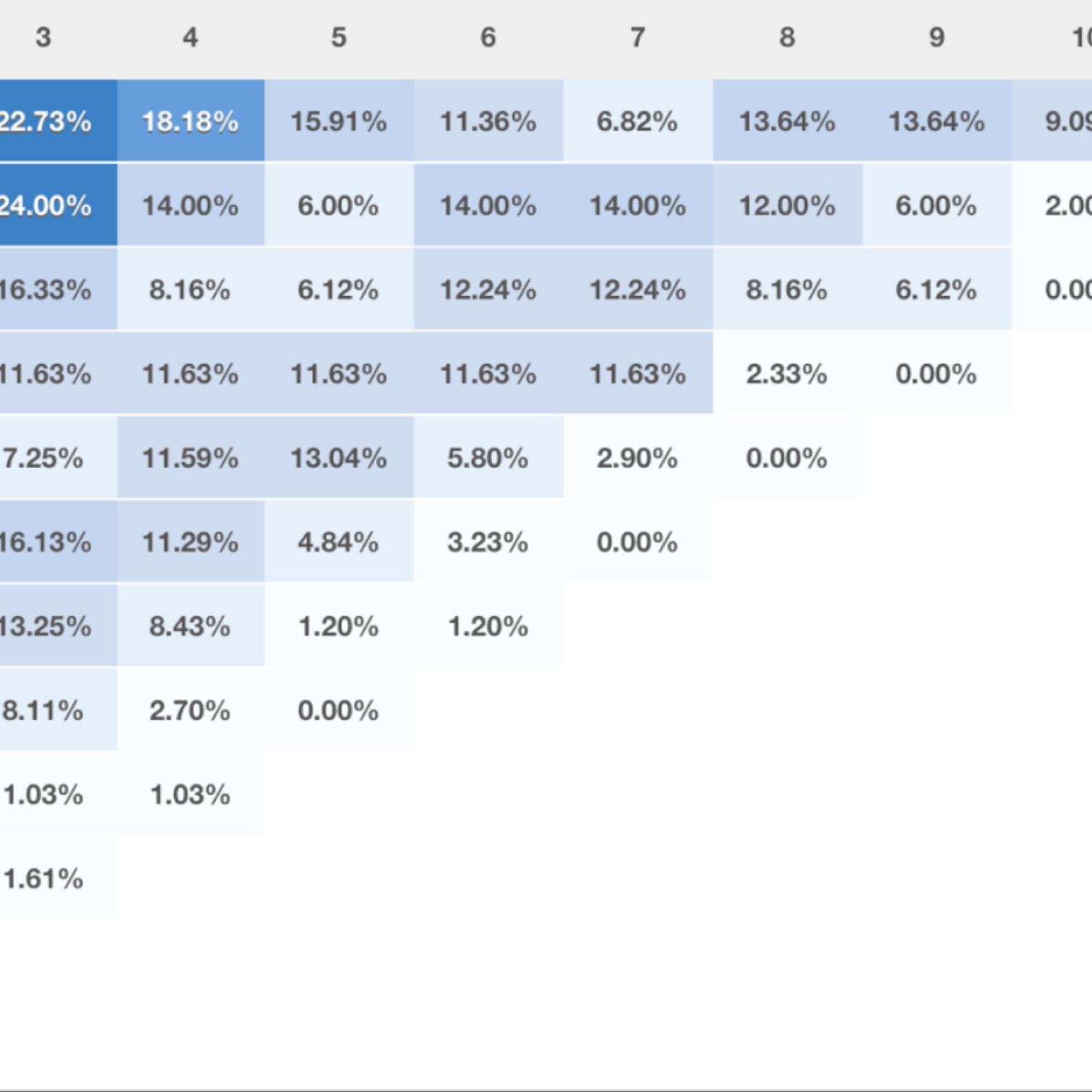 Metrics and Mindsets for Retention & Engagement | Andrew Chen | 20 February 2020 | 33 min | It's "Marketplaces Week" for us at a16z, thanks to our consumer team releasing a new index of the next industry-defining marketplaces, the Marketplace 100 . But what happens as such marketplaces and other platforms evolve over time, as do their users? This episode is a rerun of a popular conversation from a couple years ago -- featuring general partners Andrew Chen and Jeff Jordan (in conversation with Sonal Chokshi) -- on what comes after user acquisition: retention. It's all about engagement. So what are the key metrics? And if different kinds of users join a platform over time -- what does that mean for engagement, and where do cohort analyses come in? Stay Updated: Find a16z on YouTube: YouTube Find a16z on X Find a16z on LinkedIn Listen to the a16z Show on Spotify Listen to the a16z Show on Apple Podcasts Follow our host: https://twitter.com/eriktorenberg Please note that the content here is for informational purposes only; should NOT be taken as legal, business, tax, or investment advice or be used to evaluate any investment or security; and is not directed at any investors or potential investors in any a16z fund. a16z and its affiliates may maintain investments in the companies discussed. For more details please see a16z.com/disclosures. Hosted by Simplecast, an AdsWizz company. See pcm.adswizz.com for information about our collection and use of personal data for advertising. |
| Building the First CAR T Company | Jorge Conde | 7 February 2020 | with @OzAzamTmunity1, @JorgeCondeBio, and @omnivorousread CAR T therapy, the groundbreaking new medicines that uses engineered T-cells to attack cancer, has been so effective in childhood leukemias that we believe it may actually be a potential cure. But this isn't just one new medicine, it's an entirely new therapeutic tool—and a total paradigm shift from most traditional medicines we've seen before. Tmunity CEO Usman "Oz" Azam was previously the head of Cell and Gene Therapies at Novartis, in many ways the first CAR T company and the team brought us blood cancer CAR T-cell therapy Kymriah—the first cell-based gene therapy to be approved in the US. In this conversation, Azam discusses with a16z's general partner Jorge Conde and Hanne Tidnam what CAR T therapy really is and how it all works. The conversation begins with the “patient and cell journey” of this treatment and how this medicine is developed, manufactured, delivered to patients; why exactly it's so different traditional medicines; what it will take to make these new medicines work on more kinds of cancer, scale to more patients, and cost less; and finally, what company building lessons can be learned from building the first CAR T company of its kind from the ground up. This episode was recorded at the annual a16z Summit. | |
| On Pharma Trends and Big Company Innovation | Jorge Conde | 11 January 2020 | How does the world’s largest producer of medicines in terms of volume balance the science and the business of innovation? How does an enterprise at such vast scale make decisions about what to build vs. buy, especially given the fast pace of science today? How does it balance attitudes between “not invented here” and “not invented yet”? Vas Narasimhan, CEO of Novartis, sat down with a16z bio general partners Jorge Conde and Vijay Pande, and editor in chief Sonal Chokshi, during the JP Morgan Healthcare Conference around this time last year, to discuss the latest trends in therapeutics; go to market and why both big companies and bio startups need to get market value signals (not just approvals!) from payers earlier in the process; clinical trials, talent, leadership, and more in this rerun of the a16z Podcast. image: Global Panorama / Flickr Stay Updated: Find a16z on YouTube: YouTube Find a16z on X Find a16z on LinkedIn Listen to the a16z Show on Spotify Listen to the a16z Show on Apple Podcasts Follow our host: https://twitter.com/eriktorenberg Please note that the content here is for informational purposes only; should NOT be taken as legal, business, tax, or investment advice or be used to evaluate any investment or security; and is not directed at any investors or potential investors in any a16z fund. a16z and its affiliates may maintain investments in the companies discussed. For more details please see a16z.com/disclosures. Hosted by Simplecast, an AdsWizz company. | |
| Brand Building Ideas… and People | Margit Wennmachers | 20 November 2019 | Many technical founders, academics, and other experts often believe that great products -- or great ideas! -- sell themselves , without any extra effort or marketing. But in reality, they often need PR ( public relations ). The irony is, most of the work involved in PR is actually invisible to the public -- when it works, that is -- and therefore hard for those from the outside to see let alone understand. So how does such brand-building really work? In this 10-year anniversary episode of the a16z Podcast (and our 499th episode), a16z operating partner Margit Wennmachers shares the case study of her work at The Outcast Agency (which she co-founded) and of building the a16z brand (where she heads marketing and was the first and one of the earliest hires). What's the backstory there? What's the backstory behind some of the most popular media stories and op-eds -- like "software is eating the world" -- and what can it teach us about how PR and brand-building works in practice? Because -- like many software companies -- the product is so abstract, and not something you can physically touch, what kind of subtle decisions and tactics big and small does it take? Answering some frequently asked questions (in conversation with editor in chief Sonal Chokshi) that we often get around how things work, Wennmachers reveals (just some;) of the details behind the scenes. Given that technology is all about disintermediating "brokers" in the middle, will tech one day replace PR? | |
| Free Software and Open Source Business | Peter Levine | 21 October 2019 | Today, despite the critical importance of open source to software, it’s still seen by some as blasphemous to make money as an open source business. In this podcast, Armon Dadgar, Cofounder and CTO of HashiCorp; Ali Ghodsi, CEO of Databricks; and a16z General Partner Peter Levine explain why it's necessary to turn some open source projects into businesses. They also cover the most important questions for open source leaders to answer: How do you keep community engaged while building a business? What new opportunities does SaaS (software-as-a-service) present? And if you are a SaaS business, how should you approach cloud service companies, like Amazon Web Services (AWS)? Stay Updated: Find a16z on YouTube: YouTube Find a16z on X Find a16z on LinkedIn Listen to the a16z Show on Spotify Listen to the a16z Show on Apple Podcasts Follow our host: https://twitter.com/eriktorenberg Please note that the content here is for informational purposes only; should NOT be taken as legal, business, tax, or investment advice or be used to evaluate any investment or security; and is not directed at any investors or potential investors in any a16z fund. a16z and its affiliates may maintain investments in the companies discussed. For more details please see a16z.com/disclosures. Hosted by Simplecast, an AdsWizz company. See pcm.adswizz.com for information about our collection and use of personal data for advertising. | |
| a16z Podcast: How to Manage a PR Agency | Margit Wennmachers | 27 September 2018 | with Shannon (Stubo) Brayton (@sstubo), Margit Wennmachers (@wennmachers), and Sonal Chokshi (@smc90) One of the company building topics that’s surprisingly mystifying is PR -- and only surprising since so much of the strategy and tactics behind public relations are actually hidden from public view. We've tried demystifying the topic in an ongoing series, covering everything from "the why, how, and when" of PR" and leaders building a personal brand to crisis communications. But the most frequently asked question startup founders, especially technical ones, have is how to manage a PR agency -- from when to bring one in and the mechanics of onboarding and engaging with them; to key acronyms to know in the process of doing so (what's an AoR? RFP? GA?); to what are the ideal configurations for the who-what-where of in-house vs. agency PR. So this episode of the a16z Podcast provides perspectives from both sides of the table (in-house vs. agency, big company vs. startup) for what it takes, featuring PR legends and veterans Shannon (Stubo) Brayton, chief marketing officer at LinkedIn (formerly at OpenTable and formerly vice president of corporate communications at eBay) and Margit Wennmachers, operating partner at Andreessen Horowitz who heads up the marketing function (and who co-founded and later sold The Outcast Agency), in conversation with Sonal Chokshi. | |
| 2024 Big Ideas: AI-First Games That Never End with Jonathan Lai | Jonathan Lai | |||
| a16z Podcast | Mobile Invades the Data Center | Peter Levine | |||
| a16z Podcast | Money, Risk, and Software | Alex Rampell | |||
| a16z Podcast | The Business of Cybercrime | Joel de la Garza | |||
| a16z Podcast | What's in the Water at the George Church Lab? | Jorge Conde | |||
| AI Copilots and the Future of Knowledge Work with Microsoft's Kevin Scott | Bob Swan | |||
| AI Is Learning to Hack. Faster Than We Expected. | Joel de la Garza | |||
| AI is Revolutionizing Web Security - Bots, Agents, & Real-Time Defense | Joel de la Garza | |||
| AI Markets: Deep Dive with a16z's David George | David George | |||
| Automating Developer Email with MCP and AI Agents | Yoko Li | |||
 Ben Horowitz & Marc Andreessen: Why Silicon Valley Turned Against Defense (And How We're Fixing It) | Ben Horowitz | |||
| Ben Horowitz and David Solomon: The Sweetest Macro Spot in 40 Years | David Haber | |||
 Ben Horowitz on AI Anxiety, Big Tech Transitions & The Future of Startups | a16z | Ben Horowitz | |||
 Ben Horowitz on Investing in AI: AI Bubbles, Economic Impact, and VC Acceleration | Ben Horowitz | |||
| Big Ideas 2024: New Applications for Computer Vision and Video Intelligence with Kimberly Tan | Kimberly Tan | |||
| Big Ideas 2024: The Consumer AI Battleground Moves from Model to UX with Alex Immerman | Alex Immerman | |||
| Big Ideas 2024: The Rise of the Developer as a Buyer in Financial Services with Angela Strange | Angela Strange | |||
| Big Ideas in 2024: Programming Medicine’s Final Frontier with Jorge Conde | Jorge Conde | |||
| Building a $20B+ Open Source Business with MongoDB and Viam's Eliot Horowitz | Seema Amble | |||
 Building a Company in Stealth | Travis Kalanick with a16z | Ben Horowitz | |||
| Building the Cloud for AI Agents | AWS CEO Matt Garman | Raghu Raghuram | |||
| Can Open Models Keep Up With OpenAI and Anthropic? | Nathan Lambert | Lisha Li | |||
| Competing in a Crowd of Incumbents with Mercury's Immad Akhund | Seema Amble | |||
| Digital Branding: Lessons from Vogue, Monetizing Social, Creator Tips | Field Notes with Connie Chan | Connie Chan | |||
| Doubling Down on Founder-Led Sales with Pilot's Waseem Daher | Seema Amble | |||
| Former Intel CEO: Why This is the Best Time to Build Hardware | Guido Appenzeller, Raghu Raghuram | |||
| Global Investing in Tech: Pattern Recognition, Founder Traits, Momentum | Field Notes by Connie Chan | Connie Chan | |||
| How AI Will Impact Emergency Response: The Tech That Could Soon Save Your Life w/ Michael Chime | Kimberly Tan | |||
| How Andreessen Horowitz Disrupted VC & What’s Coming Next | Erik Torenberg | |||
| How Decagon Runs 90% of Its Agents on Open-Source Models | Kimberly Tan | |||
| How GenAI-Based Software Is Advancing Marketing and Sales | Seema Amble | |||
| Inside a16z’s Top 100 AI Apps Report with Olivia Moore | Olivia Moore | |||
| Inside Moderna’s Biggest mRNA Test Since COVID | Jorge Conde | |||
| Inside OpenAI’s Breakthroughs in Mathematical Reasoning | Lisha Li | |||
| Kavak's Playbook for Rebuilding a Company Around AI | Gabriel Vasquez | |||
| Leveling Up with Roblox's David Baszucki | Jonathan Lai | |||
| Lighthouse or Landgrab? How to Pick Your AI Sales Strategy | Andy McCall, Joe Schmidt | |||
| Marc Andreessen and Ben Horowitz on the State of AI | Erik Torenberg | |||
 Marc Andreessen's 2026 Outlook: AI Timelines, US vs. China, and The Price of AI | Marc Andreessen | |||
 Marc Andreessen’s Worldview in 60 Minutes | Live on MTS | Marc Andreessen, Erik Torenberg | |||
| Marketplace Breakout Strategies: Take Rates, Defensibility, Payments | Field Notes by Connie Chan | Connie Chan | |||
 Reid Hoffman on AI, Consciousness, and the Future of Labor | Reid Hoffman | |||
| Scaling Medicaid Innovation with Rajaie Batniji, Sanjay Basu, and Afia Asamoah | Vineeta Agarwala | |||
| The 2025 AI Search Race | Alex Immerman | |||
| The Current State of Consumer AI | Olivia Moore | |||
| The Future of Digital Workers | Joe Schmidt | |||
| The New Rule for Picking AI Winners | The a16z Show | David George | |||
| The Opportunity for Global Founders | Angela Strange, Gabriel Vasquez | |||
| The Ultimate AI Video Stack: Up-to-Date Best Tools to Make Content With AI | Justine Moore | |||
| Tokens Are the New Dollars | Stripe's Will Gaybrick & David George | David George | |||
| Vibe Coding is Here - How AI is Changing How We Build Online | Justine Moore, Yoko Li | |||
| Welding Yourself to Early Customers with Marqeta's Jason Gardner | Seema Amble | |||
| What Today’s Best Models Still Can’t Do in Math | Lisha Li | |||
| Why AI Agents Could Finally Reinvent the Credit Card | Alex Rampell | |||
| Why AI Demand Is Outrunning Compute Supply | David George | |||
| Why Creativity Will Matter More Than Code | Kevin Rose and Anish Acharya | Anish Acharya | |||
| Why Education Has to Change | Erik Torenberg | |||
| Why Enterprise Software Is Being Rebuilt Around AI Agents | Seema Amble | |||
| Why HubSpot’s Co-Founder Is Betting Against the SaaSpocalypse | Joe Schmidt | |||
| Why Investors Are Rethinking Everything for the AI Era | David George | |||
| Why One Internet Pioneer Thinks the Original Model Broke | Joel de la Garza | |||
| Why the Next Generation of Enterprise Software Looks Nothing Like Salesforce | Joe Schmidt | |||
| Why Top Founders Are Racing Into AI Infrastructure | Erik Torenberg, Raghu Raghuram | |||
| Winning Founders & Influencing Everyone: Margit Wennmachers at Startup Grind Europe | Margit Wennmachers |
TThe Missing Layer for Personal AI | First Person Labs’ Ken LiuJoel de la Garza, Martin Casado · 18 November 2026TCan AI Learn to Improve Itself? | Recursive Self-ImprovementSarah Wang · 17 November 2026TEvery Day Is Zero Day | Wiz CTO Ami LuttwakSarah Wang, Zane Lackey · 13 November 2026TThe Next Era of Games: Mods, Agents, and Infinite WorldsAnish Acharya, Jonathan Lai · 12 November 2026TWhat the Internet Boom Teaches Us About the AI Buildout | Mike VolpiGuido Appenzeller, Raghu Raghuram · 11 November 2026TThe Health Interventions Actually Worth Your Time | Justin MaresDaisy Wolf · 8 November 2026TMark Hyman’s Guide to Living Longer and Staying StrongDaisy Wolf · 7 November 2026TInside Salesforce’s $100 Billion M&A Playbook | John SomorjaiAlex Immerman · 6 November 2026TThe New CFO: How AI Is Rewriting the Finance Function | Figma CFO Praveer MelwaniSeema Amble · 5 November 2026TThe New AI Agents That Shop, Plan, and GossipAnish Acharya, Josh Elman · 4 November 2026TAndrew Huberman’s Three Rules for Better Health and FocusDaisy Wolf · 3 November 2026TThe Robots Already Working in American Factories | Tutor IntelligenceRaghu Raghuram · 2 November 2026THow Bending Spoons Built a $20 Billion Compounder | Luca FerrariAnish Acharya · 1 November 2026TWhy AI Could Turn Small Law Firms Into Billion-Dollar BusinessesAlex Rampell · 30 October 2026TThe Startups Rebuilding American Industry | The AD50Connor Love · 29 October 2026TMark Cuban on Why AI Could Turn Solo Founders Into TrillionairesJulie Yoo · 28 October 2026TOpenAI: When AI Agents Use Computers Faster Than YouFabrizio Serafini, Seema Amble · 26 October 2026TWhat It Takes to Win as a Founder | Ben HorowitzBen Horowitz · 24 October 2026TWhat It Takes to Win as a Founder | Ben HorowitzAndrew Chen, Ben Horowitz · 24 October 2026TMarc Andreessen and Chris DixonChris Dixon · 22 October 2026TMarc Andreessen: The Biggest Gap I’ve Seen in My CareerMarc Andreessen · 22 October 2026TThe Missing Infrastructure for AI Agents: Documents | Reducto’s Adit AbrahamJennifer Li · 21 October 2026TWhat Happens When Everyone Has a Health Expert in Their Pocket? | OpenAI’s Karan SinghalJay Rughani · 20 October 2026TWhat Happens When Al Agents Can Spend Your Money?Alex Rampell · 19 October 2026TWhy AI Could Finally Fix Healthcare Access | Zocdoc CEO Oliver KharrazJulie Yoo · 17 October 2026TAI Can Write the Code. Can It Run the System? | Grepr CEO Jad NaousMartin Casado · 16 October 2026TWhen AI Agents Start Spending Your Money | Alex Rampell & Terry AngelosAlex Rampell · 15 October 2026TCan Open Models Keep Up With the AI Frontier? | Nathan LambertLisha Li · 14 October 2026TWhat Makes a Great Entrepreneur? | Ben Horowitz on Vintage x VintageBen Horowitz · 10 October 2026TChips, Memory, and Power | Pat GelsingerGuido Appenzeller, Raghu Raghuram · 9 October 2026TBuilding the Cloud for an Agentic World | AWS CEO Matt GarmanRaghu Raghuram · 8 October 2026THow Valon Rebuilt a $13 Trillion Industry From ScratchAngela Strange · 7 October 2026TThe Top 100 Consumer AI Apps: Who’s Actually Paying?Josh Elman, Olivia Moore · 5 October 2026TDavid George & Jack Altman on AI, Autonomy, and the Next $25 TrillionDavid George · 4 October 2026TWhy AI Agents Can Beat the IncumbentsSeema Amble · 2 October 2026TRebuilding the Internet for Privacy | Barrett Lyon on DoxxNetJoel de la Garza · 1 October 2026TThe Personal Agent Race Is Here | Anish Acharya & David PawlanAnish Acharya · 29 September 2026TAaron Levie, Steven Sinofsky & Martin Casado: How Do You Secure a World of AI Agents?Aaron Levie, Martin Casado · 26 September 2026TThe Reputation Graph of Silicon Valley | Introducing CosignJosh Elman, Olivia Moore · 25 September 2026TThe Case Against an AI Pause | Eddy LazzarinEddy Lazzarin · 24 September 2026TWhy a16z is Building a New School for the AI Era | Ben HorowitzBen Horowitz · 22 September 2026TWhat Makes a Consumer AI Product Stick? | Josh ElmanJosh Elman · 19 September 2026TDatabricks CEO on AI Pacing, Cyber Risk, and the EnterpriseSarah Wang · 18 September 2026TThe Next Frontier of AI Video Is ControlJennifer Li · 17 September 2026TThe AI-Native CRMAlex Rampell · 16 September 2026TGreg Brockman on Why OpenAI Says We’re Entering the AGI EraErik Torenberg · 14 September 2026TWhy Companies Are Becoming a Series of Loops | Anish Acharya on Lenny’s PodcastAnish Acharya · 12 September 2026TWhat It Takes to Build a Startup | Andrew Chen & Matt PeraultAndrew Chen · 11 September 2026TWho Grades the AI Models? | Ben Horowitz & Rayan KrishnanBen Horowitz, Jennifer Li · 9 September 2026TOpenAI Researchers on the Future of Mathematical ReasoningLisha Li · 8 September 2026TYour AI Doctor Is Coming | Julie YooJulie Yoo · 6 September 2026TAaron Levie on Why Open AI WinsAaron Levie · 5 September 2026TThe $100B Niches Hiding Inside PaymentsMax Levchin, Alex Rampell · 3 September 2026TDaniel Litt: The Mathematician's Guide to AILisha Li · 1 September 2026TGavin Baker: Why AI Demand Is Outrunning Compute SupplyDavid George · 31 August 2026TThe Infrastructure Behind the Machine AgeMartin Casado, Raghu Raghuram · 28 August 2026TThe State of AI: Macro, Apps, and ConsumerAnish Acharya · 26 August 2026TThe New Economics of AI | Martin Casado & Steven SinofskyMartin Casado · 25 August 2026TWhy Medical AI Needs a Referee | Protege's Engy ZiedanDaisy Wolf, Eva Steinman · 24 August 2026TMartin Casado on Where the Value Is Going in AIMartin Casado · 22 August 2026TMicrosoft's Deputy CISO on Securing AI AgentsJoel de la Garza · 21 August 2026THow Global Networks Are Reshaping Startup SuccessAngela Strange, Gabriel Vasquez · 20 August 2026THow Do You Defend Against AI That Can Hack?Joel de la Garza · 18 August 2026TThe Two Ways to Sell AI: Lighthouse or Landgrab?Andy McCall, Joe Schmidt · 13 August 2026TGarry Tan on Taste, Agents and Founder AmbitionAnish Acharya · 12 August 2026TGarry Tan: New Rules for FoundersGarry Tan · 12 August 2026TThe CISO Playbook for AI Agents | DatadogJoel de la Garza · 11 August 2026TThe Self-Improving Company | Kavak's AI PlaybookAngela Strange · 10 August 2026TThe Reality of AI-Powered Cyberattacks | Truffle Security & SocketJoel de la Garza · 7 August 2026TThe Engine Powering Open-Source AIMatt Bornstein · 6 August 2026TMarc Andreessen and Chris Dixon: What’s at Stake in Crypto RegulationMarc Andreessen · 1 August 2026THow Enterprise AI Really Gets DeployedKimberly Tan, Sarah Wang · 31 July 2026TAI for America's Small Businesses | LassieAlex Rampell, Olivia Moore · 30 July 2026TAI Micro Dramas, Generative Media, and the Future of CreativityJustine Moore · 29 July 2026TBen Horowitz: The Fight Over Open Source AIBen Horowitz · 26 July 2026TBuilding the Physical AI Stack | Travis Kalanick on TBPNTravis Kalanick · 23 July 2026TFrom the Archive: Can Anyone Catch NVIDIA? | The Future of Chips and InfrastructureErin Price-Wright, Guido Appenzeller · 15 July 2026TMark Zuckerberg & Priscilla Chan: How AI Will Help Cure DiseaseVineeta Agarwala · 9 July 2026TAdam Neumann: This is How You Build Iconic CompaniesAdam Neumann · 8 July 2026Ta16z Goes Global: Why American Tech Must Lead the WorldRaghu Raghuram · 3 July 2026TBen Horowitz on the Global Race for Tech, Power, and InfluenceBen Horowitz, Raghu Raghuram · 3 July 2026TRick Rubin on AI, Creativity, and The Way of CodeAnjney Midha · 1 July 2026TBuilding AI for Creators | Luma & Phota LabsYoko Li · 30 June 2026TBeyond P(doom): Marc Andreessen - Betting on AmericaMarc Andreessen · 29 June 2026TMarc Andreessen on AI, Technology, and the Future of HumanityMarc Andreessen · 25 June 2026TWhat Happens to Design After AI?John Maeda, Anish Acharya · 24 June 2026TWhat’s Next for Consumer AI? | Josh Elman Joins a16zAnish Acharya, Josh Elman · 23 June 2026TThe New Media Playbook with Marc Andreessen & Ben HorowitzBen Horowitz, Marc Andreessen, Erik Torenberg · 19 June 2026TThe Fintech Playbook for Latin AmericaAngela Strange · 17 June 2026TAI, Design, and the Power of Open ModelsJustine Moore, Yoko Li · 15 June 2026TDesigning the Physical World with AIErin Price-Wright · 11 June 2026TTyler Cowen & Alex Tabarrok on AI, Jobs, and Economic GrowthTyler Cowen · 9 June 2026TFoundation Models are a Commodity | Benedict Evans on a16zBenedict Evans · 8 June 2026TBuilding Search for AI Agents with Exa CEO Will BrykSarah Wang · 6 June 2026TBalaji and Steven Glinert on Network States, Supply Chains, and Allied Coalition StrategyBalaji S. Srinivasan · 3 June 2026TBuilding AI Agents for Enterprise OperationsAnish Acharya, Olivia Moore · 1 June 2026TWhy $1B Exits are DeadDavid George · 29 May 2026TStablecoins, AI Agents, and The Future of Global BankingAngela Strange · 28 May 2026TMarc Rowan on Private Markets, Software Repricing, and Capital AllocationDavid Haber · 27 May 2026TMarc Andreessen on AI, California, and the Future of America | Joe RoganMarc Andreessen · 20 May 2026TRebuilding The American ShipyardErin Price-Wright · 19 May 2026TThe Plan to Make American Crime ObsoleteDavid Ulevitch · 18 May 2026TVitalik Buterin on Human Agency in the AI EraVitalik Buterin · 15 May 2026TBen Horowitz - "Your ONLY job is Right Product, Right Time"Ben Horowitz · 14 May 2026TEnergy, Minerals, and the Physical Stack Behind AIErin Price-Wright · 13 May 2026TLloyd Blankfein on Risk, Crisis, and LeadershipDavid Haber · 12 May 2026TMarc Andreessen on Builder Culture in the Age of AIMarc Andreessen · 11 May 2026TBen Horowitz on American Dynamism and the Future of AI | The a16z ShowBen Horowitz, David Ulevitch · 8 May 2026TBen Horowitz on the Next Technology EraDavid Ulevitch · 8 May 2026TBuilding Blackstone, Backing Costco, with Tony JamesDavid Haber · 5 May 2026TBalaji and Taylor Lorenz on AI and MediaBalaji S. Srinivasan · 1 May 2026TWorkday’s Last Workday? AI and the Future of Enterprise SoftwareJoe Schmidt · 30 April 2026TBen Horowitz on Venture Capital and AIBen Horowitz, Anjney Midha · 27 April 2026TAI Inside the EnterpriseMartin Casado · 24 April 2026TBalaji Srinivasan: Prove Correct, Not Just Go DirectBalaji S. Srinivasan · 22 April 2026TMarc Andreessen on how the internet changed news, politics, and outrage | The a16z ShowMarc Andreessen · 21 April 2026TRethinking Git for the Age of Coding Agents with GitHub Cofounder Scott ChaconMatt Bornstein · 20 April 2026TNetwork Effects, AI Costs, and the Future of Consumer Investing with Anish Acharya on The Kevin Rose ShowAnish Acharya · 19 April 2026TTechnology, Culture, and the Next AI Interface with signüllAnish Acharya · 16 April 2026TBen Horowitz on AI Infrastructure, Economics and The New Laws of SoftwareAlex Rampell · 14 April 2026TBuilding Agents at Home: Parenting, Work, and Benevolent NeglectKatherine Boyle, Sarah Wang · 13 April 2026TWho Controls AI Acceleration? Vitalik Buterin and Guillaume Verdon DebateEddy Lazzarin · 9 April 2026TAaron Levie on AI Adoption and Enterprise Workflows | The a16z ShowAaron Levie · 8 April 2026TThe Agent Era: Building Software Beyond Chat with Box CEO Aaron LevieMartin Casado · 8 April 2026TBalaji Srinivasan on The Future of AI | The a16z ShowBalaji S. Srinivasan · 7 April 2026TMarc Andreessen on AI Winters and Agent BreakthroughsMarc Andreessen · 3 April 2026TWhat Happens When a Public Company Goes All In on AIDavid Haber · 1 April 2026THow Radiant and Heron Are Rethinking Power Generation and DeliveryErin Price-Wright · 31 March 2026TMarc Andreessen on Evaluating Founders and AI's Consumer SurplusMarc Andreessen · 30 March 2026TThe SpaceX and Tesla Playbook for Hard Tech StartupsErin Price-Wright · 27 March 2026TSecurity, Resilience, and the Future of Mobile InfrastructureDavid Ulevitch · 26 March 2026TSubmarines and the Future of Defense ManufacturingDavid Ulevitch · 25 March 2026TThe Missing Power Layer of Modern WarfareErin Price-Wright · 24 March 2026TAI Just Gave You Superpowers — Now What?Eddy Lazzarin · 19 March 2026TAI, Supply Chains, and the Future of Economic PowerErik Torenberg · 18 March 2026TWhat's Missing Between LLMs and AGI - Vishal Misra & Martin CasadoMartin Casado · 17 March 2026TAI Startups vs. Big Chatbots — With Olivia MooreOlivia Moore · 16 March 2026TMarc Andreessen on the Mindset of Great Founders — with David SenraMarc Andreessen · 15 March 2026TAndrew Huberman: Peptides, Sleep Tech, and the End of ObesityDaisy Wolf · 9 March 2026TAtlassian CEO on the SaaS Apocalypse, AI Agents & What Comes NextMike Cannon-Brookes, Alex Rampell · 6 March 2026TDeploying AI in HealthcareJulie Yoo · 4 March 2026TBen Horowitz On What Makes a Great FounderBen Horowitz · 3 March 2026TChris Dixon: From Quant Trading to Building a16z CryptoChris Dixon · 2 March 2026TWhen Giants Don’t Go Public: Inside the $5 Trillion Private Tech MarketDavid George · 26 February 2026TPatrick Collison on Stripe’s Early Choices, Smalltalk, and What Comes After CodingPatrick Collison · 20 February 2026TAI’s Capital Flywheel: Models, Money, and the Future of PowerMartin Casado, Sarah Wang · 19 February 2026TFrom Copilots to Agents: Rebuilding the Company Around AIAngela Strange · 18 February 2026TNovartis CEO Vasant Narasimhan on Transforming a 250-Year-Old CompanyJorge Conde · 16 February 2026TMarc Andreessen: Who Runs the World’s AI?Marc Andreessen · 10 February 2026TThe State of MarketsDavid George · 9 February 2026TWhy This Isn't the Dot-Com Bubble | Martin Casado on WSJ's BOLD NAMESMartin Casado · 5 February 2026TPalmer Luckey on Hardware, Building, and the Next Frontiers of InnovationPalmer Luckey · 3 February 2026TDavid Solomon & Ben Horowitz on Building Organizational Resilience & Navigating Macro UncertaintyDavid Haber · 2 February 2026THealthcare 2026: AI Doctors, GLP-1s, and Insurance DefectionJay Rughani · 27 January 2026TThe Hidden Economics Powering AIDavid George · 26 January 2026THow Mintlify Is Rebuilding Documentation for Coding AgentsJennifer Li, Yoko Li · 23 January 2026TMartin Casado on the Demand Forces Behind AIMartin Casado · 21 January 2026TAlex Rampell on TBPN: Revenge, Redemption, and Founder DriveAlex Rampell · 14 January 2026TAlex Rampell on Venture at Scale and Founder IncentivesAlex Rampell · 12 January 2026TKeycard: 2026 is the Year of AgentsJoel de la Garza · 8 January 2026TWartime vs Peacetime: Ben Horowitz on LeadershipJorge Conde · 2 January 2026TThe Inside Story of Growth Investing at a16zDavid George · 31 December 2025TThe Rise, Fall & Reset of The Fintech IndustryDavid Haber · 19 December 2025TDo Revenue and Margins Still Matter in AI?David George · 18 December 2025TRyo Lu (Cursor): AI Turns Designers to DevelopersJennifer Li · 16 December 2025TAI Eats the World: Benedict Evans on the Next Platform ShiftBenedict Evans · 12 December 2025TThe $3 Trillion AI Coding OpportunityGuido Appenzeller, Yoko Li · 9 December 2025TThe 80-Year Bet: Why Naveen Rao Is Rebuilding the Computer from ScratchMatt Bornstein · 8 December 2025TWhy AI Moats Still Matter (And How They've Changed)Alex Rampell, David Haber · 3 December 2025TThe $700 Billion AI Productivity Problem No One's Talking AboutAlex Rampell · 1 December 2025TThe Secret Marketing Strategy That Built a16z: From Zero to Legendary VC FirmMargit Wennmachers · 26 November 2025TEmmett Shear on Building AI That Actually Cares: Beyond Control and SteeringEmmett Shear · 17 November 2025TMark Zuckerberg & Priscilla Chan: How AI Will Cure All DiseaseVineeta Agarwala · 6 November 2025TElevenLabs CEO: Why Voice is the Next AI InterfaceJennifer Li · 5 November 2025T"Is there an AI bubble?” Gavin Baker and David GeorgeDavid George · 30 October 2025TBuilding the Real-World Infrastructure for AI, with Google, Cisco & a16zRaghu Raghuram · 29 October 2025TRaghu Raghuram: AI, Robotics, and the Rebirth of InfrastructureRaghu Raghuram · 27 October 2025TMarc Andreessen: How Movies Explain AmericaErik Torenberg, Katherine Boyle · 24 October 2025TKeith Rabois: Israel, OpenAI, Opendoor, and DOGEKeith Rabois · 16 October 2025TMonitoring the Situation #3: Who Is Nick Land?Eddy Lazzarin, Erin Price-Wright · 12 October 2025TBuilding an AI Physicist: ChatGPT Co-Creator’s Next VentureAnjney Midha · 30 September 2025TFrom Vibe Coding to Vibe Researching: OpenAI’s Mark Chen and Jakub PachockiSarah Wang · 25 September 2025TSoftware Finally Eats Services - Aaron LevieAaron Levie · 24 September 2025TAmerica's Autism Crisis and How AI Can Fix Science with NIH Director Jay BhattacharyaJorge Conde, Vineeta Agarwala · 23 September 2025TDylan Patel on the AI Chip Race - NVIDIA, Intel & the US Government vs. ChinaGuido Appenzeller, Sarah Wang · 22 September 2025THow OpenAI Built Its Coding AgentAnjney Midha · 16 September 2025TInside the $13T Mortgage MachineAngela Strange · 11 September 2025TBuilding APIs for Developers and AI AgentsJennifer Li · 6 September 2025TIs Non-Consensus Investing Overrated?Leo Polovets · 4 September 2025TKatherine Boyle on Shawn RyanKatherine Boyle · 30 August 2025TThe Top 100 Most Used AI Apps in 2025Olivia Moore · 27 August 2025TAaron Levie and Steven Sinofsky on the AI-Worker FutureAaron Levie · 25 August 2025TCan AI Fix Housing and Healthcare Affordability?Alex Immerman · 21 August 2025TDylan Patel: GPT-5, NVIDIA, Intel, Meta, AppleErik Torenberg, Erin Price-Wright, Guido Appenzeller · 18 August 2025TGoogle DeepMind Lead Researchers on Genie 3 & the Future of World-BuildingAnjney Midha, Justine Moore · 16 August 2025TSteven Sinofsky & Balaji Srinivasan on the Future of M&A, AI & TechBalaji S. Srinivasan · 11 August 2025THow to Build a Successful Company in an Era of DisruptionRaghu Raghuram · 6 August 2025TTech vs. Media: Balaji Srinivasan on the Battle Shaping Our FutureBalaji S. Srinivasan · 1 August 2025TBalaji Srinivasan: How AI Will Change Politics, War, and MoneyBalaji S. Srinivasan · 28 July 2025TCritical Minerals: Mining for the Industrial FutureErin Price-Wright · 23 July 2025TThe Future of Software Development - Vibe Coding, Prompt Engineering & AI AssistantsJennifer Li, Matt Bornstein · 21 July 2025TAmerica's Energy Problem: The Grid That Built America Can’t Power Its FutureDavid Ulevitch, Erin Price-Wright, Ryan McEntush · 16 July 2025TAaron Levie on AI's Enterprise AdoptionAaron Levie · 14 July 2025TEnabling Agents and Battling Bots on an AI-Centric WebJoel de la Garza · 4 July 2025TMarc Andreessen on Startup TimingJonathan Lai · 2 July 2025TKatherine Boyle: How Tech Can Rebuild AmericaKatherine Boyle · 30 June 2025TChris Dixon & Tyler Cowen on Crypto, AI, and PhilosophyChris Dixon · 23 June 2025TChris Dixon: Stablecoins, Startups, and the Crypto StackChris Dixon · 9 June 2025TThe State of Consumer Tech in the Age of AIJustine Moore, Olivia Moore · 6 June 2025TWhere Crypto Meets AI with Chris Dixon & David GeorgeDavid George · 31 May 2025TRick Rubin: Vibe Coding is the Punk Rock of SoftwareAnjney Midha · 29 May 2025TWhere Value Will Accrue in AI: Martin Casado & Sarah WangSarah Wang · 27 May 2025TUnbundling the BPO: How AI Is Disrupting Outsourced WorkKimberly Tan · 17 May 2025TStartups & Defense: Katherine Boyle on TBPNKatherine Boyle · 7 May 2025TWhy AI Voice Feels More Human Than EverOlivia Moore · 18 March 2025TFrom Thesis to Meme to Fund: Building American DynamismDavid Ulevitch · 11 March 2025TWho Will Own the Internet? a16z’s Chris Dixon on AI and CryptoChris Dixon · 20 February 2025TThe Critical Technology in Finding Critical MaterialsConnie Chan · 11 February 2025TRIP to RPA: How AI Makes Operations WorkKimberly Tan · 22 January 2025TMarc Andreessen: Can Tech Finally Fix Healthcare?Julie Yoo · 15 January 2025TJobs of the Future, Harnessing Earth Observation, & Gaming Tech AdvancesTroy Kirwin · 20 December 2024TScaling Shopify: Tobias Lütke and Ben Horowitz on Building a Global GiantTobi Lütke · 16 December 2024THow AI is Transforming Labor MarketsAngela Strange, David Haber · 11 December 2024TRebuilding America's Industrial BackboneOliver Hsu · 11 November 2024TAutonomy Across Air, Land, and SeaErin Price-Wright · 4 November 2024TTesla's Road Ahead: The Bitter Lesson in RoboticsAnjney Midha · 24 October 2024TBuilding a Thriving AI Ecosystem with Lisa SuBob Swan · 17 October 2024TApple’s Big Reveals, OpenAI’s Multi-Step Models, and Firefly Does VideoJustine Moore · 14 September 2024TGrand Challenges in Healthcare AIJulie Yoo · 7 September 2024TIt’s Time to Build in HealthcareDaisy Wolf · 28 August 2024TLatin America: A Tech Powerhouse?Angela Strange · 24 August 2024TThe SSN Breach: What Now?Joel de la Garza · 18 August 2024TBuilding the World's Most Trusted DriverDavid George · 5 August 2024TWhen AI Meets ArtJustine Moore · 30 July 2024TTransitioning From Gymnast to Investor with Aly RaismanJulie Yoo, Daisy Wolf · 17 July 2024TThe Science and Supply of GLP-1sVineeta Agarwala · 19 June 2024TThe GenAI 100: The Apps that StickOlivia Moore · 27 May 2024TA Big Week in AI: GPT-4o & Gemini Find Their VoiceJustine Moore · 19 May 2024TRemaking the UI for AIAnjney Midha · 16 May 2024THow Discord Became a Developer PlatformAnjney Midha · 10 May 2024TSecuring the Black Box: OpenAI, Anthropic, and GDM DiscussJoel de la Garza · 6 May 2024TMarc Andreessen & Andrew Chen Talk Creative ComputersAndrew Chen · 17 April 2024TThe Real Price of Healthcare with Mark CubanDavid Ulevitch · 29 March 2024TBeyond Uncanny Valley: Breaking Down SoraAnjney Midha · 24 February 2024TFraying Wires: The Decentralization of the Electric GridRyan McEntush · 15 February 2024TDrones, Data, and Deterrence: Technology's Role in Public SafetyDavid Ulevitch · 10 January 2024TText to Video: The Next Leap in AI GenerationAnjney Midha · 20 December 2023TSafety in Numbers: Keeping AI OpenAnjney Midha · 11 December 2023TFintech Fuels Global PaymentsAngela Strange · 30 October 2023TWartime vs Peacetime: Ben Horowitz on LeadershipJorge Conde · 24 August 2023TWhen Two Giants Intersect: Healthcare Meets FintechDavid Haber · 9 May 2023TInsights from the Frontlines of Consumer TechConnie Chan · 19 April 2023TThe Marketplace 100: A Glimpse Into the Future of CommerceConnie Chan, Olivia Moore · 23 March 2023TDisrupting the World's Largest Asset Class with Adam NeumannAdam Neumann · 7 February 2023TDisrupting the World’s Largest Asset Class with Adam NeumannDavid Ulevitch · 7 February 2023T2023 Big Ideas in Technology (Part 2)Angela Strange, Ryan McEntush · 27 January 2023T2023 Big Ideas in Technology (Part 1)Connie Chan · 24 January 2023TRearchitecting the Supply Chain with Ryan PetersenRyan Petersen · 24 November 2022TThe Network State with Balaji SrinivasanBalaji S. Srinivasan · 15 November 2022TThe Future of AudioConnie Chan · 14 October 2022TCloud Wars, Company Wars, and Innovating Through ChangeMichael Dell · 7 September 2022TThe Fintech Opportunity for Students and Gen ZSeema Amble · 26 August 2022TCrisis Communications 101Margit Wennmachers · 13 July 2022TMining the Data for CobaltConnie Chan · 29 June 2022TWhen Gross Margins MatterSarah Wang · 11 May 2022TThe Founder to Investor JourneyDavid Ulevitch · 4 May 2022TThe Basics of Growth Marketing: Engagement & RetentionAndrew Chen · 6 April 2022TThe Basics of Growth Marketing: User AcquisitionAndrew Chen · 30 March 2022TCrypto Security and the New Web3 Mindsets for UsersEddy Lazzarin · 15 October 2021TCloud Wars and Company Wars: Play Nice But WinMichael Dell · 2 October 2021TUncontrolled Spread: Science, Policy, Institutions, InfrastructureVineeta Agarwala · 20 September 2021TThe Next Wave of Marketplace StartupsConnie Chan · 24 March 2021TAnatomy of the SolarWinds Hack: Who What Where When HowJoel de la Garza · 1 February 2021TDevelopers as CreativesDavid Ulevitch · 13 January 2021TWhat to Know about Those VaccinesJorge Conde, Vineeta Agarwala · 20 November 2020TThe Social Serendipity of Cloud GamingJonathan Lai · 16 November 2020TDesigning for, Marketing to, and Partnering With Gen ZConnie Chan · 19 October 2020TThe Present Future of Audio: Talk, Music, Video, InteractivityConnie Chan · 14 October 2020TFintech for Gen Z and MillennialsSeema Amble · 1 October 2020TOnline Learning and the Ed Tech DebateConnie Chan · 17 August 2020TOn Vaccines and Vaccinology, in COVID and BeyondJorge Conde · 14 August 2020THow Transparent Pricing Drives Healthcare ChangeJulie Yoo · 15 July 2020TEvery Company Is a Fintech CompanyAngela Strange · 7 July 2020TWhen One App Rules Them All: The Case of WeChat and Mobile in ChinaConnie Chan · 7 July 2020TBuilding Products for Power UsersDavid Ulevitch · 24 June 2020TReal Estate in a Pandemic: Renters and Landlords (Part 2)Connie Chan · 17 June 2020TThe Return of Home-based HealthcareJulie Yoo · 12 June 2020TThe Future of Primary CareJulie Yoo · 11 June 2020TUndruggable DrugsJorge Conde · 6 May 2020TWhen Bad Policy = Bad Business Models = Bad Public HealthJorge Conde, Julie Yoo · 16 April 2020TVirtual OncologyVineeta Agarwala · 10 April 2020TSecurity When the Workforce Goes RemoteJoel de la Garza · 27 March 2020TWhen Medicine Goes VirtualJulie Yoo · 19 March 2020TMetrics and Mindsets for Retention & EngagementAndrew Chen · 20 February 2020TBuilding the First CAR T CompanyJorge Conde · 7 February 2020TOn Pharma Trends and Big Company InnovationJorge Conde · 11 January 2020TBrand Building Ideas… and PeopleMargit Wennmachers · 20 November 2019TFree Software and Open Source BusinessPeter Levine · 21 October 2019Ta16z Podcast: How to Manage a PR AgencyMargit Wennmachers · 27 September 2018T2024 Big Ideas: AI-First Games That Never End with Jonathan LaiJonathan LaiTa16z Podcast | Mobile Invades the Data CenterPeter LevineTa16z Podcast | Money, Risk, and SoftwareAlex RampellTa16z Podcast | The Business of CybercrimeJoel de la GarzaTa16z Podcast | What's in the Water at the George Church Lab?Jorge CondeTAI Copilots and the Future of Knowledge Work with Microsoft's Kevin ScottBob SwanTAI Is Learning to Hack. Faster Than We Expected.Joel de la GarzaTAI is Revolutionizing Web Security - Bots, Agents, & Real-Time DefenseJoel de la GarzaTAI Markets: Deep Dive with a16z's David GeorgeDavid GeorgeTAutomating Developer Email with MCP and AI AgentsYoko LiTBen Horowitz & Marc Andreessen: Why Silicon Valley Turned Against Defense (And How We're Fixing It)Ben HorowitzTBen Horowitz and David Solomon: The Sweetest Macro Spot in 40 YearsDavid HaberTBen Horowitz on AI Anxiety, Big Tech Transitions & The Future of Startups | a16zBen HorowitzTBen Horowitz on Investing in AI: AI Bubbles, Economic Impact, and VC AccelerationBen HorowitzTBig Ideas 2024: New Applications for Computer Vision and Video Intelligence with Kimberly TanKimberly TanTBig Ideas 2024: The Consumer AI Battleground Moves from Model to UX with Alex ImmermanAlex ImmermanTBig Ideas 2024: The Rise of the Developer as a Buyer in Financial Services with Angela StrangeAngela StrangeTBig Ideas in 2024: Programming Medicine’s Final Frontier with Jorge CondeJorge CondeTBuilding a $20B+ Open Source Business with MongoDB and Viam's Eliot HorowitzSeema AmbleTBuilding a Company in Stealth | Travis Kalanick with a16zBen HorowitzTBuilding the Cloud for AI Agents | AWS CEO Matt GarmanRaghu RaghuramTCan Open Models Keep Up With OpenAI and Anthropic? | Nathan LambertLisha LiTCompeting in a Crowd of Incumbents with Mercury's Immad AkhundSeema AmbleTDigital Branding: Lessons from Vogue, Monetizing Social, Creator Tips | Field Notes with Connie ChanConnie ChanTDoubling Down on Founder-Led Sales with Pilot's Waseem DaherSeema AmbleTFormer Intel CEO: Why This is the Best Time to Build HardwareGuido Appenzeller, Raghu RaghuramTGlobal Investing in Tech: Pattern Recognition, Founder Traits, Momentum | Field Notes by Connie ChanConnie ChanTHow AI Will Impact Emergency Response: The Tech That Could Soon Save Your Life w/ Michael ChimeKimberly TanTHow Andreessen Horowitz Disrupted VC & What’s Coming NextErik TorenbergTHow Decagon Runs 90% of Its Agents on Open-Source ModelsKimberly TanTHow GenAI-Based Software Is Advancing Marketing and SalesSeema AmbleTInside a16z’s Top 100 AI Apps Report with Olivia MooreOlivia MooreTInside Moderna’s Biggest mRNA Test Since COVIDJorge CondeTInside OpenAI’s Breakthroughs in Mathematical ReasoningLisha LiTKavak's Playbook for Rebuilding a Company Around AIGabriel VasquezTLeveling Up with Roblox's David BaszuckiJonathan LaiTLighthouse or Landgrab? How to Pick Your AI Sales StrategyAndy McCall, Joe SchmidtTMarc Andreessen and Ben Horowitz on the State of AIErik TorenbergTMarc Andreessen's 2026 Outlook: AI Timelines, US vs. China, and The Price of AIMarc AndreessenTMarc Andreessen’s Worldview in 60 Minutes | Live on MTSMarc Andreessen, Erik TorenbergTMarketplace Breakout Strategies: Take Rates, Defensibility, Payments | Field Notes by Connie ChanConnie ChanTReid Hoffman on AI, Consciousness, and the Future of LaborReid HoffmanTScaling Medicaid Innovation with Rajaie Batniji, Sanjay Basu, and Afia AsamoahVineeta AgarwalaTThe 2025 AI Search RaceAlex ImmermanTThe Current State of Consumer AIOlivia MooreTThe Future of Digital WorkersJoe SchmidtTThe New Rule for Picking AI Winners | The a16z ShowDavid GeorgeTThe Opportunity for Global FoundersAngela Strange, Gabriel VasquezTThe Ultimate AI Video Stack: Up-to-Date Best Tools to Make Content With AIJustine MooreTTokens Are the New Dollars | Stripe's Will Gaybrick & David GeorgeDavid GeorgeTVibe Coding is Here - How AI is Changing How We Build OnlineJustine Moore, Yoko LiTWelding Yourself to Early Customers with Marqeta's Jason GardnerSeema AmbleTWhat Today’s Best Models Still Can’t Do in MathLisha LiTWhy AI Agents Could Finally Reinvent the Credit CardAlex RampellTWhy AI Demand Is Outrunning Compute SupplyDavid GeorgeTWhy Creativity Will Matter More Than Code | Kevin Rose and Anish AcharyaAnish AcharyaTWhy Education Has to ChangeErik TorenbergTWhy Enterprise Software Is Being Rebuilt Around AI AgentsSeema AmbleTWhy HubSpot’s Co-Founder Is Betting Against the SaaSpocalypseJoe SchmidtTWhy Investors Are Rethinking Everything for the AI EraDavid GeorgeTWhy One Internet Pioneer Thinks the Original Model BrokeJoel de la GarzaTWhy the Next Generation of Enterprise Software Looks Nothing Like SalesforceJoe SchmidtTWhy Top Founders Are Racing Into AI InfrastructureErik Torenberg, Raghu RaghuramTWinning Founders & Influencing Everyone: Margit Wennmachers at Startup Grind EuropeMargit Wennmachers
TWhat It Takes to Win as a Founder | Ben HorowitzBen Horowitz · 24 October 2026TWhat It Takes to Win as a Founder | Ben HorowitzAndrew Chen, Ben Horowitz · 24 October 2026TMarc Andreessen and Chris DixonChris Dixon · 22 October 2026TMarc Andreessen: The Biggest Gap I’ve Seen in My CareerMarc Andreessen · 22 October 2026TThe Missing Infrastructure for AI Agents: Documents | Reducto’s Adit AbrahamJennifer Li · 21 October 2026TWhat Happens When Everyone Has a Health Expert in Their Pocket? | OpenAI’s Karan SinghalJay Rughani · 20 October 2026TWhat Happens When Al Agents Can Spend Your Money?Alex Rampell · 19 October 2026TWhy AI Could Finally Fix Healthcare Access | Zocdoc CEO Oliver KharrazJulie Yoo · 17 October 2026TAI Can Write the Code. Can It Run the System? | Grepr CEO Jad NaousMartin Casado · 16 October 2026TWhen AI Agents Start Spending Your Money | Alex Rampell & Terry AngelosAlex Rampell · 15 October 2026TCan Open Models Keep Up With the AI Frontier? | Nathan LambertLisha Li · 14 October 2026TWhat Makes a Great Entrepreneur? | Ben Horowitz on Vintage x VintageBen Horowitz · 10 October 2026TChips, Memory, and Power | Pat GelsingerGuido Appenzeller, Raghu Raghuram · 9 October 2026TBuilding the Cloud for an Agentic World | AWS CEO Matt GarmanRaghu Raghuram · 8 October 2026THow Valon Rebuilt a $13 Trillion Industry From ScratchAngela Strange · 7 October 2026TThe Top 100 Consumer AI Apps: Who’s Actually Paying?Josh Elman, Olivia Moore · 5 October 2026TDavid George & Jack Altman on AI, Autonomy, and the Next $25 TrillionDavid George · 4 October 2026TWhy AI Agents Can Beat the IncumbentsSeema Amble · 2 October 2026TRebuilding the Internet for Privacy | Barrett Lyon on DoxxNetJoel de la Garza · 1 October 2026TThe Personal Agent Race Is Here | Anish Acharya & David PawlanAnish Acharya · 29 September 2026TAaron Levie, Steven Sinofsky & Martin Casado: How Do You Secure a World of AI Agents?Aaron Levie, Martin Casado · 26 September 2026TThe Reputation Graph of Silicon Valley | Introducing CosignJosh Elman, Olivia Moore · 25 September 2026TThe Case Against an AI Pause | Eddy LazzarinEddy Lazzarin · 24 September 2026TWhy a16z is Building a New School for the AI Era | Ben HorowitzBen Horowitz · 22 September 2026TWhat Makes a Consumer AI Product Stick? | Josh ElmanJosh Elman · 19 September 2026TDatabricks CEO on AI Pacing, Cyber Risk, and the EnterpriseSarah Wang · 18 September 2026TThe Next Frontier of AI Video Is ControlJennifer Li · 17 September 2026TThe AI-Native CRMAlex Rampell · 16 September 2026TGreg Brockman on Why OpenAI Says We’re Entering the AGI EraErik Torenberg · 14 September 2026TWhy Companies Are Becoming a Series of Loops | Anish Acharya on Lenny’s PodcastAnish Acharya · 12 September 2026TWhat It Takes to Build a Startup | Andrew Chen & Matt PeraultAndrew Chen · 11 September 2026TWho Grades the AI Models? | Ben Horowitz & Rayan KrishnanBen Horowitz, Jennifer Li · 9 September 2026TOpenAI Researchers on the Future of Mathematical ReasoningLisha Li · 8 September 2026TYour AI Doctor Is Coming | Julie YooJulie Yoo · 6 September 2026TAaron Levie on Why Open AI WinsAaron Levie · 5 September 2026TThe $100B Niches Hiding Inside PaymentsMax Levchin, Alex Rampell · 3 September 2026TDaniel Litt: The Mathematician's Guide to AILisha Li · 1 September 2026TGavin Baker: Why AI Demand Is Outrunning Compute SupplyDavid George · 31 August 2026TThe Infrastructure Behind the Machine AgeMartin Casado, Raghu Raghuram · 28 August 2026TThe State of AI: Macro, Apps, and ConsumerAnish Acharya · 26 August 2026TThe New Economics of AI | Martin Casado & Steven SinofskyMartin Casado · 25 August 2026TWhy Medical AI Needs a Referee | Protege's Engy ZiedanDaisy Wolf, Eva Steinman · 24 August 2026TMartin Casado on Where the Value Is Going in AIMartin Casado · 22 August 2026TMicrosoft's Deputy CISO on Securing AI AgentsJoel de la Garza · 21 August 2026THow Global Networks Are Reshaping Startup SuccessAngela Strange, Gabriel Vasquez · 20 August 2026THow Do You Defend Against AI That Can Hack?Joel de la Garza · 18 August 2026TThe Two Ways to Sell AI: Lighthouse or Landgrab?Andy McCall, Joe Schmidt · 13 August 2026TGarry Tan on Taste, Agents and Founder AmbitionAnish Acharya · 12 August 2026TGarry Tan: New Rules for FoundersGarry Tan · 12 August 2026TThe CISO Playbook for AI Agents | DatadogJoel de la Garza · 11 August 2026TThe Self-Improving Company | Kavak's AI PlaybookAngela Strange · 10 August 2026TThe Reality of AI-Powered Cyberattacks | Truffle Security & SocketJoel de la Garza · 7 August 2026TThe Engine Powering Open-Source AIMatt Bornstein · 6 August 2026TMarc Andreessen and Chris Dixon: What’s at Stake in Crypto RegulationMarc Andreessen · 1 August 2026THow Enterprise AI Really Gets DeployedKimberly Tan, Sarah Wang · 31 July 2026TAI for America's Small Businesses | LassieAlex Rampell, Olivia Moore · 30 July 2026TAI Micro Dramas, Generative Media, and the Future of CreativityJustine Moore · 29 July 2026TBen Horowitz: The Fight Over Open Source AIBen Horowitz · 26 July 2026TBuilding the Physical AI Stack | Travis Kalanick on TBPNTravis Kalanick · 23 July 2026TFrom the Archive: Can Anyone Catch NVIDIA? | The Future of Chips and InfrastructureErin Price-Wright, Guido Appenzeller · 15 July 2026TMark Zuckerberg & Priscilla Chan: How AI Will Help Cure DiseaseVineeta Agarwala · 9 July 2026TAdam Neumann: This is How You Build Iconic CompaniesAdam Neumann · 8 July 2026Ta16z Goes Global: Why American Tech Must Lead the WorldRaghu Raghuram · 3 July 2026TBen Horowitz on the Global Race for Tech, Power, and InfluenceBen Horowitz, Raghu Raghuram · 3 July 2026TRick Rubin on AI, Creativity, and The Way of CodeAnjney Midha · 1 July 2026TBuilding AI for Creators | Luma & Phota LabsYoko Li · 30 June 2026TBeyond P(doom): Marc Andreessen - Betting on AmericaMarc Andreessen · 29 June 2026TMarc Andreessen on AI, Technology, and the Future of HumanityMarc Andreessen · 25 June 2026TWhat Happens to Design After AI?John Maeda, Anish Acharya · 24 June 2026TWhat’s Next for Consumer AI? | Josh Elman Joins a16zAnish Acharya, Josh Elman · 23 June 2026TThe New Media Playbook with Marc Andreessen & Ben HorowitzBen Horowitz, Marc Andreessen, Erik Torenberg · 19 June 2026TThe Fintech Playbook for Latin AmericaAngela Strange · 17 June 2026TAI, Design, and the Power of Open ModelsJustine Moore, Yoko Li · 15 June 2026TDesigning the Physical World with AIErin Price-Wright · 11 June 2026TTyler Cowen & Alex Tabarrok on AI, Jobs, and Economic GrowthTyler Cowen · 9 June 2026TFoundation Models are a Commodity | Benedict Evans on a16zBenedict Evans · 8 June 2026TBuilding Search for AI Agents with Exa CEO Will BrykSarah Wang · 6 June 2026TBalaji and Steven Glinert on Network States, Supply Chains, and Allied Coalition StrategyBalaji S. Srinivasan · 3 June 2026TBuilding AI Agents for Enterprise OperationsAnish Acharya, Olivia Moore · 1 June 2026TWhy $1B Exits are DeadDavid George · 29 May 2026TStablecoins, AI Agents, and The Future of Global BankingAngela Strange · 28 May 2026TMarc Rowan on Private Markets, Software Repricing, and Capital AllocationDavid Haber · 27 May 2026TMarc Andreessen on AI, California, and the Future of America | Joe RoganMarc Andreessen · 20 May 2026TRebuilding The American ShipyardErin Price-Wright · 19 May 2026TThe Plan to Make American Crime ObsoleteDavid Ulevitch · 18 May 2026TVitalik Buterin on Human Agency in the AI EraVitalik Buterin · 15 May 2026TBen Horowitz - "Your ONLY job is Right Product, Right Time"Ben Horowitz · 14 May 2026TEnergy, Minerals, and the Physical Stack Behind AIErin Price-Wright · 13 May 2026TLloyd Blankfein on Risk, Crisis, and LeadershipDavid Haber · 12 May 2026TMarc Andreessen on Builder Culture in the Age of AIMarc Andreessen · 11 May 2026TBen Horowitz on American Dynamism and the Future of AI | The a16z ShowBen Horowitz, David Ulevitch · 8 May 2026TBen Horowitz on the Next Technology EraDavid Ulevitch · 8 May 2026TBuilding Blackstone, Backing Costco, with Tony JamesDavid Haber · 5 May 2026TBalaji and Taylor Lorenz on AI and MediaBalaji S. Srinivasan · 1 May 2026TWorkday’s Last Workday? AI and the Future of Enterprise SoftwareJoe Schmidt · 30 April 2026TBen Horowitz on Venture Capital and AIBen Horowitz, Anjney Midha · 27 April 2026TAI Inside the EnterpriseMartin Casado · 24 April 2026TBalaji Srinivasan: Prove Correct, Not Just Go DirectBalaji S. Srinivasan · 22 April 2026TMarc Andreessen on how the internet changed news, politics, and outrage | The a16z ShowMarc Andreessen · 21 April 2026TRethinking Git for the Age of Coding Agents with GitHub Cofounder Scott ChaconMatt Bornstein · 20 April 2026TNetwork Effects, AI Costs, and the Future of Consumer Investing with Anish Acharya on The Kevin Rose ShowAnish Acharya · 19 April 2026TTechnology, Culture, and the Next AI Interface with signüllAnish Acharya · 16 April 2026TBen Horowitz on AI Infrastructure, Economics and The New Laws of SoftwareAlex Rampell · 14 April 2026TBuilding Agents at Home: Parenting, Work, and Benevolent NeglectKatherine Boyle, Sarah Wang · 13 April 2026TWho Controls AI Acceleration? Vitalik Buterin and Guillaume Verdon DebateEddy Lazzarin · 9 April 2026TAaron Levie on AI Adoption and Enterprise Workflows | The a16z ShowAaron Levie · 8 April 2026TThe Agent Era: Building Software Beyond Chat with Box CEO Aaron LevieMartin Casado · 8 April 2026TBalaji Srinivasan on The Future of AI | The a16z ShowBalaji S. Srinivasan · 7 April 2026TMarc Andreessen on AI Winters and Agent BreakthroughsMarc Andreessen · 3 April 2026TWhat Happens When a Public Company Goes All In on AIDavid Haber · 1 April 2026THow Radiant and Heron Are Rethinking Power Generation and DeliveryErin Price-Wright · 31 March 2026TMarc Andreessen on Evaluating Founders and AI's Consumer SurplusMarc Andreessen · 30 March 2026TThe SpaceX and Tesla Playbook for Hard Tech StartupsErin Price-Wright · 27 March 2026TSecurity, Resilience, and the Future of Mobile InfrastructureDavid Ulevitch · 26 March 2026TSubmarines and the Future of Defense ManufacturingDavid Ulevitch · 25 March 2026TThe Missing Power Layer of Modern WarfareErin Price-Wright · 24 March 2026TAI Just Gave You Superpowers — Now What?Eddy Lazzarin · 19 March 2026TAI, Supply Chains, and the Future of Economic PowerErik Torenberg · 18 March 2026TWhat's Missing Between LLMs and AGI - Vishal Misra & Martin CasadoMartin Casado · 17 March 2026TAI Startups vs. Big Chatbots — With Olivia MooreOlivia Moore · 16 March 2026TMarc Andreessen on the Mindset of Great Founders — with David SenraMarc Andreessen · 15 March 2026TAndrew Huberman: Peptides, Sleep Tech, and the End of ObesityDaisy Wolf · 9 March 2026TAtlassian CEO on the SaaS Apocalypse, AI Agents & What Comes NextMike Cannon-Brookes, Alex Rampell · 6 March 2026TDeploying AI in HealthcareJulie Yoo · 4 March 2026TBen Horowitz On What Makes a Great FounderBen Horowitz · 3 March 2026TChris Dixon: From Quant Trading to Building a16z CryptoChris Dixon · 2 March 2026TWhen Giants Don’t Go Public: Inside the $5 Trillion Private Tech MarketDavid George · 26 February 2026TPatrick Collison on Stripe’s Early Choices, Smalltalk, and What Comes After CodingPatrick Collison · 20 February 2026TAI’s Capital Flywheel: Models, Money, and the Future of PowerMartin Casado, Sarah Wang · 19 February 2026TFrom Copilots to Agents: Rebuilding the Company Around AIAngela Strange · 18 February 2026TNovartis CEO Vasant Narasimhan on Transforming a 250-Year-Old CompanyJorge Conde · 16 February 2026TMarc Andreessen: Who Runs the World’s AI?Marc Andreessen · 10 February 2026TThe State of MarketsDavid George · 9 February 2026TWhy This Isn't the Dot-Com Bubble | Martin Casado on WSJ's BOLD NAMESMartin Casado · 5 February 2026TPalmer Luckey on Hardware, Building, and the Next Frontiers of InnovationPalmer Luckey · 3 February 2026TDavid Solomon & Ben Horowitz on Building Organizational Resilience & Navigating Macro UncertaintyDavid Haber · 2 February 2026THealthcare 2026: AI Doctors, GLP-1s, and Insurance DefectionJay Rughani · 27 January 2026TThe Hidden Economics Powering AIDavid George · 26 January 2026THow Mintlify Is Rebuilding Documentation for Coding AgentsJennifer Li, Yoko Li · 23 January 2026TMartin Casado on the Demand Forces Behind AIMartin Casado · 21 January 2026TAlex Rampell on TBPN: Revenge, Redemption, and Founder DriveAlex Rampell · 14 January 2026TAlex Rampell on Venture at Scale and Founder IncentivesAlex Rampell · 12 January 2026TKeycard: 2026 is the Year of AgentsJoel de la Garza · 8 January 2026TWartime vs Peacetime: Ben Horowitz on LeadershipJorge Conde · 2 January 2026TThe Inside Story of Growth Investing at a16zDavid George · 31 December 2025TThe Rise, Fall & Reset of The Fintech IndustryDavid Haber · 19 December 2025TDo Revenue and Margins Still Matter in AI?David George · 18 December 2025TRyo Lu (Cursor): AI Turns Designers to DevelopersJennifer Li · 16 December 2025TAI Eats the World: Benedict Evans on the Next Platform ShiftBenedict Evans · 12 December 2025TThe $3 Trillion AI Coding OpportunityGuido Appenzeller, Yoko Li · 9 December 2025TThe 80-Year Bet: Why Naveen Rao Is Rebuilding the Computer from ScratchMatt Bornstein · 8 December 2025TWhy AI Moats Still Matter (And How They've Changed)Alex Rampell, David Haber · 3 December 2025TThe $700 Billion AI Productivity Problem No One's Talking AboutAlex Rampell · 1 December 2025TThe Secret Marketing Strategy That Built a16z: From Zero to Legendary VC FirmMargit Wennmachers · 26 November 2025TEmmett Shear on Building AI That Actually Cares: Beyond Control and SteeringEmmett Shear · 17 November 2025TMark Zuckerberg & Priscilla Chan: How AI Will Cure All DiseaseVineeta Agarwala · 6 November 2025TElevenLabs CEO: Why Voice is the Next AI InterfaceJennifer Li · 5 November 2025T"Is there an AI bubble?” Gavin Baker and David GeorgeDavid George · 30 October 2025TBuilding the Real-World Infrastructure for AI, with Google, Cisco & a16zRaghu Raghuram · 29 October 2025TRaghu Raghuram: AI, Robotics, and the Rebirth of InfrastructureRaghu Raghuram · 27 October 2025TMarc Andreessen: How Movies Explain AmericaErik Torenberg, Katherine Boyle · 24 October 2025TKeith Rabois: Israel, OpenAI, Opendoor, and DOGEKeith Rabois · 16 October 2025TMonitoring the Situation #3: Who Is Nick Land?Eddy Lazzarin, Erin Price-Wright · 12 October 2025TBuilding an AI Physicist: ChatGPT Co-Creator’s Next VentureAnjney Midha · 30 September 2025TFrom Vibe Coding to Vibe Researching: OpenAI’s Mark Chen and Jakub PachockiSarah Wang · 25 September 2025TSoftware Finally Eats Services - Aaron LevieAaron Levie · 24 September 2025TAmerica's Autism Crisis and How AI Can Fix Science with NIH Director Jay BhattacharyaJorge Conde, Vineeta Agarwala · 23 September 2025TDylan Patel on the AI Chip Race - NVIDIA, Intel & the US Government vs. ChinaGuido Appenzeller, Sarah Wang · 22 September 2025THow OpenAI Built Its Coding AgentAnjney Midha · 16 September 2025TInside the $13T Mortgage MachineAngela Strange · 11 September 2025TBuilding APIs for Developers and AI AgentsJennifer Li · 6 September 2025TIs Non-Consensus Investing Overrated?Leo Polovets · 4 September 2025TKatherine Boyle on Shawn RyanKatherine Boyle · 30 August 2025TThe Top 100 Most Used AI Apps in 2025Olivia Moore · 27 August 2025TAaron Levie and Steven Sinofsky on the AI-Worker FutureAaron Levie · 25 August 2025TCan AI Fix Housing and Healthcare Affordability?Alex Immerman · 21 August 2025TDylan Patel: GPT-5, NVIDIA, Intel, Meta, AppleErik Torenberg, Erin Price-Wright, Guido Appenzeller · 18 August 2025TGoogle DeepMind Lead Researchers on Genie 3 & the Future of World-BuildingAnjney Midha, Justine Moore · 16 August 2025TSteven Sinofsky & Balaji Srinivasan on the Future of M&A, AI & TechBalaji S. Srinivasan · 11 August 2025THow to Build a Successful Company in an Era of DisruptionRaghu Raghuram · 6 August 2025TTech vs. Media: Balaji Srinivasan on the Battle Shaping Our FutureBalaji S. Srinivasan · 1 August 2025TBalaji Srinivasan: How AI Will Change Politics, War, and MoneyBalaji S. Srinivasan · 28 July 2025TCritical Minerals: Mining for the Industrial FutureErin Price-Wright · 23 July 2025TThe Future of Software Development - Vibe Coding, Prompt Engineering & AI AssistantsJennifer Li, Matt Bornstein · 21 July 2025TAmerica's Energy Problem: The Grid That Built America Can’t Power Its FutureDavid Ulevitch, Erin Price-Wright, Ryan McEntush · 16 July 2025TAaron Levie on AI's Enterprise AdoptionAaron Levie · 14 July 2025TEnabling Agents and Battling Bots on an AI-Centric WebJoel de la Garza · 4 July 2025TMarc Andreessen on Startup TimingJonathan Lai · 2 July 2025TKatherine Boyle: How Tech Can Rebuild AmericaKatherine Boyle · 30 June 2025TChris Dixon & Tyler Cowen on Crypto, AI, and PhilosophyChris Dixon · 23 June 2025TChris Dixon: Stablecoins, Startups, and the Crypto StackChris Dixon · 9 June 2025TThe State of Consumer Tech in the Age of AIJustine Moore, Olivia Moore · 6 June 2025TWhere Crypto Meets AI with Chris Dixon & David GeorgeDavid George · 31 May 2025TRick Rubin: Vibe Coding is the Punk Rock of SoftwareAnjney Midha · 29 May 2025TWhere Value Will Accrue in AI: Martin Casado & Sarah WangSarah Wang · 27 May 2025TUnbundling the BPO: How AI Is Disrupting Outsourced WorkKimberly Tan · 17 May 2025TStartups & Defense: Katherine Boyle on TBPNKatherine Boyle · 7 May 2025TWhy AI Voice Feels More Human Than EverOlivia Moore · 18 March 2025TFrom Thesis to Meme to Fund: Building American DynamismDavid Ulevitch · 11 March 2025TWho Will Own the Internet? a16z’s Chris Dixon on AI and CryptoChris Dixon · 20 February 2025TThe Critical Technology in Finding Critical MaterialsConnie Chan · 11 February 2025TRIP to RPA: How AI Makes Operations WorkKimberly Tan · 22 January 2025TMarc Andreessen: Can Tech Finally Fix Healthcare?Julie Yoo · 15 January 2025TJobs of the Future, Harnessing Earth Observation, & Gaming Tech AdvancesTroy Kirwin · 20 December 2024TScaling Shopify: Tobias Lütke and Ben Horowitz on Building a Global GiantTobi Lütke · 16 December 2024THow AI is Transforming Labor MarketsAngela Strange, David Haber · 11 December 2024TRebuilding America's Industrial BackboneOliver Hsu · 11 November 2024TAutonomy Across Air, Land, and SeaErin Price-Wright · 4 November 2024TTesla's Road Ahead: The Bitter Lesson in RoboticsAnjney Midha · 24 October 2024TBuilding a Thriving AI Ecosystem with Lisa SuBob Swan · 17 October 2024TApple’s Big Reveals, OpenAI’s Multi-Step Models, and Firefly Does VideoJustine Moore · 14 September 2024TGrand Challenges in Healthcare AIJulie Yoo · 7 September 2024TIt’s Time to Build in HealthcareDaisy Wolf · 28 August 2024TLatin America: A Tech Powerhouse?Angela Strange · 24 August 2024TThe SSN Breach: What Now?Joel de la Garza · 18 August 2024TBuilding the World's Most Trusted DriverDavid George · 5 August 2024TWhen AI Meets ArtJustine Moore · 30 July 2024TTransitioning From Gymnast to Investor with Aly RaismanJulie Yoo, Daisy Wolf · 17 July 2024TThe Science and Supply of GLP-1sVineeta Agarwala · 19 June 2024TThe GenAI 100: The Apps that StickOlivia Moore · 27 May 2024TA Big Week in AI: GPT-4o & Gemini Find Their VoiceJustine Moore · 19 May 2024TRemaking the UI for AIAnjney Midha · 16 May 2024THow Discord Became a Developer PlatformAnjney Midha · 10 May 2024TSecuring the Black Box: OpenAI, Anthropic, and GDM DiscussJoel de la Garza · 6 May 2024TMarc Andreessen & Andrew Chen Talk Creative ComputersAndrew Chen · 17 April 2024TThe Real Price of Healthcare with Mark CubanDavid Ulevitch · 29 March 2024TBeyond Uncanny Valley: Breaking Down SoraAnjney Midha · 24 February 2024TFraying Wires: The Decentralization of the Electric GridRyan McEntush · 15 February 2024TDrones, Data, and Deterrence: Technology's Role in Public SafetyDavid Ulevitch · 10 January 2024TText to Video: The Next Leap in AI GenerationAnjney Midha · 20 December 2023TSafety in Numbers: Keeping AI OpenAnjney Midha · 11 December 2023TFintech Fuels Global PaymentsAngela Strange · 30 October 2023TWartime vs Peacetime: Ben Horowitz on LeadershipJorge Conde · 24 August 2023TWhen Two Giants Intersect: Healthcare Meets FintechDavid Haber · 9 May 2023TInsights from the Frontlines of Consumer TechConnie Chan · 19 April 2023TThe Marketplace 100: A Glimpse Into the Future of CommerceConnie Chan, Olivia Moore · 23 March 2023TDisrupting the World's Largest Asset Class with Adam NeumannAdam Neumann · 7 February 2023TDisrupting the World’s Largest Asset Class with Adam NeumannDavid Ulevitch · 7 February 2023T2023 Big Ideas in Technology (Part 2)Angela Strange, Ryan McEntush · 27 January 2023T2023 Big Ideas in Technology (Part 1)Connie Chan · 24 January 2023TRearchitecting the Supply Chain with Ryan PetersenRyan Petersen · 24 November 2022TThe Network State with Balaji SrinivasanBalaji S. Srinivasan · 15 November 2022TThe Future of AudioConnie Chan · 14 October 2022TCloud Wars, Company Wars, and Innovating Through ChangeMichael Dell · 7 September 2022TThe Fintech Opportunity for Students and Gen ZSeema Amble · 26 August 2022TCrisis Communications 101Margit Wennmachers · 13 July 2022TMining the Data for CobaltConnie Chan · 29 June 2022TWhen Gross Margins MatterSarah Wang · 11 May 2022TThe Founder to Investor JourneyDavid Ulevitch · 4 May 2022TThe Basics of Growth Marketing: Engagement & RetentionAndrew Chen · 6 April 2022TThe Basics of Growth Marketing: User AcquisitionAndrew Chen · 30 March 2022TCrypto Security and the New Web3 Mindsets for UsersEddy Lazzarin · 15 October 2021TCloud Wars and Company Wars: Play Nice But WinMichael Dell · 2 October 2021TUncontrolled Spread: Science, Policy, Institutions, InfrastructureVineeta Agarwala · 20 September 2021TThe Next Wave of Marketplace StartupsConnie Chan · 24 March 2021TAnatomy of the SolarWinds Hack: Who What Where When HowJoel de la Garza · 1 February 2021TDevelopers as CreativesDavid Ulevitch · 13 January 2021TWhat to Know about Those VaccinesJorge Conde, Vineeta Agarwala · 20 November 2020TThe Social Serendipity of Cloud GamingJonathan Lai · 16 November 2020TDesigning for, Marketing to, and Partnering With Gen ZConnie Chan · 19 October 2020TThe Present Future of Audio: Talk, Music, Video, InteractivityConnie Chan · 14 October 2020TFintech for Gen Z and MillennialsSeema Amble · 1 October 2020TOnline Learning and the Ed Tech DebateConnie Chan · 17 August 2020TOn Vaccines and Vaccinology, in COVID and BeyondJorge Conde · 14 August 2020THow Transparent Pricing Drives Healthcare ChangeJulie Yoo · 15 July 2020TEvery Company Is a Fintech CompanyAngela Strange · 7 July 2020TWhen One App Rules Them All: The Case of WeChat and Mobile in ChinaConnie Chan · 7 July 2020TBuilding Products for Power UsersDavid Ulevitch · 24 June 2020TReal Estate in a Pandemic: Renters and Landlords (Part 2)Connie Chan · 17 June 2020TThe Return of Home-based HealthcareJulie Yoo · 12 June 2020TThe Future of Primary CareJulie Yoo · 11 June 2020TUndruggable DrugsJorge Conde · 6 May 2020TWhen Bad Policy = Bad Business Models = Bad Public HealthJorge Conde, Julie Yoo · 16 April 2020TVirtual OncologyVineeta Agarwala · 10 April 2020TSecurity When the Workforce Goes RemoteJoel de la Garza · 27 March 2020TWhen Medicine Goes VirtualJulie Yoo · 19 March 2020TMetrics and Mindsets for Retention & EngagementAndrew Chen · 20 February 2020TBuilding the First CAR T CompanyJorge Conde · 7 February 2020TOn Pharma Trends and Big Company InnovationJorge Conde · 11 January 2020TBrand Building Ideas… and PeopleMargit Wennmachers · 20 November 2019TFree Software and Open Source BusinessPeter Levine · 21 October 2019Ta16z Podcast: How to Manage a PR AgencyMargit Wennmachers · 27 September 2018T2024 Big Ideas: AI-First Games That Never End with Jonathan LaiJonathan LaiTa16z Podcast | Mobile Invades the Data CenterPeter LevineTa16z Podcast | Money, Risk, and SoftwareAlex RampellTa16z Podcast | The Business of CybercrimeJoel de la GarzaTa16z Podcast | What's in the Water at the George Church Lab?Jorge CondeTAI Copilots and the Future of Knowledge Work with Microsoft's Kevin ScottBob SwanTAI Is Learning to Hack. Faster Than We Expected.Joel de la GarzaTAI is Revolutionizing Web Security - Bots, Agents, & Real-Time DefenseJoel de la GarzaTAI Markets: Deep Dive with a16z's David GeorgeDavid GeorgeTAutomating Developer Email with MCP and AI AgentsYoko LiTBen Horowitz & Marc Andreessen: Why Silicon Valley Turned Against Defense (And How We're Fixing It)Ben HorowitzTBen Horowitz and David Solomon: The Sweetest Macro Spot in 40 YearsDavid HaberTBen Horowitz on AI Anxiety, Big Tech Transitions & The Future of Startups | a16zBen HorowitzTBen Horowitz on Investing in AI: AI Bubbles, Economic Impact, and VC AccelerationBen HorowitzTBig Ideas 2024: New Applications for Computer Vision and Video Intelligence with Kimberly TanKimberly TanTBig Ideas 2024: The Consumer AI Battleground Moves from Model to UX with Alex ImmermanAlex ImmermanTBig Ideas 2024: The Rise of the Developer as a Buyer in Financial Services with Angela StrangeAngela StrangeTBig Ideas in 2024: Programming Medicine’s Final Frontier with Jorge CondeJorge CondeTBuilding a $20B+ Open Source Business with MongoDB and Viam's Eliot HorowitzSeema AmbleTBuilding a Company in Stealth | Travis Kalanick with a16zBen HorowitzTBuilding the Cloud for AI Agents | AWS CEO Matt GarmanRaghu RaghuramTCan Open Models Keep Up With OpenAI and Anthropic? | Nathan LambertLisha LiTCompeting in a Crowd of Incumbents with Mercury's Immad AkhundSeema AmbleTDigital Branding: Lessons from Vogue, Monetizing Social, Creator Tips | Field Notes with Connie ChanConnie ChanTDoubling Down on Founder-Led Sales with Pilot's Waseem DaherSeema AmbleTFormer Intel CEO: Why This is the Best Time to Build HardwareGuido Appenzeller, Raghu RaghuramTGlobal Investing in Tech: Pattern Recognition, Founder Traits, Momentum | Field Notes by Connie ChanConnie ChanTHow AI Will Impact Emergency Response: The Tech That Could Soon Save Your Life w/ Michael ChimeKimberly TanTHow Andreessen Horowitz Disrupted VC & What’s Coming NextErik TorenbergTHow Decagon Runs 90% of Its Agents on Open-Source ModelsKimberly TanTHow GenAI-Based Software Is Advancing Marketing and SalesSeema AmbleTInside a16z’s Top 100 AI Apps Report with Olivia MooreOlivia MooreTInside Moderna’s Biggest mRNA Test Since COVIDJorge CondeTInside OpenAI’s Breakthroughs in Mathematical ReasoningLisha LiTKavak's Playbook for Rebuilding a Company Around AIGabriel VasquezTLeveling Up with Roblox's David BaszuckiJonathan LaiTLighthouse or Landgrab? How to Pick Your AI Sales StrategyAndy McCall, Joe SchmidtTMarc Andreessen and Ben Horowitz on the State of AIErik TorenbergTMarc Andreessen's 2026 Outlook: AI Timelines, US vs. China, and The Price of AIMarc AndreessenTMarc Andreessen’s Worldview in 60 Minutes | Live on MTSMarc Andreessen, Erik TorenbergTMarketplace Breakout Strategies: Take Rates, Defensibility, Payments | Field Notes by Connie ChanConnie ChanTReid Hoffman on AI, Consciousness, and the Future of LaborReid HoffmanTScaling Medicaid Innovation with Rajaie Batniji, Sanjay Basu, and Afia AsamoahVineeta AgarwalaTThe 2025 AI Search RaceAlex ImmermanTThe Current State of Consumer AIOlivia MooreTThe Future of Digital WorkersJoe SchmidtTThe New Rule for Picking AI Winners | The a16z ShowDavid GeorgeTThe Opportunity for Global FoundersAngela Strange, Gabriel VasquezTThe Ultimate AI Video Stack: Up-to-Date Best Tools to Make Content With AIJustine MooreTTokens Are the New Dollars | Stripe's Will Gaybrick & David GeorgeDavid GeorgeTVibe Coding is Here - How AI is Changing How We Build OnlineJustine Moore, Yoko LiTWelding Yourself to Early Customers with Marqeta's Jason GardnerSeema AmbleTWhat Today’s Best Models Still Can’t Do in MathLisha LiTWhy AI Agents Could Finally Reinvent the Credit CardAlex RampellTWhy AI Demand Is Outrunning Compute SupplyDavid GeorgeTWhy Creativity Will Matter More Than Code | Kevin Rose and Anish AcharyaAnish AcharyaTWhy Education Has to ChangeErik TorenbergTWhy Enterprise Software Is Being Rebuilt Around AI AgentsSeema AmbleTWhy HubSpot’s Co-Founder Is Betting Against the SaaSpocalypseJoe SchmidtTWhy Investors Are Rethinking Everything for the AI EraDavid GeorgeTWhy One Internet Pioneer Thinks the Original Model BrokeJoel de la GarzaTWhy the Next Generation of Enterprise Software Looks Nothing Like SalesforceJoe SchmidtTWhy Top Founders Are Racing Into AI InfrastructureErik Torenberg, Raghu RaghuramTWinning Founders & Influencing Everyone: Margit Wennmachers at Startup Grind EuropeMargit Wennmachers