| Stanford CS153 Frontier Systems | Anjney Midha from AMP PBC on Frontier Systems | Stanford Online: University Courses & Lectures | 2026-11-10 | | For more information about Stanford's online Artificial Intelligence programs, visit: https://stanford.io/ai Follow along with the course schedule and syllabus, visit: https://cs153.stanford.edu/ Anjney Midha opens the quarter of Stanford’s CS153 Frontier Systems by framing the course as a speaker-led “AI Coachella,” emphasizing relationships, fun, and “obsessing over what you love” as a life heuristic. Uploaded 30-04-26 He introduces his background and the course goal of real-world preparedness, then outlines the modern AI stack from capital and data centers through chips, cloud, models, applications, and governance. Midha reviews how AI development has industrialized—especially reinforcement learning and continuous post-training—and argues that “context” and verifiable feedback loops determine where progress accelerates and where value accrues, citing examples like IDE access conflicts and sovereign AI needs. He then deep-dives on compute infrastructure, showing how capabilities and revenue correlate with compute buildouts, why GPU prices can rise, how infrastructure cycles resemble past commodity booms, and why compute remains non-fungible without standards and institutions. About the speaker: Anjney Midha is the founder of AMP PBC. Most recently, Anjney was General Partner at Andreessen Horowitz, leading frontier AI investments and Oxygen, the firm’s compute program. |
| AMD CEO Lisa Su Live on TBPN | Oliver Cameron, Mohammad Norouzi, Anjney Midha, Lisa Su | TBPN | 2026-07-23 | | (03:31) - Oliver Cameron, co-founder and CEO of Odyssey, discusses the development of foundational world models—AI systems capable of understanding physics, causality, and human behavior—to enhance various industries, including robotics, gaming, and autonomous vehicles. He highlights the limitations of current AI systems, which are often narrowly trained, and advocates for more generalized models that can be fine-tuned for specific tasks. Cameron also emphasizes the importance of diverse data sources in training these models to ensure robustness and adaptability across different applications. (21:09) - Mohammad Norouzi, CEO and co-founder of Ideogram, discusses the company's mission to enhance creativity through generative AI, focusing on design and marketing applications. He highlights the challenges of achieving consistency in AI-generated images, particularly for brand marketing and product design, and emphasizes the importance of data sovereignty for enterprises, noting that Ideogram's compact, open-weight models can be hosted on-premises to address these concerns. Norouzi also mentions Ideogram's collaboration with AMD to optimize their models for AMD's hardware, tailoring model architectures to balance price, performance, and latency. (31:42) - Anjney Midha is the founder of AMP PBC, an AI infrastructure startup, and a former general partner at Andreessen Horowitz. |
| Anjney Midha, Founder of AMP PBC: Creating public value with AI | End of Limits Podcast by HUMAIN | End of Limits: The AI Podcast by HUMAIN | 2026-07-01 | | In this episode of the HUMAIN podcast, Yasmin Alkhowaiter sits down with Anjney Midha, Venture Partner at Andreessen Horowitz, to unpack the global race for AI dominance and what it means for the future of business, infrastructure, and society. From sovereign AI and national infrastructure to frontier agents, compute scarcity, and the future of regulation, this conversation explores how AI is reshaping economies, leadership, and the next generation of startups. If you're a founder, investor, operator, or simply curious about where AI is heading next, this episode offers a deep look into the systems, incentives, and people driving the future. Timestamps: 00:00 Trailer 01:20 Why Saudi Arabia Is Becoming an AI Powerhouse 05:10 AI as National Infrastructure 09:32 Sovereign AI & Global AI Strategy 13:58 The Future of AI Regulation 18:20 Energy, Compute & Infrastructure Challenges 22:41 Why the World Still Needs More Compute 27:05 What Makes a Great AI Startup 31:22 Team Structures & Scaling Frontier Companies 35:40 Why There’s No Perfect Org Chart About HUMAIN: HUMAIN brings you conversations with world-class founders, operators, and thinkers who are shaping the future of business, technology, and human potential. Explore more: https://www.humain.com/ Podcast-related inquiries, contact us at Podcast@humain.com |
| Rick Rubin on AI, Creativity, and The Way of Code | The a16z Show | 2026-07-01 | | Rick Rubin joins Marc Andreessen, Ben Horowitz, Anjney Midha, and Erik Torenberg to discuss creativity, artificial intelligence, and his book The Way of Code , which reimagines the Tao Te Ching for the age of AI. The conversation explores vibe coding, remix culture, artistic process, entrepreneurship, and what AI changes, and doesn't change, about creativity. Rubin argues that AI is best understood not as a replacement for artists, but as another creative tool, one that expands what's possible while making taste, curiosity, and individual perspective even more valuable. Along the way, they discuss music, philosophy, startup building, collective intelligence, and why the most enduring creative work begins with staying true to yourself rather than trying to satisfy an audience. Resources: Follow Rick Rubin on X: https://x.com/rickrubin Follow Marc Andreessen on X: https://x.com/pmarca Follow Ben Horowitz on X: https://x.com/bhorowitz Follow Anjney Midha on X: https://x.com/AnjneyMidha Stay Updated: Find a16z on YouTube: YouTube Find a16z on X Find a16z on LinkedIn Listen to the a16z Show on Spotify Listen to the a16z Show on Apple Podcasts Follow our host: https://twitter.com/eriktorenberg Please note that the content here is for informational purposes only; should NOT be taken as legal, business, tax, or investment advice or be used to evaluate any investment or security; and is not directed at any investors or potential investors in any a16z fund. |
| Anjney Midha's Plan to Radically Lower the Price of Compute | Odd Lots | 2026-06-13 | | Anjney Midha wrote the first check to Anthropic. He teaches a viral course at Stanford on how AI works. And he was, until recently, a partner at a16z. In other words, he is AI-industry royalty. Midha's new project is AMP PBC, a company that believes it can radically lower the price of compute. To accomplish that, he is working on building a compute grid that turns GPUs into a standardized utility. But right now, compute is too fragmented. It's too heterogeneous. And given the way contracts are structured, he says that labs are being forced to spend money on capacity that often goes unused. In other words, small labs are forced to pay up for big, long-term contracts, even though their own demand (particularly during model training) may be very spiky. On this episode, Midha explains how the market for compute currently works and why he believes there's a software solution that could significantly improve compute utilization. He also tells us why he does not anticipate one company will emerge as the dominate player and that instead we'll have a wide range of models, each optimally used in specific applications. Read more: Amazon Says Its Data Centers Use 2.5 Billion Gallons of Water Oracle Falls Most in Six Months on Mounting Data Center Costs Only http://Bloomberg.com subscribers can get the Odd Lots newsletter in their inbox each week, plus unlimited access to the site and app. |
| GameStop + eBay, Neural Computers | Nat Eliason, Michael York, Maddie Hall, Anjney Midha, Ben Lamm, Jake Stauch, Garth Sheldon-Coulson, Katie Haun, Nick Abouzeid | TBPN | 2026-05-04 | 2:42 | |
| Ben Horowitz on Venture Capital and AI | The a16z Show | 2026-04-27 | 1:09 | Anjney Midha, founder of AMP PBC, speaks with Ben Horowitz, cofounder of a16z, about how venture capital changed from a small, relationship-driven business into a scalable system for backing new technology companies. They discuss network effects, firm design, leadership, culture, and how AI is reshaping both the capital race and the kinds of companies that can be built now. Resources: Follow Ben on X: https://x.com/bhorowitz Follow Anjney on X: https://x.com/AnjneyMidha Watch more from CS 153: Frontiers: https://www.youtube.com/@CS153Team Stay Updated: Find a16z on YouTube: YouTube Find a16z on X Find a16z on LinkedIn Listen to the a16z Show on Spotify Listen to the a16z Show on Apple Podcasts Follow our host: https://twitter.com/eriktorenberg Please note that the content here is for informational purposes only; should NOT be taken as legal, business, tax, or investment advice or be used to evaluate any investment or security; and is not directed at any investors or potential investors in any a16z fund. a16z and its affiliates may maintain investments in the companies discussed. For more details please see a16z.com/disclosures. Hosted by Simplecast, an AdsWizz company. See pcm.adswizz.com for information about our collection and use of personal data for advertising. |
| Training an AI Scientist with Feedback from Reality, w- Liam Fedus & Ekin Dogus Cubuk (from a16z) | "The Cognitive Revolution" | 2025-10-02 | | Today’s special crosspost features a16z General Partner Anjney Midha with Liam Fedus and Ekin Dogus Cubuk of Periodic Labs. They discuss experiments in training frontier AI models on real-world physics lab experiments—rather than digital reward functions—and how coupling language models with automated materials synthesis could accelerate the discovery of room-temperature superconductors and transform R&D in advanced manufacturing. Shownotes brought to you by Notion AI Meeting Notes - try one month for free at: https://notion.com/lp/nathan Core innovation: Periodic Labs is creating a "physically grounded reward function" by integrating experiments directly with AI systems. Physical lab integration: Unlike traditional AI labs, Periodic includes actual physical experimentation facilities where AI can run tests in the real world. Novel approach to training: Periodic takes pre-trained language models and further trains them on physics and chemistry knowledge to improve performance in scientific domains. Read the full transcript here: https://storage.aipodcast.ing/cache/combinedtranscript-20251002T100327544Z.html Sponsors: Linear: Linear is the system for modern product development. Nearly every AI company you've heard of is using Linear to build products. Get 6 months of Linear Business for free at: https://linear.app/tcr AGNTCY: AGNTCY is dropping code, specs, and services. Visit AGNTCY.org. |
| Building an AI Physicist: ChatGPT Co-Creator’s Next Venture | The a16z Show | 2025-09-30 | | Scaling laws took us from GPT-1 to GPT-5 Pro. But in order to crack physics, we’ll need a different approach. In this episode, a16z General Partner Anjney Midha talks to Liam Fedus, former VP of post-training research and co-creator of ChatGPT at OpenAI, and Ekin Dogus Cubuk, former head of materials science and chemistry research at Google DeepMind, on their new startup Periodic Labs and their plan to automate discovery in the hard sciences. Follow Liam on X: https://x.com/LiamFedus Follow Dogus on X: https://x.com/ekindogus Learn more about Periodic: https://periodic.com/ Stay Updated: Find a16z on YouTube: YouTube Find a16z on X Find a16z on LinkedIn Listen to the a16z Show on Spotify Listen to the a16z Show on Apple Podcasts Follow our host: https://twitter.com/eriktorenberg Please note that the content here is for informational purposes only; should NOT be taken as legal, business, tax, or investment advice or be used to evaluate any investment or security; and is not directed at any investors or potential investors in any a16z fund. a16z and its affiliates may maintain investments in the companies discussed. For more details please see a16z.com/disclosures. Hosted by Simplecast, an AdsWizz company. See pcm.adswizz.com for information about our collection and use of personal data for advertising. |
| How OpenAI Built Its Coding Agent | The a16z Show | 2025-09-16 | | OpenAI’s Codex has already shipped hundreds of thousands of pull requests in its first month. But what is it really, and how will coding agents change the future of software? In this episode, General Partner Anjney Midha goes behind the scenes with one of Codex’s product leads- Alexander Embiricos - to unpack its origin story, why its PR success rate is so high, the safety challenges of autonomous agents, and what this all means for developers, students, and the future of coding. Timecodes: 0:00 Intro: The Vision for AI Agents 1:25 Codex’s Origin and Naming 3:20 Early Prototypes and Agent Form Factors 6:00 Cloud Agents: Safety and Security 9:40 Prompt Injection and Attack Vectors 12:00 PR Merging: Metrics and Transparency 17:00 The Future of Code Review and Automation 20:00 User Adoption: Internal vs. |
| How OpenAI Built Its Coding Agent | AI + a16z | 2025-08-29 | | OpenAI’s Codex has already shipped hundreds of thousands of pull requests in its first month. But what is it really, and how will coding agents change the future of software? In this episode, General Partner Anjney Midha goes behind the scenes with one of Codex’s product leads- Alexander Embiricos - to unpack its origin story, why its PR success rate is so high, the safety challenges of autonomous agents, and what this all means for developers, students, and the future of coding. Resources: Find Alex on X: https://x.com/embirico Find Anjney on X: https://twitter.com/AnjneyMidha Stay Updated: Find a16z on Twitter: https://twitter.com/a16z Find a16z on LinkedIn: https://www.linkedin.com/company/a16z Subscribe on your favorite podcast app: https://a16z.simplecast.com/ Follow our host: https://x.com/eriktorenberg Please note that the content here is for informational purposes only; should NOT be taken as legal, business, tax, or investment advice or be used to evaluate any investment or security; and is not directed at any investors or potential investors in any a16z fund. a16z and its affiliates may maintain Check out everything a16z is doing with artificial intelligence here , including articles, projects, and more podcasts. Hosted by Simplecast, an AdsWizz company. See pcm.adswizz.com for information about our collection and use of personal data for advertising. |
| Google DeepMind Lead Researchers on Genie 3 & the Future of World-Building | The a16z Show | 2025-08-16 | | Genie 3 can generate fully interactive, persistent worlds from just text, in real time. In this episode, Google DeepMind’s Jack Parker-Holder (Research Scientist) and Shlomi Fruchter (Research Director) join Anjney Midha, Marco Mascorro, and Justine Moore of a16z, with host Erik Torenberg, to discuss how they built it, the breakthrough “special memory” feature, and the future of AI-powered gaming, robotics, and world models. They share: How Genie 3 generates interactive environments in real time Why its “special memory” feature is such a breakthrough The evolution of generative models and emergent behaviors Instruction following, text adherence, and model comparisons Potential applications in gaming, robotics, simulation, and more What’s next: Genie 4, Genie 5, and the future of world models This conversation offers a first-hand look at one of the most advanced world models ever created. |
| Sovereign AI: Geopolitical Strategy & Industrial Policy for Countries 3-193, with Anjney Midha, a16z | "The Cognitive Revolution" | 2025-08-06 | | Today Anjney Midha, General Partner at a16z joins The Cognitive Revolution to discuss sovereign AI and China's growing semiconductor capabilities. Check out our sponsors: Gemini CLI, Labelbox, Oracle Cloud Infrastructure, Shopify. Shownotes below brought to you by Notion AI Meeting Notes - try one month for free at https://notion.com/lp/nathan What is Sovereign AI ? Varies by stakeholder - for enterprises it means controlling where AI workloads run, while for nation-states it represents both technical independence and cultural alignment with local values Semiconductor Competition with China : "Chip sanctions on China have resulted in an enormous doubling down of local investment in Huawei's ecosystem... they're in a full-on tear to try to decouple themselves from American chips" Middle Path on American AI Policy : Midha advocates for a Marshall Plan for AI where countries maintain sovereignty over models while partnering with the US on semiconductor infrastructure European AI Alignment : "It's a huge win for America that MARA in Europe is going with American chips and not Huawei chips... the European continent has been courted by the Chinese semiconductor industry like never before" The Race to Close the Gap : "Huawei is in a much stronger position today than it was three years ago... |
| #259 Anjney Midha: a16z's Strategy to Turn AI Startups into Unicorns | Eye On A.I. | 2025-06-02 | | AGNTCY - Unlock agents at scale with an open Internet of Agents. Visit https://agntcy.org/ and add your support. What does it really take to turn cutting-edge AI research into a successful foundation model company? In this episode of Eye on AI, we sit down with Anjney Midha, General Partner at a16z, to unpack how he helps scientists and researchers transform their breakthroughs into scalable, real-world AI businesses. From his early backing of Anthropic to launching Mistral and Black Forest Labs, Anjney shares a behind-the-scenes look at how AI infrastructure companies are born. We dive into the critical challenges of model reliability, evaluation beyond academic benchmarks, and the rise of hybrid architectures combining transformers with diffusion and LSTMs. If you're building in AI or investing in it, this is the roadmap to what's next. Stay Updated: Craig Smith on X: https://x.com/craigss Eye on A.I. on X: https://x.com/EyeOn_AI (00:00) Turning AI Research into Real Companies (02:08) Anjney's Journey into Venture Capital (05:44) The Birth of Anthropic (08:26) Backing Mistral and Stable Diffusion (13:16) Are Transformers Really Enough? |
| An unfiltered conversation with Anjney Midha, General Partner at A16Z | Around the Prompt | 2025-06-02 | | Join Nolan Fortman and Logan Kilpatrick as they sit down with legendary investor and builder Anjney Midha to chat all things AI. From foundation model progress, to evals, to how to find the next generation of AI enabled products, Anjney shares his deep insights around AI as one of the critical figures in the ecosystem. |
| Beyond Leaderboards: LMArena’s Mission to Make AI Reliable | AI + a16z | 2025-05-30 | | LMArena cofounders Anastasios N. Angelopoulos, Wei-Lin Chiang, and Ion Stoica sit down with a16z general partner Anjney Midha to talk about the future of AI evaluation. As benchmarks struggle to keep up with the pace of real-world deployment, LMArena is reframing the problem: what if the best way to test AI models is to put them in front of millions of users and let them vote? The team discusses how Arena evolved from a research side project into a key part of the AI stack, why fresh and subjective data is crucial for reliability, and what it means to build a CI/CD pipeline for large models. They also explore: Why expert-only benchmarks are no longer enough. How user preferences reveal model capabilities — and their limits. What it takes to build personalized leaderboards and evaluation SDKs. Why real-time testing is foundational for mission-critical AI. Follow everyone on X: Anastasios N. |
| Rick Rubin: Vibe Coding is the Punk Rock of Software | The a16z Show | 2025-05-29 | | In this episode a16z co-founders Marc Andreessen and Ben Horowitz sit down with legendary music producer and bestselling author Rick Rubin to explore the origin of his unexpected new creation: "The Way of Code"* Blending ancient philosophy and modern AI, The Way of Code reimagines the 3,000-year-old Tao Te Ching for the age of artificial intelligence, software, and “vibe coding.” What began as a viral tweet quickly evolved into a creative manifesto—part book, part tool, part spiritual operating system for the future. Joined by a16z General Partners Anjney Midha and Erik Torenberg, the group dives deep into: How Rick became a meme for Vibe Coding —and then quickly wrote "The Way of Code" Why AI is just another artistic tool Remix culture, creativity, and collective consciousness Why great founders and artists need to stay true to themselves With shout outs to punk rock, the collective unconscious, and Johnny Cash’s famed acoustic sessions, this conversation is a sprawling, soul-searching journey across music, philosophy, tech, and truth. We hope you enjoy this deeply personal and surprisingly practical conversation on how to live—and create—in the age of AI. The Way of Code: https://www.thewayofcode.com/ “Tools will come and tools will go. |
| Anjney Midha: Pivot To Algorithms | From the New World | 2025-03-17 | | Anjney Midha is a GP at Andreessen Horowitz and an early investor in Anthropic, Mistral, Black Forest Labs, and many other AI companies. Find Anjney: https://x.com/AnjneyMidha https://a16z.com/author/anjney-midha/ Mentioned in the episode: https://www.fromthenew.world/p/take-jd-vances-ai-speech-literally https://darioamodei.com/on-deepseek-and-export-controls https://lmarena.ai/ This is a public episode. If you'd like to discuss this with other subscribers or get access to bonus episodes, visit www.fromthenew.world/subscribe |
| Building the Next Generation of Conversational AI | AI + a16z | 2025-03-14 | | In this episode of AI + a16z, Sesame Cofounder and CTO Ankit Kumar joins a16z general partner Anjney Midha for a deep dive into the research and engineering behind their voice technology. They discuss the technical challenges of real-time speech generation, the trade-offs in balancing personality with efficiency, and why the team is open-sourcing key components of their model. Ankit breaks down the complexities of multimodal AI, full-duplex conversation modeling, and the computational optimizations that enable low-latency interactions. They also explore the evolution of natural language as a user interface and its potential to redefine human-computer interaction. Plus, we take audience questions on everything from scaling laws in speech synthesis to the role of in-context learning in making AI voices more expressive. Key Takeaways: How Sesame AI achieves natural voice interactions through real-time speech generation. The impact of open-sourcing their speech model and what it means for AI research. The role of full-duplex modeling in improving AI responsiveness. How computational efficiency and system latency shape AI conversation quality. The growing role of natural language as a user interface in AI-driven experiences. For anyone interested in AI and voice technology, this episode offers an in-depth look at the latest advancements pushing the boundaries of human-computer interaction. |
| Should you go all in on Nvidia stock?: NVIDIA EARNINGS SPECIAL | Power Players with Brian Sozzi | 2025-02-27 | | Nvidia mania has returned to markets. Shares of the $3.2 trillion market cap chipmaker reversed losses and were up nearly 3% in early trading on Thursday as investors digested a host of Nvidia earnings headlines . In its earnings release on Wednesday evening, Nvidia said it expects gross profit margins of 70.6% to 71% in the first quarter as it contends with the production ramp-up of its new Blackwell chip. That initially drove concern in the markets about peak AI demand , and perhaps peak Nvidia hype. Nvidia execs sought to push back on the bears on its earnings call. "We're going to have to continue to scale as demand is quite high, and customers are anxious and impatient to get their Blackwell systems," Nvidia founder and CEO Jensen Huang said. Huang teased several new powerful chips set to be unveiled at the company's March 17 GTC conference. In a special Nvidia themed episode of Opening Bid, Yahoo Finance executive editor Brian Sozzi sits with EMJ Capital founder Eric Jackson and a16z general Partner Anjney Midha to dive into multiple areas of Nvidia. Jackson shares his views on Nvidia as a trade, while Midha unveiled a powerful force likely to drive Nvidia’s business for the next decade. Yahoo Finance's Opening Bid, brings you a high-octane take on the freshest analyst calls, wildest stock moves and shrewdest commentary in the business world. |
| Meta mulls a move to Texas, Sam Altman says OpenAI is on “the wrong side of history,” and crazy Super Bowl bets | StrictlyVC News | 2025-02-01 | | Briefing Document: StrictlyVC Newsletter - January 31, 2025 Overall Theme: The newsletter provides a snapshot of the fast-evolving tech landscape, focusing heavily on AI advancements, funding activity, and some notable shifts in the industry. The tone is informal, but the content is packed with significant developments and emerging trends. I. Key Themes and Developments: AI Model Competition Intensifies: DeepSeek's Rise: DeepSeek is presented as a major disruptive force in the AI space, challenging the dominance of OpenAI with its more cost-effective and efficient models. Anjney Midha, a Mistral board member and a16z VC, acknowledges DeepSeek's impact: "Now we can get 10 times more output from the same compute." OpenAI's Response: OpenAI is reacting to DeepSeek's challenge by releasing a new mini-LLM to counter the perception of DeepSeek's cost efficiency. AI2 Joins the Race: The Allen Institute for Artificial Intelligence (Ai2) is also in the running with a new contender for the world's fastest LLM, further highlighting the competitive landscape. GPU Consumption Debate: Despite DeepSeek's efficiency, Midha argues that the hunger for GPUs in the AI space will not diminish as companies seek to maximize what they can do with the compute power they can acquire. "Does DeepSeek mean that all that billion dollars is completely unnecessary? |
| Neural Nets and Nobel Prizes: AI's 40-Year Journey from the Lab to Ubiquity | AI + a16z | 2024-10-25 | | In this episode of AI + a16z, General Partner Anjney Midha shares his perspective on the recent collection of Nobel Prizes awarded to AI researchers in both Physics and Chemistry. He talks through how early work on neural networks in the 1980s spurred continuous advancement in the field — even through the "AI winter" — which resulted in today's extremely useful AI technologies. Here's a sample of the discussion, in response to a question about whether we will see more high-quality research emerge from sources beyond large universities and commercial labs: "It can be easy to conclude that the most impactful AI research still requires resources beyond the reach of most individuals or small teams. And that open source contributions, while valuable, are unlikely to match the breakthroughs from well-funded labs. I've even heard heard some dismissive folks call it cute, and undermine the value of those. "But on the other hand, I think that you could argue that open source and individual contributions are becoming increasingly more important in AI development. I think that the democratization of AI will lead probably to more diverse and innovative applications. |
| Tesla's Road Ahead: The Bitter Lesson in Robotics | The a16z Show | 2024-10-24 | | What does Rich Sutton’s "Bitter Lesson" reveal about the decisions Tesla is making in its pursuit of autonomy? In this episode, we dive into Tesla’s recent "We, Robot" event, where they unveiled bold plans for the unsupervised full-self-driving Cybercab, Robovan, and Optimus—their humanoid robot, which Elon Musk predicts could become “the biggest product ever.” Joined by a16z partners Anjney Midha and Erin Price-Wright, we explore how these announcements reflect the evolving intersection of hardware and software. We’ll unpack the layers of the autonomy stack, the sources of data powering it, and the challenges involved in making these technologies a reality. Anjney, with his experience in computer vision and multiplayer tech at Ubiquity6, and Erin, an AI expert focused on the physical world, share their unique perspectives on how these advancements could extend far beyond the consumer market. For more insights, check out Erin’s articles linked below. |
| How GPU Access Helps AI Startups Be Agile | AI + a16z | 2024-10-23 | | In this episode of AI + a16z, General Partner Anjney Midha explains the forces that lead to GPU shortages and price spikes, and how the firm mitigates these concerns for portfolio companies by supplying them with the GPUs they need through a program called Oxygen. The TL;DR version of the problem is that competition for GPU access favors large incumbents who can afford to outbid startups and commit to long contracts; when startups do buy or rent in bulk, they can be stuck with lots of GPUs and — absent training runs or ample customer demand for inference workloads — nothing to do with them. Here is an excerpt of Anjney explaining how training versus inference workloads affect what level of resources a company needs at any given time: "It comes down to whether the customer that's using them . . . has a use that can really optimize the efficiency of those chips. As an example, if you happen to be an image model company or a video model company and you put a long-term contract on H100s this year, and you trained and put out a really good model and a product that a lot of people want to use, even though you're not training on the best and latest cluster next year, that's OK. Because you can essentially swap out your training workloads for your inference workloads on those H100s. "The H100s are actually incredibly powerful chips that you can run really good inference workloads on. |
| DisTrO and the Quest for Community-Trained AI Models | AI + a16z | 2024-09-27 | | In this episode of AI + a16z, Bowen Peng and Jeffrey Quesnelle of Nous Research join a16z General Partner Anjney Midha to discuss their mission to keep open source AI research alive and activate the community of independent builders. The focus is on a recent project called DisTrO, which demonstrates it's possible to train AI models across the public internet much faster than previously thought possible. However, Nous is behind a number of other successful open source AI projects, including the popular Hermes family of "neutral" and guardrail-free language models. Here's an excerpt of Jeffrey explaining how DisTrO was inspired by the possibility that major open source AI providers could turn their efforts back inward: "What if we don't get Llama 4? That's like an actual existential threat because the closed providers will continue to get better and we would be dead in the water, in a sense. "So we asked, 'Is there any real reason we can't make Llama 4 ourselves?' And there is a real reason, which is that we don't have 20,000 H100s. . . . God willing and the creek don't rise, maybe we will one day, but we don't have that right now. "So we said, 'But what do we have?' We have a giant activated community who's passionate about wanting to do this and would be willing to contribute their GPUs, their power, to it, if only they could . . . but we don't have the ability to activate that willingness into actual action. . . . |
| The Researcher to Founder Journey, and the Power of Open Models | AI + a16z | 2024-08-16 | | In this episode of the AI + a16z podcast, Black Forest Labs founders Robin Rombach, Andreas Blattmann, and Patrick Esser sit down with a16z general partner Anjney Midha to discuss their journey from PhD researchers to Stability AI, and now to launching their own company building state-of-the-art image and video models. They also delve into the topic of openness in AI, explaining the benefits of releasing open models and sharing research findings with the field. Learn more: Flux Keep the code to AI open, say two entrepreneurs Follow everyone on X: Robin Rombach Andreas Blattmann Patrick Esser Anjney Midha Check out everything a16z is doing with artificial intelligence here , including articles, projects, and more podcasts. Hosted by Simplecast, an AdsWizz company. See pcm.adswizz.com for information about our collection and use of personal data for advertising. |
| Democratizing Generative AI Red Teams | AI + a16z | 2024-08-02 | | In this episode of the AI + a16z podcast, a16z General Partner Anjney Midha speaks with PromptFoo founder and CEO Ian Webster about the importance of red-teaming for AI safety and security, and how bringing those capabilities to more organizations will lead to safer, more predictable generative AI applications. They also delve into lessons they learned about this during their time together as early large language model adopters at Discord, and why attempts to regulate AI should focus on applications and use cases rather than models themselves. Here's an excerpt of Ian laying out his take on AI governance: "The reason why I think that the future of AI safety is open source is that I think there's been a lot of high-level discussion about what AI safety is, and some of the existential threats, and all of these scenarios. But what I'm really hoping to do is focus the conversation on the here and now. Like, what are the harms and the safety and security issues that we see in the wild right now with AI? And the reality is that there's a very large set of practical security considerations that we should be thinking about. "And the reason why I think that open source is really important here is because you have the large AI labs, which have the resources to employ specialized red teams and start to find these problems, but there are only, let's say, five big AI labs that are doing this. And the rest of us are left in the dark. |
| SB 1047: The Bill That Could Hinder AI Progress ft. Anjney Midha | The Next Wave - AI and The Future of Technology | 2024-07-16 | | Episode 15: Is the future of AI development under threat due to new legislation? Matt Wolfe ( https://x.com/mreflow ) and Nathan Lands ( https://x.com/NathanLands ) are joined by Anjney Midha ( https://x.com/AnjneyMidha ), a General Partner at a16z and a prominent voice in the tech community and advocate against SB 1047. In this episode, Anjney Midha dives deep into the potential ramifications of California's proposed bill, SB 1047, on the tech industry, startups, and researchers. The discussion covers why regulations could force AI companies to leave California, how the bill might favor big tech over smaller developers, and the broader implications for America's leadership in AI. Anjney also introduces StopSB1047.com, a platform to raise awareness and mobilize opposition to the bill. Check out The Next Wave YouTube Channel if you want to see Matt and Nathan on screen: https://lnk.to/thenextwavepd — Show Notes: (00:00) Proposed bill aims to hold AI developers accountable. (05:29) Launching website to stop SB 1047, frustration. (07:21) Open source model certification liability issue explained. (09:57) Sponsor questions bill's effect on tech companies. (15:59) OpenAI may ban ChatGPT in China. (17:14) Open source AI not a national security threat. (23:31) Global legislation may lead to AI sanctuary. (26:06) Small startups need support to prevent AI dominance. (27:57) Chinese dominance in open source AI models. |
| Beyond Language: Inside a Hundred-Trillion-Token Video Model | AI + a16z | 2024-07-03 | | In this episode of the AI + a16z podcast, Luma Chief Scientist Jiaming Song joins a16z General Partner Anjney MIdha to discuss Jiaming's esteemed career in video models, culminating thus far in Luma's recently released Dream Machine 3D model that shows abilities to reason about the world across a variety of aspects. Jiaming covers the history of image and video models, shares his vision for the future of multimodal models, and explains why he thinks Dream Machine demonstrates its emergent reasoning capabilities. In short: Because it was trained on a volume of high-quality video data that, if measured in relation to language data, would amount to hundreds of trillions of tokens. Here's a sample of the discussion, where Jiaming explains the "bitter lesson" as applied to training generative models, and in the process sums up a big component of why Dream Machine can do what it does by using context-rich video data: "For a lot of the problems related to artificial intelligence, it is often more productive in the long run to use methods that are simpler but use more compute, [rather] than trying to develop priors, and then trying to leverage the priors so that you can use less compute. "Cases in this question first happened in language, where people were initially working on language understanding, trying to use grammar or semantic parsing, these kinds of techniques. But eventually these tasks began to be replaced by large language models. |
| ARCHIVE: Open Models (with Arthur Mensch) and Video Models (with Stefano Ermon) | AI + a16z | 2024-05-24 | | For this holiday weekend (in the United States) episode, we've stitched together two archived episodes from the a16z Podcast , both featuring General Partner Anjney Midha. In the first half, from December, he speaks with Mistral cofounder and CEO Arthur Mensch about the importance of open foundation models, as well as Mistral's approach to building them. In the second half (at 34:40), from February, he speaks with Stanford's Stefano Ermon about the state of the art in video models, including how OpenAI's Sora might work under the hood. Here's a sample of what Arthur had to say about the debate over how to regulate AI models: "I think the battle is for the neutrality of the technology. Like a technology, by a sense, is something neutral. You can use it for bad purposes. You can use it for good purposes. If you look at what an LLM does, it's not really different from a programming language. . . . "So we should regulate the function, the mathematics behind it. But, really, you never use a large language model itself. You always use it in an application, in a way, with a user interface. And so, that's the one thing you want to regulate. And what it means is that companies like us, like foundational model companies, will obviously make the model as controllable as possible so that the applications on top of it can be compliant, can be safe. |
| Remaking the UI for AI | The a16z Show | 2024-05-16 | | Make sure to check out our new AI + a16z feed: https://link.chtbl.com/aiplusa16z a16z General Partner Anjney Midha joins the podcast to discuss what's happening with hardware for artificial intelligence. Nvidia might have cornered the market on training workloads for now, but he believes there's a big opportunity at the inference layer — especially for wearable or similar devices that can become a natural part of our everyday interactions. Here's one small passage that speaks to his larger thesis on where we're heading: "I think why we're seeing so many developers flock to Ollama is because there is a lot of demand from consumers to interact with language models in private ways. And that means that they're going to have to figure out how to get the models to run locally without ever leaving without ever the user's context, and data leaving the user's device. And that's going to result, I think, in a renaissance of new kinds of chips that are capable of handling massive workloads of inference on device. "We are yet to see those unlocked, but the good news is that open source models are phenomenal at unlocking efficiency. The open source language model ecosystem is just so ravenous." |
| How Discord Became a Developer Platform | The a16z Show | 2024-05-10 | | In 2009 Discord cofounder and CEO, Jason Citron, started building tools and infrastructure for games. Fast forward to today and the platform has over 200 million monthly active users. In this episode, Jason, alongside a16z General Partner Anjney Midha—who merged his company Ubiquity6 with Discord in 2021—shares insights on the nuances of community-driven product development, the shift from gamer to developer, and Discord’s longstanding commitment to platform extensibility. Now, with Discord's recent release of embeddable apps, what can we expect now that it's easier than ever for developers to build? Resources: Find Jason on Twitter: https://twitter.com/jasoncitron Find Anjney on Twitter: https://twitter.com/AnjneyMidha Stay Updated: Find a16z on Twitter: https://twitter.com/a16z Find a16z on LinkedIn: https://www.linkedin.com/company/a16z Subscribe on your favorite podcast app: https://a16z.simplecast.com/ Follow our host: https://twitter.com/stephsmithio Please note that the content here is for informational purposes only; should NOT be taken as legal, business, tax, or investment advice or be used to evaluate any investment or security; and is not directed at any investors or potential investors in any a16z fund. a16z and its affiliates may maintain investments in the companies discussed. For more details please see a16z.com/disclosures. |
| Remaking the UI for AI | AI + a16z | 2024-04-19 | | a16z General Partner Anjney Midha joins the podcast to discuss what's happening with hardware for artificial intelligence. Nvidia might have cornered the market on training workloads for now, but he believes there's a big opportunity at the inference layer — especially for wearable or similar devices that can become a natural part of our everyday interactions. Here's one small passage that speaks to his larger thesis on where we're heading: "I think why we're seeing so many developers flock to Ollama is because there is a lot of demand from consumers to interact with language models in private ways. And that means that they're going to have to figure out how to get the models to run locally without ever leaving without ever the user's context, and data leaving the user's device. And that's going to result, I think, in a renaissance of new kinds of chips that are capable of handling massive workloads of inference on device. "We are yet to see those unlocked, but the good news is that open source models are phenomenal at unlocking efficiency. The open source language model ecosystem is just so ravenous." More from Anjney: The Quest for AGI: Q*, Self-Play, and Synthetic Data Making the Most of Open Source AI Safety in Numbers: Keeping AI Open Investing in Luma AI Follow everyone on X: Anjney Midha Derrick Harris Check out everything a16z is doing with artificial intelligence here , including articles, projects, and more podcasts. Hosted by Simplecast, an AdsWizz company. |
| Making the Most of Open Source in AI | AI + a16z | 2024-04-12 | | There are few terms in the world of AI — if any — that invoke more of a reaction than a simple four-letter word: Open. Whether it’s industry debates over business models and the actual definition of open, or the US government actively discussing how to regulate open models, seemingly everyone has an opinion on what it means for AI models to be open. The good, the bad, and the ugly. But to be fair, there’s good reason for this. In a world where many developers have come to expect open source tools at every level of the stack, the idea of powerful models locked behind enterprise licenses and corporate ethics can be disconcerting — especially for a technology as game-changing as AI promises to be. It’s a matter of who has the ability to innovate in the space, and whose release schedules and guardrails they’re beholden to. This is why, back in February, a16z convened a panel of experts to discuss the state — and future — of open source AI models. Featuring: Jim Zemlin (Executive Director, Linux Foundation) Mitchell Baker (Executive Chair, Mozilla Corp.) Percy Liang (Associate Professor, Stanford; Cofounder, Together AI) Anjney Midha (General Partner, a16z) Derrick Harris (Editorial Partner, a16z) Check out everything a16z is doing with artificial intelligence here , including articles, projects, and more podcasts. Hosted by Simplecast, an AdsWizz company. See pcm.adswizz.com for information about our collection and use of personal data for advertising. |
| Beyond Uncanny Valley: Breaking Down Sora | The a16z Show | 2024-02-24 | | In early 2024, the notion of high fidelity, believable AI-generated video seemed a distant future to many. Yet, a mere few weeks into the year, OpenAI unveiled Sora, its new state of the art text-to-video model producing videos of up to 60 seconds. The output shattered expectations – even for other builders and researchers within generative AI – sparking widespread speculation and awe. How does Sora achieve such realism? And are explicit 3D modeling techniques or game engines at play? In this episode of the a16z Podcast, a16z General Partner Anjney Midha connects with Stefano Ermon, Professor of Computer Science at Stanford and key figure at the lab behind the diffusion models now used in Sora, ChatGPT, and Midjourney. Together, they delve into the challenges of video generation, the cutting-edge mechanics of Sora, and what this all could mean for the road ahead. |
| Text to Video: The Next Leap in AI Generation | The a16z Show | 2023-12-20 | | General Partner Anjney Midha explores the cutting-edge world of text-to-video AI with AI researchers Andreas Blattmann and Robin Rombach. Released in November, Stable Video Diffusion is their latest open-source generative video model, overcoming challenges in size and dynamic representation. In this episode Robin and Andreas share why translating text to video is complex, the key role of datasets, current applications, and the future of video editing. Topics Covered: 00:00 - Text to Video: The Next Leap in AI Generation 02:41 - The Stable Diffusion backstory 04:25 - Diffusion vs autoregressive models 06:09 - The benefits of single step sampling 09:15 - Why generative video? 11:19 - Understanding physics through AI video 12:20 - The challenge of creating generative video 15:36 - Data set selection and training 17:50 - Structural consistency and 3D objects 19:50 - Incorporating LoRAs 21:24 - How should creators think about these tools? |
| Safety in Numbers: Keeping AI Open | The a16z Show | 2023-12-11 | | Arthur Mensch is the co-founder of Mistral and the co-author of Deepmind’s pivotal 2022 "Chinchilla" paper. In September 2023, Mistral released Mistral-7B, an advanced open-source language model that has rapidly become the top choice for developers. Just this week, they introduced a new mixture of experts model – Mixtral — that’s already generating significant buzz among AI developers. As the battleground around large language models heats up, join us for a conversation with Arthur as he sits down with a16z General Partner Anjney Midha. Together, they delve into the misconceptions and opportunities around open source; the current performance reality of open and closed models; and the compute, data, and algorithmic innovations required to efficiently scale LLMs. |
| AI Revolution: Improving AI with Anthropic's Dario Amodei | a16z Live | 2023-09-27 | | Cofounder and CEO of Anthropic Dario Amodei unpacks how far can scaling laws take us and how can AI be used to improve AI, in conversation with a16z's Anjney Midha. [0:59] Dario's background [2:45] GPT-2's emergent capabilities [5:16] Scaling laws [8:55] Why are there so many physicists in AI? [11:58] Constitutional AI [18:29] Anthropic's Roadmap This conversation is part of our AI Revolution series, recorded August 2023 at a live event in San Francisco. The series features some of the most impactful builders in the field of AI discussing and debating where we are, where we’re going, and the big open questions in AI. Find more content from our AI Revolution series on www.a16z.com/AIRevolution. |
| Ep. 85: Solving for Shared Experiences in XR—with Anjney Midha CEO of Ubiquity6 | "Can't Be Done" | 2019-01-17 | | “Clearly, the killer use case, the most valuable thing 6DoF can do is allow two or more humans to interact—just be with each other from wherever they are.” The internet has succeeded in connecting people to machines and information. So, what’s missing? Anjney Midha argues that the element of human interaction is what the web lacks, and he is on a mission to develop the tools creators can use to design shared experiences online through XR. Anjney Midha is the cofounder and CEO of Ubiquity6, a startup using computer vision to create multiplayer experiences for augmented and virtual reality. Founded by alums from Metamind, Facebook, Tesla, Twitter and Stanford, the Ubiquity team is leveraging spatial computing to bring people together in valuable new ways. Anjney began his career in venture as Founding Partner of KPCB Edge, a Kleiner Perkins fund formed to support founders in AR, VR and computer vision. Today, Anjney joins us to share his background in frontier tech and explain how his experience in VC led to the creation of Ubiquity6. He offers insight on the problems in venture capital, describing how good and bad investors can impact a startup. Anjney also discusses the particular challenges of the deep tech space and the futility of the AR versus VR debate. Listen in to understand the tech advancements that have facilitated networked capabilities and learn how Ubiquity6 is solving for shared experiences—at six degrees of freedom. |

 Andreessen Horowitz
 SStanford CS153 Frontier Systems | Anjney Midha from AMP PBC on Frontier SystemsStanford Online: University Courses & Lectures · 2026-11-10
 TAMD CEO Lisa Su Live on TBPN | Oliver Cameron, Mohammad Norouzi, Anjney Midha, Lisa SuTBPN · 2026-07-23
 EAnjney Midha, Founder of AMP PBC: Creating public value with AI | End of Limits Podcast by HUMAINEnd of Limits: The AI Podcast by HUMAIN · 2026-07-01
 TRick Rubin on AI, Creativity, and The Way of CodeThe a16z Show · 2026-07-01
 OAnjney Midha's Plan to Radically Lower the Price of ComputeOdd Lots · 2026-06-13
 "Training an AI Scientist with Feedback from Reality, w- Liam Fedus & Ekin Dogus Cubuk (from a16z)"The Cognitive Revolution" · 2025-10-02
 TBuilding an AI Physicist: ChatGPT Co-Creator’s Next VentureThe a16z Show · 2025-09-30
 THow OpenAI Built Its Coding AgentThe a16z Show · 2025-09-16
 AHow OpenAI Built Its Coding AgentAI + a16z · 2025-08-29
 "Sovereign AI: Geopolitical Strategy & Industrial Policy for Countries 3-193, with Anjney Midha, a16z"The Cognitive Revolution" · 2025-08-06
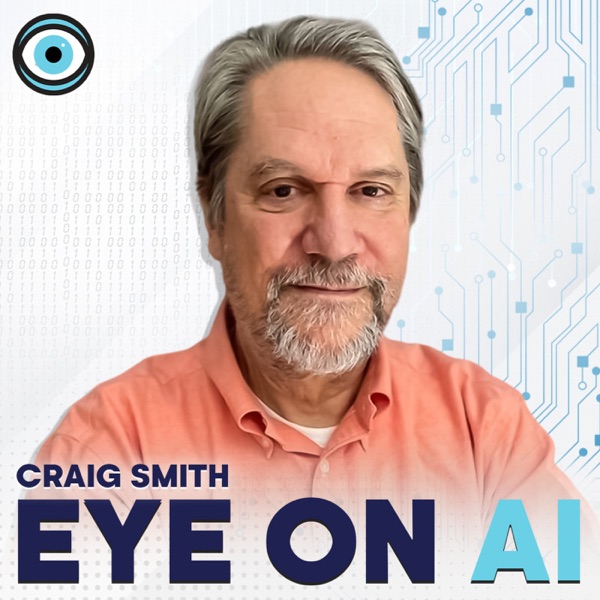 E#259 Anjney Midha: a16z's Strategy to Turn AI Startups into UnicornsEye On A.I. · 2025-06-02
 AAn unfiltered conversation with Anjney Midha, General Partner at A16ZAround the Prompt · 2025-06-02
 ABeyond Leaderboards: LMArena’s Mission to Make AI ReliableAI + a16z · 2025-05-30
 TRick Rubin: Vibe Coding is the Punk Rock of SoftwareThe a16z Show · 2025-05-29
 FAnjney Midha: Pivot To AlgorithmsFrom the New World · 2025-03-17
 ABuilding the Next Generation of Conversational AIAI + a16z · 2025-03-14
 PShould you go all in on Nvidia stock?: NVIDIA EARNINGS SPECIALPower Players with Brian Sozzi · 2025-02-27
 SMeta mulls a move to Texas, Sam Altman says OpenAI is on “the wrong side of history,” and crazy Super Bowl betsStrictlyVC News · 2025-02-01
 ANeural Nets and Nobel Prizes: AI's 40-Year Journey from the Lab to UbiquityAI + a16z · 2024-10-25
 TTesla's Road Ahead: The Bitter Lesson in RoboticsThe a16z Show · 2024-10-24
 AHow GPU Access Helps AI Startups Be AgileAI + a16z · 2024-10-23
 ADisTrO and the Quest for Community-Trained AI ModelsAI + a16z · 2024-09-27
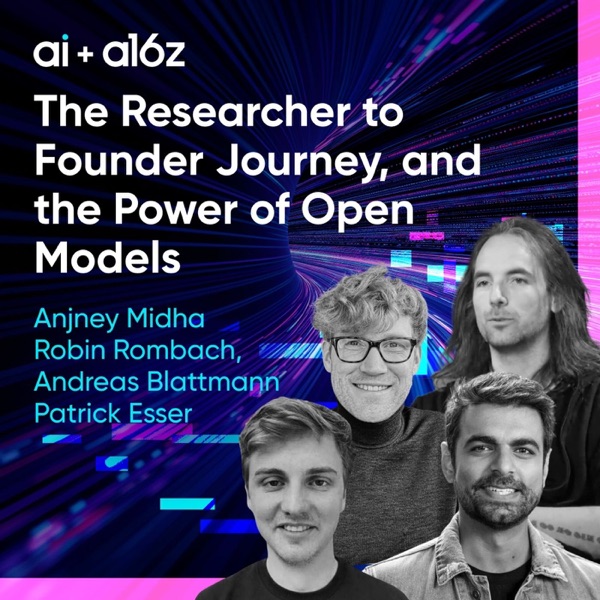 AThe Researcher to Founder Journey, and the Power of Open ModelsAI + a16z · 2024-08-16
 ADemocratizing Generative AI Red TeamsAI + a16z · 2024-08-02
 TSB 1047: The Bill That Could Hinder AI Progress ft. Anjney MidhaThe Next Wave - AI and The Future of Technology · 2024-07-16
 ABeyond Language: Inside a Hundred-Trillion-Token Video ModelAI + a16z · 2024-07-03
 AARCHIVE: Open Models (with Arthur Mensch) and Video Models (with Stefano Ermon)AI + a16z · 2024-05-24
 THow Discord Became a Developer PlatformThe a16z Show · 2024-05-10
 ARemaking the UI for AIAI + a16z · 2024-04-19
 AMaking the Most of Open Source in AIAI + a16z · 2024-04-12
 TBeyond Uncanny Valley: Breaking Down SoraThe a16z Show · 2024-02-24
 TText to Video: The Next Leap in AI GenerationThe a16z Show · 2023-12-20
 TSafety in Numbers: Keeping AI OpenThe a16z Show · 2023-12-11
 aAI Revolution: Improving AI with Anthropic's Dario Amodeia16z Live · 2023-09-27
 "Ep. 85: Solving for Shared Experiences in XR—with Anjney Midha CEO of Ubiquity6"Can't Be Done" · 2019-01-17