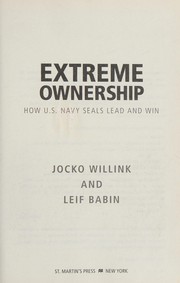
Extreme Ownership
Combat leadership lessons from the battle of Ramadi, applied to running teams.
Navy SEAL leadership doctrine adapted to running teams and firms
Summary
Willink and Babin were Navy SEAL officers in Task Unit Bruiser during the 2006 battle of Ramadi, and they translate combat leadership lessons into business practice. Each chapter follows the same structure: a combat account, the principle extracted from it, and an application to a corporate client from their consulting firm.
The title principle states that a leader owns every outcome in their area of responsibility, including failures caused by subordinates, by inadequate resources or by unclear orders from above. Willink opens with a blue-on-blue incident in Ramadi where friendly forces fired on each other, and describes taking full responsibility in the investigation despite multiple contributing failures by others.
The other principles include no bad teams only bad leaders, believing in the mission well enough to explain why to the team, checking the ego, covering and moving between units, keeping plans simple, prioritising and executing one problem at a time, decentralised command with clearly stated commander's intent, and the argument that discipline produces freedom.
The main weakness is the translation. The business applications are brief, drawn from unnamed consulting clients and generally show the principle working, which makes them unfalsifiable. Combat and commercial organisations differ in ways the book acknowledges only in passing, particularly in that soldiers cannot resign. The extreme ownership principle can be applied in ways that excuse organisational failure by loading it onto individuals. The material on decentralised command and commander's intent transfers best, because it addresses a real problem of scale.
Key takeaways 8
- A leader owns every outcome in their area of responsibility, including failures they did not cause and could not have prevented directly.
- There are no bad teams, only bad leaders, and the same team under different leadership produces different results.
- A team executes only when every member understands why the mission matters, which requires the leader to have understood it themselves first.
- Plans must be simple enough that the most junior person can state the objective and their part in it.
- When multiple problems arrive at once, the leader must name the highest priority, direct effort there, and then move to the next.
- Decentralised command requires teams of six to ten with leaders who know the commander's intent and can act without asking.
- Leaders must manage upward as well as downward, and a leader who complains that senior management does not support them has failed to communicate.
- Discipline in standard procedures creates the freedom to improvise, because the routine parts require no attention.
Who should read it
Managers who need a direct account of responsibility and decentralised execution, prepared for military framing and thin business evidence.
Who recommended it 12 · 2 direct
Similar books 6
Chosen by shared topics, the entries that hold them, and the people who recommended both.
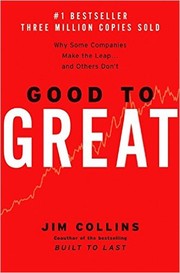
What eleven companies did to turn fifteen ordinary years into fifteen great ones.
“(We invite you to read the chapter devoted to the company in the book “Good to Great”).” — Francois Rochon
Source: Giverny Capital Annual Letter to Partners 2006, page 7
Recommended by: Brian Armstrong, Francois Rochon and 20 others
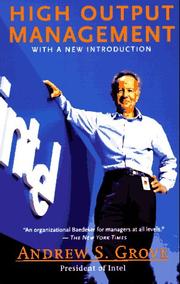
Management as production: a manager's output is the output of the team they lead.
“Also read and re-read High Output Management by Andy Grove.” — Andrew Chen
Source: What do you look for an investment? How long should a founder be without salary? And other Q&A
Recommended by: Andrew Chen, Ben Horowitz, David Cancel and 24 others
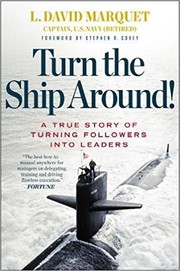
How a submarine captain replaced leader-follower command with leader-leader.
Recommended by: Brian Armstrong, Jason Fried, Simon Sinek
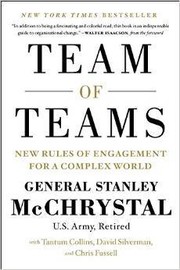
How the US special operations command was rebuilt to make decisions faster.
“You need to understand what you're up against. But Team of Teams has been huge. I'm still giving that one out.” — Doug McMillon
Source: The Tim Ferriss Show Transcripts: Doug McMillon (#345)
Recommended by: Doug McMillon, Patrick Collison and 2 others
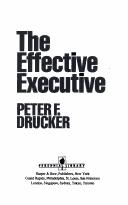
Effectiveness is learned practice: manage time, pick priorities, decide well.
“The second is The Effective Executive by Peter Drucker, and the central core of that book is really about it's very easy to mistake effort for effectiveness.” — Drew Houston
Source: The Tim Ferriss Show Transcripts: Drew Houston (#334)
Recommended by: Drew Houston, Ev Williams, Jim Collins and 6 others
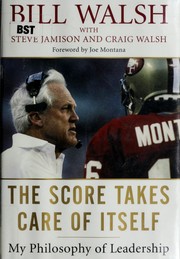
How a coach took the 49ers from 2 and 14 to three Super Bowls with set standards.
“The 49ers coach who took one of the worst teams to one of the best.” — Noah Kagan
Source: The 25 Best Business Books I Ever Read (Out of 697)
Recommended by: David Cancel, Keith Rabois, Nat Eliason and 9 others
Where it sits in the reference 3
Topics 2
As an Amazon Associate I earn from qualifying purchases.