Updates

  1. Every US-listed company has a page with its SEC filings. Company pages list their experts and their management, past and present. Fund managers sit under Investors. Each show has a page of its episodes, and an episode page names its guests and hosts. Biographies lists groups, then people. Breadcrumbs show where a page sits.
  2. Media lists every podcast episode, video, interview and talk, over 10,000, by person, company, publisher and event; each filter searches its own choices. Books opens on its table, then Browse, then Authors and Recommenders. A filter's count no longer covers its arrow.
  3. A book that no company, country or subject page lists shows its topics under Where it sits in the reference. On a phone, a page's tabs scroll sideways only. Descriptions read the same on every page. See them in the Experts tab lists every expert the page names.
  4. Every podcast episode, video and interview has its own page with a video or audio player and a link to the source. Investor pages show each company's sector and market cap; firms such as Berkshire Hathaway have one page that holds their letters and their company tabs. Letters tabs filter by company and search the theses. Companies filter by Public, Private and Defunct and link each company's website.
  5. Every tab, view and search has its own address, such as /books/table/asset or /letters/companies, so Back works and a link opens the same place. Page addresses no longer end in .html. Fund letters, Investors, Companies and Papers load about a fifth of the data they did.
  6. Fund letters has a Companies tab: every company the letters name, with its market cap, sector, country, and how many letters and investors name it. Investor pages link each investor's website. Lists in table cells end with “… and N more” at every width.
  7. 1,120 more book summaries; descriptions for 373 papers; pages for 137 more companies, each with the fund letters that discuss it; 215 official photographs; search has its own page.
  8. 411 more books have a summary; person pages list 930 more of the books they wrote; 147 people show their official photograph.
  9. Every investor has a page with its letters and the companies they discuss; company pages list the investors whose letters name them.
  10. A Companies section at the top of the rail lists every company the books, experts and fund letters name.
  11. Person pages list letters, writing, profiles and links as sortable tables with filters, and show each person's companies as links; Fund letters show each letter's description in its own column.
  12. Experts show a checked job title and a short description of each person; 30 more people have photographs.
  13. Every company, fund, university and publication the experts work for has a page listing the people there.
  14. Fund letters show each letter's thesis and filter by it; 225 person pages list the essays, columns and newsletter issues the person wrote.
  15. Person pages list every essay and newsletter issue a person wrote, and their own books as a table in List view.
  16. Recommends shows the five largest kinds of book and the rest under More; browse pictures load sooner.
  17. Podcasts and talks link the original episode, filter by Audio and video or Press, and list each publisher once.
  18. Pages are wider, Recommends has List and Grid, and a filter clicked again turns off.
  19. Book cards sit in a ruled grid with Open Library and Goodreads links and each book's one-line note.
  20. Funds is now Investors; each investor's styles are buttons that filter the table.
  21. Podcasts and talks on a person's page filter by year and publisher and show as a list or a grid of pictures.
  22. Quotes show only people's own words: 472 summaries written by list sites are gone.
  23. Country pages open from Browse again, and every link on the shelf lands on a page.
  24. Subject and person pages show their sections as tabs, and each book appears once on a person's page.
  25. Book cards show the quote, who said it and the source; grids show five cards to a row.
  26. On a phone, a menu holds the sections, search, Updates, Feedback and dark mode.
  27. Feedback takes a screenshot of the page with no browser prompt, opens a screenshot full size when you click it, and clears itself once sent.
  28. Book cards are centred, search names the topic each book sits in, and any text cut short shows whole on hover.
  29. Search groups its results by kind: people, companies, geographies, subjects, topics, books, funds, fund letters and papers.
  30. The Books table lists who recommended each book by name, and the browser tab names the section you are in.
  31. Feedback can take a screenshot of the page, or one you paste or choose, and opens in the corner beside Updates.
  32. Each rail button reopens its section where you left it, and Browse, Table and People show on every book and subject page.
  33. Filters grey out choices that hold nothing instead of hiding them, and Books › People filters by authors or recommenders.
  34. Feedback takes a subject line and up to three screenshots.
  35. Biographies are grouped by the person they are about: 41 new pages, from Abraham Lincoln to Lee Kuan Yew.
  36. Sport splits into 23 sports, and Religion into one topic per faith.
  37. Book lists show as cards: the cover, one recommendation quote and every recommender by name.
  38. Seventeen subjects that had two or three pages under different names now have one page each.
  39. Every page lists its Experts as authors and recommenders, with a link to them on the Experts tab.
  40. Economics, Financial history, Financial panics and Accounting are subjects of their own, with one page per financial crisis.
  41. Book, person and subject pages open inside the app, so the tabs stay in view.
  42. 996 more book covers, and photographs or logos for 227 more people and companies.
  43. Books › Browse shows every subject as cards, and the rail holds Fund letters, Papers, Experts, Books and Funds.
  44. Every topic over 150 books splits into narrower topics, each with a page of its own.

Send feedback

What is it?
Screenshots, up to 3 (optional)
or paste one with Ctrl+V

We use your email only to reply to you.

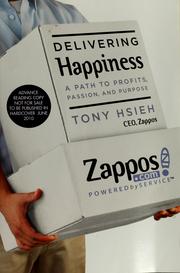
Delivering Happiness

Delivering Happiness

From LinkExchange to Zappos, and the case for building a company on its culture.

Tony Hsieh
2010
T2 253 pages · about 4h 13m to read Open Librarygoodreads

Zappos: service as the customer-acquisition budget.

Summary

Hsieh covers his path from childhood businesses through LinkExchange, which he sold to Microsoft for 265 million dollars at twenty-four, to Zappos, which Amazon acquired for around 1.2 billion dollars in 2009. The book's argument is that culture is the operating system of a company and that everything else follows from it.

The LinkExchange section is the more instructive part. Hsieh describes selling a company he no longer wanted to work at because the culture had deteriorated as it hired for skills rather than fit, and he treats that as the formative lesson.

The Zappos material covers the decision to bring warehousing and customer service in-house after concluding that outsourcing them meant outsourcing the brand; the free shipping and free returns policy accepted as a cost of removing purchase friction; the refusal to measure call handling time, so that representatives could stay on calls as long as needed; the offer to pay new employees to quit after training, which filtered for commitment; and the ten core values developed collectively and used in hiring, firing and promotion.

His framework for happiness draws on positive psychology, identifying perceived control, perceived progress, connectedness and being part of something larger as the components. The book mixes memoir, business history and self-help unevenly. The evidence is anecdotal. Hsieh's later experiments including holacracy, which produced substantial attrition, are not in the book, and his personal decline and death in 2020 sit uncomfortably against the happiness argument. The core practices around hiring for culture and treating customer service as a marketing expense transfer well.

Key takeaways 8

  1. Culture determines everything else in a company, and hiring for skills over cultural fit degrades it faster than any other decision.
  2. Hsieh sold LinkExchange because the culture had deteriorated to the point where he no longer wanted to work there.
  3. Outsourcing warehousing and customer service means outsourcing the brand, which is why Zappos brought both in-house at significant cost.
  4. Customer service should be treated as a marketing expense, which changes the calculation on free shipping, free returns and call duration.
  5. Measuring call handling time makes representatives end calls, which is why Zappos deliberately did not measure it.
  6. Offering new employees a payment to quit after training filters for people who want the job rather than the salary.
  7. Core values are worthless unless they are used in hiring, firing and promotion decisions, and Zappos removed high performers who violated them.
  8. Employee happiness depends on perceived control, perceived progress, connectedness and being part of something larger than oneself.

Who should read it

Founders building service-intensive consumer businesses who want a case for treating culture and customer service as strategy rather than as cost.

Who recommended it 5 · 1 direct

Ev Williamsreported
Ran Segallreported
Tim Ferrissreported
Tony Hsiehreported

Similar books 6

Chosen by shared topics, the entries that hold them, and the people who recommended both.
Ed Catmull, Amy Wallace · 2014

How Pixar kept a creative company working after success, and the habits it used.

Laszlo Bock · 2015

Insider account of Google's people operations by its SVP of HR.

Michael Dell, Catherine Fredman · 1999

Insider account of build-to-order, negative working capital and cutting the channel.

Recommended by: Mohnish Pabrai, Andrew Grove

T4 Fish
Stephen C. Lundin et al. · 2011
Brian J. Robertson · 2015

Where it sits in the reference 3

Business models
Business themes
Business themes

Topics 3

Company HistoriesEntrepreneurship and StartupsFounder Memoirs