The ONE Thing
Extraordinary results come from narrowing focus to the one thing that matters most.
Summary
Keller, who founded Keller Williams Realty, and Papasan argue that extraordinary results come from narrowing focus rather than from managing many priorities. Their central device is what they call the focusing question: what is the one thing I can do such that by doing it everything else will be easier or unnecessary. The question is applied at every timescale, from the one thing for a life, to the year, month, week, day and current hour, with each level derived from the one above it. They call this the goal setting to the now sequence.
The first half attacks six beliefs they consider destructive: that everything matters equally, that multitasking is possible, that success requires a disciplined life rather than a small number of habits, that willpower is always available, that balanced living is achievable, and that big is bad. Their treatment of willpower as a depleting resource rests on ego depletion research that has largely failed to replicate. Their treatment of multitasking as costly switching is better supported.
The practical content includes time blocking, in which the one thing receives a protected block of four hours at the start of each day before anything else, protecting that block aggressively, and the argument that habits require roughly sixty-six days rather than twenty-one.
The book is repetitive and the material would fit in a long essay. The evidence is thin and several supporting claims are inaccurate, including a misattributed Pareto history. The focusing question itself is genuinely useful, and the discipline of deriving each timescale's priority from the one above it is the part that distinguishes this from other prioritisation advice.
Key takeaways 8
- Extraordinary results follow from narrowing to a single priority rather than from managing many, because effort distributed produces no disproportionate outcome.
- The focusing question asks what one action would make everything else easier or unnecessary, which is a stronger test than asking what is most important.
- Priorities at every timescale should be derived from the level above, so the day's one thing follows from the month's and the month's from the year's.
- Multitasking is task switching with a cost each time, and the cost is invisible to the person paying it.
- The single priority should receive a protected block of hours at the start of the day, before anything else is permitted to intervene.
- Achieving something significant requires accepting that other areas will be out of balance during that period.
- A small number of established habits removes the need for continuous discipline, because the behaviour no longer requires a decision.
- The book's claims about willpower depletion rest on research that has largely failed to replicate.
Who should read it
Operators who habitually work from long priority lists and need a single question to force selection, tolerating a repetitive and thinly evidenced book.
Who recommended it 6 · 1 direct
Similar books 6
Chosen by shared topics, the entries that hold them, and the people who recommended both.
Get more with less by finding the 20% of effort that yields 80% of results.
Recommended by: Keith Rabois, Tim Ferriss, Ana Fabrega
How to get what you need from your boss, step by step.
Recommended by: Tim Ferriss
Valuable work now needs people who do what can't be written into a job description.
“For someone who has a job at a company, I would call this essential reading with my highest recommendation. Since I haven't had a job since 1992, I couldn't apply many of his great points to my life. Still I loved his reminder of the value of the brilliant workers instead of systemized workers. The opposite of E-Myth (another book reviewed here).” — Derek Sivers
Source: Derek Sivers book notes (primary, rated list) · Rating: 5/10
Recommended by: Derek Sivers, Tom Bilyeu, Ann Handley and 3 others
Nine toddler traits, such as imagination and determination, that adults can relearn.
Recommended by: Richard Branson
Personal accountability: asking better questions instead of blaming and complaining.
Recommended by: The Barefoot Investor
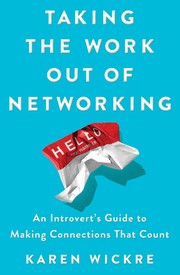
Networking advice for introverts from a former Google and Twitter executive.
Recommended by: Ryan Hoover