Linchpin
Valuable work now needs people who do what can't be written into a job description.
Summary
Godin argues that the industrial economy created jobs that required compliance and replaceability, and that the remaining valuable work requires people who do things that cannot be specified in advance. His term for such a person is a linchpin, meaning someone who is essential rather than interchangeable, and his argument is that this is a choice rather than a talent.
The qualities he identifies as making someone indispensable include providing a unique interface between the organisation and people outside it, delivering unique creativity, managing complex situations without a manual, leading customers, inspiring colleagues, providing deep domain knowledge, and possessing unique talent. He argues that following instructions well is now the least valuable capability because it is the most easily replaced.
His explanation for why people do not do this work is what he calls the resistance, located in the amygdala, which he calls the lizard brain. He argues that fear of failure and of standing out produces the behaviour of hiding inside a defined role, and that the specific manifestations are procrastination, perfectionism, and the search for permission.
He also argues for what he calls the art of giving gifts, meaning contributions made without a defined transactional return, which he holds is what builds the position that makes a person indispensable. The book has no evidence and is written as exhortation. The neuroscience is loose and the lizard brain framing is not accurate. The advice presupposes work that permits discretion, and many jobs do not. The argument that following instructions is the least defensible position has become more accurate rather than less since publication.
Key takeaways 8
- Work that consists of following instructions well is the most easily replaced and therefore the least valuable position a person can hold.
- Becoming indispensable is a choice about how to work rather than a talent some people are born with.
- Indispensability comes from doing work that cannot be specified in advance, including judgment in unusual situations and connection with people outside the organisation.
- Fear of standing out produces the behaviour of hiding inside a defined role, which Godin identifies as the actual obstacle rather than lack of ability.
- Procrastination, perfectionism and waiting for permission are the observable forms that fear takes.
- Contributions made without a defined transactional return build the position that eventually makes a person indispensable.
- Shipping the work, meaning actually completing and releasing it, is the discipline that separates people who could be indispensable from those who are.
- The advice presupposes a role that permits discretion, and many jobs do not offer that latitude.
Who should read it
Employees with discretion in how they work who need an argument for taking initiative rather than executing a defined role.
About Seth Godin
American marketing writer, founder of Yoyodyne and Squidoo, who has published a daily marketing blog for two decades.
Permission Marketing argued for earning attention through opt-in years before that became the default of email and content marketing, and Purple Cow made remarkability the product's job rather than the advertising budget's. The Dip supplies a decision rule for when to quit a market and when the difficulty itself is the barrier worth pushing through.
Who recommended it 6 · 2 direct
“For someone who has a job at a company, I would call this essential reading with my highest recommendation. Since I haven't had a job since 1992, I couldn't apply many of his great points to my life. Still I loved his reminder of the value of the brilliant workers instead of systemized workers. The opposite of E-Myth (another book reviewed here).”
Similar books 6
Chosen by shared topics, the entries that hold them, and the people who recommended both.
When to push through a hard stretch and when to quit a dead end.
“Tiny quick read with a punchy point: Anything worth doing has a painfully-hard middle period, which is where most people quit. But knowing this in advance, ask yourself seriously if you really have the dedication to stick it through that hard time. If not, then don’t begin! Quit in advance! But if so, then expect that dark dip, and don’t quit when you’re in it. Read the whole book if this applies to you. There’s not a wasted page.” — Derek Sivers
Source: Derek Sivers book notes (primary, rated list) · Rating: 8/10
Recommended by: Brian Armstrong, Derek Sivers, Nat Eliason and 2 others
How to get what you need from your boss, step by step.
Recommended by: Tim Ferriss
Networking advice for introverts from a former Google and Twitter executive.
Recommended by: Ryan Hoover


Run your career the way an entrepreneur runs a startup.
Recommended by: Mohnish Pabrai, Jack Dorsey and 4 others
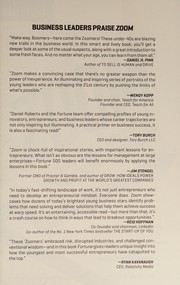
Lessons from Fortune's 40 Under 40 on how top founders and leaders built careers.
Recommended by: Mohnish Pabrai