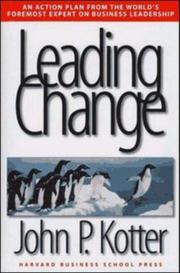
Leading Change
An eight-stage process for organisational change, starting with urgency.
Summary
Kotter, a Harvard Business School professor, sets out an eight-stage process for organisational transformation, derived from his observation of many change efforts and his conclusion that most fail.
The eight stages are: establish a sense of urgency, which he argues is the most commonly skipped and the most consequential omission, since people will not act while the current situation feels acceptable; create a guiding coalition with enough positional power, expertise and credibility to lead the effort, because no individual can drive change alone; develop a vision and strategy that can be communicated in five minutes; communicate the vision, which he argues requires an order of magnitude more repetition than executives supply and which fails most often when leaders behave inconsistently with it; empower broad-based action by removing the structures, systems and people that block it; generate short-term wins within twelve to twenty-four months, because credibility depends on visible results before the full change arrives; consolidate gains and produce more change rather than declaring victory, which he identifies as the most common cause of reversal; and anchor the changes in the culture, which happens last rather than first.
His central insight is the sequencing. The stages must occur in order, each is skipped at a predictable cost, and the most frequent failure is declaring success at stage six.
The book has no controlled evidence and rests on Kotter's consulting observation. It has been criticised as prescriptive and top-down, and later change literature emphasises emergence and participation more. The urgency and premature victory arguments are the most durable.
Key takeaways 7
- Establishing genuine urgency is the most commonly skipped stage and the most consequential, because people will not act while the current situation feels acceptable.
- No individual can drive organisational change alone, and a coalition with positional power, expertise and credibility must be assembled first.
- A vision that cannot be communicated convincingly in five minutes is not a vision that anyone will act on.
- Communication of a change vision requires an order of magnitude more repetition than executives supply, and fails entirely when leaders behave inconsistently with it.
- Visible short-term wins within two years are required to sustain credibility, and change efforts that promise only long-term results lose support.
- Declaring victory too early is the most common cause of reversal, because the changes have not yet become self-sustaining.
- Culture changes last rather than first, since new behaviour must produce visible results before people attribute value to it.
Who should read it
Executives leading organisational change who want a sequenced process and a diagnosis of the stages most commonly skipped.
Who recommended it 1 · 1 direct
Similar books 6
Chosen by shared topics, the entries that hold them, and the people who recommended both.
A fable of a failing executive team and a five-level model of what goes wrong.
Recommended by: Alfred Lin, Chris Powers, Sarah Pritula and 1 other
Ideas for empowering employees: self-directed teams, initiative and risk.
Recommended by: Mohnish Pabrai
Rewards of every kind for employees, gathered from American businesses.
Recommended by: Mohnish Pabrai
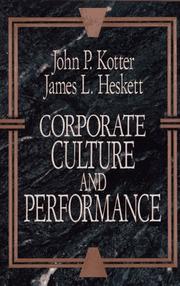
A study of over two hundred companies on whether culture drives performance.
Recommended by: Mohnish Pabrai
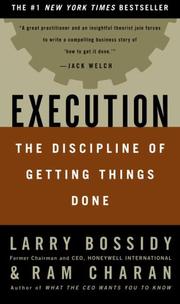
Execution is a discipline the CEO must lead, linking people, strategy and operations.
“In-depth look at the dirty discipline of getting things done in a large organization.” — Derek Sivers
Source: Derek Sivers book notes (primary, rated list) · Rating: 3/10
Recommended by: Derek Sivers, Michael Mauboussin and 2 others