
Megaprojects and Risk
Data showing big infrastructure projects run over cost and under demand by design.
The evidence that traffic forecasts and costs are systematically wrong.
Summary
Bent Flyvbjerg, Nils Bruzelius and Werner Rothengatter assembled data on large infrastructure projects and found that cost overruns and demand shortfalls are systematic rather than exceptional. Their database covers hundreds of transport projects across twenty countries and several decades.
The empirical findings are specific. Cost overruns occur in roughly nine out of ten projects. For rail projects the average overrun is around forty-five per cent in constant prices; for bridges and tunnels around thirty-four per cent; for roads around twenty per cent. Demand forecasts are equally unreliable and biased in a particular direction: rail passenger forecasts overstate actual traffic by an average of more than half, while road traffic forecasts are less biased but highly variable. The errors have not improved over seventy years, which the authors treat as evidence that they are not forecasting mistakes.
Their explanation is that the errors are produced deliberately. Project promoters need approval, approval depends on favourable cost-benefit numbers, and the people producing those numbers are engaged by the promoters. Flyvbjerg calls this strategic misrepresentation and distinguishes it from optimism bias, which is unconscious. Their proposed remedies are institutional: require promoters to put private capital at risk, separate the forecasting function from the promoting function, use reference class forecasting based on outcomes of comparable completed projects, and impose accountability for forecasts after the fact. The reference class forecasting recommendation was subsequently adopted by the United Kingdom Treasury. The book is the foundation of a large subsequent literature, including Flyvbjerg's own How Big Things Get Done.
Key takeaways 7
- Cost overruns affect roughly nine out of ten large infrastructure projects, and the average overrun has not declined in seventy years.
- Rail passenger demand forecasts overstate realised traffic by more than half on average, and the bias is consistent in direction.
- Persistent one-directional forecasting error indicates deliberate misrepresentation rather than technical difficulty.
- Promoters produce the forecasts that determine whether their own projects proceed, which is the structural cause of the bias.
- Reference class forecasting, using the distribution of outcomes from comparable completed projects, outperforms bottom-up estimation.
- Requiring private capital at risk changes forecast behaviour because the forecaster bears the consequence of being wrong.
- Accountability for forecasts after project completion is almost never imposed, which removes any correction mechanism.
Who should read it
Investors, lenders and executives evaluating large capital projects who need the base rates for cost and demand forecast error and the reasons those errors persist.
Similar books 6
Chosen by shared topics, the entries that hold them, and the people who recommended both.
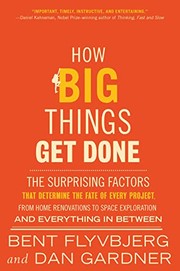
What 16,000 projects show about why big ones overrun, and how to plan them.
“Bent Flyvbjerg and Dan Gardner, How Big Things Get Done: The Surprising Factors That Determine the Fate of Every Project, from Home Renovations to Space Exploration and Everything In Between (New York: Crown Currency, 2023)” — Michael Mauboussin
Source: Pattern Recognition: Opportunities and Limits, page 14
Recommended by: Michael Mauboussin

Why the annual budget harms firms, and how some run without one.
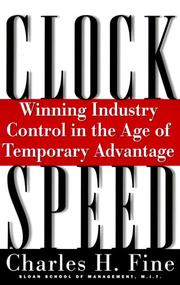
Fast-moving industries reveal supply-chain dynamics slow ones take decades to show.
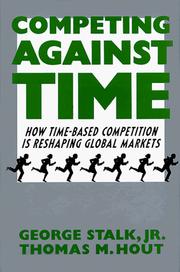
Why managing time in production, development and sales is a source of advantage.
Recommended by: Tim Cook

A novel applying the theory of constraints to finishing projects on time.

Seventy-eight short rules for raising profit fast by cutting costs.
Recommended by: Mohnish Pabrai, Patrick O'Shaughnessy and 1 other