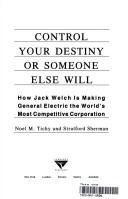
Control Your Destiny or Someone Else Will
Jack Welch's first decade remaking General Electric, written with the company's help.
The admiring contemporary account of Welch's restructuring.
Summary
Tichy, a Michigan business professor who ran General Electric's Crotonville management development centre, and Sherman, a Fortune writer, were given extended access to document Jack Welch's transformation of General Electric during his first decade as chief executive.
The programme they describe has phases. The first, from 1981, was portfolio restructuring under the rule that every business must hold first or second position in its market or be fixed, sold or closed. Welch sold businesses accounting for a substantial share of revenue, bought others including RCA, and cut employment by well over a hundred thousand people, which produced the nickname Neutron Jack. The second phase attacked the organisation itself: removing layers of management, eliminating the strategic planning staff, shrinking the corporate centre and pushing decisions down.
The third phase, which the book treats as the substance, was cultural. Work-Out brought groups of employees together with an outside facilitator to identify unnecessary work and required the responsible manager to decide on each proposal immediately, in front of the group. Best practices programmes searched other companies for methods to copy. Boundarylessness meant attacking the barriers between functions, between levels and between the company and its suppliers and customers. Welch also introduced the requirement that managers be assessed on both results and adherence to the company's stated values, and stated that managers who delivered results while violating the values would be removed, which the authors treat as the decisive signal.
The book was written from inside and with the company's cooperation, so it is largely admiring, and it was published before the outcome. General Electric's subsequent history complicates the story considerably: the growth of GE Capital, which supplied a large and later fatal share of earnings; the earnings management that produced consistently smooth reported results; and the collapse under Welch's successor. Readers should pair it with a critical account such as Cohan's Power Failure.
Key takeaways 7
- Requiring every business to hold first or second position in its market gave a portfolio rule that could be applied without central strategic planning.
- Removing the corporate strategic planning staff transferred strategy responsibility to the businesses that had to execute it.
- Work-Out forced managers to decide on employee proposals immediately and publicly, which removed the option of quiet refusal.
- Removing a manager who delivers results but violates stated values is the only action that makes values credible.
- Delayering shortened the distance between the chief executive and the front line, which changed what information reached the top.
- Copying practices from other companies produces faster improvement than developing methods internally.
- Assessing managers on a grid of results and values gave the company a defensible basis for removing high performers.
Who should read it
Executives running large-scale organisational change who want a detailed account of the mechanics, read alongside a critical account of what followed.
Similar books 6
Chosen by shared topics, the entries that hold them, and the people who recommended both.
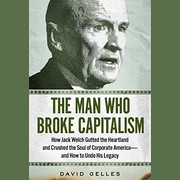
How Jack Welch's General Electric spread a damaging model across American business.
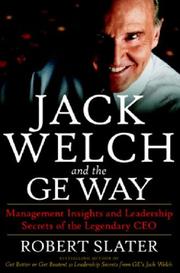
The management methods Jack Welch brought to General Electric, chapter by chapter.
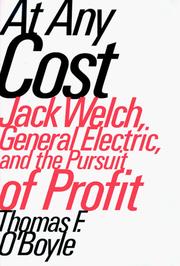
The costs behind Jack Welch's profits at General Electric, reported at his peak.
General Electric's chief executive from 9/11 onward defends his sixteen years.
Running General Electric from 1981 to 2001, as told on retiring.
“Last fall, Charlie and I read Jack Welch’s terrific book, Jack, Straight from the Gut (get a copy!).” — Warren Buffett
Source: Berkshire Hathaway Chairman’s Letter 2001, page 8
Recommended by: Mohnish Pabrai, Warren Buffett, Jamie Dimon
How Alan Mulally turned Ford around and saved it without bankruptcy.
Recommended by: Mohnish Pabrai