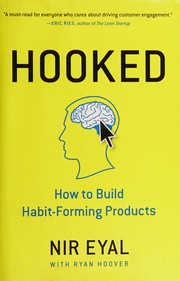
Hooked
A four-step model for habit-forming products: trigger, action, reward, investment.
The habit loop that makes a free product worth monetising.
Summary
Eyal presents a four-stage model for building products that create habitual use: trigger, action, variable reward and investment. External triggers such as notifications bring a user in initially, and the objective is to attach the behaviour to an internal trigger, usually a negative emotion such as boredom, loneliness or uncertainty, so the product becomes the automatic response to that state.
The action stage draws on BJ Fogg's behaviour model, requiring motivation, ability and a trigger to coincide, with the practical instruction that reducing the effort required works better than increasing motivation. The variable reward stage draws on the finding that unpredictable rewards produce stronger and more persistent behaviour than fixed ones, and Eyal divides rewards into those of the tribe, of the hunt and of the self. The investment stage argues that users who put work into a product, through content, data, followers or configuration, value it more and load the next trigger themselves.
Eyal includes a manipulation matrix that asks whether the maker uses the product and whether it materially improves users' lives, and argues that products failing both tests should not be built. He has since written Indistractable, which addresses the user side of the same mechanics.
The ethical problem is not resolved by the matrix. The book gives a working method for building compulsive products, and the subsequent decade of evidence about social media effects has made it read differently than it did in 2014. The research is reported secondhand and the case studies are selected. The model itself is accurate as a description of how habit-forming products work, which is precisely why the ethical framing matters more than Eyal allows.
Key takeaways 8
- Habit-forming products move users from external triggers such as notifications to internal triggers, usually a negative emotional state the product relieves.
- A behaviour requires motivation, ability and a trigger at the same moment, and reducing the effort required is more effective than increasing motivation.
- Variable rewards produce stronger and more persistent engagement than predictable rewards, because uncertainty sustains attention.
- Rewards divide into social validation, the pursuit of resources or information, and mastery, and different products use different types.
- Users who invest work into a product, through data, content or configuration, value it more and are less likely to leave.
- Investment should also load the next trigger, so each use of the product creates the reason for the following one.
- Habits form only where the behaviour is frequent enough and the perceived utility high enough, so infrequently used products cannot become habits.
- A product that the maker would not use themselves and that does not materially improve users' lives should not be built, which is Eyal's own test.
Who should read it
Product builders who want the mechanics of engagement stated explicitly, and anyone assessing whether a consumer product's retention is durable or extractive.
Who recommended it 9 · 3 direct
Similar books 6
Chosen by shared topics, the entries that hold them, and the people who recommended both.
A five-day process for answering a business question by prototyping and testing.
Recommended by: Andy Budd, Jessica Hische, Marty Cagan and 1 other
Build, measure, learn: test what customers want with small experiments.
“There's a bunch of - I think if it's a little company, Eric Ries's book is great, The Lean Startup.” — Ben Horowitz
Recommended by: Ben Horowitz, Derek Sivers, Kathryn Minshew and 19 others
Why startups should build something new and own a small market before growing.
“Inspired by modern tech classics like Zero to One and The Hard Thing About Hard Things, I wrote the book to be succinct, thorough, and accessible.” — Chris Dixon
Source: I wrote a book: Read Write Own — cdixon
Recommended by: Balaji S. Srinivasan, Chris Dixon and 38 others
Why objects confuse people, and how affordances, signifiers and feedback fix them.
“Designing software is difficult, to be sure, but designing a door is difficult too.” — Jeff Atwood
Source: Recommended Reading for Developers — Coding Horror
Recommended by: Andrew Chen, Jeff Atwood, Ran Segall and 10 others
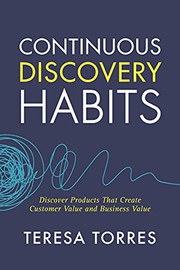
How product teams build a weekly habit of customer interviews and assumption tests.
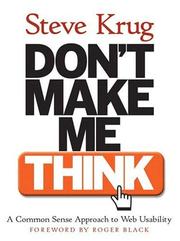
Web usability: why every page should be self-evident and how to test that it is.
“The classic book of web usability. Required reading for anyone who makes websites.” — Derek Sivers
Source: Derek Sivers book notes (primary, rated list) · Rating: 7/10
Recommended by: Brian Armstrong, Derek Sivers, Jeff Atwood and 8 others
Where it sits in the reference 5
Topics 2
As an Amazon Associate I earn from qualifying purchases.