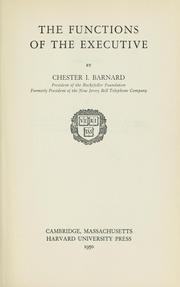
The Functions of the Executive
A working executive's theory of organisation, where authority rests on acceptance.
Insider theory from a working AT&T executive; the origin of authority-as-acceptance.
Summary
Barnard, a working executive at AT&T, sets out a theory of organisation and of what executives do, derived from his idea of organisations as cooperative systems of human activity. Most organisations, he argues, are short-lived because they fail one of the two tests of survival, effectiveness and efficiency.
From that model he derives the executive's functions: establishing and maintaining a system of communication, securing essential services from members, and formulating the organisation's purposes and objectives. His theory of authority holds that what makes a communication authoritative rests with the subordinate who accepts it, not with the superior who issues it, so managers earn authority through respect and competence. His theory of incentives distinguishes tangible incentives from persuasion and gives persuasion far more weight. Among non-material incentives he lists good physical conditions, pride of workmanship, compatible colleagues, work suited to people's habits, a sense of participation and comradeship. Published in 1938, the book has been widely assigned in management and organisational sociology courses.
Key takeaways 4
- Organisations are systems of cooperation, and most are short-lived because they fail on effectiveness or on efficiency.
- Authority rests on the subordinate's acceptance of an order, not on the position of the person giving it.
- The executive's core jobs are communication, securing people's contributions and setting purpose.
- Persuasion and non-material incentives such as pride and comradeship matter more than pay in securing cooperation.
Who should read it
Managers and students of organisation who want the original theory of authority as acceptance, written by a practising executive.
Similar books 6
Chosen by shared topics, the entries that hold them, and the people who recommended both.
Why managers are rethinking the principles that have run their institutions.
Recommended by: Mohnish Pabrai
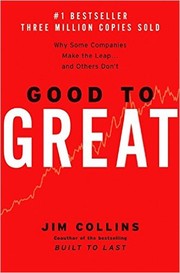
What eleven companies did to turn fifteen ordinary years into fifteen great ones.
“(We invite you to read the chapter devoted to the company in the book “Good to Great”).” — Francois Rochon
Source: Giverny Capital Annual Letter to Partners 2006, page 7
Recommended by: Brian Armstrong, Francois Rochon and 20 others
Good to Great's principles applied to non-profits and the public sector.
Recommended by: Mohnish Pabrai
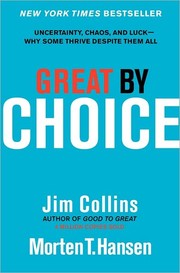
What companies that beat their industries tenfold in turbulent times did differently.
Recommended by: Mohnish Pabrai, Tony Hsieh, Alfred Lin
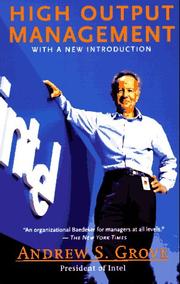
Management as production: a manager's output is the output of the team they lead.
“Also read and re-read High Output Management by Andy Grove.” — Andrew Chen
Source: What do you look for an investment? How long should a founder be without salary? And other Q&A
Recommended by: Andrew Chen, Ben Horowitz, David Cancel and 24 others
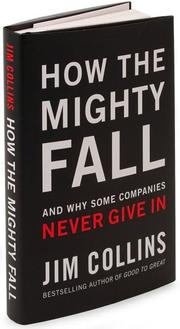
The stages by which great companies decline, and how to spot and reverse them early.
Recommended by: Alfred Lin
Where it sits in the reference 2
Topics 2
As an Amazon Associate I earn from qualifying purchases.