
On Competition
Harvard Business Review articles on competitive strategy across two decades.
Collected HBR articles; expanded edition 2008
Summary
This collects Michael Porter's Harvard Business Review articles across two decades, and it is the most efficient way to get his framework without reading the three long books. The pieces are grouped into sections on competition and strategy, on clusters and regional competitiveness, and on competitive solutions to social problems.
The strategy material includes the original 1979 five forces article, the argument that operational effectiveness is not strategy, the treatment of strategy as making trade-offs and creating fit among activities, and the work on corporate strategy and diversification. The central claim throughout is that competitive advantage comes from performing different activities from rivals or performing similar activities differently, and that improvement on shared dimensions of performance produces convergence rather than advantage. Porter is explicit that a strategy must specify what the firm will not do.
The location material sets out the cluster concept: firms in related industries concentrated geographically benefit from specialised labour markets, supplier depth and knowledge spillovers, which is why competitive advantage is often local even in global industries. The later sections extend the framework to health care and to social issues, culminating in the shared value argument that Porter developed with Mark Kramer. The shared value work is the weakest and has been criticised for restating corporate social responsibility with a claim of novelty. Later editions add material; readers should check which they have.
Key takeaways 7
- Operational effectiveness is not strategy, because improvements available to everyone produce convergence rather than advantage.
- Strategy requires choosing what not to do, and a firm that makes no trade-offs has no strategy.
- Competitive advantage comes from a system of activities that fit together, which is harder to copy than any single activity.
- Industry structure, described by the five competitive forces, determines average profitability more than firm conduct does.
- Clusters of related firms in one location generate advantages through specialised labour, supplier depth and knowledge spillover.
- Porter argues that competitive advantage in global industries is frequently determined by conditions in the firm's home location.
- Diversification creates value only when the corporate parent transfers skills or shares activities, not through portfolio management alone.
Who should read it
Executives and investors who want Porter's complete framework in article form, including the strategy pieces that are the most cited in the field.
About Michael E. Porter
Bishop William Lawrence University Professor Emeritus, Harvard Business School; founder, Institute for Strategy and Competitiveness
Competitive Strategy and the five-forces framework are the primary source for industry analysis, and Competitive Advantage supplied the value-chain vocabulary the field still uses.
Similar books 6
Chosen by shared topics, the entries that hold them, and the people who recommended both.
Teaching cases for applying the framework of Competitive Strategy.
Research on how firms compete internationally, from a Harvard colloquium.
The value chain: how to find where a firm's cost or differentiation advantage lies.
“For example, I read Competitive Strategy and Competitive Advantage by Michael Porter.” — Michael Mauboussin
Source: Thirty Years: Reflections on the Ten Attributes of Great Investors, page 3
Recommended by: Michael Mauboussin, Li Lu
The five forces model for analysing an industry and a firm's place in it.
“For example, I read Competitive Strategy and Competitive Advantage by Michael Porter.” — Michael Mauboussin
Source: Thirty Years: Reflections on the Ten Attributes of Great Investors, page 3
Recommended by: Jim Collins, Michael Mauboussin and 3 others
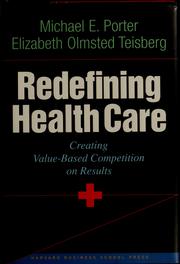
Why American health care competes on the wrong things, and value-based competition.
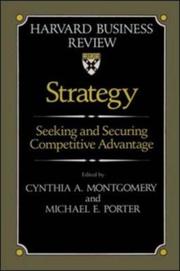
Harvard Business Review readings on strategy and competitive advantage.
“Michael E. Porter, “The Internet and Strategy”, Harvard Business Review, February 2001. Jeff Bezos at the 1999 Internet Summit, quoted in Julie Rawe, “Doom Stalks the Dotcoms,” Time, April 17, 2000. 3 See Extinction: Bad Genes or Bad Luck by David M. Raup, W.W. Norton, 1991, pp” — Michael Mauboussin
Source: Fill and Kill: Succeeding with Survivors is Nothing New, page 11
Recommended by: Jim Collins, Michael Mauboussin