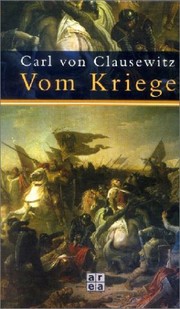
On War
War as a continuation of politics, shaped by friction and the fog of uncertainty.
Clausewitz introduces friction, fog, and the political nature of conflict as irreducible elements of strategy. His insistence that war is a continuation of politics by other means is the foundational challenge to anyone who wants a purely technical theory of winning.
Summary
Clausewitz served in the Prussian army through the Napoleonic wars and wrote On War over twelve years without completing the revision. His widow published it after his death in 1831, which is why the text is uneven and why some sections contradict others.
The central proposition is that war is a continuation of policy by other means, which establishes that military action has no logic of its own and must be governed by the political purpose it serves. Everything else follows from this. The military objective, the resources committed and the definition of success are all political questions rather than military ones.
His second major concept is friction, meaning the accumulation of small difficulties that make even simple things difficult in war. Weather, exhaustion, misunderstood orders, delayed information and chance combine so that the difference between plans and execution is systematic rather than occasional. His related concept, the fog of war, describes decision-making with incomplete and incorrect information as the normal condition.
He also develops the concept of the culminating point of victory, beyond which continued advance weakens the attacker; the centre of gravity, meaning the source of an opponent's power against which effort should be concentrated; the superiority of defence as a form of war; and the trinity of the government, the army and the people, whose relationship determines what any state can sustain. The text is difficult, contradictory in places and reflects nineteenth-century warfare. The business applications are frequently superficial. The concepts of friction, the culminating point and the primacy of purpose over method transfer directly.
Key takeaways 8
- War is a continuation of policy by other means, which means military action has no logic of its own and must serve the political purpose.
- The political purpose determines the objective, the resources justified and the definition of success, and none of these are military questions.
- Friction, meaning the accumulation of small difficulties, makes the simplest actions difficult and is the systematic difference between plans and execution.
- Decisions must be made with incomplete and incorrect information, which is the normal condition rather than a failure of preparation.
- Every offensive has a culminating point beyond which continued advance weakens the attacker rather than strengthening the position.
- Effort should be concentrated against the opponent's centre of gravity, meaning the source of their power rather than their most visible asset.
- Defence is the stronger form of war, which means an attacker requires a substantial advantage rather than parity.
- The relationship between the government, the fighting force and the population determines what a state can actually sustain.
Who should read it
Executives and strategists who want the original concepts of friction, culminating point and the primacy of purpose, prepared for a difficult unfinished text.
Who recommended it 4 · 1 direct
Similar books 6
Chosen by shared topics, the entries that hold them, and the people who recommended both.
An ancient Chinese treatise on war: position, deception and choosing when to fight.
Recommended by: Mohnish Pabrai, Evan Spiegel, Fred Wilson and 4 others
Game theory without maths: look forward, reason back, and make threats credible.
“Avinash K. Dixit and Barry J. Nalebuff, Thinking Strategically (New York: W. W. Norton & Co., 1991)” — Michael Mauboussin
Source: Measuring the Moat: Assessing the Magnitude and Sustainability of Value Creation, page 47
Recommended by: Jim Collins, Michael Mauboussin

How rulers acquire and hold power, judged by effect rather than by morality.
Recommended by: Jim Collins, Ryan Holiday, Stewart Brand and 5 others
The life of John Boyd, the pilot behind the OODA loop and the F-15 and F-16.
Recommended by: Morgan Housel, Patrick O'Shaughnessy and 2 others
Campaigns showing that striking an enemy's balance beats meeting its strength.
Recommended by: Ryan Holiday
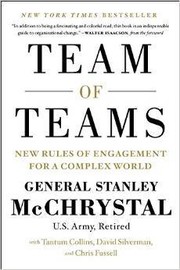
How the US special operations command was rebuilt to make decisions faster.
“You need to understand what you're up against. But Team of Teams has been huge. I'm still giving that one out.” — Doug McMillon
Source: The Tim Ferriss Show Transcripts: Doug McMillon (#345)
Recommended by: Doug McMillon, Patrick Collison and 2 others