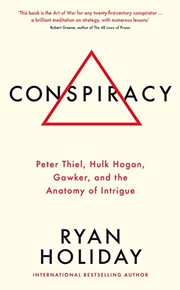
Conspiracy: Peter Thiel, Hulk Hogan, Gawker, and the Anatomy of Intrigue
How Peter Thiel secretly funded the lawsuits that destroyed Gawker Media.
The secretly funded litigation that destroyed Gawker.
Summary
Holiday reconstructs Peter Thiel's decade-long, secretly funded campaign to destroy Gawker Media, which had outed him in 2007. Thiel funded litigation by third parties against Gawker, most consequentially Hulk Hogan's invasion of privacy suit over a published sex tape, which produced a one hundred and forty million dollar verdict in 2016 and drove the company into bankruptcy. Holiday interviewed Thiel, Nick Denton and Hogan's lawyer Charles Harder.
The operational detail is the point. Thiel hired a young operative to identify potential plaintiffs, funded the cases without disclosure, selected Florida state court for its jury composition and its privacy law, and instructed Harder to drop the claim covered by Gawker's insurance so the company would face the verdict directly rather than through its insurer. Holiday shows how a plan executed over years with secrecy and patience beat an opponent with greater public standing.
Holiday frames the book around the mechanics of conspiracy as a general category, drawing on the Florentine Renaissance and on Machiavelli, and covering the requirements of secrecy, patience, resources, a defined objective and a plan for the aftermath.
The framing is admiring in a way many readers find uncomfortable, and Holiday does not seriously engage with the implications of a billionaire secretly funding litigation to destroy a publication. The press freedom question is raised and dropped. Holiday had a prior professional relationship with Thiel, which he discloses. The account of how a long-horizon plan is actually executed is genuinely instructive, and the moral framework surrounding it is thin.
Key takeaways 8
- A campaign executed with secrecy and patience over years can defeat a better-positioned opponent who never knows they are being attacked.
- Thiel funded third-party litigation without disclosure, which meant Gawker fought cases without knowing who was behind them.
- Selecting the jurisdiction, the plaintiff and the specific legal claim determined the outcome more than the underlying facts did.
- The claim covered by Gawker's insurance was deliberately dropped so the company would face the verdict directly rather than through its insurer.
- Conspiracies require a defined objective, patience, resources, secrecy and a plan for what happens after the objective is achieved.
- Most people who intend a long campaign act too early, and the discipline to wait is what distinguishes the ones that work.
- An opponent who believes themselves invulnerable does not defend, which is the condition that makes a secret campaign possible.
- The book treats the campaign as a demonstration of strategic skill and gives little weight to the press freedom implications.
Who should read it
Readers interested in the mechanics of long-horizon strategic campaigns, aware that the moral analysis is thin and the framing admiring.
About Ryan Holiday
Author and media strategist; former director of marketing at American Apparel and owner of the Painted Porch bookshop in Texas.
The Obstacle Is the Way and Ego Is the Enemy convert Stoic practice - separating what is controllable from what is not, treating recognition as a threat to judgment - into working habits for people running companies, which is why the books circulate so widely among founders. Trust Me, I'm Lying and Growth Hacker Marketing document how online media incentives can be manipulated, written by someone who did it professionally.
Who recommended it 5
Similar books 6
Chosen by shared topics, the entries that hold them, and the people who recommended both.
The American airline industry's upheaval in the years after deregulation.
Why startups should build something new and own a small market before growing.
“Inspired by modern tech classics like Zero to One and The Hard Thing About Hard Things, I wrote the book to be succinct, thorough, and accessible.” — Chris Dixon
Source: I wrote a book: Read Write Own — cdixon
Recommended by: Balaji S. Srinivasan, Chris Dixon and 38 others
How corporate governance brought down Nortel Networks, the Canadian technology firm.
“You may understand why I say this if you read the recent book on Nortel’s bankruptcy ‘‘100 Days: The rush to judgment that killed Nortel’’, by James Bagnall.” — Prem Watsa
Source: Chairman's Letter to Shareholders 2013, page 6
Recommended by: Mohnish Pabrai, Prem Watsa
An eyewitness account of how Ford and the American car industry undid themselves.
Recommended by: Mohnish Pabrai

The story of the Walgreens drugstore chain and the American history around it.
Recommended by: Mohnish Pabrai
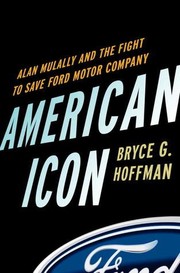
How Alan Mulally turned Ford around and saved it without bankruptcy.
Recommended by: Mohnish Pabrai
Where it sits in the reference 4
Topics 3
As an Amazon Associate I earn from qualifying purchases.