Eliyahu M. Goldratt
Israeli management theorist who originated the Theory of Constraints, the Thinking Processes, Drum-Buffer-Rope scheduling and Critical Chain Project Management. Died in 2011. The Goal teaches throughput accounting and constraint management inside a plant-turnaround novel: find the bottleneck, subordinate every other decision to it, raise it, then repeat. The method transfers to any process with a limiting step, which is why operations, project and software-delivery teams still run on it.
Start here
- The GoalEliyahu M. Goldratt, Jeff Cox, 1984
- Critical ChainEliyahu M. Goldratt, 1997
- Theory of ConstraintsEliyahu M. Goldratt, 1990
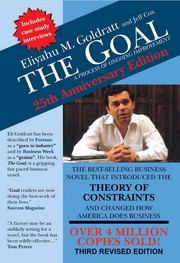
A plant manager learns that a system's output is set by its bottleneck.
Recommended by: Jim Collins, Mohnish Pabrai, Nat Eliason and 6 others
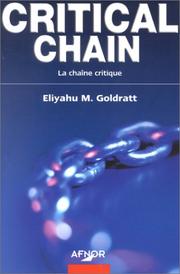
A novel applying the theory of constraints to finishing projects on time.
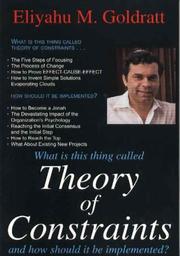
Every system has one constraint; find it, exploit it, and subordinate all else to it.
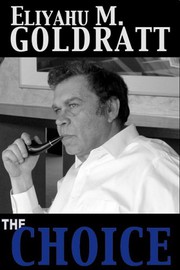
A dialogue on thinking clearly: reality is simple, conflicts can be resolved.
Recommended by: Mohnish Pabrai
 The Goal | A plant manager learns that a system's output is set by its bottleneck. | 1984 | T2 | Jim Collins, Mohnish Pabrai, Nat Eliason and 6 others |
 Critical Chain | A novel applying the theory of constraints to finishing projects on time. | 1997 | T2 | – |
 Theory of Constraints | Every system has one constraint; find it, exploit it, and subordinate all else to it. | 1990 | T2 | – |
 The Choice | A dialogue on thinking clearly: reality is simple, conflicts can be resolved. | 2008 | T2 | Mohnish Pabrai |
| It's not luck | – | 1994 | – | |
| Necessary but Not Sufficient | – | 2000 | – | |
| Race | – | 1986 | – | |
| The haystack syndrome | – | 1990 | – | |
| Isnt It Obvious? | – | 2009 | – | |
| Production | – | 1996 | – | |
| What is this thing called theory of constraints and how should it be implemented? | – | 1990 | – | |
| Essays on the Theory of Constraints | – | 1998 | – |