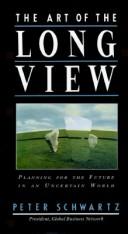
The Art of the Long View
Scenario planning: building strategic vision for business and life amid uncertainty.
Summary
Peter Schwartz explains scenario planning, a way of building strategic vision for a business or a life under uncertainty. He argues that what most affects people, professional planners or individuals preparing for the future, is not tangibles such as bottom-line numbers but intangibles: hopes and fears, beliefs and dreams. Only stories, scenarios, and the ability to picture different kinds of future capture these.
Schwartz describes the techniques, first developed inside Royal Dutch Shell, drawing on scenario exercises he ran with leading institutions and companies, including the White House, the Environmental Protection Agency, BellSouth, PG&E and the International Stock Exchange. He sets out the "scenaric" approach and gives tools for developing a strategic vision; the paperback edition adds a new user's guide. The source read here gives the method and its origins but not the step-by-step procedure.
Key takeaways 4
- Scenarios capture the intangibles that numbers miss.
- Planners should picture several possible futures, not one forecast.
- Royal Dutch Shell developed scenario planning.
- Schwartz drew on exercises with the White House, the EPA and large companies.
Who should read it
Strategists and managers who want to plan under deep uncertainty.
Who recommended it 1 · 1 direct
Similar books 6
Chosen by shared topics, the entries that hold them, and the people who recommended both.
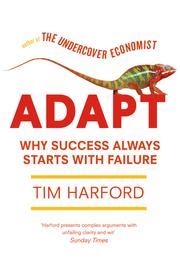
Complex problems yield to trial and error, not expert plans, and how to run it.
“There is a book I recently ran into by Tim Hartford called Adapt. That’s another kind of fun read; I thought that was pretty good.” — Mohnish Pabrai
Source: Pabrai Investment Funds Annual Meeting Transcript 2011, page 48
Recommended by: Mohnish Pabrai, Patrick O'Shaughnessy
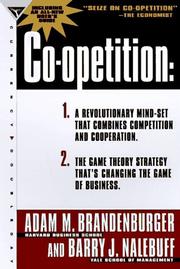
Game theory applied to business, which is cooperative and competitive at once.
“Adam M. Brandenburger and Barry J. Nalebuff, Co-opetition (New York: Currency Doubleday, 1996)” — Michael Mauboussin
Source: The Ecosystem Edge, page 10
Recommended by: Michael Mauboussin, Mohnish Pabrai
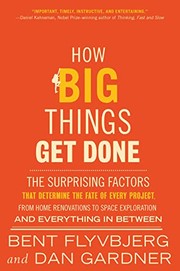
What 16,000 projects show about why big ones overrun, and how to plan them.
“Bent Flyvbjerg and Dan Gardner, How Big Things Get Done: The Surprising Factors That Determine the Fate of Every Project, from Home Renovations to Space Exploration and Everything In Between (New York: Crown Currency, 2023)” — Michael Mauboussin
Source: Pattern Recognition: Opportunities and Limits, page 14
Recommended by: Michael Mauboussin
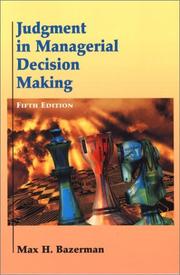
The biases that distort managers' decisions, with exercises that show them.
“Max Bazerman, Judgment in Managerial Decision Making, 4th ed. (New York: John Wiley & Son, 1998), 6-17” — Michael Mauboussin
Source: The Janitor’s Dream: Why Listening to Individuals Can be Hazardous to Your Wealth, page 3
Recommended by: Michael Mauboussin, Mohnish Pabrai and 1 other
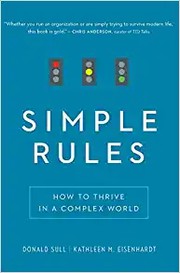
Why a few simple rules help people and firms decide well in a complex world.
“Not a book that gives you simple rules. Instead it's on the meta-topic of simple rules. Gives examples from medicine, crime, gambling, investing, etc.” — Derek Sivers
Source: Derek Sivers book notes (primary, rated list) · Rating: 2/10
Recommended by: Derek Sivers, Nat Eliason
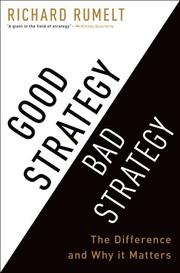
Why most so-called strategies are not, and the three-part kernel real ones need.
“Rumelt, Richard P., Good Strategy Bad Strategy: The Difference and Why It Matters (New York: Crown Business, 2011)” — Michael Mauboussin
Source: Measuring the Moat: Assessing the Magnitude and Sustainability of Value Creation, page 65
Recommended by: Michael Mauboussin, Ann Handley and 3 others