Updates

  1. Every US-listed company has a page with its SEC filings. Company pages list their experts and their management, past and present. Fund managers sit under Investors. Each show has a page of its episodes, and an episode page names its guests and hosts. Biographies lists groups, then people. Breadcrumbs show where a page sits.
  2. Media lists every podcast episode, video, interview and talk, over 10,000, by person, company, publisher and event; each filter searches its own choices. Books opens on its table, then Browse, then Authors and Recommenders. A filter's count no longer covers its arrow.
  3. A book that no company, country or subject page lists shows its topics under Where it sits in the reference. On a phone, a page's tabs scroll sideways only. Descriptions read the same on every page. See them in the Experts tab lists every expert the page names.
  4. Every podcast episode, video and interview has its own page with a video or audio player and a link to the source. Investor pages show each company's sector and market cap; firms such as Berkshire Hathaway have one page that holds their letters and their company tabs. Letters tabs filter by company and search the theses. Companies filter by Public, Private and Defunct and link each company's website.
  5. Every tab, view and search has its own address, such as /books/table/asset or /letters/companies, so Back works and a link opens the same place. Page addresses no longer end in .html. Fund letters, Investors, Companies and Papers load about a fifth of the data they did.
  6. Fund letters has a Companies tab: every company the letters name, with its market cap, sector, country, and how many letters and investors name it. Investor pages link each investor's website. Lists in table cells end with “… and N more” at every width.
  7. 1,120 more book summaries; descriptions for 373 papers; pages for 137 more companies, each with the fund letters that discuss it; 215 official photographs; search has its own page.
  8. 411 more books have a summary; person pages list 930 more of the books they wrote; 147 people show their official photograph.
  9. Every investor has a page with its letters and the companies they discuss; company pages list the investors whose letters name them.
  10. A Companies section at the top of the rail lists every company the books, experts and fund letters name.
  11. Person pages list letters, writing, profiles and links as sortable tables with filters, and show each person's companies as links; Fund letters show each letter's description in its own column.
  12. Experts show a checked job title and a short description of each person; 30 more people have photographs.
  13. Every company, fund, university and publication the experts work for has a page listing the people there.
  14. Fund letters show each letter's thesis and filter by it; 225 person pages list the essays, columns and newsletter issues the person wrote.
  15. Person pages list every essay and newsletter issue a person wrote, and their own books as a table in List view.
  16. Recommends shows the five largest kinds of book and the rest under More; browse pictures load sooner.
  17. Podcasts and talks link the original episode, filter by Audio and video or Press, and list each publisher once.
  18. Pages are wider, Recommends has List and Grid, and a filter clicked again turns off.
  19. Book cards sit in a ruled grid with Open Library and Goodreads links and each book's one-line note.
  20. Funds is now Investors; each investor's styles are buttons that filter the table.
  21. Podcasts and talks on a person's page filter by year and publisher and show as a list or a grid of pictures.
  22. Quotes show only people's own words: 472 summaries written by list sites are gone.
  23. Country pages open from Browse again, and every link on the shelf lands on a page.
  24. Subject and person pages show their sections as tabs, and each book appears once on a person's page.
  25. Book cards show the quote, who said it and the source; grids show five cards to a row.
  26. On a phone, a menu holds the sections, search, Updates, Feedback and dark mode.
  27. Feedback takes a screenshot of the page with no browser prompt, opens a screenshot full size when you click it, and clears itself once sent.
  28. Book cards are centred, search names the topic each book sits in, and any text cut short shows whole on hover.
  29. Search groups its results by kind: people, companies, geographies, subjects, topics, books, funds, fund letters and papers.
  30. The Books table lists who recommended each book by name, and the browser tab names the section you are in.
  31. Feedback can take a screenshot of the page, or one you paste or choose, and opens in the corner beside Updates.
  32. Each rail button reopens its section where you left it, and Browse, Table and People show on every book and subject page.
  33. Filters grey out choices that hold nothing instead of hiding them, and Books › People filters by authors or recommenders.
  34. Feedback takes a subject line and up to three screenshots.
  35. Biographies are grouped by the person they are about: 41 new pages, from Abraham Lincoln to Lee Kuan Yew.
  36. Sport splits into 23 sports, and Religion into one topic per faith.
  37. Book lists show as cards: the cover, one recommendation quote and every recommender by name.
  38. Seventeen subjects that had two or three pages under different names now have one page each.
  39. Every page lists its Experts as authors and recommenders, with a link to them on the Experts tab.
  40. Economics, Financial history, Financial panics and Accounting are subjects of their own, with one page per financial crisis.
  41. Book, person and subject pages open inside the app, so the tabs stay in view.
  42. 996 more book covers, and photographs or logos for 227 more people and companies.
  43. Books › Browse shows every subject as cards, and the rail holds Fund letters, Papers, Experts, Books and Funds.
  44. Every topic over 150 books splits into narrower topics, each with a page of its own.

Send feedback

What is it?
Screenshots, up to 3 (optional)
or paste one with Ctrl+V

We use your email only to reply to you.

Working Backwards

Working Backwards

Amazon's operating mechanisms, from leadership principles to the six-page memo.

Colin Bryar, Bill Carr
2021
T2 304 pages · about 5h 4m to read Open Librarygoodreads

Insider account by two long-serving executives; the mechanisms manual.

Summary

Bryar and Carr were Amazon executives for a combined twenty-seven years, and Bryar served as Bezos' technical adviser, a role in which he shadowed him for two years. The book documents Amazon's operating mechanisms rather than its history. The leadership principles are covered as operating instruments rather than as values, with specific accounts of how they are used in hiring, in performance evaluation and in decisions. The bar raiser process for hiring assigns a trained interviewer from outside the hiring team with authority to veto, which removes the hiring manager's incentive to fill the role quickly.

The single-threaded leader concept holds that a significant initiative requires one person whose only job is that initiative, and the separable teams structure gives each team its own resources and interfaces so that dependencies do not accumulate. The narrative process replaced presentations with six-page documents read in silence at the start of the meeting, which the authors argue forces complete reasoning that slides permit people to conceal.

Working backwards means writing the press release and the frequently asked questions for a product before building it, which forces the team to state what the customer benefit is and to confront the difficult questions before any resources are committed. The metrics material covers input metrics that a team can control rather than output metrics that follow, and the weekly business review structure.

The book is written by former executives and is favourable throughout. It says almost nothing about labour conditions or about the failures. The mechanisms are described concretely enough to implement, which is what distinguishes it from most accounts of the company.

Key takeaways 8

  1. A significant initiative requires a single-threaded leader whose only responsibility is that initiative, since divided attention is what kills them.
  2. Teams should be structured with their own resources and clean interfaces so that dependencies between them do not accumulate.
  3. Hiring decisions include a trained interviewer from outside the team with veto authority, which removes the manager's incentive to fill a role quickly.
  4. Six-page written narratives read in silence at the start of a meeting force complete reasoning that presentation slides allow people to conceal.
  5. Writing the press release and the customer questions before building a product forces the team to state the benefit and confront the hard questions first.
  6. Input metrics that a team controls should be managed, and output metrics follow from them rather than being manageable directly.
  7. Controllable input metrics must be identified precisely, and choosing the wrong ones produces effort directed at things that do not move the outcome.
  8. The book is written by former executives, is favourable throughout, and says almost nothing about labour conditions or about the company's failures.

Who should read it

Executives who want Amazon's specific operating mechanisms described concretely enough to implement rather than a narrative about the company.

Who recommended it 1

Jeff Bezosreported

Similar books 6

Chosen by shared topics, the entries that hold them, and the people who recommended both.
Brian Dumaine · 2020

Business-model analysis rather than a life.

Brad Stone · 2021

Amazon from 2010 to 2020: Alexa, AWS, logistics and its rise to the top.

Recommended by: Andrew Wilkinson
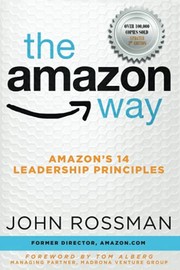
John Rossman · 2014

Insider account by the executive who launched Amazon Marketplace.
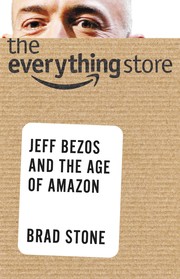
Brad Stone · 2013

Amazon's first two decades, from an online bookshop to selling nearly everything.

Richard L. Brandt · 2011

Jeff Bezos and Amazon's early years, from D. E. Shaw to the founding in 1994.

Recommended by: Mohnish Pabrai

Where it sits in the reference 6

Companies
Biographies
Business models
Business themes
Industries
Business themes

Topics 2

Business and ManagementCompany Histories