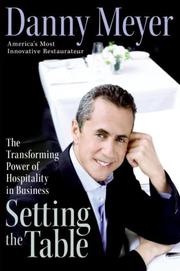
Setting the Table
Enlightened hospitality: put employees first, then guests, community and investors.
Restaurateur on hospitality as an operating system for service businesses
Summary
Meyer built Union Square Hospitality Group from a single restaurant opened at twenty-seven, and the book states the operating philosophy he calls enlightened hospitality. Its central claim is a stated priority order: employees first, then guests, then community, then suppliers, then investors. He argues that this order produces better returns for investors than putting them first would.
His distinction between service and hospitality is the book's most quoted idea. Service is the technical delivery of a product, which is a monologue. Hospitality is how that delivery makes the recipient feel, which is a dialogue and requires reading the specific person. He argues that a business can be excellent at service and produce no loyalty.
The hiring material is specific. Meyer hires for what he calls the hospitality quotient, meaning optimism, curiosity, work ethic, empathy and self-awareness, and treats technical skill as trainable. He uses a fifty-one percent rule, weighting emotional skills above technical ones. He also argues that a manager must remove people who are technically excellent and hospitality-poor, because their presence contradicts the stated priority.
On mistakes he gives a recovery sequence, arguing that a well-handled error produces more loyalty than an experience with no error at all, and that the response must be immediate, generous and personal. The book is written by a successful operator about his own successes, and the failures receive little space. Restaurants are unusual in the directness of the customer relationship, so the transfer to other businesses requires work. The service and hospitality distinction and the hiring weighting are the parts that transfer directly.
Key takeaways 8
- The stated priority order runs employees, guests, community, suppliers and then investors, and Meyer argues this produces better investor returns than reversing it.
- Service is the technical delivery of a product and hospitality is how the delivery makes the recipient feel, and a business can excel at the first while failing at the second.
- Hiring should weight emotional skills above technical ones, since technical skill can be trained and disposition cannot.
- Employees who are technically excellent and hospitality-poor must be removed, because keeping them contradicts the stated priorities visibly.
- A well-handled mistake produces more loyalty than an experience with no mistake, provided the response is immediate, generous and personal.
- Collecting and using specific information about individual guests converts a transaction into a relationship that competitors cannot replicate.
- Constant gentle pressure, meaning continuous small corrections rather than periodic interventions, is Meyer's stated management method.
- A new business should be located and designed around the neighbourhood it serves rather than imposed on it, which he treats as a determinant of survival.
Who should read it
Operators of service businesses who want a concrete distinction between service and hospitality and a hiring method that follows from it.
Who recommended it 5 · 1 direct
Similar books 6
Chosen by shared topics, the entries that hold them, and the people who recommended both.
A decade working in hotels, from valet to front desk, and the hustles behind them.
Recommended by: Mohnish Pabrai
The life of Andy Grove, from Nazi-occupied Hungary to running Intel.
Recommended by: Keith Rabois, Patrick Collison
How two Stanford friends founded Hewlett-Packard and the way they ran it.
Recommended by: Mohnish Pabrai
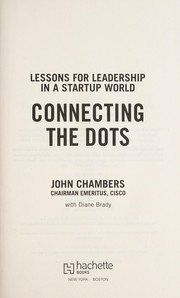
Lessons from a dyslexic boy from West Virginia who became a leading chief executive.
Recommended by: Safra Catz
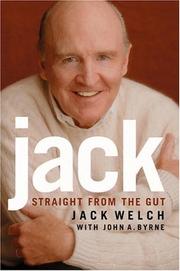
Running General Electric from 1981 to 2001, as told on retiring.
“Last fall, Charlie and I read Jack Welch’s terrific book, Jack, Straight from the Gut (get a copy!).” — Warren Buffett
Source: Berkshire Hathaway Chairman’s Letter 2001, page 8
Recommended by: Mohnish Pabrai, Warren Buffett, Jamie Dimon
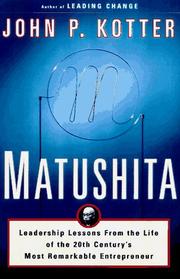
Konosuke Matsushita's rise from childhood poverty to a great company, and how he led.
Recommended by: Mohnish Pabrai