Updates

  1. Person pages list letters, writing, profiles and links as sortable tables with filters, and show each person's companies as links; Fund letters show each letter's description in its own column.
  2. Experts show a checked job title and a short description of each person; 30 more people have photographs.
  3. Every company, fund, university and publication the experts work for has a page listing the people there.
  4. Fund letters show each letter's thesis and filter by it; 225 person pages list the essays, columns and newsletter issues the person wrote.
  5. Person pages list every essay and newsletter issue a person wrote, and their own books as a table in List view.
  6. Recommends shows the five largest kinds of book and the rest under More; browse pictures load sooner.
  7. Podcasts and talks link the original episode, filter by Audio and video or Press, and list each publisher once.
  8. Pages are wider, Recommends has List and Grid, and a filter clicked again turns off.
  9. Book cards sit in a ruled grid with Open Library and Goodreads links and each book's one-line note.
  10. Funds is now Investors; each investor's styles are buttons that filter the table.
  11. Podcasts and talks on a person's page filter by year and publisher and show as a list or a grid of pictures.
  12. Quotes show only people's own words: 472 summaries written by list sites are gone.
  13. Country pages open from Browse again, and every link on the shelf lands on a page.
  14. Subject and person pages show their sections as tabs, and each book appears once on a person's page.
  15. Book cards show the quote, who said it and the source; grids show five cards to a row.
  16. On a phone, a menu holds the sections, search, Updates, Feedback and dark mode.
  17. Feedback takes a screenshot of the page with no browser prompt, opens a screenshot full size when you click it, and clears itself once sent.
  18. Book cards are centred, search names the topic each book sits in, and any text cut short shows whole on hover.
  19. Search groups its results by kind: people, companies, geographies, subjects, topics, books, funds, fund letters and papers.
  20. The Books table lists who recommended each book by name, and the browser tab names the section you are in.
  21. Feedback can take a screenshot of the page, or one you paste or choose, and opens in the corner beside Updates.
  22. Each rail button reopens its section where you left it, and Browse, Table and People show on every book and subject page.
  23. Filters grey out choices that hold nothing instead of hiding them, and Books › People filters by authors or recommenders.
  24. Feedback takes a subject line and up to three screenshots.
  25. Biographies are grouped by the person they are about: 41 new pages, from Abraham Lincoln to Lee Kuan Yew.
  26. Sport splits into 23 sports, and Religion into one topic per faith.
  27. Book lists show as cards: the cover, one recommendation quote and every recommender by name.
  28. Seventeen subjects that had two or three pages under different names now have one page each.
  29. Every page lists its Experts as authors and recommenders, with a link to them on the Experts tab.
  30. Economics, Financial history, Financial panics and Accounting are subjects of their own, with one page per financial crisis.
  31. Book, person and subject pages open inside the app, so the tabs stay in view.
  32. 996 more book covers, and photographs or logos for 227 more people and companies.
  33. Books › Browse shows every subject as cards, and the rail holds Fund letters, Papers, Experts, Books and Funds.
  34. Every topic over 150 books splits into narrower topics, each with a page of its own.

Send feedback

What is it?
Screenshots, up to 3 (optional)
or paste one with Ctrl+V

We use your email only to reply to you.

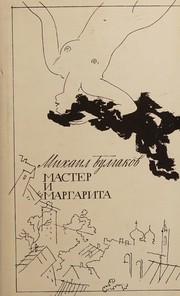
The Master and Margarita

The Master and Margarita

Mikhail Bulgakov
1966
436 pages · about 7h 16m to read Open Librarygoodreads

Summary

Bulgakov wrote the novel between 1928 and his death in 1940, revising it repeatedly, and it was published in censored form only in 1966 and complete in 1973. The devil, appearing as a foreign professor named Woland, arrives in Soviet Moscow with a retinue including a talking cat, and produces chaos among the literary and bureaucratic establishment.

Three narratives interlock. The Moscow chapters satirise the Soviet cultural apparatus, the housing bureaucracy, the state security organs and the writers' union, whose members are shown competing for apartments and restaurant privileges while producing work to order. The second narrative is a novel about Pontius Pilate written by a character called the Master, whose manuscript was rejected and who burned it and was committed to an asylum. The third follows Margarita, his lover, who accepts Woland's offer to host his ball in exchange for the Master's return.

The line that manuscripts do not burn is the novel's most quoted, and it carries the book's central claim about the survival of work under a regime that suppresses it. Bulgakov wrote it knowing it could not be published and burned an early draft himself.

The satire of the Soviet literary establishment is precise and requires some context to follow. The Pilate chapters are written in a completely different register and readers frequently find one thread more compelling than the other. Translations vary substantially in how they handle the humour and the wordplay. Its business relevance is minimal and its interest is as a document of work produced under conditions where publication was impossible.

Key takeaways 8

  1. Work produced under conditions where publication is impossible can survive the regime that suppressed it, which is what the phrase about manuscripts not burning asserts.
  2. The Soviet literary establishment is depicted as an apparatus for allocating apartments and privileges rather than for producing work.
  3. An institution that requires its members to produce to specification selects for people who have nothing of their own to say.
  4. Bureaucratic systems respond to inexplicable events by fitting them into their existing categories, which the novel uses for its central comedy.
  5. Cowardice is named as the worst of the vices, which is the judgment the Pilate narrative delivers on its central figure.
  6. People behave predictably when offered money and goods, which Woland demonstrates in the theatre scene as an experiment rather than as a temptation.
  7. Bulgakov wrote knowing the book could not be published in his lifetime and burned an early draft himself.
  8. The novel appeared in censored form twenty-six years after his death and complete only in 1973.

Who should read it

Readers interested in a satirical account of institutional life under a system that allocated everything, produced under conditions of certain suppression.

Who recommended it 5 · 1 direct

Jack Dorseyreported
Max Levchinreported

Similar books 6

Chosen by shared topics, the entries that hold them, and the people who recommended both.
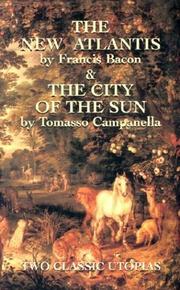
Francis Bacon · 1627

Bacon's utopia of organised research; science as an institution

Recommended by: Patrick Collison, Peter Thiel
Where it sits in the reference 0

No entry holds this book yet. It reached the reference because someone recommended it.

Topics

FictionClassic novels and stories