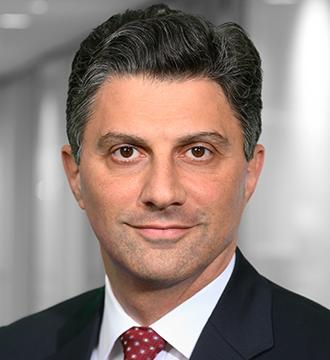
Armen Panossian
Co-chief executive of Brookfield's credit group and head of performing credit at Oaktree Capital Management.
 Oaktree Capital Management
| Scale, Selectivity, and What’s Next in Private Credit with Bob O’Leary and Armen Panossian | Brookfield Perspectives | 2026-04-28 | On this episode of Brookfield Perspectives, Bob O’Leary and Armen Panossian, incoming co-CEOs of Brookfield’s credit business, share their perspective on today’s private credit market—and what comes next. Drawing on decades of experience across credit cycles, they discuss how Brookfield and Oaktree’s combined strengths enhance scale, sourcing and underwriting—and why those advantages matter in a more complex market environment. Read disclaimers (https://www.brookfield.com/brookfield-perspectives-podcast-disclaimer) for this episode. | |
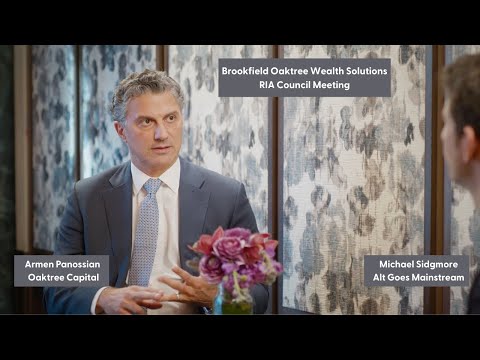
| Live from New York with Oaktree's Armen Panossian - "don't reach for risk to deliver the right return" | Alt Goes Mainstream: The Latest on Alternative Investments, WealthTech, & Private Markets | 2025-12-04 | Welcome back to the Alt Goes Mainstream podcast. Today’s episode was filmed live at an event during a Brookfield Oaktree Wealth Solutions RIA Council meeting in New York. Armen Panossian , the Co-CEO and Head of Performing Credit at Oaktree , and I sat down for a conversation in a Brookfield-owned building with a group of RIAs in the audience. Armen, who joined Oaktree in 2007, has been an integral part of scaling Oaktree to over $209B in AUM. Oaktree, a storied firm, particularly in distressed credit, was recently fully acquired by Brookfield, the $1T AUM alternative asset manager. Armen has a wealth of experience across different areas of credit. He is the Head of Performing Credit, where his responsibilities include oversight of the firm’s liquid and private credit strategies and as a portfolio manager within the Global Private Debt and Global Credit strategies. He also led the development of Oaktree’s CLO business. Armen and I had a fascinating and thought-provoking conversation. We covered: The evolution of Oaktree’s business. How the acquisition by Brookfield has helped scale Oaktree’s business. Why private credit is more than direct lending. The nuances of asset-based finance. The current state of the credit markets. How Oaktree has approached distressed credit investing. What Armen’s memo would be if he were to write a memo like his colleague Howard Marks. | |
| Convergence | The Insight by Oaktree Capital | 2025-11-13 | How are private and liquid credit evolving into complementary forces? And how can combining these two distinct but interlinked markets be of benefit to both investors and issuers? In an in-depth conversation, Armen Panossian (Co-CEO and Head of Performing Credit), Raghav Khanna (Co-Portfolio Manager, Strategic Credit), and Danielle Poli (Assistant Portfolio Manager, Global Credit) discuss the implications of the liquid-private credit convergence. | |
| The 28th Annual Milken Institute Global Conference: Day 2 | Bloomberg Businessweek | 2025-05-06 | The 28th annual Milken Institute Global Conference will, in the organization’s own words, “unite our catalytic community to tackle challenges and seize the opportunity to collectively shape our shared future.” The conference aims to tackle our world’s most pressing issues from climate change to geopolitical hotspots to AI complexities, examining impact on markets and workers globally. On this special edition of the Bloomberg Businessweek Daily podcast, hear some of the top conversations from our second day at Milken, with hosts Carol Massar and Romaine Bostick live from the conference. On this episode, we hear from: Pimco CEO Manny Roman Oaktree Capital Co-CEO Armen Panossian Former Baltimore Mayor Stephanie Rawlings-Blake Churchill Asset Management President/CEO Ken Kencel See omnystudio.com/listener for privacy information. | |
| Navigating LMEs with Armen Panossian, Ronnie Kaplan, and Ross Rosenfelt | The Insight by Oaktree Capital | 2025-02-13 | Why have liability management exercises (LMEs) soared in prominence? What are the risks and opportunities associated with these transactions? And what factors determine successful navigation of the LME wave? Join Armen Panossian (Co-CEO and Head of Performing Credit), Ronnie Kaplan (Portfolio Manager, U.S. Senior Loans), and Ross Rosenfelt (Managing Director, Opportunistic Credit) as they discuss topics from the recently published Oaktree Credit Quarterly 4Q2024: The LME Wave. | |
| Conversations: The Evolution of Asset-Backed Finance with Armen Panossian, Brendan Beer, and Jennifer Marques | The Insight by Oaktree Capital | 2024-11-13 | In the latest episode of The Insight: Conversations , Armen Panossian (Co-CEO and Head of Performing Credit), Brendan Beer (Co-Portfolio Manager, Structured Credit and Asset-Backed Finance) and Jennifer Marques (Head of Strategy and Structuring, Asset-Backed Finance) discuss topics from the recently published Performing Credit Quarterly 3Q2024: Who Are the Lenders Now? They examine the current state of the credit markets, narrowing in on the evolution of one growing area of private credit, asset-backed finance. They explore the shifting lender base of this unique asset class, assess how ABF differs from corporate direct lending, and look at several prominent sectors within this broad universe. | |
| Conversations: Dissecting the Dual Economy with Armen Panossian and Wayne Dahl | The Insight by Oaktree Capital | 2024-08-08 | The disparity between the haves and the have-nots has widened meaningfully in the U.S. economy over the last year. As a result, healthy aggregate macroeconomic indicators have often obscured the weakness building among pockets of the population. In the latest episode of The Insight: Conversations , Armen Panossian (Co-CEO and Head of Performing Credit) and Wayne Dahl (Co-Portfolio Manager, Global Credit) consider how this dual economy is impacting credit investors as they discuss topics from the recently published Performing Credit Quarterly 2Q2024: The Dual Economy ( https://www.oaktreecapital.com/insights/insight-commentary/market-commentary/performing-credit-quarterly-2q2024-the-dual-economy ). | |
| Day Three Part Two from the Milken Institute Global Conference | Bloomberg Businessweek | 2024-05-09 | Watch Carol and Tim LIVE every day on YouTube: http://bit.ly/3vTiACF . Bloomberg Television and Radio broadcast live from the Milken Institute Global Conference featuring Armen Panossian, Co-CEO at Oaktree Capital Management, Runa Alam, Co-Founding Partner and CEO at Development Partners International, Al Rabil, CEO at Kayne Anderson, Raj Chetty, Harvard University Professor of Public Economics and Andrew Bednar, CEO at Perella Weinberg. Hosts: Carol Massar and Romaine Bostick. Producer: Paul Brennan. See omnystudio.com/listener for privacy information. | |
| Conversations: Volatility Ahead? Featuring Howard Marks, Armen Panossian, and David Rosenberg | The Insight by Oaktree Capital | 2024-05-06 | Where are we in the market cycle? Why is it healthy to be uncertain? And what does it mean to actually “be opportunistic”? In the latest episode of The Insight: Conversations, Howard Marks (Co-Chairman), Armen Panossian (Co-CEO), and David Rosenberg (Head of Liquid Performing Credit) discuss these and other topics from the recently published Performing Credit Quarterly 1Q2024: Unusually Uncertain. You can listen to the Performing Credit Quarterly 1Q2024 in the prior episode in this feed. | |
| Ep 169: Armen Panossian - Oaktree's approach to navigating distressed credit | Inside the Rope with David Clark | 2024-04-29 | In this episode David interviews Armen Panossian, co-CEO and head of Performing Credit at Oaktree Capital Management, known for its successful management of distressed debt. Armen outlines his background in finance and his journey at Oaktree since joining the firm in 2007. He discusses Oaktree's foundation in 1995, its investment philosophy emphasising risk control, and its focus on credit investment. The firm emphasizes an opportunistic, value-oriented and risk-controlled approach to investments in credit, private equity, real assets and listed equities. The conversation also highlights the differences between performing and non-performing credit, with the former involving financially stable borrowers and the latter involving distressed entities that may offer enhanced returns. Despite current economic stability, Armen highlights a significant need for tailored capital solutions, especially in sectors like real estate and healthcare. He concludes by discussing potential economic shifts and the importance of prudent investment strategies to navigate uncertain financial landscapes. | |
| Conversations: Defying Gravity with Robert O’Leary, Armen Panossian, Jean-Pierre Latrille, and Janet Wang | The Insight by Oaktree Capital | 2024-04-11 | What were some of the biggest surprises in credit markets during the first quarter? Why might global convertibles be set for a rebound? And why do many Chinese equities look more attractive today than they did a year ago? In the latest episode of The Insight: Conversations , Robert O’Leary (co-CEO), Armen Panossian (co-CEO), Jean-Pierre Latrille (Portfolio Manager, Global Convertibles), and Janet Wang (Co-Portfolio Manager, Emerging Markets Equities) discuss these and other topics from the recently published edition of The Roundup: Top Takeaways from Oaktree’s Quarterly Letters. You can listen to the March 2024 edition of The Roundup in the previous episode in this feed, or read it here (https://www.oaktreecapital.com/insights/insight-commentary/market-commentary/the-roundup-top-takeaways-from-oaktrees-quarterly-letters-march-2024). | |
| Conversations: The Goldilocks Market with Armen Panossian, Danielle Poli, and Wayne Dahl | The Insight by Oaktree Capital | 2024-02-15 | Which macroeconomic tailwinds are weakening and potentially turning into headwinds? Why may it now be easier to find a signal amid the economic noise? And what are the implications for credit investors? In the latest episode of The Insight: Conversations , Armen Panossian (incoming co-CEO and Head of Performing Credit), Danielle Poli (Assistant Portfolio Manager, Global Credit), and Wayne Dahl (Co-Portfolio Manager, Global Credit) discuss these and other topics from the recently published Performing Credit Quarterly 4Q2023: The Goldilocks Trap . | |
| Conversations: Full Return World with Howard Marks and Armen Panossian | The Insight by Oaktree Capital | 2023-11-02 | Howard Marks (Co-Chairman) and Armen Panossian (Head of Performing Credit) discuss topics related to Howard’s latest memo, Further Thoughts on Sea Change, and Oaktree’s recently published Performing Credit Quarterly 3Q2023 in this crossover episode of The Insight: Conversations and Behind the Memo. They consider the implications of the potential sea change reshaping the investment environment, the tail risks building in today’s markets, and what it means to be in a full return world. | |
| The Insight: Conversations – Full Return World with Howard Marks and Armen Panossian | The Memo by Howard Marks | 2023-11-02 | Howard Marks (Co-Chairman) and Armen Panossian (Head of Performing Credit) discuss topics related to Howard’s latest memo, Further Thoughts on Sea Change, and Oaktree’s recently published Performing Credit Quarterly 3Q2023 in this crossover episode of The Insight: Conversations and Behind the Memo. They consider the implications of the potential sea change reshaping the investment environment, the tail risks building in today’s markets, and what it means to be in a full return world. | |
| Oaktree's Panossian on Compelling Credit Options: Credit Crunch | FICC Focus | 2023-10-31 | “There's not enough private credit capital relative to private equity demand,” Armen Panossian, managing director, head of performing credit and incoming co-CEO for Oaktree Capital Management says. Panossian joins Bloomberg Intelligence's Noel Hebert and Sam Geier on this Credit Crunch episode of the podcast FICC Focus podcast series for an in-depth discussion about private-credit growth, the high-yield opportunity, expected impacts from a prospective economic slowdown and more. | |
| Armen Panossian on Credit in a Time of Rising Rates | Masters in Business | 2023-09-22 | Bloomberg Radio host Barry Ritholtz speaks with Armen Panossian, managing director and head of performing credit at Oaktree Capital Management LP, which has $179 billion in assets under management. He oversees the firm’s liquid and private credit strategies, and also serves as a portfolio manager within Oaktree’s global private debt and global credit strategies. He previously worked for Pequot Capital Management, where he worked on distressed debt strategy. Panossian holds an MS degree in health services research from Stanford Medical School; a JD degree from Harvard Law School; and an MBA from Harvard Business School. He serves on the advisory board of the Stanford Institute for Economic Policy Research and is a member of the state bar of California. See omnystudio.com/listener for privacy information. | |
| Conversations: European Credit at a Turning Point | The Insight by Oaktree Capital | 2023-09-07 | Learn about the current state of European credit and the dramatic changes seen over the last year in this thought-provoking discussion with Armen Panossian (Head of Performing Credit), Madelaine Jones (Portfolio Manager, European Senior Loans and European High Yield Bonds), and Nael Khatoun (Head of European Private Debt). They consider the challenges created by the end of the easy money era, risks posed by geopolitics and artificial intelligence, and the quality advantage that exists in European markets. | |
| Conversations: Fighting the Fed with Armen Panossian, Danielle Poli, and Megan Messina | The Insight by Oaktree Capital | 2023-08-08 | Armen Panossian (Head of Performing Credit), Danielle Poli (Assistant Portfolio Manager, Global Credit), and Megan Messina (Head of CLO Capital Markets) discuss topics from the 2Q2023 Performing Credit Quarterly . They consider the current tug-of war between fiscal and monetary policy, opportunities in credit, and what many investors are getting wrong about today’s CLO market. | |
| The Insight: Conversations – Performing Credit Quarterly 1Q2023 | The Memo by Howard Marks | 2023-04-20 | In the first episode of Oaktree’s new podcast, Armen Panossian (Head of Performing Credit) and Howard Marks (Co-Chairman) discuss key takeaways from the 1Q2023 Performing Credit Quarterly , including the potential ramifications of the recent banking turmoil, opportunities in private credit and a possible rise in distress. As part of the discussion, they explore Howard’s memo Lessons from Silicon Valley Bank . | |
| Conversations: Performing Credit Quarterly 1Q2023 | The Insight by Oaktree Capital | 2023-04-20 | In the first episode of Oaktree’s new podcast, Armen Panossian (Head of Performing Credit) and Howard Marks (Co-Chairman) discuss key takeaways from the 1Q2023 Performing Credit Quarterly , including the potential ramifications of the recent banking turmoil, opportunities in private credit, and a possible rise in distress. As part of the discussion, they explore Howard’s memo Lessons from Silicon Valley Bank . | |
| CEO Forum Series: Armen Panossian, Co-CEO, Oaktree | HBS Club of San Diego | |||
| The Big Picture: Outlook from the Co-CEOs at Oaktree Conference 2026 | Oaktree | |||
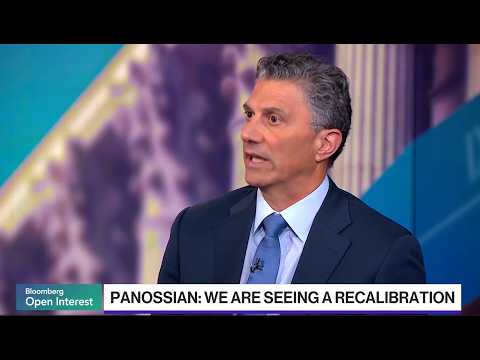
| Oaktree’s Armen Panossian on Private Credit | Brookfield | |||
| Live! Armen Panossian, co-CEO of Oaktree at Brookfield Oaktree Wealth Solutions RIA Council Meeting | Alt Goes Mainstream (AGM) | |||
| Conversations: Defying Gravity with Robert O’Leary, Armen Panossian, Jean-Pierre Latrille, and Ja... | Oaktree | |||
| Conversations: The Evolution of Asset-Backed Finance with Armen Panossian, Brendan Beer, and Jenn... | Oaktree | |||
| The Insight: Conversations – Fighting the Fed with Armen Panossian, Danielle Poli, and Megan Messina | Oaktree | |||
| Armen Panossian: SuperReturn International 2023 | Oaktree | |||
| Economy and markets could actually experience trouble going forward: Oaktree's Armen Panossian | CNBC Television |
 BScale, Selectivity, and What’s Next in Private Credit with Bob O’Leary and Armen PanossianBrookfield Perspectives · 2026-04-28
 ALive from New York with Oaktree's Armen Panossian - "don't reach for risk to deliver the right return"Alt Goes Mainstream: The Latest on Alternative Investments, WealthTech, & Private Markets · 2025-12-04
 TConvergenceThe Insight by Oaktree Capital · 2025-11-13
 BThe 28th Annual Milken Institute Global Conference: Day 2Bloomberg Businessweek · 2025-05-06
 TNavigating LMEs with Armen Panossian, Ronnie Kaplan, and Ross RosenfeltThe Insight by Oaktree Capital · 2025-02-13
 TConversations: The Evolution of Asset-Backed Finance with Armen Panossian, Brendan Beer, and Jennifer MarquesThe Insight by Oaktree Capital · 2024-11-13
 TConversations: Dissecting the Dual Economy with Armen Panossian and Wayne DahlThe Insight by Oaktree Capital · 2024-08-08BDay Three Part Two from the Milken Institute Global ConferenceBloomberg Businessweek · 2024-05-09
 TConversations: Volatility Ahead? Featuring Howard Marks, Armen Panossian, and David RosenbergThe Insight by Oaktree Capital · 2024-05-06
 IEp 169: Armen Panossian - Oaktree's approach to navigating distressed creditInside the Rope with David Clark · 2024-04-29
 TConversations: Defying Gravity with Robert O’Leary, Armen Panossian, Jean-Pierre Latrille, and Janet WangThe Insight by Oaktree Capital · 2024-04-11
 TConversations: The Goldilocks Market with Armen Panossian, Danielle Poli, and Wayne DahlThe Insight by Oaktree Capital · 2024-02-15
 TConversations: Full Return World with Howard Marks and Armen PanossianThe Insight by Oaktree Capital · 2023-11-02
 TThe Insight: Conversations – Full Return World with Howard Marks and Armen PanossianThe Memo by Howard Marks · 2023-11-02
 FOaktree's Panossian on Compelling Credit Options: Credit CrunchFICC Focus · 2023-10-31
 MArmen Panossian on Credit in a Time of Rising RatesMasters in Business · 2023-09-22
 TConversations: European Credit at a Turning PointThe Insight by Oaktree Capital · 2023-09-07
 TConversations: Fighting the Fed with Armen Panossian, Danielle Poli, and Megan MessinaThe Insight by Oaktree Capital · 2023-08-08
 TThe Insight: Conversations – Performing Credit Quarterly 1Q2023The Memo by Howard Marks · 2023-04-20
 TConversations: Performing Credit Quarterly 1Q2023The Insight by Oaktree Capital · 2023-04-20
 HCEO Forum Series: Armen Panossian, Co-CEO, OaktreeHBS Club of San Diego
 OThe Big Picture: Outlook from the Co-CEOs at Oaktree Conference 2026Oaktree
 BOaktree’s Armen Panossian on Private CreditBrookfield
 ALive! Armen Panossian, co-CEO of Oaktree at Brookfield Oaktree Wealth Solutions RIA Council MeetingAlt Goes Mainstream (AGM)
 OConversations: Defying Gravity with Robert O’Leary, Armen Panossian, Jean-Pierre Latrille, and Ja...Oaktree
 OConversations: The Evolution of Asset-Backed Finance with Armen Panossian, Brendan Beer, and Jenn...Oaktree
 OThe Insight: Conversations – Fighting the Fed with Armen Panossian, Danielle Poli, and Megan MessinaOaktree
 OArmen Panossian: SuperReturn International 2023Oaktree
 CEconomy and markets could actually experience trouble going forward: Oaktree's Armen PanossianCNBC Television