C
Video · 86 episodes in the reference
CNBC Television
Episodes
CBen Horowitz: We have to make sure AI regulation doesn't slow down the tech industryDavid Ulevitch CBerkshire Hathaway VP Charlie Munger on investingCharlie Munger
 CBill Miller: We sold GameStop earlier this yearBill MillerCBilt Rewards is the first neighborhood loyalty platform, says General Catalyst chairman Ken ChenaultKen ChenaultCBlackstone's Nadeem Meghji: Can't paint CRE space with a broad brush due to big bifurcationNadeem MeghjiCBlackstone's Nadeem Meghji: Data centers are the most exciting asset class across our entire firmNadeem MeghjiCBonds are not diversifying stocks like they used to, says WisdomTree's Jeremy SchwartzJeremy SchwartzCBonds no longer hedge stock market risk, says Carlyle's Jason ThomasJason Thomas
 CBuffett disciple Guy Spier’s rare cancer changed what he values mostGuy SpierCCarlyle Group's Jason Thomas on investing in digital platformsJason Thomas
 CCFR’s Sebastian Mallaby on Google's place in the AI raceSebastian Mallaby
 CCharlie Munger in final CNBC interview: You've got to learn how to recognize rare opportunitiesCharlie Munger
 CCharlie Munger: When Warren and I were starting 'I never thought we would ever get to $100 million'Charlie MungerCCheap currencies make global companies more attractive, says WisdomTree Inc.'s SchwartzJeremy SchwartzCCNBC TechCheck+ chats with Maven Founder & CEO Kate Ryder and Lux Capital Partner Deena ShakirDeena ShakirCDavid Herro weighs in on the sectors he believes will deliver strong returnsDavid G. Herro
 CDell CEO Michael Dell: AI demand is very solidMichael DellCEconomy and markets could actually experience trouble going forward: Oaktree's Armen PanossianArmen PanossianCEmerging market debt an opportunity: DoubleLine's ShermanJeffrey ShermanCEthereum won't 'win' at the end of the day, says Miller Value Partners' Bill MillerBill Miller IVCFamily-owned businesses could be an investing opportunity in 2024, says Blackstone's Joseph BarattaJoseph Baratta
 CFull interview with Carl IcahnCarl Icahn
 CGarry Tan urges separating ‘science fact from science fiction’ amid AI doomsday fearsGarry TanCGerman companies looking attractive because of depressed valuations, says David HerroDavid G. HerroCHere's how to play the China rallyJeremy SchwartzCHunt for value begins in Europe, says Harris Associates' David HerroDavid G. HerroCI expect bitcoin will breakout to new high since fall 2025: Miller Value Partners' Bill MillerBill Miller IV
 CI think the Fed screwed up, says billionaire investor Sam ZellSam Zell
 CI'm just trying to figure out where there are cheap stocks out there, says Bill Miller IIIBill Miller IV, Bill MillerCInside Alts: Blackstone Private Wealth's Joan Solotar on changing private market landscapeJoan SolotarCInvestors should position the top of their portfolios for the sell-off, says Carlyle's Jason ThomasJason Thomas
 CIt's quite easy today to find a diversified portfolio trading at low-teens multiples: Bill NygrenBill NygrenCJapan is looking expensive, says Oakmark's David Herro on international investing opportunitiesDavid G. Herro
 CJim Grant says U.S. economic data could make the case for an interest rate hikeJames Grant
 CJoseph Stiglitz on impact of tariffs on inflation: Prices are affected by costJoseph E. Stiglitz
 CLawrence Cunningham talks Berkshire Hathaway's investment in ChubbLawrence A. Cunningham
 CLegendary investor Paul Tudor Jones: 2027 is going to be really challenging for the stock marketPaul Tudor Jones
 CLegendary investor Paul Tudor Jones: AI bull market has 'another year or two to run'Paul Tudor Jones
 CLegendary investor Peter Lynch on stock picking: 'The sucker's going up' is not a good reasonPeter LynchCLux Capital's Deena Shakir offers her health care playbookDeena ShakirCMarket volatility has provided a lot of opportunity, says Oakmark Funds' HerroDavid G. HerroCMarkets face 'overflowing river' of liquidity: Bridgewater's Bob PrinceBob Prince
 CMichael Dell: AI demand is in excess of supplyMichael Dell
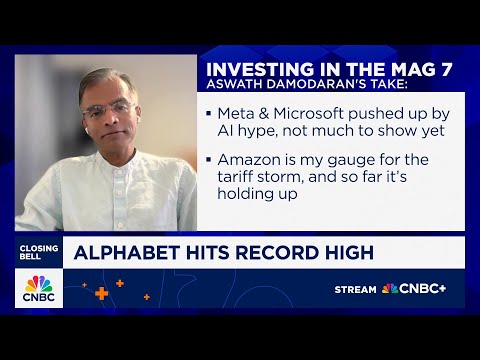 CNYU's Aswath Damodaran: Market is being held afloat by earnings numbersAswath Damodaran
 COakmark’s Bill Nygren on Salesforce: It has lagged enough for value investors like us to take a lookBill NygrenCOakmark's David Herro on finding opportunity amid tariff uncertainty and market volatilityDavid G. HerroCOakmark's David Herro says European financials remain one of the most undervalued sectorsDavid G. HerroCOakmark's International Fund sees strong returnsDavid G. Herro
 COaktree Capital's Howard Marks: Valuations right now are high, but not crazyHoward Marks
 COracle CEO Safra Catz goes one-on-one with Jim CramerSafra CatzCPeople are misplaying the AI revolution, says Carlyle's Jason ThomasJason Thomas
 CPinterest CEO Ben Silbermann following the company's IPOBen Silbermann
 CSalesforce CEO Marc Benioff goes one-on-one with Jim CramerMarc BenioffCSeeing good opportunities in the agricultural and automobile sectors, says Oakmark's David HerroDavid G. HerroCSequoia Capital's Pat Grady on the IPO landscapePat GradyCSequoia Capital's Pat Grady on ZoomPat GradyCSetting limits on AI exposure: Carlyle's Jason Thomas on the risks for private creditJason ThomasCShaping Up a Deal: Spanx founder on Blackstone's majority stakeAnn ChungCSpaceX valuation is maybe even conservative, says Sequoia's Shaun MaguireShaun Maguire
 CSquawk Pod: Paul Tudor Jones’ call for 2027 & vibes - 10/13/26 | Audio OnlyPaul Tudor Jones
 CSquawk Pod: Warren Buffett in Omaha - 03/31/26 | Audio OnlyWarren BuffettCTech could face inflationary concerns: CarlyleJason ThomasCThe current situation is pretty bullish for stocks, says Bridgewater's Karen Karniol-TambourKaren Karniol-TambourCThe idea that the Fed should be cutting aggressively strikes me as inapt: Carlyle's Jason ThomasJason Thomas
 CThe S&P isn't the broad-based index it used to be, says Oakmark Fund's Bill NygrenBill NygrenCThere's much more risk on rate than credit, says Blackstone's Joan SolotarJoan Solotar
 CThird Point CEO Dan Loeb: I wouldn't underestimate the resilience of the American economyDaniel LoebCTop fund manager David Herro breaks down his top picksDavid G. HerroCTough times like today help build strong companies, says Sequoia Capital's GradyPat Grady
 CWarren Buffett tells CNBC it's not the ideal environment to invest Berkshire's record cash hoardWarren Buffett
 CWarren Buffett: Ended Gates donations to give more to my children, not because of Epstein tiesWarren Buffett
 CWarren Buffett: I initiated Berkshire Hathaway's investment in AlphabetWarren Buffett
 CWarren Buffett: I’d rather have Greg Abel handle my money than any of the top U.S. CEOsWarren Buffett
 CWatch CNBC'S full interview with Alan GreenspanAlan Greenspan
 CWatch CNBC's full interview with Berkshire Hathaway CEO Warren BuffettWarren Buffett
 CWatch CNBC's full interview with Berkshire Hathaway Chair Warren BuffettWarren Buffett
 CWatch CNBC's full interview with Brookfield CEO Bruce FlattBruce FlattCWatch CNBC's full interview with Sequoia Capital partner Konstantine BuhlerKonstantine Buhler
 CWatch CNBC's full interview with Warren Buffett, Charlie Munger and Bill GatesCharlie Munger, Warren Buffett
 CWatch CNBC’s full interview with Wharton’s Jeremy SiegelJeremy SiegelCWe're towards the end of a capital market cycle, says Blackstone's BarrataJoseph BarattaCWe're worried 'the Fed will be too slow' in cutting, says WisdomTree's Jeremy SchwartzJeremy Schwartz
 CWharton's Jeremy Siegel: September jobs report was 'a wonderful report' for Fed Chairman WarshJeremy SiegelCWhat meme stocks do for markets: Bridgewater's Karen Karniol-TambourKaren Karniol-TambourCWhy international stocks could outperform U.S. stocks: WisdomTree's Jeremy SchwartzJeremy Schwartz
 CWired's Steven Levy on DeepSeek's latest AI model, state of AI tech raceSteven Levy
CBerkshire Hathaway VP Charlie Munger on investingCharlie MungerCBill Miller: We sold GameStop earlier this yearBill MillerCBilt Rewards is the first neighborhood loyalty platform, says General Catalyst chairman Ken ChenaultKen ChenaultCBlackstone's Nadeem Meghji: Can't paint CRE space with a broad brush due to big bifurcationNadeem MeghjiCBlackstone's Nadeem Meghji: Data centers are the most exciting asset class across our entire firmNadeem MeghjiCBonds are not diversifying stocks like they used to, says WisdomTree's Jeremy SchwartzJeremy SchwartzCBonds no longer hedge stock market risk, says Carlyle's Jason ThomasJason ThomasCBuffett disciple Guy Spier’s rare cancer changed what he values mostGuy SpierCCarlyle Group's Jason Thomas on investing in digital platformsJason ThomasCCFR’s Sebastian Mallaby on Google's place in the AI raceSebastian MallabyCCharlie Munger in final CNBC interview: You've got to learn how to recognize rare opportunitiesCharlie MungerCCharlie Munger: When Warren and I were starting 'I never thought we would ever get to $100 million'Charlie MungerCCheap currencies make global companies more attractive, says WisdomTree Inc.'s SchwartzJeremy SchwartzCCNBC TechCheck+ chats with Maven Founder & CEO Kate Ryder and Lux Capital Partner Deena ShakirDeena ShakirCDavid Herro weighs in on the sectors he believes will deliver strong returnsDavid G. HerroCDell CEO Michael Dell: AI demand is very solidMichael DellCEconomy and markets could actually experience trouble going forward: Oaktree's Armen PanossianArmen PanossianCEmerging market debt an opportunity: DoubleLine's ShermanJeffrey ShermanCEthereum won't 'win' at the end of the day, says Miller Value Partners' Bill MillerBill Miller IVCFamily-owned businesses could be an investing opportunity in 2024, says Blackstone's Joseph BarattaJoseph BarattaCFull interview with Carl IcahnCarl IcahnCGarry Tan urges separating ‘science fact from science fiction’ amid AI doomsday fearsGarry TanCGerman companies looking attractive because of depressed valuations, says David HerroDavid G. HerroCHere's how to play the China rallyJeremy SchwartzCHunt for value begins in Europe, says Harris Associates' David HerroDavid G. HerroCI expect bitcoin will breakout to new high since fall 2025: Miller Value Partners' Bill MillerBill Miller IVCI think the Fed screwed up, says billionaire investor Sam ZellSam ZellCI'm just trying to figure out where there are cheap stocks out there, says Bill Miller IIIBill Miller IV, Bill MillerCInside Alts: Blackstone Private Wealth's Joan Solotar on changing private market landscapeJoan SolotarCInvestors should position the top of their portfolios for the sell-off, says Carlyle's Jason ThomasJason ThomasCIt's quite easy today to find a diversified portfolio trading at low-teens multiples: Bill NygrenBill NygrenCJapan is looking expensive, says Oakmark's David Herro on international investing opportunitiesDavid G. HerroCJim Grant says U.S. economic data could make the case for an interest rate hikeJames GrantCJoseph Stiglitz on impact of tariffs on inflation: Prices are affected by costJoseph E. StiglitzCLawrence Cunningham talks Berkshire Hathaway's investment in ChubbLawrence A. CunninghamCLegendary investor Paul Tudor Jones: 2027 is going to be really challenging for the stock marketPaul Tudor JonesCLegendary investor Paul Tudor Jones: AI bull market has 'another year or two to run'Paul Tudor JonesCLegendary investor Peter Lynch on stock picking: 'The sucker's going up' is not a good reasonPeter LynchCLux Capital's Deena Shakir offers her health care playbookDeena ShakirCMarket volatility has provided a lot of opportunity, says Oakmark Funds' HerroDavid G. HerroCMarkets face 'overflowing river' of liquidity: Bridgewater's Bob PrinceBob PrinceCMichael Dell: AI demand is in excess of supplyMichael DellCNYU's Aswath Damodaran: Market is being held afloat by earnings numbersAswath DamodaranCOakmark’s Bill Nygren on Salesforce: It has lagged enough for value investors like us to take a lookBill NygrenCOakmark's David Herro on finding opportunity amid tariff uncertainty and market volatilityDavid G. HerroCOakmark's David Herro says European financials remain one of the most undervalued sectorsDavid G. HerroCOakmark's International Fund sees strong returnsDavid G. HerroCOaktree Capital's Howard Marks: Valuations right now are high, but not crazyHoward MarksCOracle CEO Safra Catz goes one-on-one with Jim CramerSafra CatzCPeople are misplaying the AI revolution, says Carlyle's Jason ThomasJason ThomasCPinterest CEO Ben Silbermann following the company's IPOBen SilbermannCSalesforce CEO Marc Benioff goes one-on-one with Jim CramerMarc BenioffCSeeing good opportunities in the agricultural and automobile sectors, says Oakmark's David HerroDavid G. HerroCSequoia Capital's Pat Grady on the IPO landscapePat GradyCSequoia Capital's Pat Grady on ZoomPat GradyCSetting limits on AI exposure: Carlyle's Jason Thomas on the risks for private creditJason ThomasCShaping Up a Deal: Spanx founder on Blackstone's majority stakeAnn ChungCSpaceX valuation is maybe even conservative, says Sequoia's Shaun MaguireShaun MaguireCSquawk Pod: Paul Tudor Jones’ call for 2027 & vibes - 10/13/26 | Audio OnlyPaul Tudor JonesCSquawk Pod: Warren Buffett in Omaha - 03/31/26 | Audio OnlyWarren BuffettCTech could face inflationary concerns: CarlyleJason ThomasCThe current situation is pretty bullish for stocks, says Bridgewater's Karen Karniol-TambourKaren Karniol-TambourCThe idea that the Fed should be cutting aggressively strikes me as inapt: Carlyle's Jason ThomasJason ThomasCThe S&P isn't the broad-based index it used to be, says Oakmark Fund's Bill NygrenBill NygrenCThere's much more risk on rate than credit, says Blackstone's Joan SolotarJoan SolotarCThird Point CEO Dan Loeb: I wouldn't underestimate the resilience of the American economyDaniel LoebCTop fund manager David Herro breaks down his top picksDavid G. HerroCTough times like today help build strong companies, says Sequoia Capital's GradyPat GradyCWarren Buffett tells CNBC it's not the ideal environment to invest Berkshire's record cash hoardWarren BuffettCWarren Buffett: Ended Gates donations to give more to my children, not because of Epstein tiesWarren BuffettCWarren Buffett: I initiated Berkshire Hathaway's investment in AlphabetWarren BuffettCWarren Buffett: I’d rather have Greg Abel handle my money than any of the top U.S. CEOsWarren BuffettCWatch CNBC'S full interview with Alan GreenspanAlan GreenspanCWatch CNBC's full interview with Berkshire Hathaway CEO Warren BuffettWarren BuffettCWatch CNBC's full interview with Berkshire Hathaway Chair Warren BuffettWarren BuffettCWatch CNBC's full interview with Brookfield CEO Bruce FlattBruce FlattCWatch CNBC's full interview with Sequoia Capital partner Konstantine BuhlerKonstantine BuhlerCWatch CNBC's full interview with Warren Buffett, Charlie Munger and Bill GatesCharlie Munger, Warren BuffettCWatch CNBC’s full interview with Wharton’s Jeremy SiegelJeremy SiegelCWe're towards the end of a capital market cycle, says Blackstone's BarrataJoseph BarattaCWe're worried 'the Fed will be too slow' in cutting, says WisdomTree's Jeremy SchwartzJeremy SchwartzCWharton's Jeremy Siegel: September jobs report was 'a wonderful report' for Fed Chairman WarshJeremy SiegelCWhat meme stocks do for markets: Bridgewater's Karen Karniol-TambourKaren Karniol-TambourCWhy international stocks could outperform U.S. stocks: WisdomTree's Jeremy SchwartzJeremy SchwartzCWired's Steven Levy on DeepSeek's latest AI model, state of AI tech raceSteven Levy