
Charles W. Mulford
Joined Georgia Tech in 1983 and was founding director of its Financial Reporting and Analysis Lab; MBA students named their Core Professor of the Year award after him in 1999. The Financial Numbers Game catalogues the specific devices companies use to flatter reported results - revenue recognition timing, capitalised costs, reserve releases, one-off classification - and shows how to find each one in the filings. Creative Cash Flow Reporting does the same for the cash flow statement, where operating cash flow can be raised by classification choices that leave the cash unchanged.
 Georgia Tech
Start here
- The Financial Numbers GameCharles W. Mulford, Eugene E. Comiskey, 2002
- Creative Cash Flow ReportingCharles W. Mulford, Eugene E. Comiskey, 2005
- Financial Warnings: Detecting Earning Surprises, Avoiding Business Troubles, Implementing Corrective StrategiesCharles W. Mulford, Eugene E. Comiskey, 1996
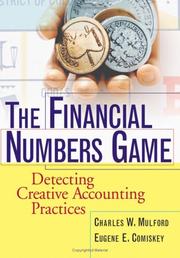
How to detect the ways companies manipulate reported results.
“Charles W. Mulford and Eugene E. Comiskey, The Financial Numbers Game: Detecting Creative Accounting Practices (Hoboken, NJ: John Wiley & Sons, 2005)” — Michael Mauboussin
Source: Thirty Years: Reflections on the Ten Attributes of Great Investors, page 18
Recommended by: Michael Mauboussin
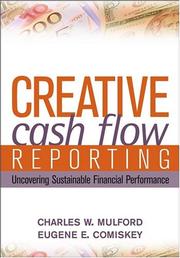
How companies dress up their reported operating cash flow, and how to spot it.
“Charles W. Mulford and Eugene E. Comiskey, Creative Cash Flow Reporting: Uncovering Sustainable Financial Performance (Hoboken, NJ: John Wiley & Sons, 2005)” — Michael Mauboussin
Source: Thirty Years: Reflections on the Ten Attributes of Great Investors, page 18
Recommended by: Michael Mauboussin, Mohnish Pabrai
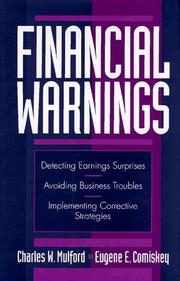
How to spot weakening finances and coming earnings shortfalls in published accounts.
Recommended by: Mohnish Pabrai
 The Financial Numbers Game | How to detect the ways companies manipulate reported results. | 2002 | T3 | Michael Mauboussin |
 Creative Cash Flow Reporting | How companies dress up their reported operating cash flow, and how to spot it. | 2005 | T3 | Michael Mauboussin, Mohnish Pabrai |
 Financial Warnings: Detecting Earning Surprises, Avoiding Business Troubles, Implementing Corrective Strategies | How to spot weakening finances and coming earnings shortfalls in published accounts. | 1996 | T3 | Mohnish Pabrai |
| Guide to financial reporting and analysis | – | 2000 | – |