Updates

  1. 137 new fund letters and reports, each with its own page: Kayne Anderson Rudnick (48 market briefings, KayneCast episodes and TV commentaries), Shelton Capital Management (48 shareholder reports and a commentary), Lakehouse Capital (10 Small Companies Fund letters), Smead (5 newsletters), RIT Capital Partners (5 monthly commentaries), Kovitz, Legal & General, Generation, Hosking, Marram, Munro, Oldfield and others.
  2. 200 new fund letters and reports, each with its own page: Spheria (41 monthly reports), Peapack Private (41 weekly recaps and planning newsletters), Fort Washington (23), Polen Capital (15), Aristotle Pacific (14), Riverwater (13), Chou (10), Apollo Asia Fund (8, back to 1998), Personal Asset Trust, Rockwood Strategic, J Capital Research, I/O Fund, Penn Davis McFarland, Pomona and others.
  3. Investor pages have one Investments tab with shares, changes, % owned, class, market cap and Market cap and Status filters, a Funds tab listing each fund the firm runs, and assets under management from Form ADV. The Investors table shows AUM and current investments, and its search finds investors by what they hold.
  4. Filters, search and sort stay as you left them when you come back to a section. Person cards look like book cards. Company pages name their Investors tab Ownership. Kind and Sector filters use four kinds and GICS sectors with industries. Dead links left the Links tabs.
  5. 190 more investors from fiscal.ai's list, with their sites, letters, partners and 13F holdings; 556 more partner descriptions. Experts now lists only people.
  6. Fund letters lists 144 new documents from 23 firms, each with its own page: a summary, key insights and quotes. Among them: 37 BlackRock articles, 21 Value Partners monthly notes, eight Baron Capital letters, six Stone Sentinel letters to partners, seven Value Line portfolio manager Q&As, BNY's 2026 earnings releases and Starboard Value's 2026 conference presentations.
  7. 584 more investors, with their websites, 6,776 letters from their own sites, 1,385 partners with pages and the 13F holdings of 213 firms. New letters arrive daily from 290 more archives.
  8. Media and Companies filter by GICS sector and industry group, taken from the companies an episode or page names. 1,860 more company pages show a logo, the SEC's list included.
  9. The home page counts what the platform holds and lists features such as the document reader, the player and saved marks. Settings sits at the foot of the rail. Book cards are a quarter wider, so rows hold fewer. Companies drops the Named in filter, and the Role list in your account runs A to Z.
  10. Investor pages of 13 firms show their newsroom's latest posts. New 13F filings are read as the SEC publishes them.
  11. Investor pages have an Investments tab: 13,975 holdings for 105 investors, from their 13F filings with the SEC and their own portfolio pages, with status and sector. 7,338 more companies have a page of their own.
  12. A podcast or YouTube episode keeps playing while you move around the site, in a bar with skip, speed and volume. Media tables show each episode's length and description.
  13. Press releases come from each company's own newsroom (167 companies); SEC filings sit on the Filings tab. Tickers name their exchange, and a company's Experts tab includes guests whose episode description names it.
  14. Letter types now include Market commentary, Fact sheet, Interim report, Annual report, Proxy circular and Governance document. The reader opens over the whole window.
  15. Partners of investment firms have 2,836 appearances and 580 pieces of writing on their pages; Derek Sivers's page lists every book he rates, with his rating.
  16. Fund letters lists three Akre Focus shareholder reports: the ETF's annual report for the year to July 2026, its semi-annual report to January 2026 and the fund's semi-annual report to January 2025, each with its own page: a summary, key insights and quotes.
  17. 837 partners of 73 investment firms now have their own pages, with title, description, photograph and social accounts; Andreessen Horowitz partners' pages also list their writing on a16z.com.
  18. Company pages have a Press releases tab: 8,229 releases for 203 companies, from SEC filings and company newsrooms. Companies filter by For-profit or Non-profit. Own media is a table with filters. Media filters by sector and industry. Publication pages link their publisher in the description.
  19. The Unilever page's Letters tab shows what each fund letter says about Unilever, word for word with its page, and whether the letter is bullish, bearish, mixed or neutral. Filter by sentiment, and see 10 letters at a time.
  20. 492 more fund letters and 3,183 more articles show the day they were published, read from each letter's first page or each article's own page.
  21. The PDF reader has a search box: type words to see every match in the document and step through them. About 540 letters that were web pages, among them Oakmark's commentaries, Bill Miller's letters and Howard Marks's memos, now open in the reader.
  22. Person pages: recommendations open with tier 1 books; one button per organisation; transcripts sit on their episodes; the books on 129 reading lists joined the Recommends tabs.
  23. Companies lists every company with a ticker on the SEC's list, with a Source filter. A quote on a company page opens the letter at that page with the words marked. A company's Media tab lists only episodes that name it, and a new Own media tab lists its podcasts, publications and YouTube channel. Show pages link their publisher. A page opened from a table no longer shows that table's filters beside it.
  24. Company, investor and person pages show more of their social accounts: Facebook, TikTok, Bluesky, Medium, GitHub, Discord and podcast shows. Investor pages list every partner the firm's own team page names: 965 people across 73 investors, 98 for Andreessen Horowitz.
  25. About 170 more letters and papers open in the reader: Mohnish Pabrai's letters and transcripts from his site's new folder, and free copies of papers by Asness, Harvey, Altman, Lo and others from their own or their schools' sites.
  26. Every company a fund letter names has a page, with the letters and quotes that name it: 47 new pages, among them Atom Computing, Hugging Face, Rolls-Royce Holdings and Westinghouse Electric. Company pages have a Quotes tab.
  27. A person's Writing tab has a Type column and filter (Article, Essay, Transcript, Speech, Foreword, Interview and the rest), and Publication names only the publication that published each piece.
  28. Fund letters opens on the newest published letter, and a letter or paper found by search opens its own page here instead of the publisher's site.
  29. A letter or paper with a copy on the site opens its PDF over its page, with a button to open it in a new tab. Select text to highlight or underline it; signed-in readers keep their marks in their account. Each quote opens the PDF at its page with its words marked, and a Source link leads to the publisher's original.
  30. Fund letters lists 61 more documents, each with its own page: Fairfax's 2025 and 2026 interim reports, proxy circulars and 2025 annual report (with their French editions), 26 Charlie Munger meeting transcripts, talks and essays, Third Point's 2026 monthly reports and Malibu Life's interim results, and a Seth Klarman interview. Papers adds Richard Thaler's two 2020 editorials on nudges.
  31. Fund letters lists Lux Capital's letters for Q2 and Q3 2026, by Josh Wolfe, each with its own page: a summary, key insights and quotes.
  32. Fund letters lists Brookfield's letter to shareholders for Q3 2026, by Bruce Flatt, with its own page: a summary, key insights and quotes.
  33. Fund letters lists Howard Marks's memo of 11 November 2026, A Layman Thinks About AI, with its own page: a summary, key insights and quotes.
  34. Fund letters lists 118 more letters, each with its own page: 44 weekly commentaries by Jeremy Siegel from 2026, 31 issues of Van Tharp's newsletter from 2018, 23 Pabrai Investment Funds letters from 2021 to Q3 2026, 13 Efficient Frontier essays by William Bernstein, Oakmark's three 3Q 2026 commentaries, two Lindsell Train reports, a John Hussman comment and Third Point's Q3 2026 letter.
  35. 2,027 more books carry a one-line description in the Books table and on their pages; 7,067 of 7,715 have one, every tier 1, 2 and 3 book among them.
  36. Fund letters lists 187 more letters from 19 firms, among them Permanent Equity, Social Capital, Lux Capital, Square Peg, Bestinver, Cobas, Sequoia Fund, Marketfield and EquityCompass; each shows on its investor's page and has a page of its own.
  37. 2,928 more books carry a one-line description in the Books table and on their pages, so every tier 1, 2 and 3 book has one; 5,040 in all.
  38. Every publication on Newsletters has its own page: its writing, its writers, its staff and who recommends it. Investor pages have a Management tab; a company's Experts tab now leaves out its own people, who list under Management. Tabs on a phone move sideways only.
  39. Every fund letter and research paper has its own page: the thesis, the PDF, the companies and books it names, and for 176 letters and 24 papers so far a summary, key insights and quotes with their page.
  40. 99 books that no page listed now sit under their topics in Books, among them Caste, American Prometheus and Pale Blue Dot.
  41. Newsletters lists every newspaper, magazine, investment newsletter, journal and blog the reference holds, 442 in all, with the people who write there. The search box keeps your last 20 searches. You can create an account.
  42. 283 books that fund managers recommend in their letters are on the shelf, each with the letter's own words and page; investor pages have a Recommends tab.
  43. Person, company, investor and show pages link their own accounts on X, Threads, Instagram, LinkedIn, YouTube and Substack: 275 people, 552 companies and organisations, 88 investors and 478 shows.
  44. 716 more book recommendations name their source: the person's own reading list, letter, blog post, speech or interview, or an article that reports it. 232 of them quote the person's own words about the book, on the book card and on the book's page.
  45. Every US-listed company has a page with its SEC filings. Company pages list their experts and their management, past and present. Fund managers sit under Investors. Each show has a page of its episodes, and an episode page names its guests and hosts. Biographies lists groups, then people. Breadcrumbs show where a page sits.
  46. Media lists every podcast episode, video, interview and talk, over 10,000, by person, company, publisher and event; each filter searches its own choices. Books opens on its table, then Browse, then Authors and Recommenders. A filter's count no longer covers its arrow.
  47. A book that no company, country or subject page lists shows its topics under Where it sits in the reference. On a phone, a page's tabs scroll sideways only. Descriptions read the same on every page. See them in the Experts tab lists every expert the page names.
  48. Every podcast episode, video and interview has its own page with a video or audio player and a link to the source. Investor pages show each company's sector and market cap; firms such as Berkshire Hathaway have one page that holds their letters and their company tabs. Letters tabs filter by company and search the theses. Companies filter by Public, Private and Defunct and link each company's website.
  49. Every tab, view and search has its own address, such as /books/table/asset or /letters/companies, so Back works and a link opens the same place. Page addresses no longer end in .html. Fund letters, Investors, Companies and Papers load about a fifth of the data they did.
  50. Fund letters has a Companies tab: every company the letters name, with its market cap, sector, country, and how many letters and investors name it. Investor pages link each investor's website. Lists in table cells end with “… and N more” at every width.
  51. 1,120 more book summaries; descriptions for 373 papers; pages for 137 more companies, each with the fund letters that discuss it; 215 official photographs; search has its own page.
  52. 411 more books have a summary; person pages list 930 more of the books they wrote; 147 people show their official photograph.
  53. Every investor has a page with its letters and the companies they discuss; company pages list the investors whose letters name them.
  54. A Companies section at the top of the rail lists every company the books, experts and fund letters name.
  55. Person pages list letters, writing, profiles and links as sortable tables with filters, and show each person's companies as links; Fund letters show each letter's description in its own column.
  56. Experts show a checked job title and a short description of each person; 30 more people have photographs.
  57. Every company, fund, university and publication the experts work for has a page listing the people there.
  58. Fund letters show each letter's thesis and filter by it; 225 person pages list the essays, columns and newsletter issues the person wrote.
  59. Person pages list every essay and newsletter issue a person wrote, and their own books as a table in List view.
  60. Recommends shows the five largest kinds of book and the rest under More; browse pictures load sooner.
  61. Podcasts and talks link the original episode, filter by Audio and video or Press, and list each publisher once.
  62. Pages are wider, Recommends has List and Grid, and a filter clicked again turns off.
  63. Book cards sit in a ruled grid with Open Library and Goodreads links and each book's one-line note.
  64. Funds is now Investors; each investor's styles are buttons that filter the table.
  65. Podcasts and talks on a person's page filter by year and publisher and show as a list or a grid of pictures.
  66. Quotes show only people's own words: 472 summaries written by list sites are gone.
  67. Country pages open from Browse again, and every link on the shelf lands on a page.
  68. Subject and person pages show their sections as tabs, and each book appears once on a person's page.
  69. Book cards show the quote, who said it and the source; grids show five cards to a row.
  70. On a phone, a menu holds the sections, search, Updates, Feedback and dark mode.
  71. Feedback takes a screenshot of the page with no browser prompt, opens a screenshot full size when you click it, and clears itself once sent.
  72. Book cards are centred, search names the topic each book sits in, and any text cut short shows whole on hover.
  73. Search groups its results by kind: people, companies, geographies, subjects, topics, books, funds, fund letters and papers.
  74. The Books table lists who recommended each book by name, and the browser tab names the section you are in.
  75. Feedback can take a screenshot of the page, or one you paste or choose, and opens in the corner beside Updates.
  76. Each rail button reopens its section where you left it, and Browse, Table and People show on every book and subject page.
  77. Filters grey out choices that hold nothing instead of hiding them, and Books › People filters by authors or recommenders.
  78. Feedback takes a subject line and up to three screenshots.
  79. Biographies are grouped by the person they are about: 41 new pages, from Abraham Lincoln to Lee Kuan Yew.
  80. Sport splits into 23 sports, and Religion into one topic per faith.
  81. Book lists show as cards: the cover, one recommendation quote and every recommender by name.
  82. Seventeen subjects that had two or three pages under different names now have one page each.
  83. Every page lists its Experts as authors and recommenders, with a link to them on the Experts tab.
  84. Economics, Financial history, Financial panics and Accounting are subjects of their own, with one page per financial crisis.
  85. Book, person and subject pages open inside the app, so the tabs stay in view.
  86. 996 more book covers, and photographs or logos for 227 more people and companies.
  87. Books › Browse shows every subject as cards, and the rail holds Fund letters, Papers, Experts, Books and Funds.
  88. Every topic over 150 books splits into narrower topics, each with a page of its own.

Send feedback

What is it?
Screenshots, up to 3 (optional)
or paste one with Ctrl+V

We use your email only to reply to you.

Grace Isford

Invests in software for the physical world, LLM applications and infrastructure for Lux Capital in New York; earlier a principal at Canvas Ventures and on the Stanford endowment.

Lux Capital

Why the World Can't Build Without Japan | Lux Capital Grace IsfordBuild with Japan2026-06-01"I don't want AI being controlled by Beijing or the Bay Area, and I want Japan to have the opportunity to shine." ¥10 trillion. That's how serious Japan is about building its next generation of unicorns. Grace Isford and James Riney have been watching this shift happen in real time, and in this episode, they break down exactly what it means. Japan dominates 90% of the global photoresist market. It supplies 90% of the steel that builds the world's nuclear reactors. And now, with government backing at an unprecedented scale, it's betting big on becoming a deep tech superpower. In this episode, Grace Isford and James Riney break down why the world can't build without Japan. They share: Why Japan never actually stopped innovating; it just went invisible How the US-Japan partnership is becoming the most critical alliance in global tech Why sovereign AI matters and who controls it Japan's ¥10T roadmap for building its next generation of unicorns Why defense, nuclear, and semiconductors are Japan's next frontier Connect with Grace Isford: https://www.linkedin.com/in/grace-isford-04123081/ https://www.linkedin.com/company/lux-capital/ Connect with James Riney: https://www.linkedin.com/in/jamesriney/ https://www.linkedin.com/company/coralcapital/ Connect with Tim Romero: https://www.disruptingjapan.com/tim/ https://www.linkedin.com/in/timromero/ If you're working on something ambitious or Building with Japan, we'd love to hear from you!
Computer Science is 'So Hot Right Now' | Grace Isford, Lux CapitalSourcery2024-08-23Molly O'Shea talks to Grace Isford of Lux Capital, the firm’s youngest Partner, on computational sciences, the current AI Landscape, her investment thesis on New York City's AI sector, and implementing AI in companies. Grace discusses the potential and challenges of AI agents, the current state of the technology as well as the companies making progress in this space. She also provides practical advice on how companies can implement AI, emphasizing the importance of defining your goals, finding the right tools, and proving value. Is it time to invest in AI? Listen to Grace’s insights and perspectives on the current investment climate and where opportunities lie in the evolving AI landscape, highlighting the potential and challenges of infrastructure and application companies. - Follow on Twitter ⁠⁠https://x.com/MollySOShea⁠⁠ ⁠⁠https://x.com/graceisford⁠⁠ -- Check out: Lux Capital: ⁠⁠https://www.luxcapital.com/⁠⁠ -- Subscribe to Sourcery: ⁠⁠https://www.sourcery.vc/ ⁠⁠ -- Sponsor: ArcherArcher's Midnight is a piloted four passenger aircraft designed to perform rapid back-to-back flights with minimal charge time between flights.
AI Surging in NYC, Tik Tok v. Montana, Sequoia China’s Global ExpansionVenture Daily2023-10-13Featured Guests: Grace Isford , partner, Lux Capital | Michael Daniel , president & CEO, Cyber Threat Alliance New York City is making its case to be regarded as the world capital of AI, Tik Tok seeks to block Montana’s ban of the app, and HongShan, Sequoia’s former Chinese arm, may be seeking to expand the firm to global markets.
First impressions of OpenAI’s new GPT-4 AI modelRiskgaming2023-03-15ChatGPT has overtaken the cultural zeitgeist faster than any consumer service in the history of technology, with some analysts estimating that it has already been used by more than 100 million people. So when OpenAI, ChatGPT’s creator, live-streamed the launch of its new AI model GPT-4, there was a rush of excitement reminiscent of the Apple product launches of the past. It’s been about 24 hours since GPT-4’s public launch, and all of us here at Lux have already extensively played around with it, so it seemed apt for a rapid response “Securities” episode on our very first impressions. Joining host Danny Crichton is Lux Capital partner Grace Isford , who not only has been playing around with ChatGPT, but also Anthropic ’s new bot Claude, which was a bit overshadowed between SVB’s situation and OpenAI’s announcement. We talk about GPT-4 and what’s new, its new frontiers of performance, the increasingly impenetrable black box OpenAI is establishing around its company and processes, the company’s competitive dynamics with big tech, and much more.
May the AI be ever in your favorRiskgaming2023-03-03While much of the venture world has hit a reset in 2023, you’d never know that in artificial intelligence, where fire marshals are shutting down crammed engineering meetups and startups are once again raising at eye-watering valuations. Why the excitement? Because for founders, technologists and VCs, it feels like the everlasting promise of AI dating back to the 1950s and 1960s is finally on the cusp of being realized with the training and deployment of large language models like GPT-3. To hear about what’s happening on the frontlines of this frenetic field, Lux Capital partner Grace Isford joins “Securities” host Danny Crichton to talk about what she’s seeing in 2023 across the AI tech landscape. We talk about her impressions at the recent AI Film Festival in New York City hosted by Lux’s portfolio company Runway , how developers are being empowered with new technologies in Python and TypeScript and why that matters, and finally, how the big tech giants like Microsoft, Google and Amazon are carefully playing their cards in the ferocious competition to lead the next generation of AI cloud infrastructure.
The utopian visions of Stanford’s generations of entrepreneursRiskgaming2022-09-16Stanford University is at the beating heart of Silicon Valley and has become almost a rite of passage for generations of entrepreneurs. But how does each generation form, and what skills and mindsets should they be equipped with given our changing world? No one has thought more about how to shape that entrepreneurial spirit than Dr. Tina Seelig . Seelig is the Executive Director of the prestigious Knight-Hennessy Scholars program at Stanford among many other leadership roles, and she is also the author of Creativity Rules: Get Ideas Out of Your Head and into the World as well as What I Wish I Knew When I Was 20. Joining Seelig is host Danny Crichton and Lux Capital partner Grace Isford. We talk about Seelig’s class “Inventing the Future” and how she guides students in considering the utopian and dystopian aspects of the future technologies that are shaping our everyday lives. We also talk about generational differences between students over the past two decades, from the 9/11 generation to the global financial crisis and Covid-19 generations and how global events influence the approach of budding entrepreneurs. Then we walk through how to teach leadership, how to increase luck, and why there is such an important correlation between optimism and agency.
Crypto and incentive design with MIT Cryptoeconomics Lab’s Christian CataliniRiskgaming2022-08-17Humans have been bartering and trading for millennia, building extraordinarily complex mechanisms of exchange centered on fiat currencies, contracts, and trust. As cryptocurrencies have emerged this past decade, economists and incentive designers have been forced to consider how to construct new forms of currency without the social lubricant of trust. How can we prove that every market participant is incentive aligned with market goals? What contributions can game theory, theoretical computer science, cryptography and microeconomics make to this newly energized field? That’s the subject of this episode of “Securities” with Christian Catalini , the founder of the MIT Cryptoeconomics Lab . He and his colleagues fuse the fields of economics and computer science together with the goal of analyzing decentralized marketplaces and applications. It’s just the latest endeavor for Catalini, who is also a Research Scientist at the MIT Sloan School of Management, the co-creator of Diem (formerly known as Libra), and the co-founder and Chief Strategy Officer at Lightspark . Joining host Danny Crichton is Lux’s own Grace Isford , who invests in web3 and crypto infrastructure and is based in New York City. We’ll talk about the growing community of crypto infrastructure analysts, the now-famous MIT Bitcoin Experiment, how academics are translating their work into crypto, and how to think about stablecoins in the aftermath of Luna’s collapse this year.
Jake Saper (Emergence Capital), Olivia Moore (Andreessen Horowitz), and Grace Isford (Lux Capital)Newcomer AI Summits
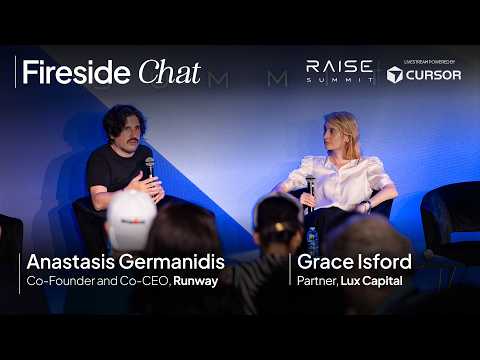
Fireside Chat with Anastasis Germanidis, Co-Founder & Co-CEO of Runway | RAISE Summit 2026RAISE Summit
Navigating AI’s Frontier in 2025 - Grace Isford, Lux CapitalAI Engineer
AI Engineer Summit 2025 - AI Leadership (Day 1)AI Engineer
Lux Capital's Isford Sees Unprecedented AI Demand in NYCBloomberg Tech
Axios AI+ Summit NY: Axios' Hope King in conversation with Grace Isford + Alex WiltschkoAxios
Founders and Funders need PATIENCE.Demo Day
Economics - Web3’s New Economy | Web3 Summit @ MIT 2022Imagination in Action