A Short History of Financial Euphoria
Summary
Galbraith wrote a very short book in 1990 identifying the recurring features of speculative episodes and arguing that they will continue because the conditions producing them are permanent features of financial markets and of human memory.
His analysis has two central components. The extreme brevity of financial memory means that a crash is forgotten within twenty years or less, so a new generation encounters the same conditions with no experiential defence. The specious association of money and intelligence means that people with money are presumed to understand what they are doing, and that people who acquire money quickly are assumed to be exceptionally able rather than lucky.
He identifies the standard features of an episode: something new that is believed to be genuinely different, the rediscovery of leverage in a form presented as an innovation, the entry of people who defend the rise as justified by novel circumstances, the dismissal of sceptics as failing to understand, and a collapse whose timing nobody predicts and whose causes are then assigned to some trivial precipitating event rather than to the preceding conditions.
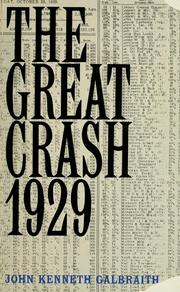
His historical survey covers tulips, the South Sea Company, the 1929 crash, the 1980s conglomerate and junk bond period, and the October 1987 crash. The book is under a hundred pages and contains no data. Galbraith writes with heavy irony that some readers enjoy and others find dismissive. He offers no method for identifying an episode in progress other than scepticism about novelty claims. It remains the sharpest short statement of why the same pattern recurs and why participants each time believe it does not apply to them.
Key takeaways 8
- Financial memory is extremely short, so the conditions producing a crash are forgotten within twenty years and encountered fresh by a new generation.
- People with money are assumed to be intelligent, and people who acquire it quickly are assumed to be exceptionally able rather than fortunate.
- Every episode involves something believed to be genuinely new, which is used to explain why previous limits do not apply.
- Leverage is rediscovered in each episode in a form presented as an innovation, and it is always the mechanism rather than the novelty.
- Sceptics during an episode are dismissed as failing to understand the new circumstances, which suppresses the only useful information available.
- The collapse is attributed afterwards to a trivial precipitating event rather than to the conditions that made a collapse inevitable.
- Nobody predicts the timing, and the participants who leave early are treated as having been wrong until they are not.
- Regulation cannot prevent these episodes because the conditions producing them are permanent features of markets and memory.
Who should read it
Investors who want the shortest available statement of why speculative episodes recur and why participants each time believe theirs is different.
About John Kenneth Galbraith
Harvard economist, wartime price administrator and US ambassador to India; died in 2006.
The Great Crash 1929 is the standard narrative of the boom, the leverage stacked inside investment trusts and the collapse that followed, written close enough to the events to use the participants directly. A Short History of Financial Euphoria condenses four centuries of speculation into a recurring pattern of leverage, the belief that a familiar instrument is genuinely new, and very short memory.
Where it sits in the reference 5
Who recommended it 3 · 2 direct
Similar books 6
Chosen by shared topics, the entries that hold them, and the people who recommended both.