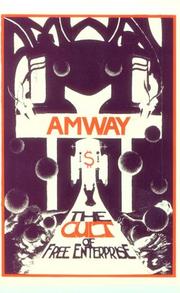
Amway: The Cult of Free Enterprise
A former distributor on the ideology that sustains recruitment.
Summary
Butterfield spent years as an Amway distributor, reaching a middle level of the organisation, and wrote a critical account after leaving.
His argument is that Amway's economics work through recruitment rather than through product sales. Distributors buy products at wholesale and are supposed to sell them at retail, but Butterfield argues that most product moves to distributors themselves and to their immediate circle, and that the meaningful income comes from bonuses on the purchasing volume of the organisation a distributor recruits beneath them. This means the business is about recruiting rather than selling, and that success requires a continuously expanding base of new recruits.
The second mechanism he identifies is the tools business. Upline distributors sell motivational tapes, books, seminars and rally tickets to their downline, and Butterfield argues that for the highest earners this revenue exceeds their income from product entirely, which means the top of the organisation profits from the aspiration of the people below rather than from any product moving to consumers.
His account of the culture is what gives the book its title. He describes the rallies, the testimonial format, the discouragement of contact with sceptical friends and family, the merger of the business with religious and patriotic language, and the way failure is attributed to insufficient belief rather than to the structure.
The book is a former participant's account written after a bad experience, and it argues one position throughout. Amway has disputed such characterisations and has operated for decades under regulatory arrangements including a 1979 Federal Trade Commission decision that set rules distinguishing it from a prohibited scheme. Readers should treat the culture material as testimony and the structural analysis as an argument that later litigation and regulatory action against the tools business substantially supported.
Key takeaways 7
- Distributor income comes primarily from bonuses on the purchasing volume of recruits rather than from retail product sales.
- A business model requiring continuous recruitment cannot deliver the promised income to more than a small fraction of participants.
- Upline distributors sell motivational materials and event tickets to their downline, and for top earners this revenue exceeds product income.
- The tools business means the top of the organisation profits from the aspiration of participants rather than from products reaching consumers.
- Recruitment presentations emphasise income potential while the compensation structure makes that income unattainable for nearly everyone.
- Attributing failure to insufficient belief rather than to the structure prevents participants from evaluating the arrangement.
- Discouraging contact with sceptical friends and family removes the outside judgement that would end participation.
Who should read it
Readers evaluating multi-level marketing structures who want a participant's account of the economics and the recruitment culture, treated as one-sided testimony.
Where it sits in the reference 2
Similar books 6
Chosen by shared topics, the entries that hold them, and the people who recommended both.