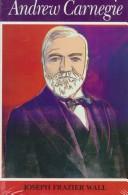
Andrew Carnegie
The scholarly biography Nasaw's book displaced but did not erase.
Summary
Wall's biography, based on the Carnegie papers at the Library of Congress and on company records, is the standard scholarly life. It covers the Dunfermline childhood, the family's emigration and poverty, Carnegie's rise through the Pennsylvania Railroad under Thomas Scott, his bond selling in Europe, the entry into iron and then steel, the building of Carnegie Steel, the Homestead strike, the sale to Morgan in 1901, and the philanthropy.
The business material is what investors will use. Wall documents Carnegie's cost accounting system, adopted from railroad practice, which let him know the cost of every process at every mill and price accordingly. He shows Carnegie's counter-cyclical investment policy: expand and rebuild during depressions when construction is cheap and competitors are retrenching, which is how Carnegie Steel took share through three downturns. He documents the partnership structure with the ironclad agreement that let Carnegie buy out partners at book value, the deliberate avoidance of public equity and debt, and the practice of scrapping functioning plant when a better process appeared.
Wall does not resolve the contradiction between Carnegie's stated views on labour and his conduct at Homestead, where Frick broke the union while Carnegie was in Scotland, and he documents Carnegie's evasions on the subject without excusing them. The book is long, from 1970, and written in a discursive academic style. Later work has added detail on the technology and on the labour history, but Wall remains the reference biography.
Key takeaways 7
- Carnegie's decisive advantage was cost accounting imported from railroad practice, which let him know his production cost at every stage when competitors did not.
- He expanded capacity during depressions, when construction was cheap and rivals were retrenching, and took market share in every downturn as a result.
- Carnegie scrapped functioning plant whenever a better process appeared, on the reasoning that sunk cost is irrelevant to the decision about future cost.
- He financed the company from retained earnings and partner capital rather than public markets, which kept control concentrated and avoided fixed obligations in downturns.
- The ironclad partnership agreement let the firm buy out any partner at book value, which suppressed the market value of partners' stakes until the 1901 sale.
- Vertical integration into ore, coke and transport removed suppliers who could extract rents at the moment of highest demand.
- Carnegie's public positions on labour and wealth distribution were contradicted directly by his conduct at Homestead, and he managed the contradiction by delegating the confrontation to Frick.
Who should read it
Investors and operators studying counter-cyclical capital allocation and cost-based competition, in the definitive account of the industrialist who practised both.
Where it sits in the reference 2
Who recommended it 2 · 2 direct
Similar books 6
Chosen by shared topics, the entries that hold them, and the people who recommended both.

