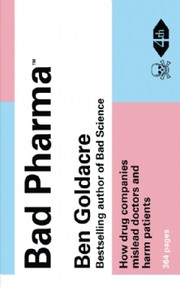
Bad Pharma
Trial design, publication bias and regulatory failure.
Summary
Goldacre, a physician and epidemiologist, sets out how the evidence base for medicine is distorted, working through the drug development and publication pipeline stage by stage.
His central charge is publication bias. Trials with negative results are systematically less likely to be published, which means the published literature overstates the effectiveness of treatments even when every individual study is honest. He documents the scale of missing trial data, the failed attempts to establish registration requirements, and the cases including Tamiflu and Study 329 on paroxetine in adolescents where withheld data reversed the apparent conclusion.
He then covers the other distortions: trials designed with the wrong comparator, the wrong dose of the comparator, surrogate endpoints rather than outcomes patients care about, populations selected to maximise the chance of a positive result, and durations too short to show harms. He covers the regulatory approval process and the fact that regulators hold data they do not release. He covers ghostwriting of academic papers, the payment of key opinion leaders, the marketing of medical education, and the effect of pharmaceutical representatives on prescribing.
Goldacre is precise about what is illegal, what is legal and what is simply a structural consequence of who funds the research. The book is written accessibly and is carefully sourced.
It is from 2012 and there have been real changes since, including the AllTrials campaign it launched, mandatory registration requirements and improved data access. The problems it documents have been reduced rather than resolved.
Key takeaways 7
- Trials with negative results are systematically less likely to be published, which means the published literature overstates treatment effectiveness even when every study is honest.
- Withheld trial data has in documented cases reversed the apparent conclusion about a drug's effectiveness or safety.
- Trials can be designed to produce a positive result through comparator choice, dose selection, surrogate endpoints and study duration without any fabrication.
- Regulators hold trial data they do not release, which prevents independent assessment of the drugs they have approved.
- Academic papers on drugs are frequently written by industry-employed writers and signed by academics who did not conduct the analysis.
- Payments to influential physicians and funding of medical education shape prescribing in ways that individual clinicians do not perceive.
- The distortion is structural rather than the result of individual misconduct, because the party funding the research also designs, analyses and decides whether to publish it.
Who should read it
Healthcare investors and operators who need to understand what published clinical evidence does and does not establish.
Where it sits in the reference 2
Who recommended it 1
Similar books 6
Chosen by shared topics, the entries that hold them, and the people who recommended both.