Bringing Down the House
The MIT blackjack team; dramatised and disputed in places.
Summary
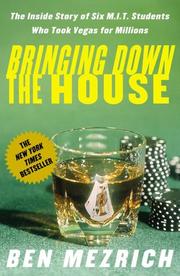
Mezrich tells the story of the MIT blackjack team, a group of students who used card counting and team play to win money from Las Vegas casinos in the 1990s. The team method separates roles: spotters play minimum bets at multiple tables and track the count, and a big player joins a table only when the count is favourable and bets large, which makes the pattern harder for casino surveillance to detect.
The underlying mathematics is real. Blackjack has a small, quantifiable player advantage when the remaining deck is rich in tens and aces, and the team structure converts a thin edge into a bankroll return by increasing the fraction of hands played at favourable counts. Mezrich covers bankroll management, bet sizing relative to the count, and the way the casinos eventually identified the players through the Griffin surveillance service.
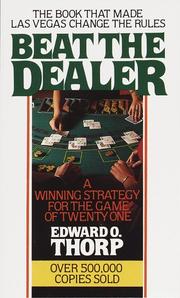
The book has a serious accuracy problem. Mezrich acknowledged inventing and compositing scenes, several named participants disputed the account, and the book is marketed as non-fiction while operating as a dramatised narrative. It is not a source on how to count cards, and readers who want the technique should read Thorp's Beat the Dealer. It is worth reading only as a popular treatment of a real edge-based operation, and investors sometimes cite it for the general points about small edges, bet sizing and operating within a system that will eventually detect and eject you. Treat the specific events as unverified.
Key takeaways 7
- A small quantifiable edge produces large returns only when bet sizing scales with the edge and the bankroll is large enough to survive variance.
- Splitting the operation into spotters and a big player converts a detectable betting pattern into one the casino's surveillance is built to miss.
- The counting advantage in blackjack is small, roughly one to two percent, so results are dominated by variance over any short period.
- Playing an edge inside a system controlled by an adversary means the operation has a finite life, since detection is a matter of time rather than of error.
- Discipline in bet sizing matters more to the outcome than accuracy in counting, because deviation from the rule destroys the expected value quickly.
- The casinos' countermeasure was identifying individuals rather than changing the game, which shows the edge was real and the response was operational.
- The book's specific events are dramatised and disputed, so it should not be treated as a factual record of what the team did.
Who should read it
Readers who want a popular narrative about operating a small statistical edge, with the caution that the reporting is dramatised and disputed.
About Ben Mezrich
American author of dramatised nonfiction about card counting, Facebook's founding, the Winklevoss bitcoin position and the GameStop squeeze.
The books reconstruct financial episodes scene by scene from participant interviews, which is why several became films and why they reach readers who never open a market history. Read them as accounts told from one side, with dialogue and detail reconstructed rather than documented.
Where it sits in the reference 2
Who recommended it 2 · 1 direct
Similar books 6
Chosen by shared topics, the entries that hold them, and the people who recommended both.