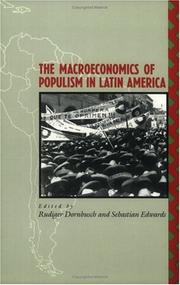
Crisis and Reform in Latin America
The World Bank chief economist on the debt crisis and the reforms after it.
Summary
Edwards wrote this while serving as chief economist for Latin America at the World Bank, assessing the region's reform programmes from the debt crisis of the 1980s to the mid-1990s.
The historical account covers the sequence: the import substitution model and its exhaustion, the borrowing of the 1970s funded by recycled oil surpluses, the 1982 debt crisis when interest rates rose and lending stopped, the lost decade of stagnation and inflation, and then the reform programmes of the late 1980s and early 1990s covering stabilisation, trade liberalisation, privatisation, financial deregulation and in several countries the opening of the capital account.
His assessment is broadly favourable to the reforms while identifying what was not achieved. Inflation was defeated, which was the largest single gain. Trade opening raised productivity in tradeable sectors. Privatisation removed loss-making enterprises from budgets. But the reforms did not deliver the growth rates expected, poverty and inequality remained high, and the social sectors were not reformed at the same pace as the economic ones.
His analytical points concern sequencing and credibility. He argues that stabilisation must precede liberalisation, that opening the capital account before the domestic financial system is properly supervised produces crises, and that reforms are reversed unless they establish credibility that survives changes of government.
The book was published in 1995, immediately after the Mexican peso crisis, which tested exactly the capital account sequencing question he raises, and before the crises of the following years. Edwards has continued working on the region since, including The Chile Project which is also in this reference. His position is broadly within the reform consensus and readers wanting the critique should read across.
Key takeaways 7
- Defeating inflation was the largest single achievement of the Latin American reform programmes.
- Trade liberalisation raised productivity in tradeable sectors but did not produce the aggregate growth rates expected.
- Stabilisation must precede liberalisation, because liberalising an unstable economy produces capital flight rather than investment.
- Opening the capital account before the domestic financial system is adequately supervised produces crises.
- Reforms are reversed unless they establish credibility that survives a change of government.
- Social sector reform did not proceed at the pace of economic reform, which left poverty and inequality high.
- The 1980s debt crisis followed from borrowing at floating rates that repriced when American monetary policy tightened.
Who should read it
Investors and analysts working in Latin America who want an assessment of the reform decade from within the institutions that designed it.
Where it sits in the reference 2
Similar books 6
Chosen by shared topics, the entries that hold them, and the people who recommended both.