Distressed Securities: Analyzing and Evaluating Market Potential and Investment Risk
Summary
Altman wrote this as a practitioner and academic treatment of the distressed securities market as it existed after the leveraged buyout period, covering the size and composition of the market, the analytical methods for valuing defaulted debt, and the empirical evidence on returns.
The analytical content covers his bankruptcy prediction work, particularly the Z-score model and its variants, applied to identifying candidates before default; the estimation of recovery rates by seniority, collateral and industry; the mechanics of Chapter 11 and the determination of which claim class receives the reorganised equity; and the construction of distressed debt indices and the measurement of returns to the asset class.
His empirical findings include that returns to distressed debt investing have been attractive but are concentrated in the periods immediately following default waves, that recovery rates vary systematically and predictably by seniority and industry, and that the market's size and liquidity had grown enough by the early 1990s to constitute an asset class rather than a specialist activity.
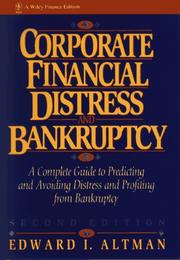
The reference has not verified the specific data in this 1991 volume. The market has changed fundamentally since: it has institutionalised, participants are far larger, and the tactics now include loan-to-own strategies, liability management exercises and non-pro-rata transactions that did not exist. Altman's own later book with Hotchkiss, Corporate Financial Distress and Bankruptcy, covers the same material in updated editions and should be used instead for current practice.
Key takeaways 7
- Distressed debt returns are attractive as an asset class but are concentrated in periods immediately following default waves rather than earned steadily.
- Recovery rates vary systematically and predictably by seniority, collateral type and industry, which makes them estimable before default.
- Bankruptcy prediction models identify candidates before default, which allows positioning before forced sellers arrive.
- Industry asset specificity is a major determinant of recovery, because assets with few alternative uses recover less regardless of seniority.
- The claim class that receives the reorganised equity is the central analytical question, and identifying it correctly determines the return.
- The distressed market grew in the early 1990s to a size and liquidity that made it an asset class rather than a specialist activity.
- The reference has not verified this volume's specific data, and Altman's later work with Hotchkiss covers the material in updated form.
Who should read it
Credit investors who want Altman's early treatment of distressed securities, with his later book as the current reference.
About Edward I. Altman
Professor emeritus of finance at NYU Stern who created the Z-score model of bankruptcy prediction.
The Z-score gave credit analysts a published, testable formula for default probability from balance sheet ratios, and it is still the default screen in distressed work. Corporate Financial Distress and Bankruptcy sets out the mechanics of Chapter 11 and restructuring alongside the recovery and default statistics that distressed investors price against.
Where it sits in the reference 2
Who recommended it 1 · 1 direct
Similar books 6
Chosen by shared topics, the entries that hold them, and the people who recommended both.