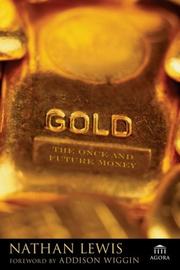
Gold: The Once and Future Money
Hard-money argument for a return to a gold link.
Summary
Lewis, an investment strategist, argued for a return to a gold-based monetary system, presenting both a historical case and a practical proposal.
His historical argument reads monetary history as a contrast between periods of stable currency value and periods of instability. He covers the classical gold standard from roughly 1870 to 1914, which he presents as a period of price stability and international integration; the interwar breakdown; Bretton Woods; and the period after 1971, which he characterises as one of monetary instability producing inflation, currency crises and misallocation. He interprets particular episodes, including the American 1970s inflation, the Japanese asset bubble and various emerging market crises, as consequences of currencies without a stable anchor.
His conceptual argument is that a currency should be a stable unit of measurement rather than a policy instrument. He argues that the value of money should be fixed against something outside the control of the monetary authority, that gold's stability as a store of value derives from its supply characteristics, and that a modern gold standard would not require gold coinage or full reserve backing but only a commitment by the monetary authority to buy and sell gold at a fixed price and to conduct open market operations to maintain it.
He also argues that supply-side tax policy and stable money together are what produce growth, which connects his position to the supply-side economics tradition.
The book argues one position throughout. The mainstream economic assessment is that the classical gold standard's stability is overstated, that it produced repeated deflations and banking panics, that it required political tolerance for deflation that no longer exists, and that gold standard constraints deepened the Depression. Lewis does not engage these arguments substantially. Bernstein's The Power of Gold, also in this reference, presents the historical record without the advocacy.
Key takeaways 7
- A currency should function as a stable unit of measurement rather than as a policy instrument in this account.
- The classical gold standard period from 1870 to 1914 is presented as one of price stability and international integration.
- A modern gold standard would require only a commitment to buy and sell at a fixed price rather than coinage or full reserve backing.
- Post-1971 monetary instability is presented as the cause of inflation, currency crises and capital misallocation.
- Fixing money's value against something outside the monetary authority's control removes the discretion the author considers harmful.
- Stable money combined with low marginal tax rates is presented as the combination that produces growth.
- The mainstream assessment that the gold standard produced repeated deflations and deepened the Depression is not substantially engaged.
Who should read it
Readers who want the case for gold-based money argued fully, read against the historical record presented without advocacy.
Where it sits in the reference 2
Similar books 6
Chosen by shared topics, the entries that hold them, and the people who recommended both.