Goldman Sachs: The Culture of Success
By a former Goldman VP; sympathetic pre-IPO institutional history.
Summary
Endlich, a former Goldman Sachs vice president, wrote a history of the firm covering its founding through the 1999 initial public offering, with particular attention to the partnership culture and to the decade-long internal argument about whether to go public.
The cultural material is the substance. Endlich describes the recruitment process, the partnership selection that occurred every two years and consumed enormous senior time, the requirement that partners keep the great majority of their wealth in the firm, the unlimited liability, and the compensation structure that paid people well below what they could earn elsewhere until they made partner and then extraordinarily well afterwards. She argues these produced the behaviour the firm was known for: long tenure, internal cooperation, willingness to subordinate individual credit, and a risk posture disciplined by the fact that partners' own money was at stake.
The flotation argument is the book's spine. Endlich covers the repeated votes, the arguments on both sides, the 1994 trading losses that nearly forced the issue and caused partner withdrawals, and the eventual decision. The case for going public was capital: principal risk-taking and international expansion required more capital than partners could supply, and the partnership structure meant capital left whenever a partner did.
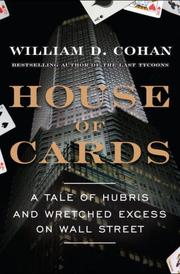
The book was published in 1999 and predates everything the firm is now argued about. Endlich is sympathetic and had access. Cohan's Money and Power is the more critical and better documented treatment of the same institution.
Key takeaways 7
- Partners kept the great majority of their wealth in the firm and bore unlimited liability, which disciplined risk-taking in a way no policy could.
- The partnership structure meant capital left whenever a partner retired, which made the capital base unstable as the business became more capital-intensive.
- Partner selection every two years consumed enormous senior management time and was the mechanism through which the culture was transmitted.
- Compensation well below market until partnership and extraordinarily above it afterwards selected for people willing to accept a long deferred payoff.
- The 1994 trading losses caused partner withdrawals and demonstrated that the partnership capital structure could not support the risks the firm was taking.
- Going public was driven by the capital requirements of principal risk-taking and international expansion rather than by partners seeking liquidity.
- Subordinating individual credit to the firm's was enforced socially rather than formally, and it was what allowed cooperation across a competitive organisation.
Who should read it
Finance readers interested in how partnership economics shape behaviour and why the structure became unsustainable, with Cohan as the critical counterpart.
Where it sits in the reference 2
Who recommended it 1 · 1 direct
Similar books 6
Chosen by shared topics, the entries that hold them, and the people who recommended both.