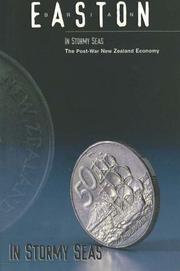
In Stormy Seas
The post-war economy through the liberalisation, by its best chronicler.
Summary
The reference has not verified this book in detail; the summary states only what the title, author and subject establish.
Brian Easton is a New Zealand economist and this book examines the country's economic policy and performance from roughly the 1970s through the mid-1990s, covering the interventionist period under Robert Muldoon and the rapid liberalisation that followed from 1984 under the fourth Labour government. Easton was a persistent critic of the reform programme from within the economics profession, and the book presents that critique.
His general argument is that New Zealand's post-1984 reforms were more radical than the country's problems required, that they were implemented without adequate attention to sequencing or to the transitional costs, and that the growth payoff promised by their advocates did not arrive on the timetable claimed. He gives attention to the terms-of-trade shocks of the 1970s, the loss of preferential British market access after 1973, the failure of the Think Big projects, and the disinflation and unemployment of the late 1980s.
The reference has not yet verified this book's detailed content chapter by chapter, and the description above reflects Easton's known positions and the book's period rather than a close reading. Readers who want the debate in full should set it against advocates of the reforms and against the more recent literature assessing New Zealand's productivity record.
Key takeaways 5
- New Zealand's economic difficulties in the 1970s originated in external shocks and lost market access rather than in domestic policy alone.
- The pace of the post-1984 liberalisation imposed transitional costs that its designers had not budgeted for.
- Disinflation achieved through monetary policy alone produced unemployment that persisted long after prices stabilised.
- Easton argues that the productivity gains predicted by reform advocates did not materialise in the expected timeframe.
- Muldoon's Think Big energy projects committed capital on demand forecasts that the oil price collapse invalidated.
Who should read it
Readers studying the New Zealand reform experiment who want a critical account from an economist who observed it from inside the country.
Where it sits in the reference 2
Similar books 6
Chosen by shared topics, the entries that hold them, and the people who recommended both.