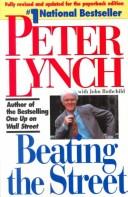
Learn to Earn
Introduction to business and investing aimed at beginners and teenagers.
Summary
Peter Lynch and John Rothchild wrote this for beginners, explicitly aimed at teenagers and young adults who have never owned a security. It is the simplest of Lynch's three books and the only one that starts from what a company is.
The first part is a history of American capitalism written for someone who has not encountered it: the colonial trading companies, the growth of railroads, the industrial consolidations, the 1929 crash and the Depression, the postwar expansion. Lynch uses this to make his central point, which is that the ownership of productive businesses has been the reliable route to long-run wealth accumulation and that the risk of not owning equities exceeds the risk of owning them. The second part covers practical mechanics: what a share is, how to read a balance sheet and income statement, what the standard ratios mean, how mutual funds work, and what brokers charge.
Running through it is Lynch's method from One Up on Wall Street: notice the products and shops you use, investigate the companies behind them, and understand the business before buying the stock. The book is dated in its specific examples, most of which are 1990s consumer companies, and in its treatment of costs, since index funds and zero-commission brokerage have transformed the arithmetic since. The argument for early and continuous equity ownership has held up.
Key takeaways 7
- Not owning equities is itself a risk position, and over long horizons it has been the more damaging one.
- Young investors have time as their principal advantage, and starting early matters more than selecting well.
- A share of stock is a fractional claim on a business, and anyone who cannot describe the business should not own the share.
- Ordinary consumers observe successful products before analysts write about them, which is a genuine informational advantage.
- Reading a company's balance sheet and income statement is within the reach of anyone willing to spend a few hours learning the vocabulary.
- Lynch argues that the history of American business shows creative destruction removing dominant firms regularly, so no holding is permanent.
- Costs and taxes compound against the investor exactly as returns compound for them.
Who should read it
Beginning investors, and parents or managers teaching them, who want a first book that starts from what a company is rather than from portfolio theory.
About Peter Lynch
Manager, Fidelity Magellan Fund 1977-1990
A documented 29% annualized record at Magellan plus three books that outlived their news cycle and put 'buy what you know' into general use.
Where it sits in the reference 2
Similar books 6
Chosen by shared topics, the entries that hold them, and the people who recommended both.