Pioneering Portfolio Management
Subtitled An Unconventional Approach to Institutional Investment; revised 2009.
Summary
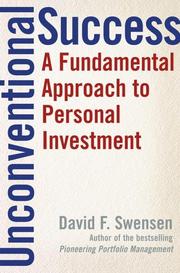
Swensen ran the Yale endowment from 1985 until his death in 2021, producing returns that changed how institutional portfolios are constructed. This book states the approach for institutional investors, and his later book Unconventional Success addresses individuals with substantially different advice.
The framework begins with the purpose of an endowment, which is to support current operations while preserving purchasing power in perpetuity, and derives the investment policy from that dual mandate. Because the horizon is unlimited, the portfolio can accept illiquidity and volatility that other investors cannot, and Swensen argues that the illiquidity premium is the most reliable source of excess return available to such an investor.
His specific positions include heavy allocation to equity-like assets because bonds do not preserve purchasing power; diversification across genuinely different return drivers rather than across many managers within the same exposure; substantial allocation to private equity, venture capital, real assets and absolute return strategies; and the argument that active management is worthwhile only in inefficient markets where manager skill dispersion is wide, which excludes large-capitalisation public equities.
His treatment of manager selection and of the principal-agent problem is unusually detailed, covering fee structures, alignment of interests, the incentives created by asset gathering, and the argument that the best managers restrict capacity. The model has been widely copied and has performed poorly for many imitators who lacked Yale's access to top-quartile managers, which is where the returns concentrated. Swensen himself warned that the approach requires resources most institutions do not have. Illiquidity also proved painful for endowments during 2008.
Key takeaways 8
- An endowment's dual mandate of supporting current spending and preserving purchasing power in perpetuity determines the entire investment policy.
- An unlimited horizon allows an investor to accept illiquidity and volatility that others cannot, which is the structural advantage to be exploited.
- The illiquidity premium is the most reliable source of excess return available to a long-horizon investor.
- Bonds do not preserve purchasing power over long periods, which is why an endowment should hold predominantly equity-like assets.
- Diversification means holding genuinely different return drivers rather than many managers within the same exposure.
- Active management is worthwhile only in markets where manager skill dispersion is wide, which excludes large-capitalisation public equities.
- Manager incentives must be examined directly, since asset gathering and fee structures frequently conflict with investor returns.
- Access to top-quartile managers in private markets is where the returns concentrate, and institutions without that access should not copy the allocation.
Who should read it
Institutional investors and allocators who want the original statement of the endowment model, including the access conditions its returns depended on.
About David F. Swensen
Chief Investment Officer, Yale University 1985-2021
Pioneering Portfolio Management defined the endowment model that institutional investors worldwide copied, and Unconventional Success is its counterpart argument for individuals.
Where it sits in the reference 3
Who recommended it 4 · 4 direct
Similar books 6
Chosen by shared topics, the entries that hold them, and the people who recommended both.