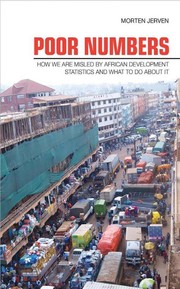
Poor Numbers: How We Are Misled by African Development Statistics
Ghana's 2010 GDP rebasing is the central case; read before trusting any African macro series.
Summary
Jerven, an economic historian, visited national statistical offices in several African countries and examined how GDP figures are actually produced. His finding is that the numbers used routinely by researchers, investors, development agencies and rating agencies rest on data collection so weak that the figures cannot support the uses made of them.
The specific problems he documents are concrete. Base years for national accounts were in some cases decades old, which means the sectoral weights reflected an economy that no longer existed. Statistical offices are underfunded and understaffed relative to their mandate. Different international sources, including the World Bank, the Penn World Tables and the IMF, publish substantially different figures for the same country and year, derived from the same underlying national data through different adjustment procedures. The informal sector, which is a large share of activity, is estimated rather than measured. When Ghana rebased its accounts in 2010, measured GDP rose by more than sixty percent overnight, and Nigeria's 2014 rebasing produced a similar jump.
His argument is that this makes cross-country growth regressions, the standard tool of development economics, unreliable, since the dependent variable contains error that is not random but is correlated with the political and administrative conditions being studied.
The book is short, careful and specific. It is not an argument that African economies are doing better or worse than reported, but that the numbers do not support the confidence placed in them. It has been influential among development economists and has not been seriously rebutted.
Key takeaways 7
- African GDP figures rest on data collection too weak to support the analytical uses routinely made of them.
- Different international sources publish substantially different GDP figures for the same country and year, derived from the same national data through different adjustments.
- Base years for national accounts were in several cases decades out of date, so sectoral weights reflected an economy that no longer existed.
- Ghana's 2010 rebasing raised measured GDP by more than sixty percent overnight, which shows the size of the error in the prior figures.
- Cross-country growth regressions are unreliable because the measurement error in the dependent variable correlates with the conditions being studied.
- Statistical capacity is itself a function of state capacity, which means the countries whose numbers are worst are the ones most studied for institutional weakness.
- The informal sector is estimated rather than measured, and the estimation method rather than the underlying activity determines a large share of reported output.
Who should read it
Investors and analysts who use developing country economic statistics and need to know what those figures actually rest on.
Where it sits in the reference 3
Who recommended it 1 · 1 direct
Similar books 6
Chosen by shared topics, the entries that hold them, and the people who recommended both.